Artwork
Agony
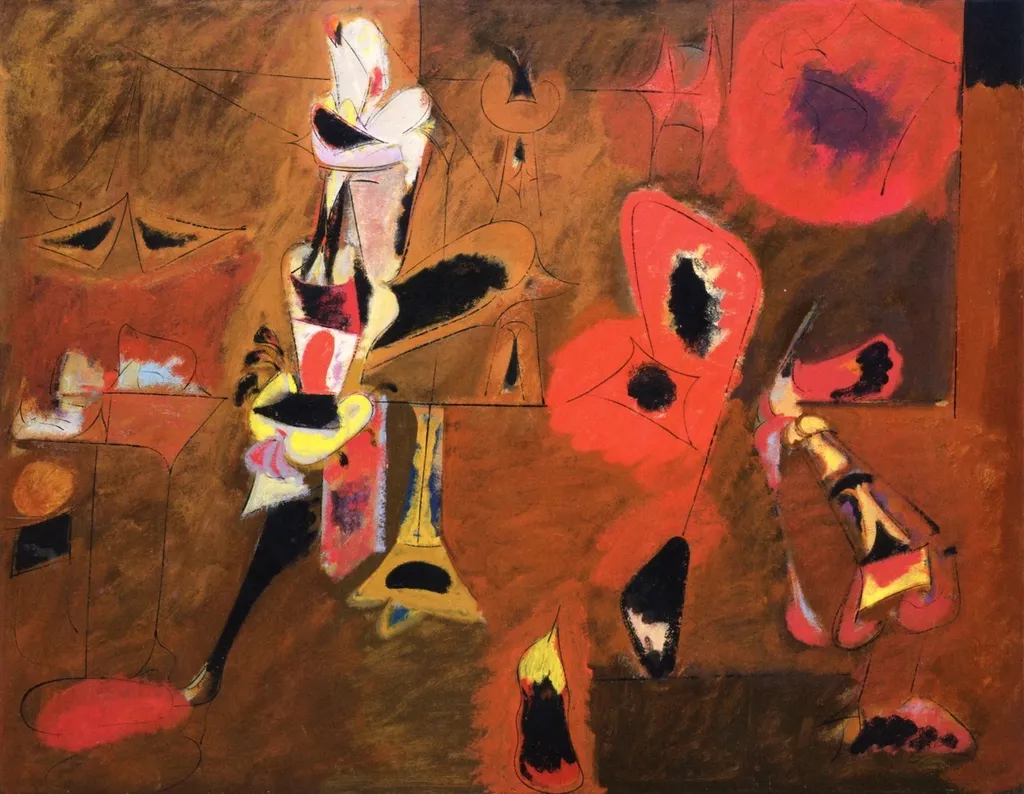
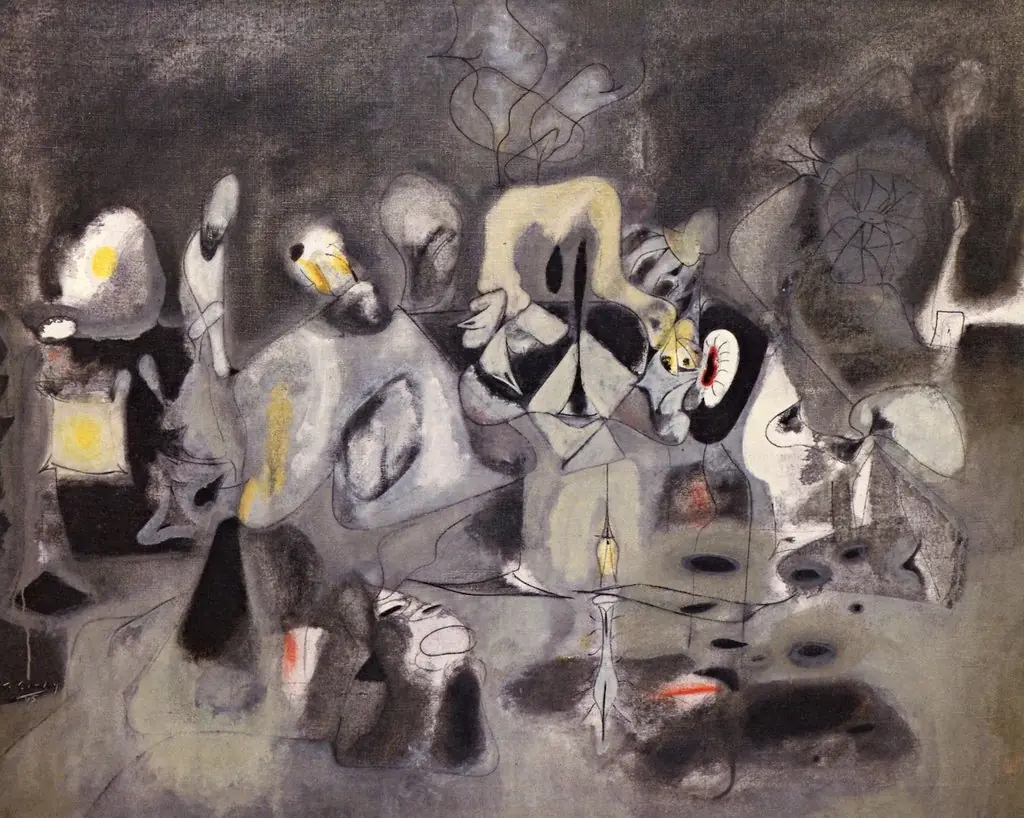
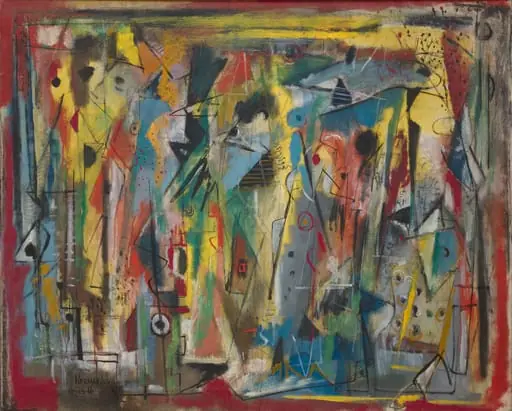
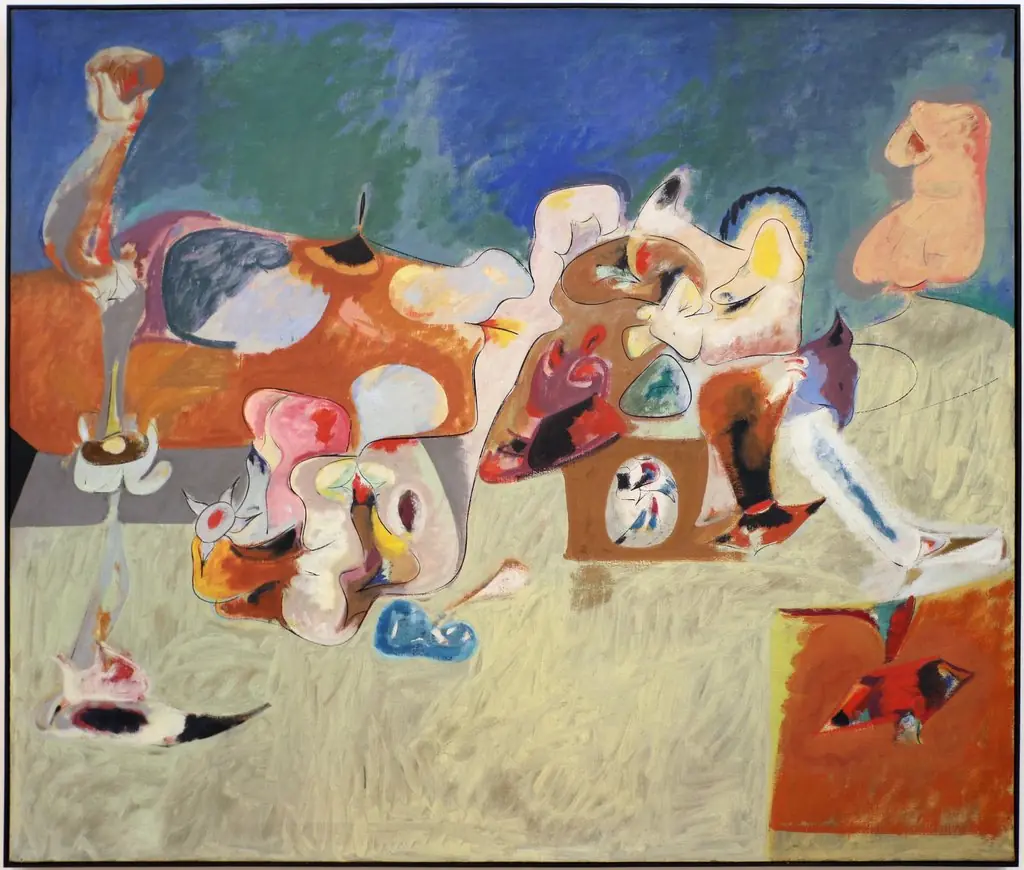
Agony is an oil painting by the Abstract Expressionist artist Arshile Gorky. It dates from 1947 and is held in the collection of the Museum of Modern Art.
About this work
Overview
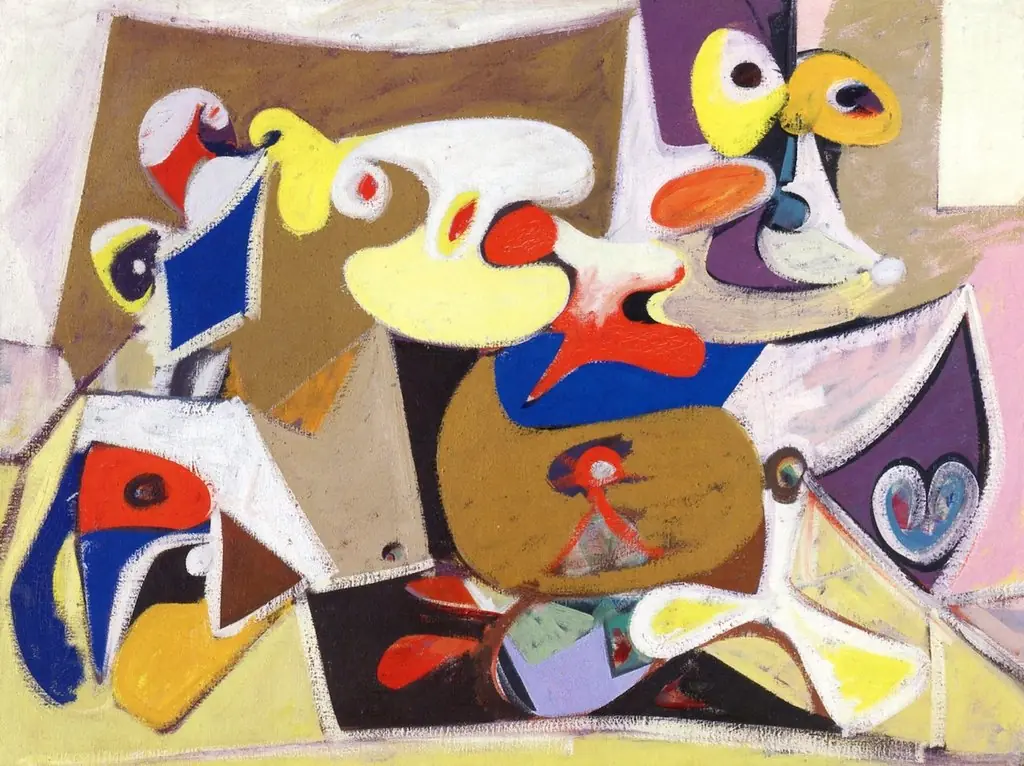
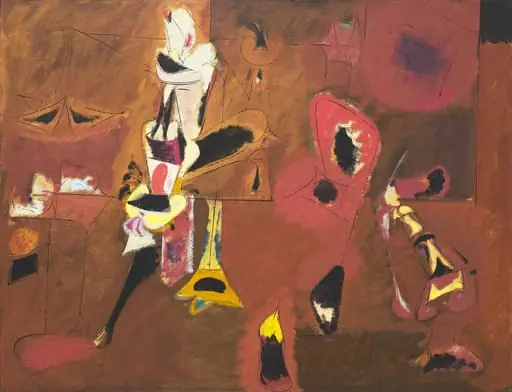
Created in 1947, this oil on canvas by Arshile Gorky resides in the collection of the Museum of Modern Art. The composition intertwines vivid reds, yellows, and deep blacks against a muted brown ground, generating a dynamic interplay of forms that seem to shift and collide across the surface.
Subject & Meaning
The work does not depict a recognizable scene; instead, it conveys an emotional state through abstracted shapes that suggest tension and movement. The juxtaposition of sharp, angular elements with softer, rounded masses evokes a sense of inner conflict, inviting viewers to interpret the visual tension as an expression of personal or existential turmoil.
Technique & Style
Gorky employs oil paint in a layered manner, allowing colors to pulse against the warm earth tone background. Thin, pen‑like lines thread through the composition, linking disparate forms and reinforcing a sense of motion. The palette’s high contrast and the blend of gestural and precise marks reflect his synthesis of surrealist abstraction and emerging abstract expressionist tendencies.
History & Provenance
The painting was completed shortly after World War II, a period marked by Gorky’s intense personal and artistic development. It entered the Museum of Modern Art’s holdings in the mid‑20th century, becoming part of the institution’s early acquisitions of post‑war American abstraction.
Context
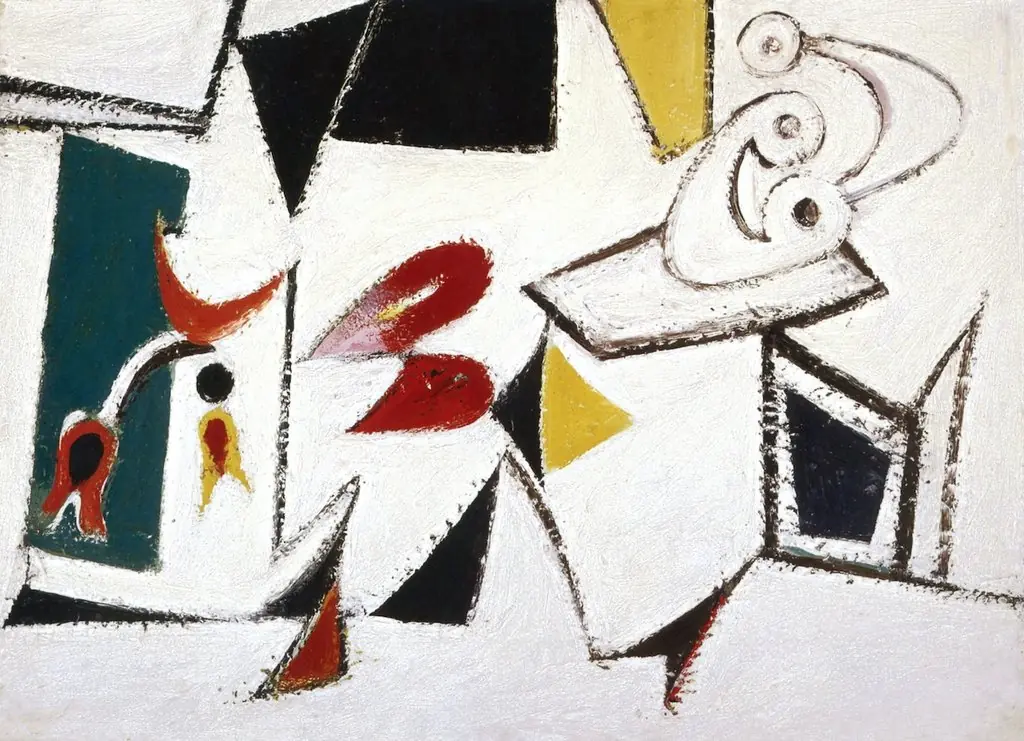
In the late 1940s, Gorky was transitioning from figurative surrealism toward a more fully abstract language that would influence the next generation of American painters. "Agony" exemplifies this shift, embodying the emotional intensity and formal experimentation that characterized the nascent abstract expressionist movement in New York.
Artist & collection

Artist
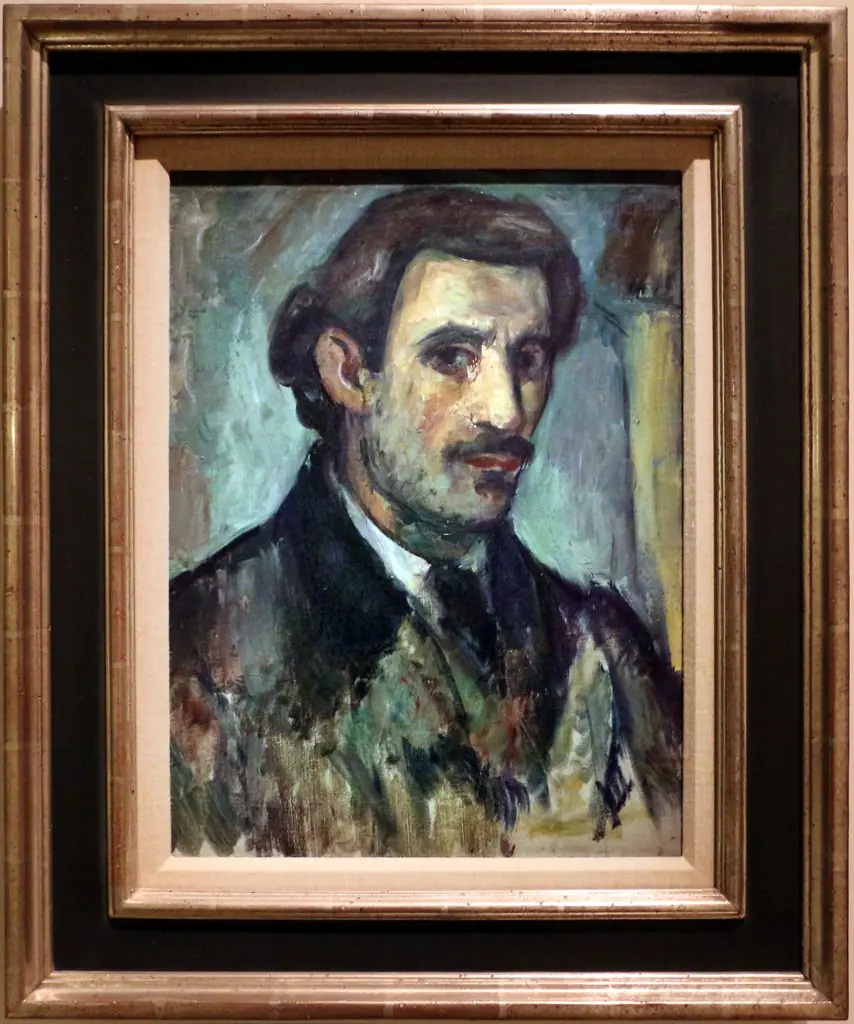
Arshile Gorky was an Armenian-American painter who had a seminal influence on Abstract Expressionism.