Artwork
After Xhorkum
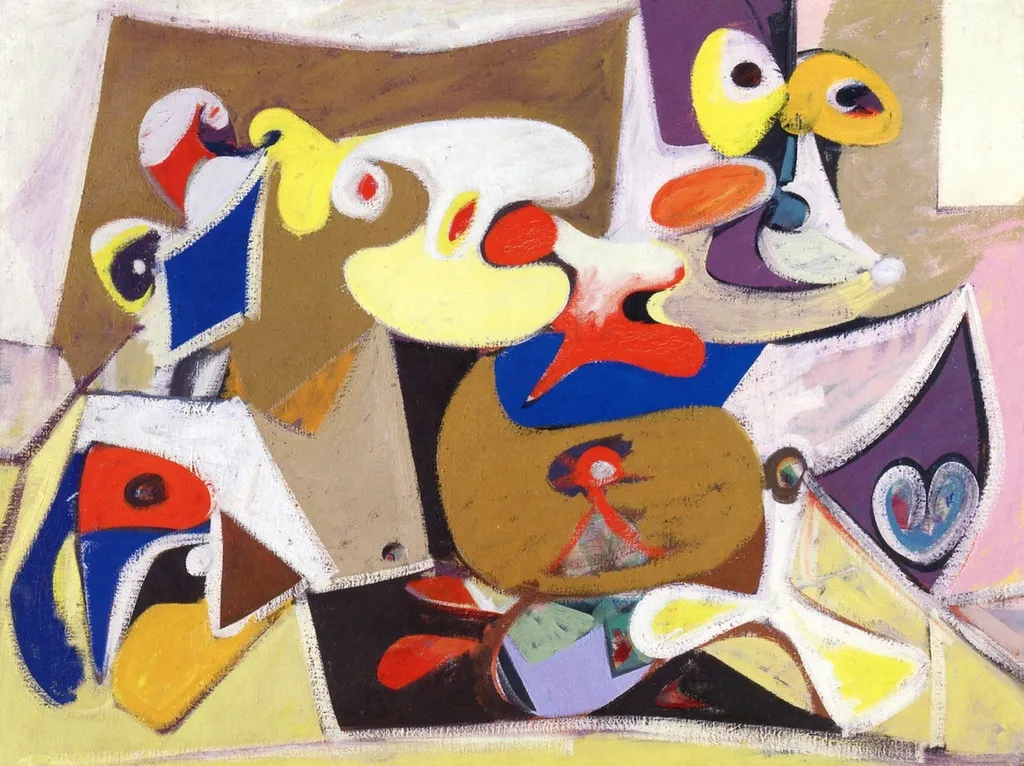
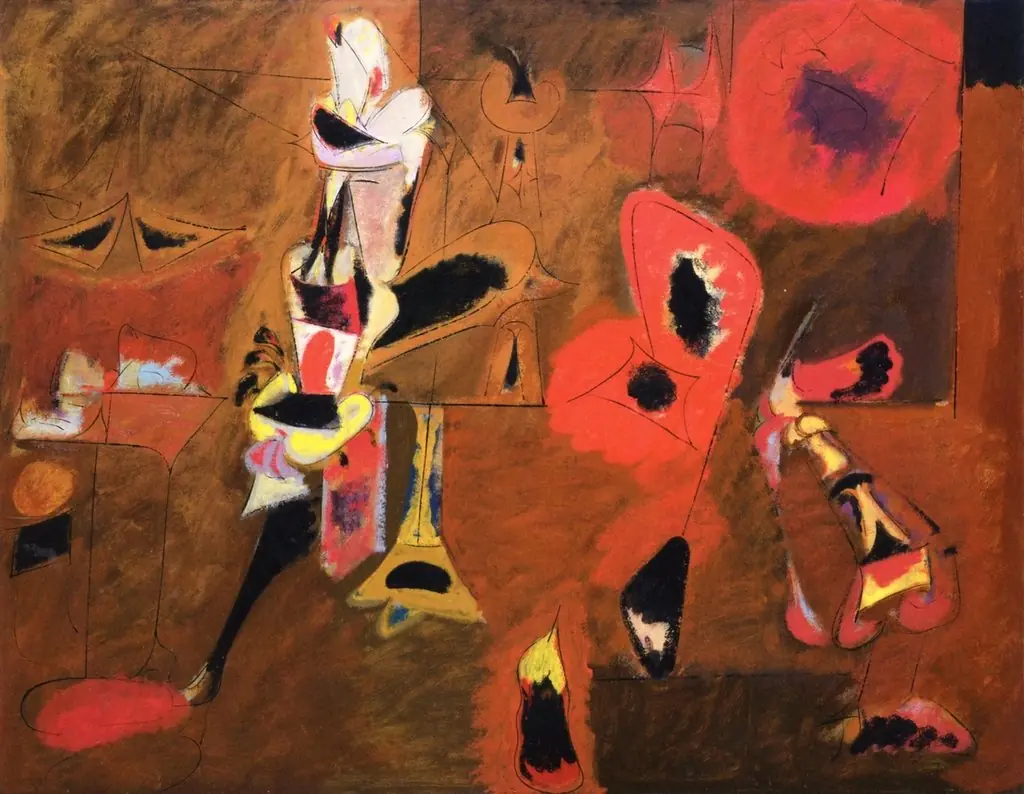
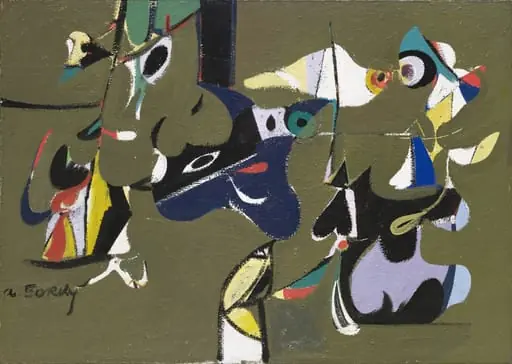
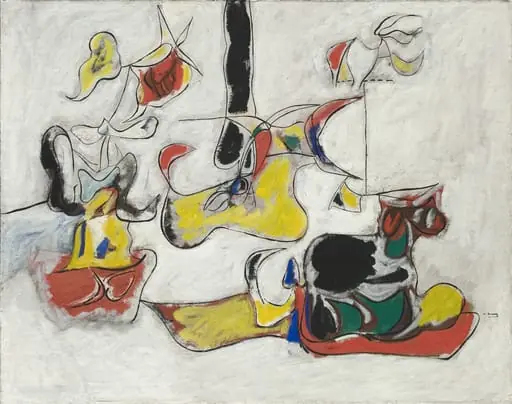
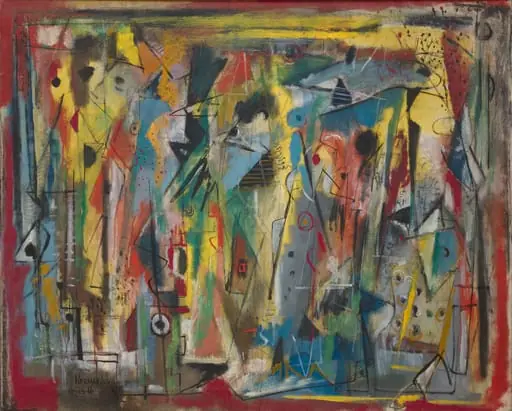
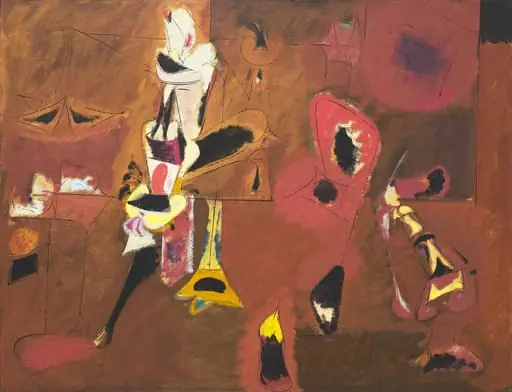
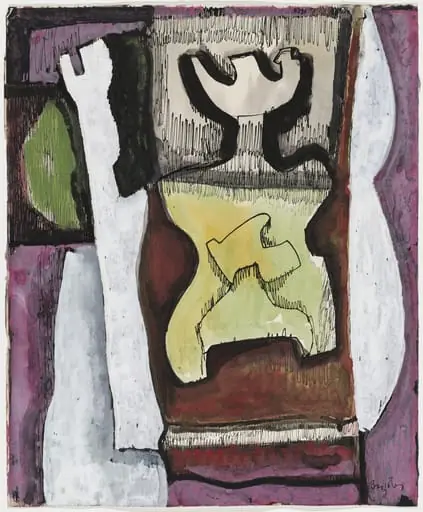
After Xhorkum is an oil painting by the Abstract Expressionist artist Arshile Gorky. It dates from 1941 and is held in the collection of the Art Institute of Chicago.
About this work
Overview
Created in 1941, After Xhorkum is an abstract oil painting by Arshile Gorky. It resides in the collection of the Art Institute of Chicago. The work presents a dynamic composition of interlocking forms, blending geometric and organic elements. Its energetic surface suggests movement and unresolved tension, characteristic of Gorky’s transitional style during this period.
Subject & Meaning
The painting does not depict a recognizable scene but evokes emotional and psychological states through abstraction. Its title references a personal memory, possibly tied to Gorky’s Armenian heritage or childhood. The arrangement of forms suggests internal conflict or memory fragments, conveying a sense of longing and dislocation without literal narrative.
Technique & Style
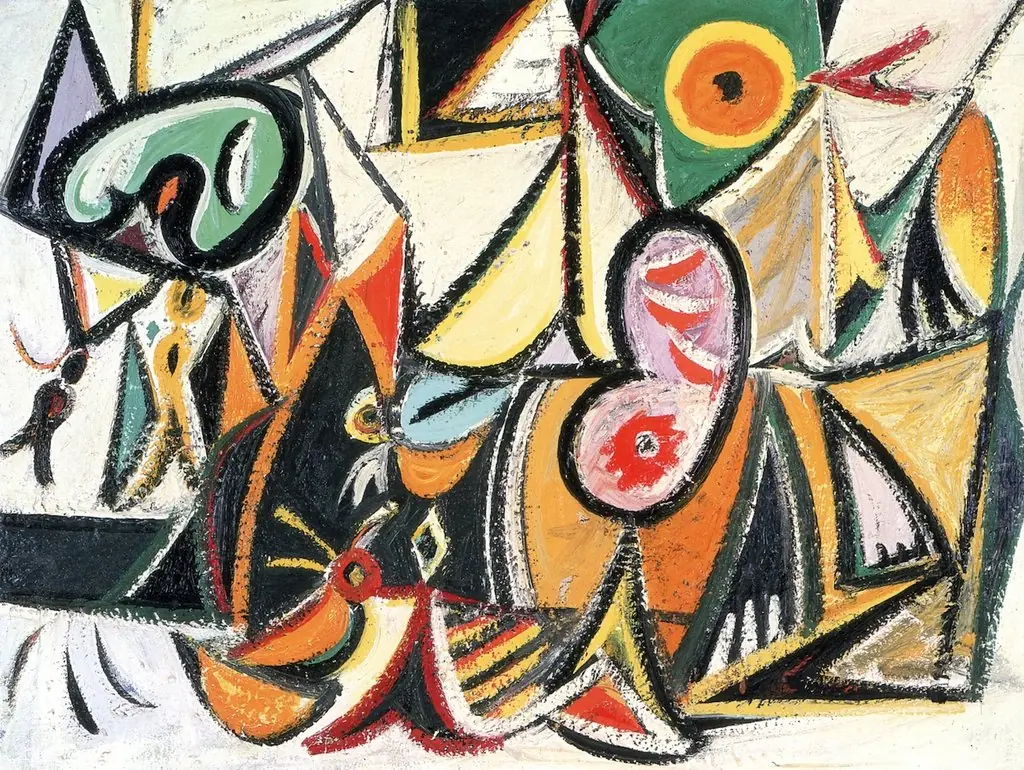
Gorky applied oil paint with vigorous, layered brushwork, creating texture and rhythm across the canvas. Dominant hues of brown, yellow, and blue are punctuated by accents of red, purple, and white. The interplay of sharp angles and fluid curves generates visual tension, while the thick impasto and uneven edges enhance the painting’s sense of urgency and spontaneity.
History & Provenance
Painted in 1941, the work entered the Art Institute of Chicago’s collection shortly after its creation. It reflects Gorky’s shift from Surrealist influences toward a more personal abstraction, preceding his mature style of the late 1940s. The painting has remained in institutional hands since acquisition, with no known private ownership during its early years.
Context
In the early 1940s, Gorky was synthesizing European modernism with emerging American abstraction. Artists like Miró and Picasso influenced his biomorphic forms, yet his work increasingly drew from personal trauma and memory. After Xhorkum emerges from this crossroads, situated between European avant-garde traditions and the nascent Abstract Expressionist movement in New York.
Legacy
The painting exemplifies Gorky’s role as a bridge between Surrealism and Abstract Expressionism. Though less known than his later works, After Xhorkum reveals his evolving language of form and emotion. Its presence in a major American museum underscores its importance in the transition toward gestural abstraction in postwar American art.
Artist & collection

Artist
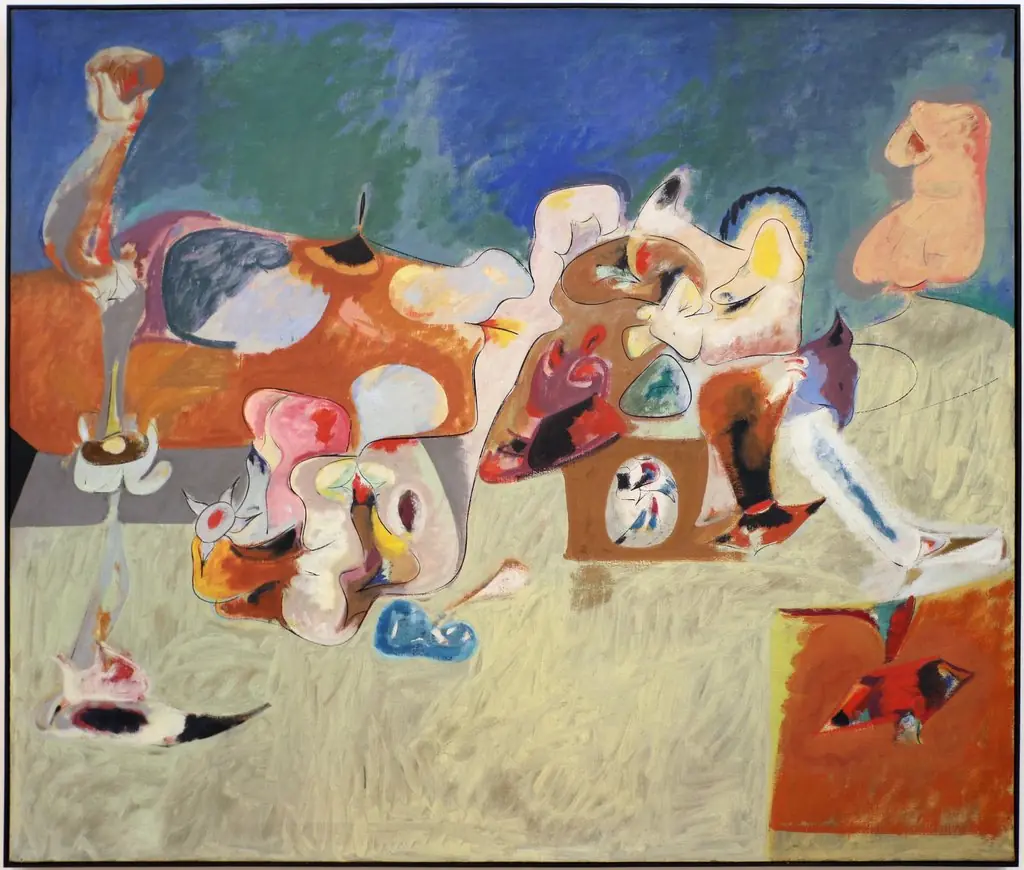
Arshile Gorky was an Armenian-American painter who had a seminal influence on Abstract Expressionism.