Artwork
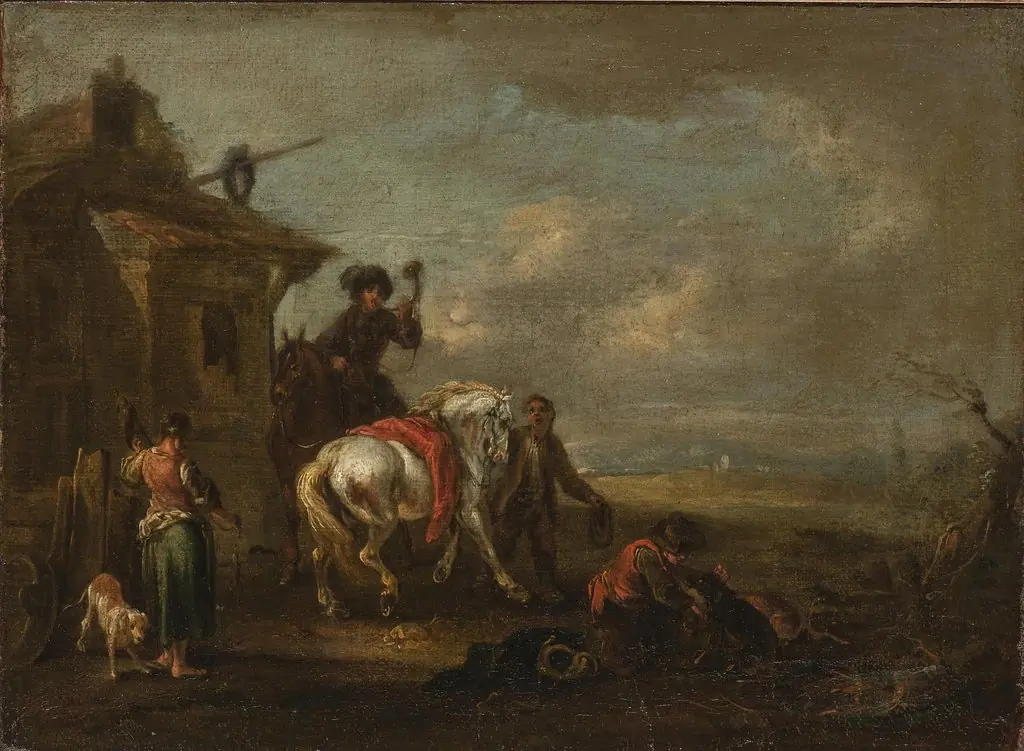
Fahrendes Volk mit Reiter bei der Rast (Nachfolger)
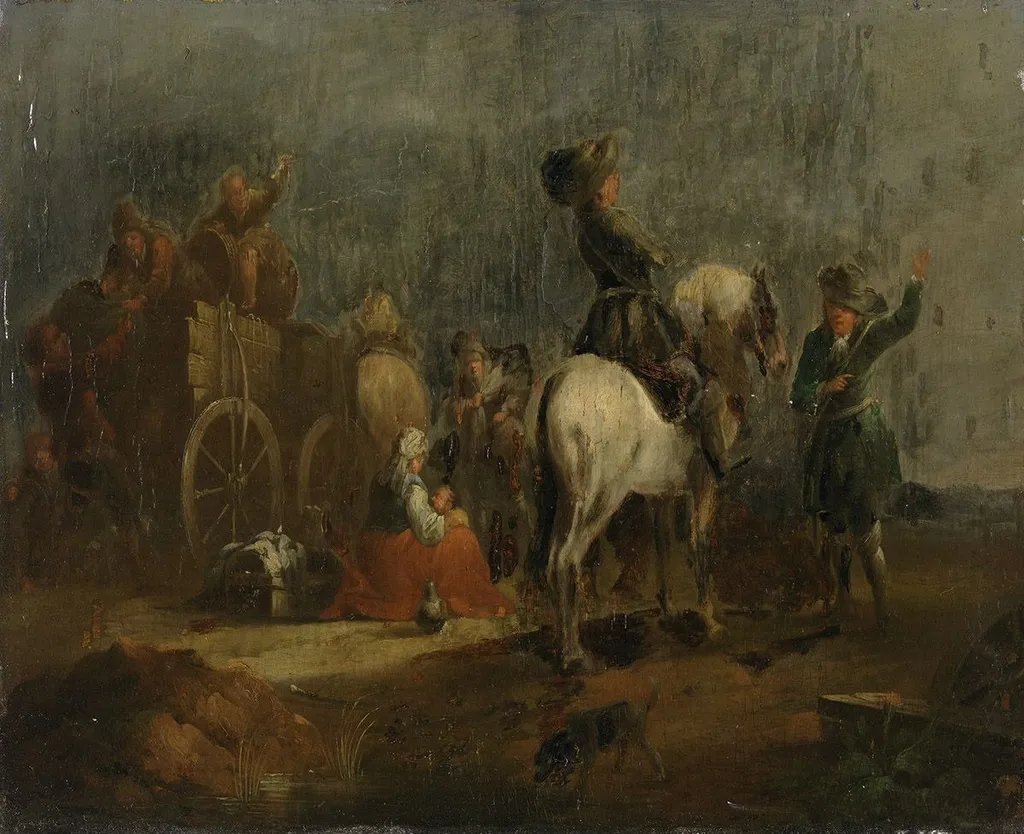
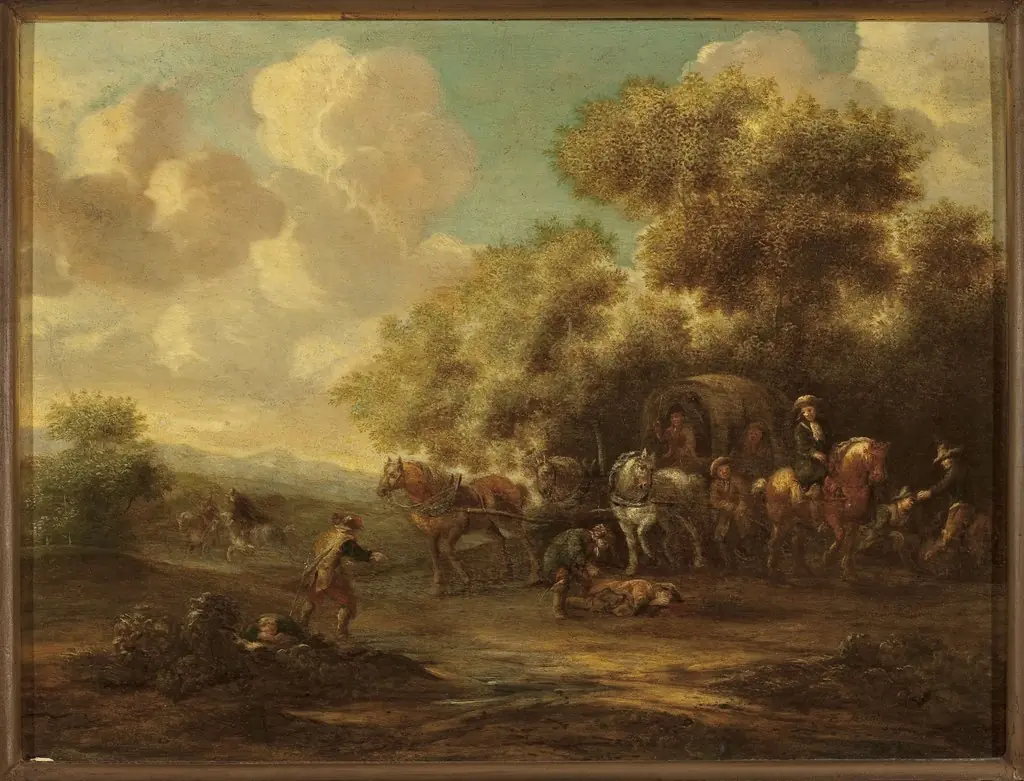
Fahrendes Volk mit Reiter bei der Rast (Nachfolger) is an unspecified painting by the Rococo painting artist August Querfurt. It dates from 1750 and is held in the collection of the Bavarian State Painting Collections. Created circa 1750 by Austrian artist August Querquer, this oil painting captures a bustling roadside tableau.
About this work
Subject & Meaning
The central iconography features a horse and a cart, which serve as the primary indicators of the subjects' nomadic lifestyle and mode of transport.
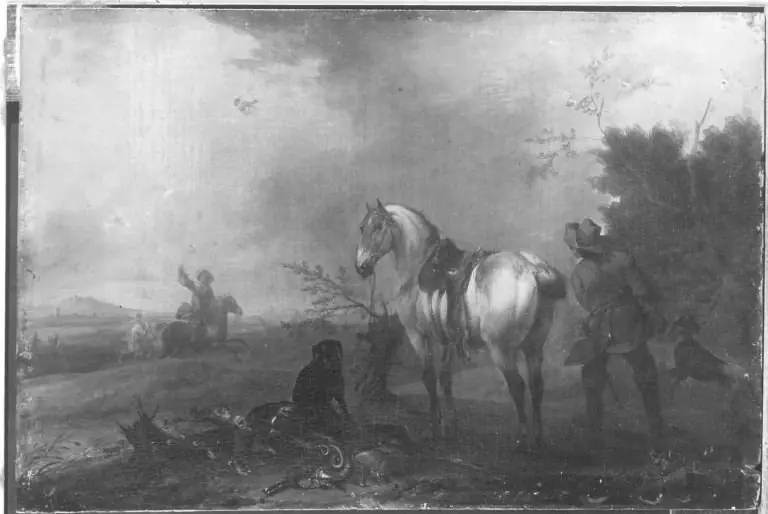
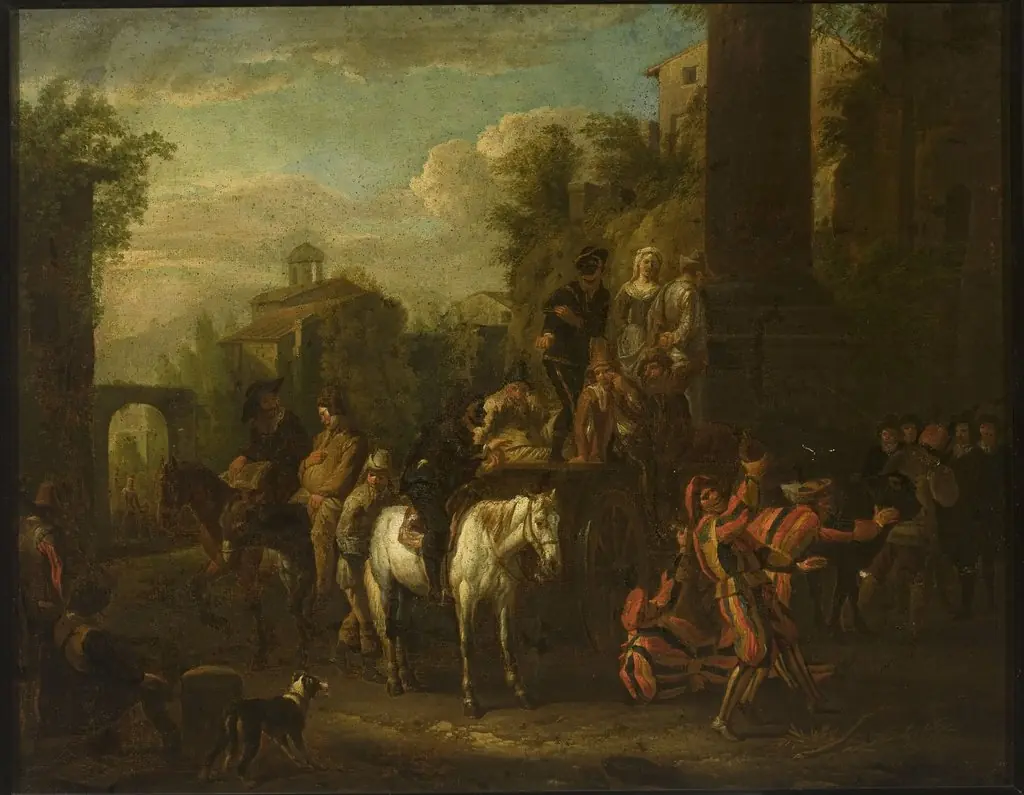
The painting depicts a scene of itinerant people, specifically a traveling group with a rider, paused during a rest. The central iconography features a horse and a cart, which serve as the primary indicators of the subjects' nomadic lifestyle and mode of transport. These elements collectively represent the theme of 'fahrendes Volk,' or traveling folk, capturing a moment of temporary halt in their journey.
The work functions as a genre scene illustrating the daily life and movement of such groups in the mid-18th century.
Technique & Style
The work is an oil painting on canvas executed in 1750, measuring 23.3 cm by 28.4 cm. It depicts a horse pulling a cart with a rider at rest, reflecting the Rococo style characteristic of August Querfurt’s output. The painting belongs to the Bavarian State Painting Collections and is housed in the Alte Pinakothek in Munich.
History & Provenance
The painting was created in 1750 by August Querfurt, depicting a horse and cart. It is part of the Bavarian State Painting Collections and is housed in the Alte Pinakothek. The work measures 23.3 cm by 28.4 cm. Querfurt produced this piece as a successor to an earlier composition, reflecting his ongoing exploration of rural subjects.
Overview
Created circa 1750 by Austrian artist August Querquer, this oil painting captures a bustling roadside tableau. Central to the composition is a woman astride a white horse, her orange attire contrasting with the darker surrounding palette. Around her, figures engage in various activities near a large, wheel‑laden cart, suggesting a moment of pause during travel.
Artist & collection
Artist
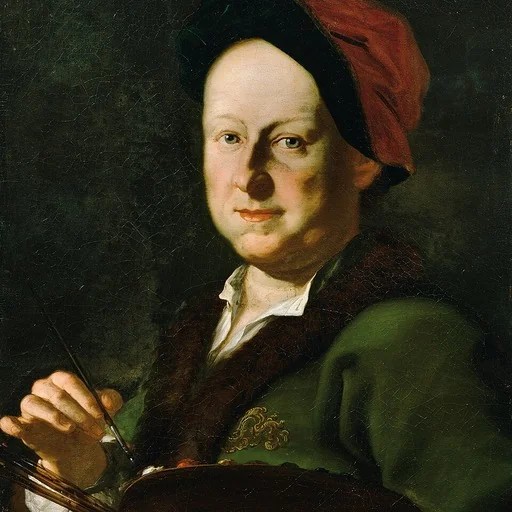
August Querfurt (1696, Wolfenbüttel – 1761, Vienna) was an Austrian painter. He painted primarily soldiers and battle scenes. He was first instructed by his father, Tobias Querfurt, a landscape and animal painter, and…

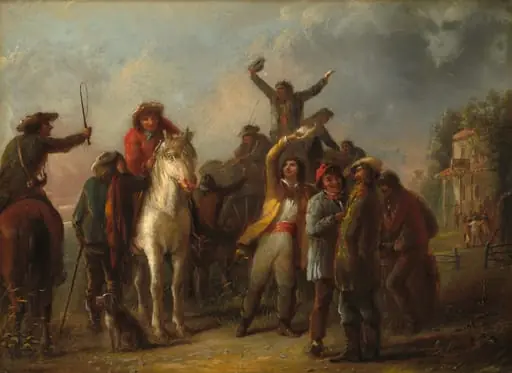
- Election Scene, Catonsville, Baltimore County
 Jugglers passing – Carnival
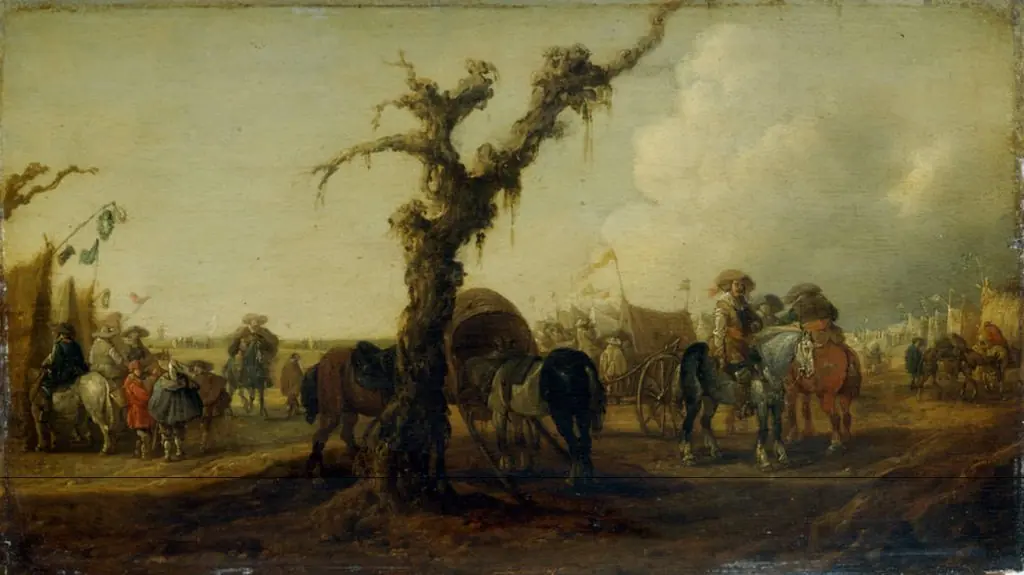 Military camp
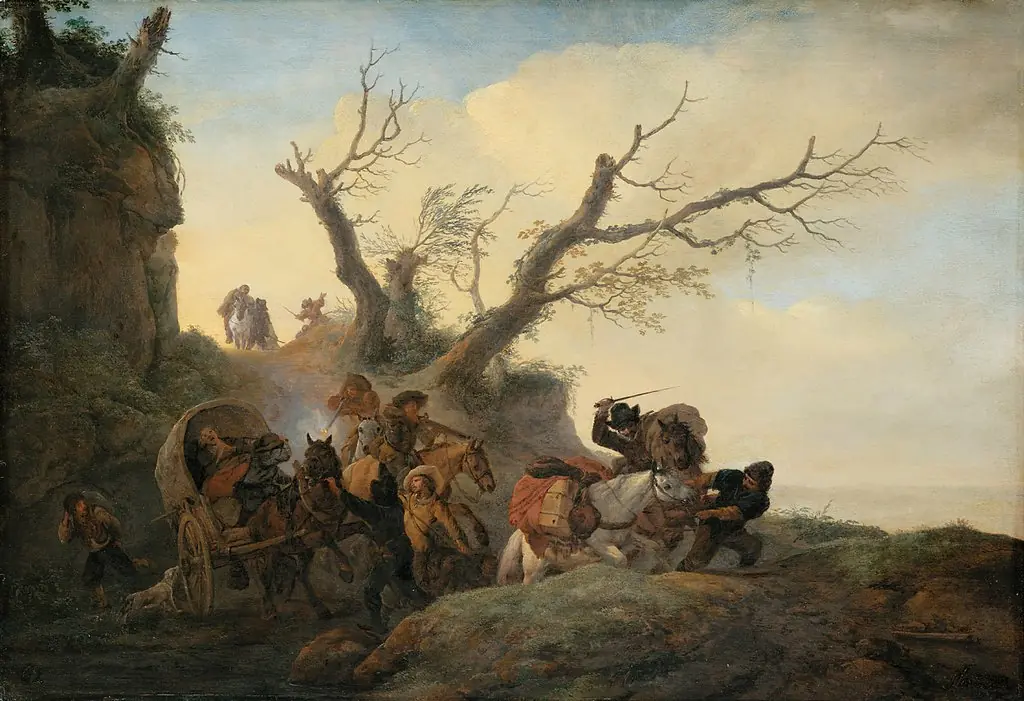 Robbers attacking Travellers
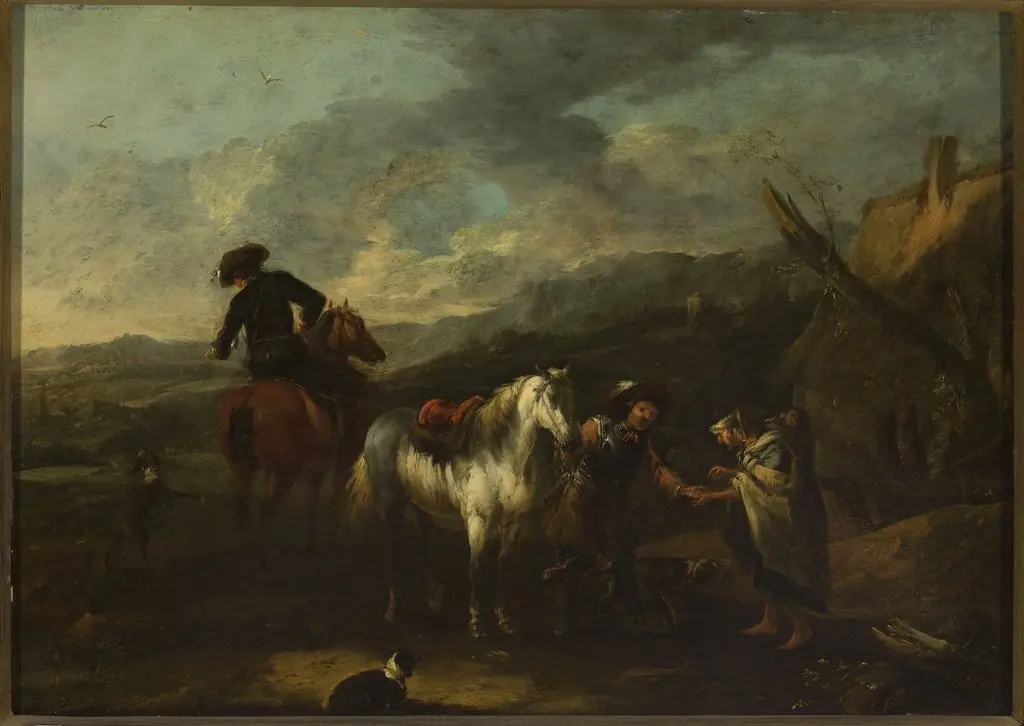 Horsemen and a beggar woman against landscape
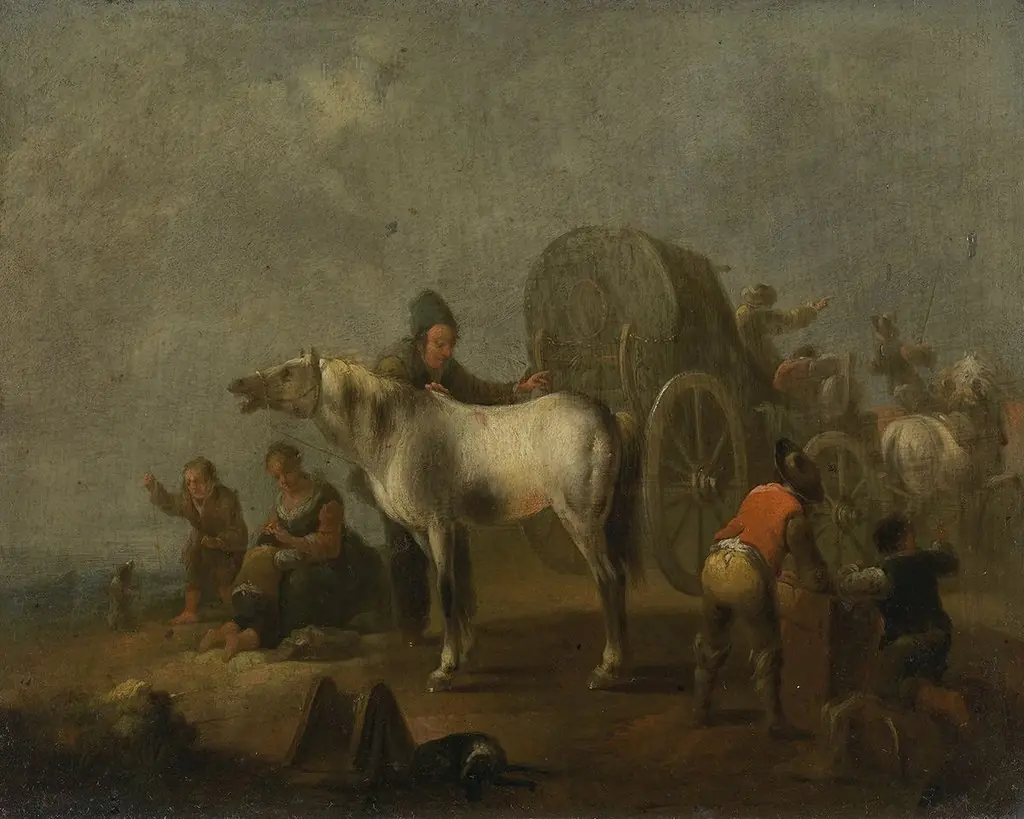 Fahrendes Volk beim Aufbruch (Nachfolger)
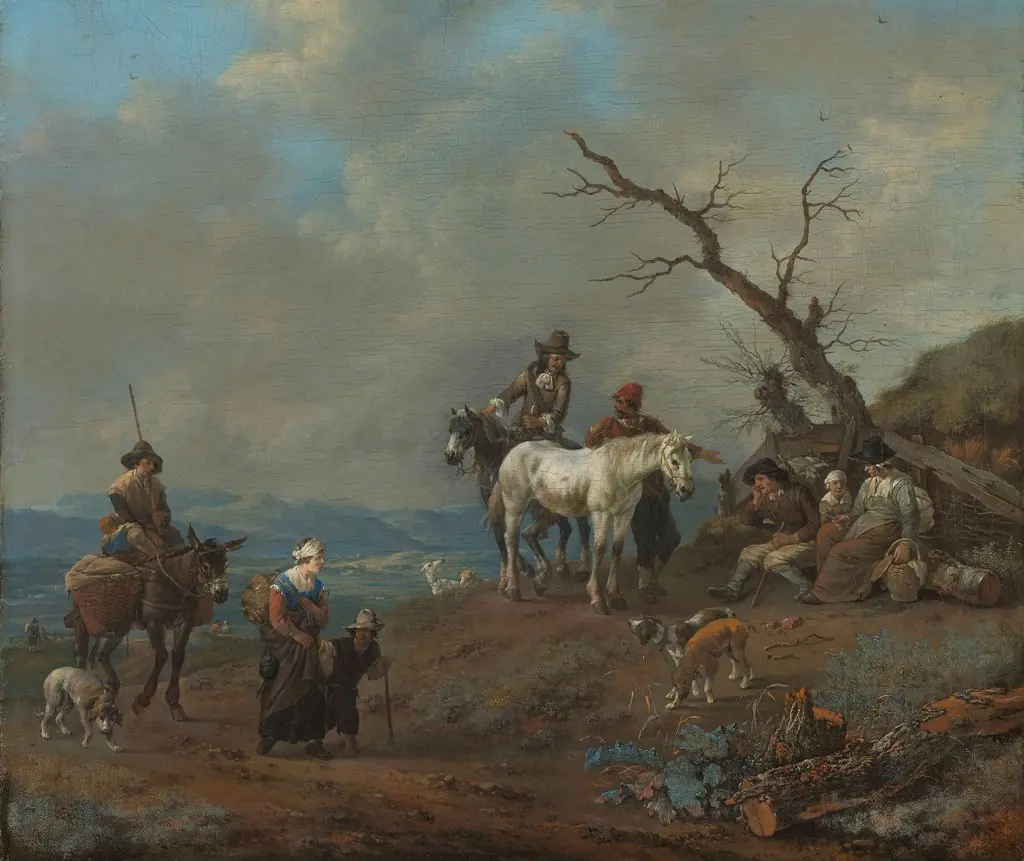 Country road with hunter and peasants
 Hunters by a Tavern
 Country Road with Hunter and Peasants
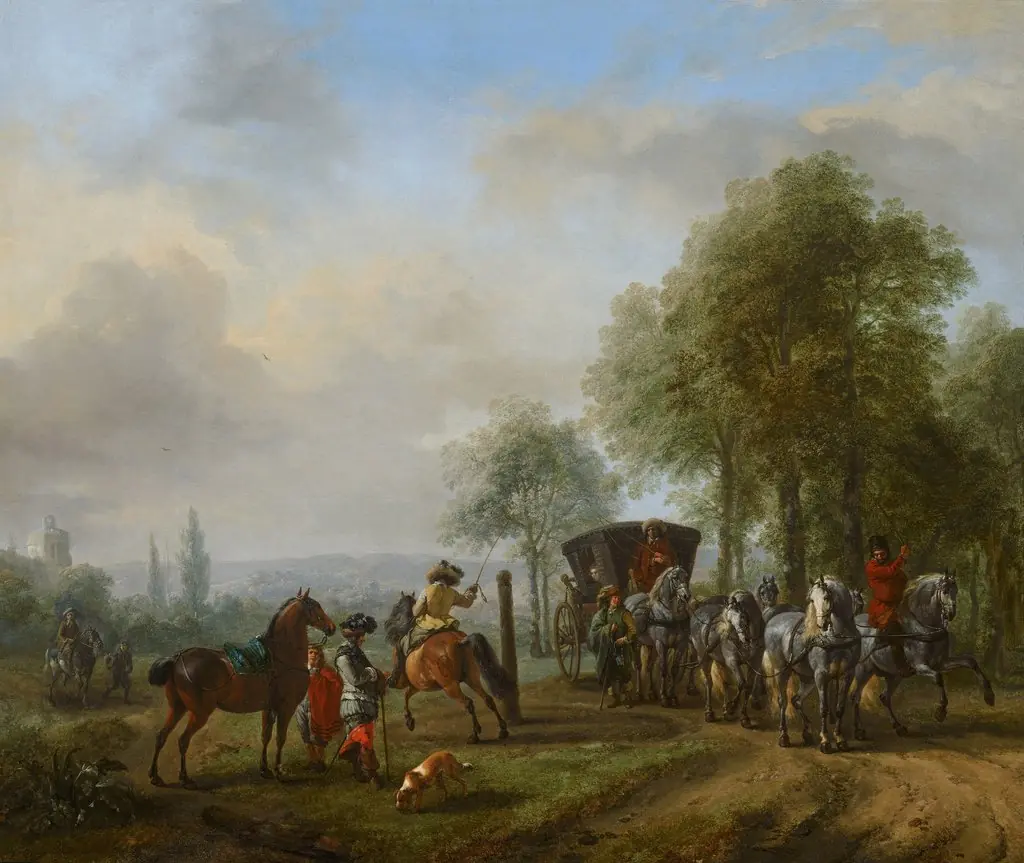 The Driving School
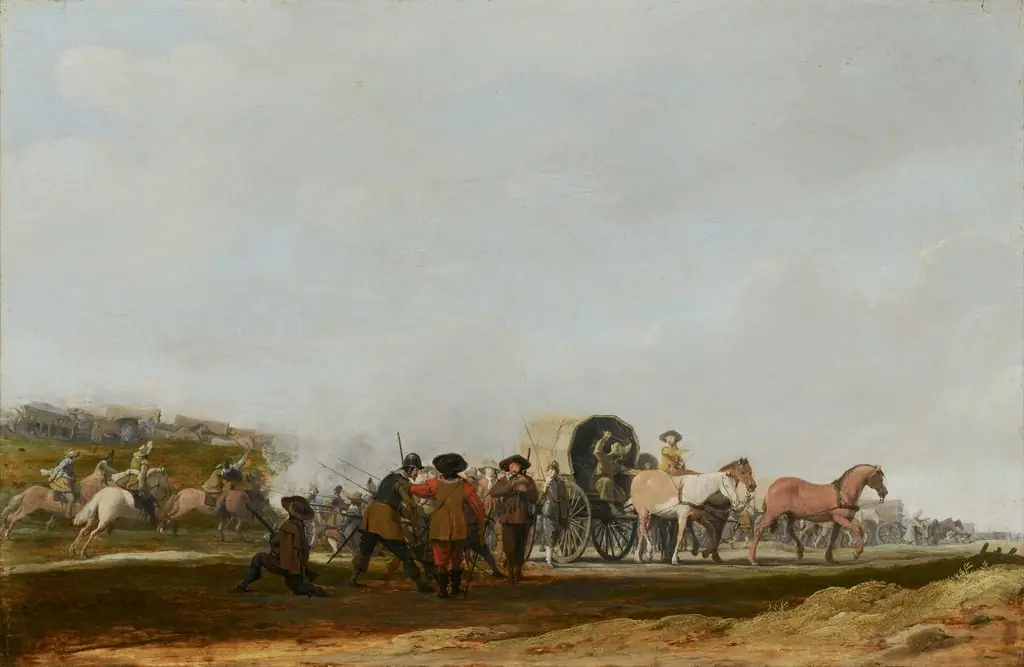 Ambushing an Army Convoy
 Assault on travellers