Artwork
Frontispiece: Le long de la Seine et des Boulevards
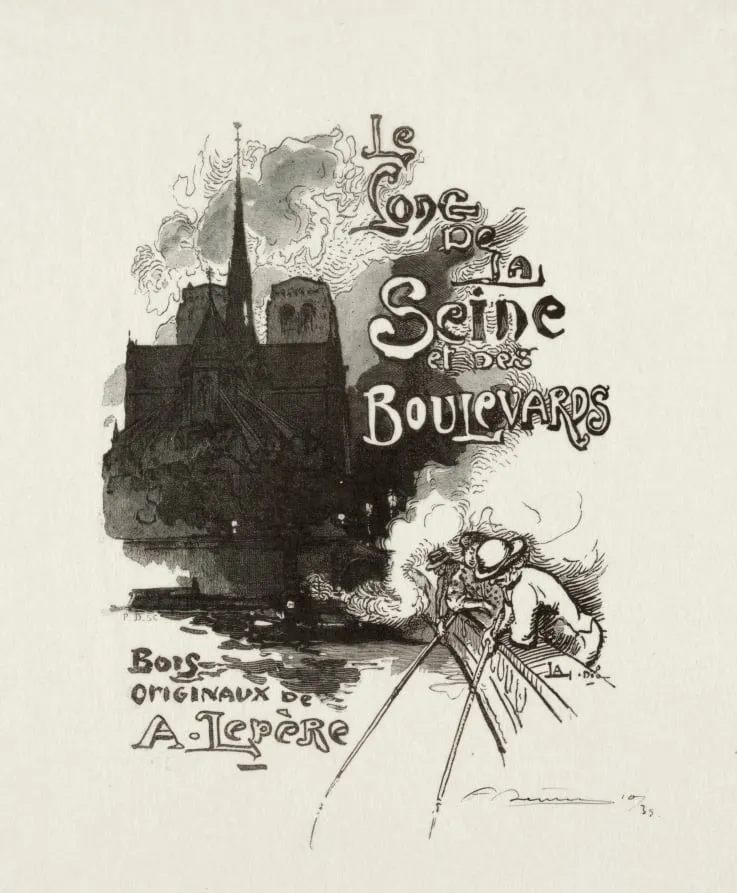
Frontispiece: Le long de la Seine et des Boulevards is a print by the Impressionist artist Auguste Louis Lepère. It dates from 1894 and is held in the collection of the Cleveland Museum of Art.
- Accession no.
- 1921.1346
- Credit line
- Gift of Leonard C. Hanna Jr.
About this work
Overview
The print is part of the collection at The Cleveland Museum of Art and exemplifies his technical precision and commitment to the craft of relief printing.
Created in 1894 by French artist Auguste Louis Lepère, this wood engraving serves as a frontispiece titled Le long de la Seine et des Boulevards. Lepère was instrumental in the late 19th-century revival of wood engraving as a fine art medium in Europe. The print is part of the collection at The Cleveland Museum of Art and exemplifies his technical precision and commitment to the craft of relief printing.
Subject & Meaning
The scene depicts a solitary figure in formal attire leaning on a railing beside the Seine, gazing toward the river and a distant structure with a prominent spire. Smoke or atmospheric haze softens the background, suggesting urban air quality or early morning conditions. The title, elegantly lettered beside the figure, anchors the image to a specific urban experience, walking along the river and boulevards, evoking quiet contemplation amid the modern city.
Technique & Style
Executed in black-and-white wood engraving, the work relies on fine, controlled lines to render texture and depth. Lepère’s meticulous carving captures the play of light and shadow on water, fabric, and architecture, using contrast to define form without color. The intricate detailing in the railing, clothing, and building façade reflects his mastery of the medium, aligning with the precision valued in 19th-century reproductive printmaking.
History & Provenance
The print was produced during a period when Lepère was actively promoting wood engraving as a legitimate artistic form, distinct from commercial illustration. It entered the collection of The Cleveland Museum of Art in the 20th century, likely through acquisition of European prints from the post-Impressionist era. Its preservation reflects institutional interest in the technical evolution of printmaking in France.
Context
Lepère worked amid a cultural moment when artists sought to elevate printmaking beyond reproduction. His focus on urban landscapes aligned with broader interests in modern life, paralleling the work of contemporaries like Degas and Toulouse-Lautrec. The Seine and its boulevards were recurring motifs in Parisian art, symbolizing both leisure and the transformation of the city under Haussmann’s renovations.
Legacy
Lepère’s dedication to wood engraving helped reestablish it as a vehicle for artistic expression in Europe. While less widely known than his painterly peers, his technical innovations influenced later printmakers who valued handcrafted detail over mechanical reproduction. This print remains a representative example of his contribution to the revival of traditional methods in a rapidly industrializing art world.
Artist & collection

Artist
Louis-Auguste Lepère (30 November 1849 – 20 November 1918) was a French painter and etcher. Lepère is also considered a leader in the creative revival of wood engraving in Europe.

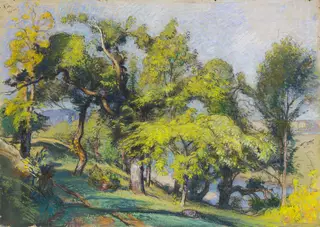
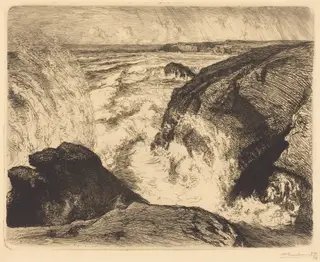
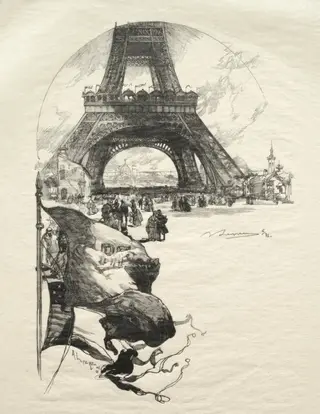
- La Tour Eiffel
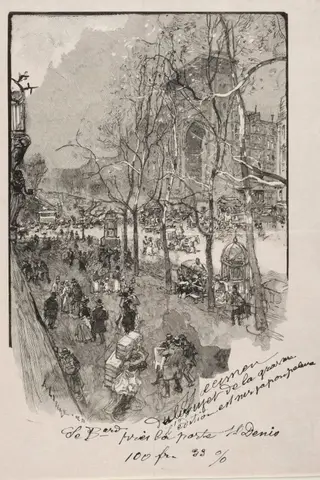 Les Boulevards, près de la Porte St. Denis
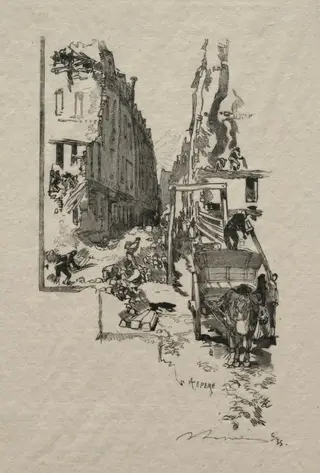 La Rue Victor Cousin
 Untitled
 Untitled
 Notre Dame, le Soir
 "Une de ces mines pudibones"
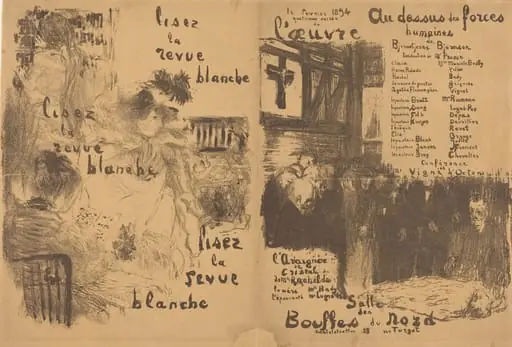 Au dessus des forces humaines; L'Araignée de cristal
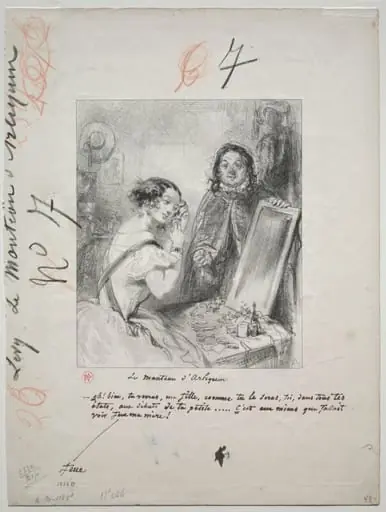 Le Manteau d'Arlequin: Eh bien ! Tu verra, ma fille...
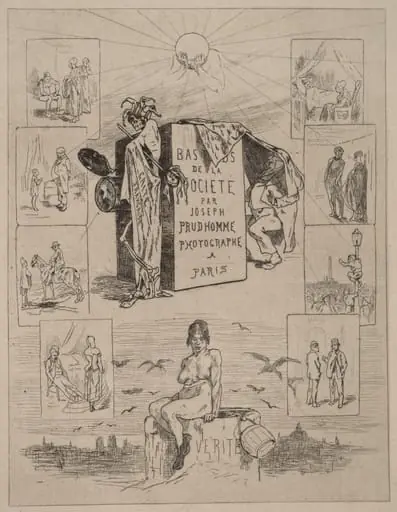 Frontispiece: The Dregs of Society (Las bas-fonds de la societe)
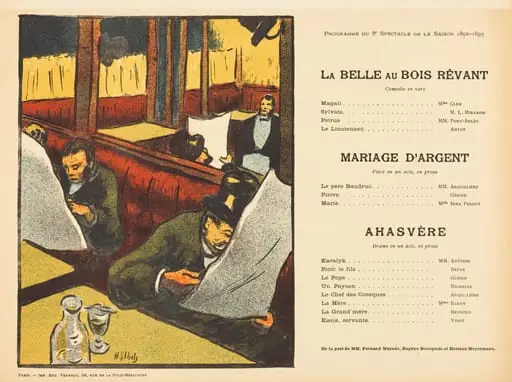 La Belle au bois rêvant; Mariage d'argent; Ahasvère
 Rue Saint-Lazare, Paris