Artwork
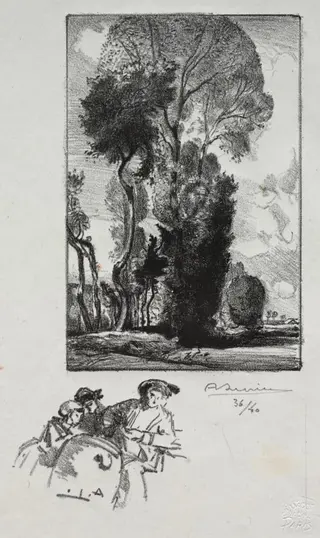
Le Bocage
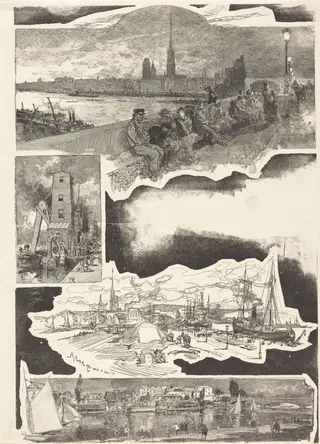
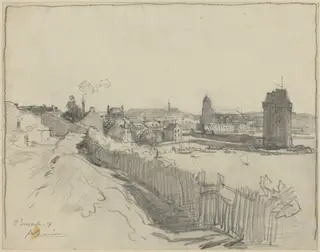
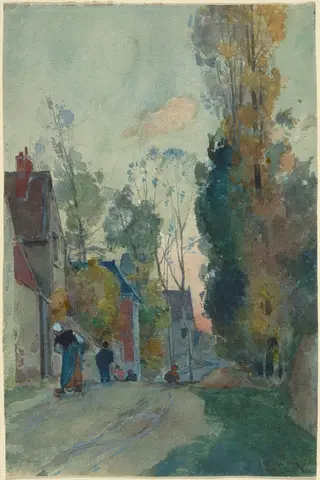
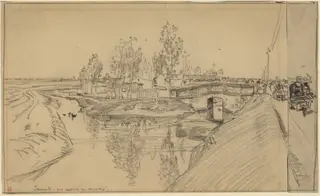
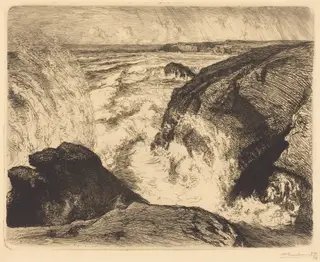
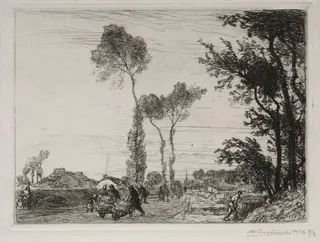
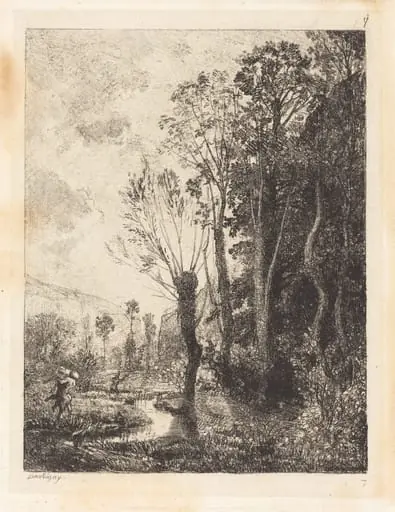
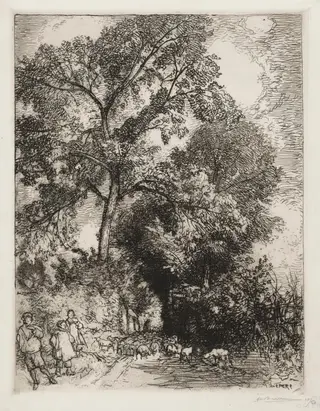
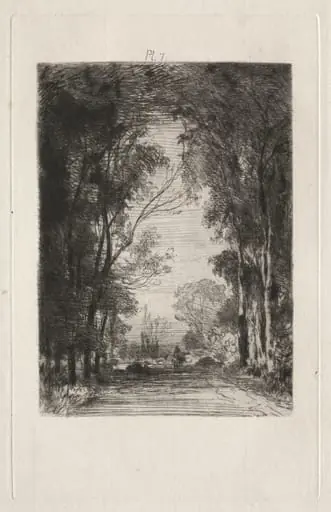
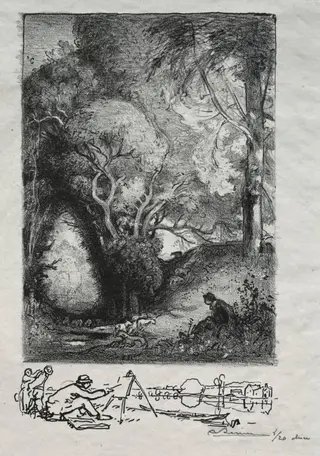
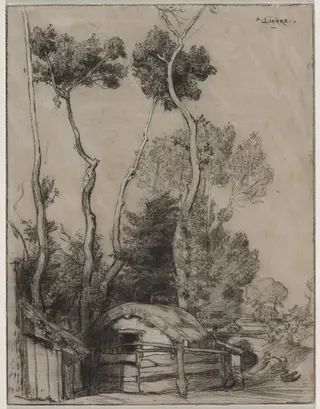
Le Bocage is a print by the Impressionist artist Auguste Louis Lepère. It dates from 1894 and is held in the collection of the Cleveland Museum of Art.
- Accession no.
- 1920.609
- Credit line
- Gift of Ralph King
About this work
Overview
As a key figure in the late 19th-century revival of wood engraving and etching in France, Lepère brought technical precision to landscape printmaking.
Auguste Louis Lepère’s 1894 etching Le Bocage is a quiet rural scene rendered in fine linear detail. As a key figure in the late 19th-century revival of wood engraving and etching in France, Lepère brought technical precision to landscape printmaking. This work exemplifies his shift from painting to graphic media, emphasizing atmosphere over narrative.
The composition captures a moment of stillness, grounded in the textures of nature and the subtlety of ink on paper.
Subject & Meaning
The scene portrays a solitary, gnarled tree beside a slow-moving river, with three figures seated in a small boat. One rower holds an oar, while the others rest, their posture suggesting pause rather than travel. The figures are minor elements within the landscape, emphasizing harmony between human presence and the natural world.
The absence of architectural or urban markers reinforces a sense of isolation and tranquility, evoking rural life without sentimentality.
Technique & Style
Lepère employed etching to achieve fine gradations of tone, using dense hatching and crosshatching to model shadow. The tree and sky are rendered in deep, overlapping lines, while the boat and water reflect lighter, more open strokes. This contrast creates a chiaroscuro effect, drawing attention to the boat as a focal point.
The technique avoids bold outlines, allowing forms to emerge through light and texture, characteristic of Lepère’s refined approach to printmaking.
History & Provenance
Created in 1894, Le Bocage belongs to a series of landscapes Lepère produced during his mature period, when he increasingly focused on printmaking over painting. The work was likely made for private collectors and art societies interested in the revival of handcrafted prints. While its early ownership is undocumented, it entered institutional collections in the 20th century, recognized for its technical mastery and contribution to the French graphic arts revival.
Context
In the 1890s, French artists sought to elevate printmaking beyond reproductive roles, embracing it as an expressive medium. Lepère was part of this movement, influenced by Japanese woodcuts and the English etching revival. Le Bocage reflects a broader cultural interest in rural life as a counterpoint to industrialization.
Its quiet composition aligns with contemporaneous works by artists like Whistler and Daubigny, who valued mood and atmosphere in landscape.
Legacy
Lepère’s Le Bocage remains a representative example of late 19th-century French etching, admired for its restraint and technical discipline. It contributed to the recognition of printmaking as a legitimate fine art form in France. Though not widely exhibited today, the work is held in major museum collections, where it continues to inform studies of printmaking’s evolution and the aesthetic values of naturalism in graphic art.
Artist & collection

Artist
Louis-Auguste Lepère (30 November 1849 – 20 November 1918) was a French painter and etcher. Lepère is also considered a leader in the creative revival of wood engraving in Europe.