Artwork
Iarna – Peisaj
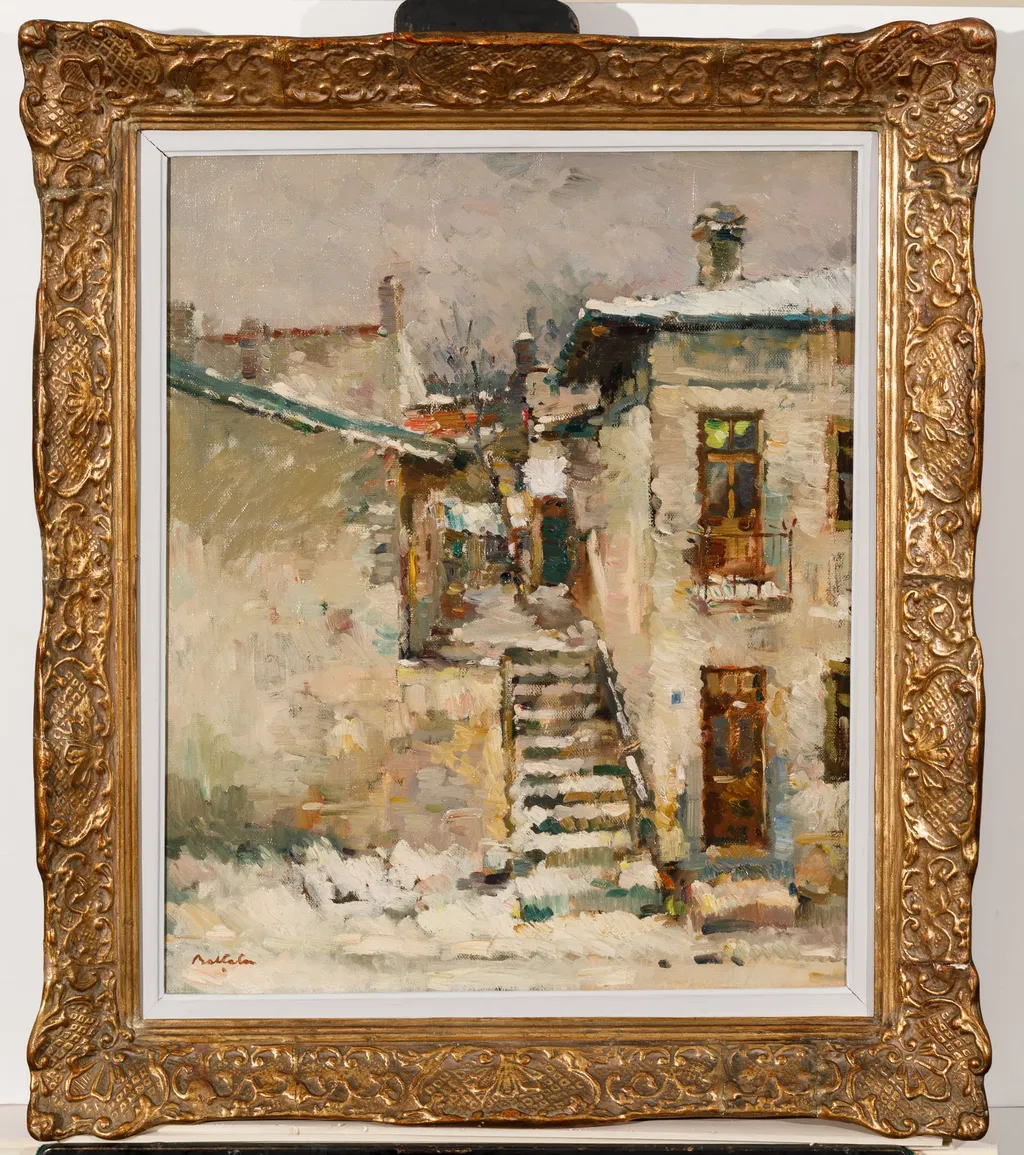
Iarna – Peisaj is an unspecified painting by Adam Bălțatu. It dates from 1940 and is held in the collection of the National Museum of Art of Romania.
About this work
Overview
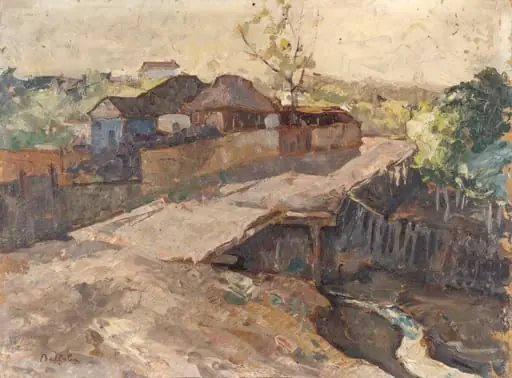
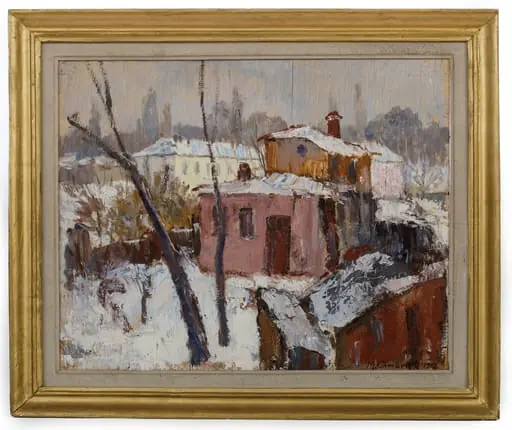
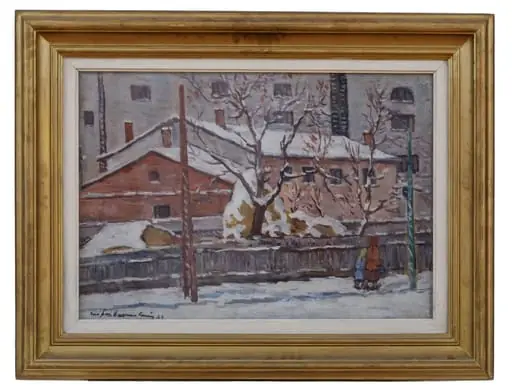
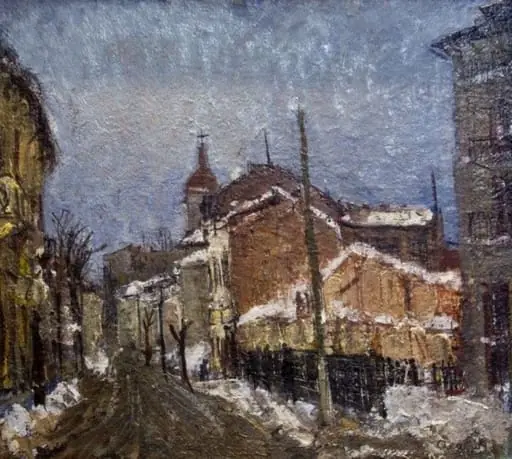
Painted in 1940 by Adam Bălțatu, Iarna – Peisaj captures a quiet winter street in Romania. The scene centers on a flight of stone steps leading to a modest dwelling, its wooden door and curtained window suggesting quiet domestic life. The sky and snow are rendered in muted tones, while the brushwork remains deliberately physical, emphasizing texture over detail.
Subject & Meaning
The painting presents an unadorned winter landscape, avoiding narrative or symbolism. The stairs and house imply human presence without showing figures, evoking stillness and solitude. The absence of movement or activity invites contemplation of routine, seasonal rhythm, and the quiet endurance of everyday architecture in cold weather.
Technique & Style
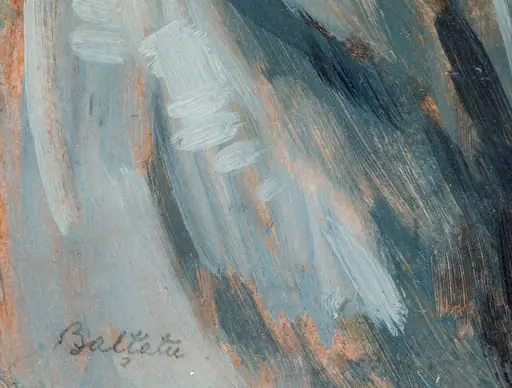
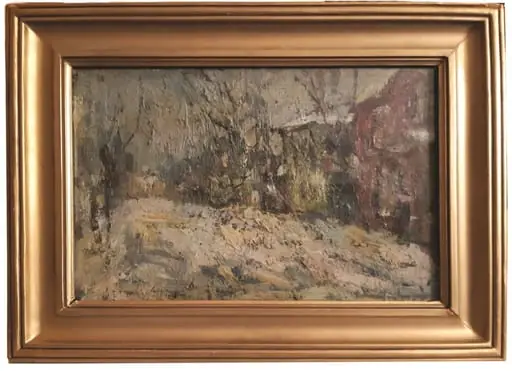
Bălțatu applied paint thickly, using visible, chunky strokes to build form in the stairs and walls. Colors, green, brown, and white, are not blended smoothly but placed in distinct masses, creating a tactile surface. This impasto approach emphasizes materiality and the physical act of painting, aligning with early 20th-century expressive traditions.
History & Provenance
Created during a period of cultural consolidation in interwar Romania, the work reflects local artistic interests in rural and urban vernacular scenes. While specific ownership history is not widely documented, it remains part of Romanian modernist collections, often cited in studies of regional landscape painting from the 1930s–40s.
Context
In the late 1930s and early 1940s, Romanian artists increasingly turned to domestic subjects, moving away from academic idealism. Bălțatu’s focus on ordinary architecture and seasonal change aligns with this shift, echoing broader European trends that valued emotional resonance over polished realism.
Legacy
Iarna – Peisaj contributes to the recognition of Romanian modernism’s engagement with everyday life through expressive technique. Though not widely exhibited internationally, it remains a reference point in national art histories for its honest depiction of winter and its bold, unrefined handling of paint.
Artist & collection