Artwork
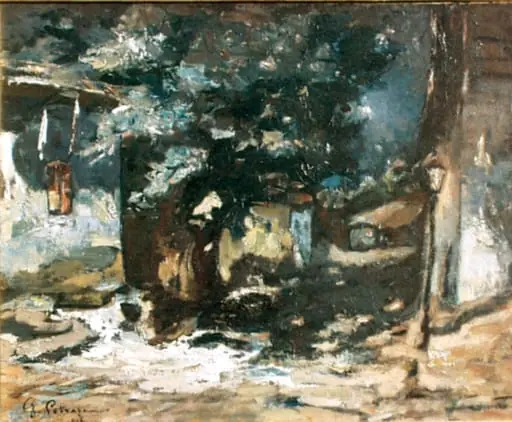
Intrare la mănăstire
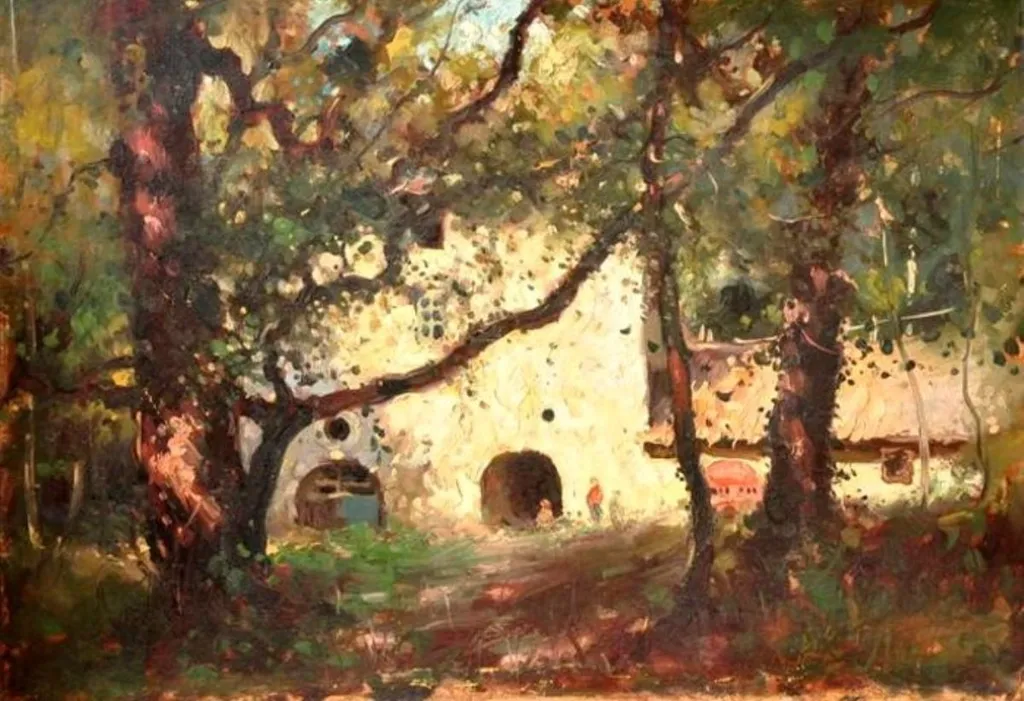
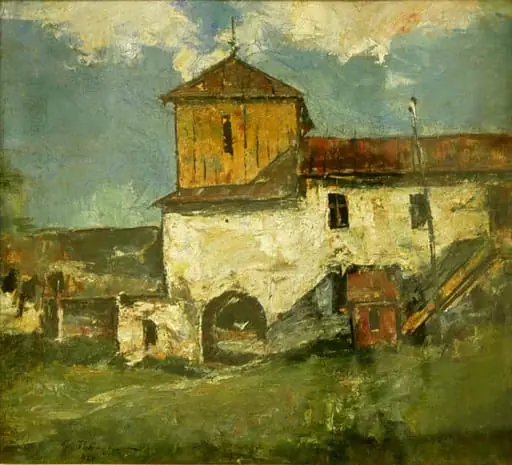
Intrare la mănăstire is an unspecified painting by the Romanesque artist Adam Bălțatu. It dates from 1920 and is held in the collection of the Botoșani County Museum.
About this work
Overview
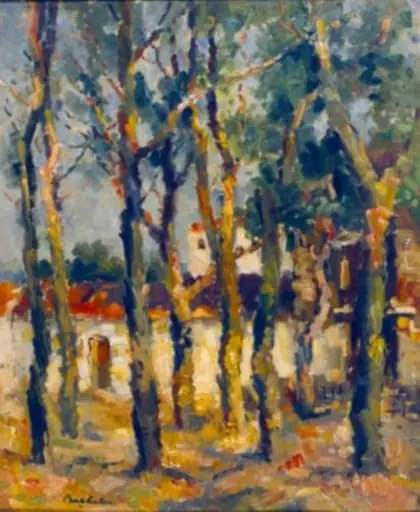
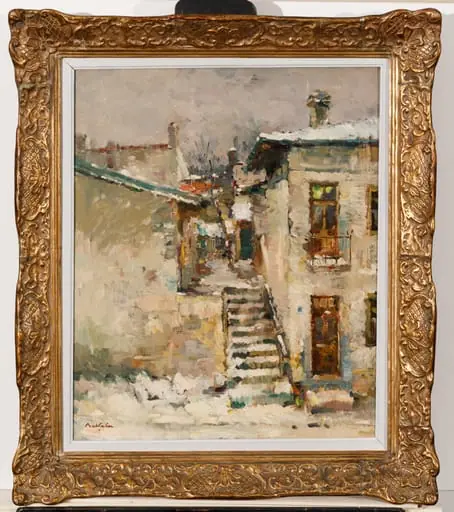
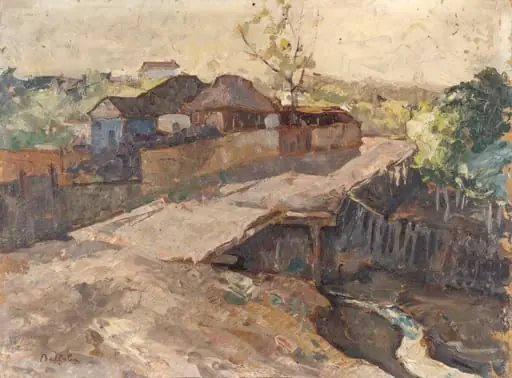
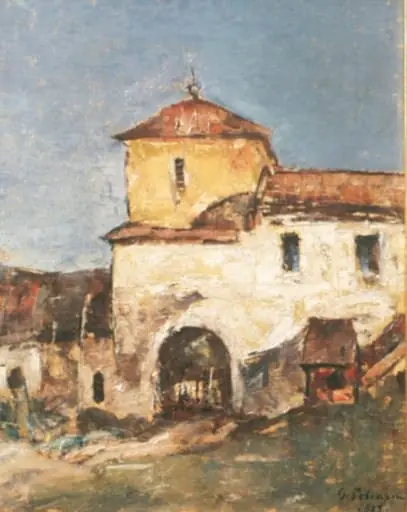
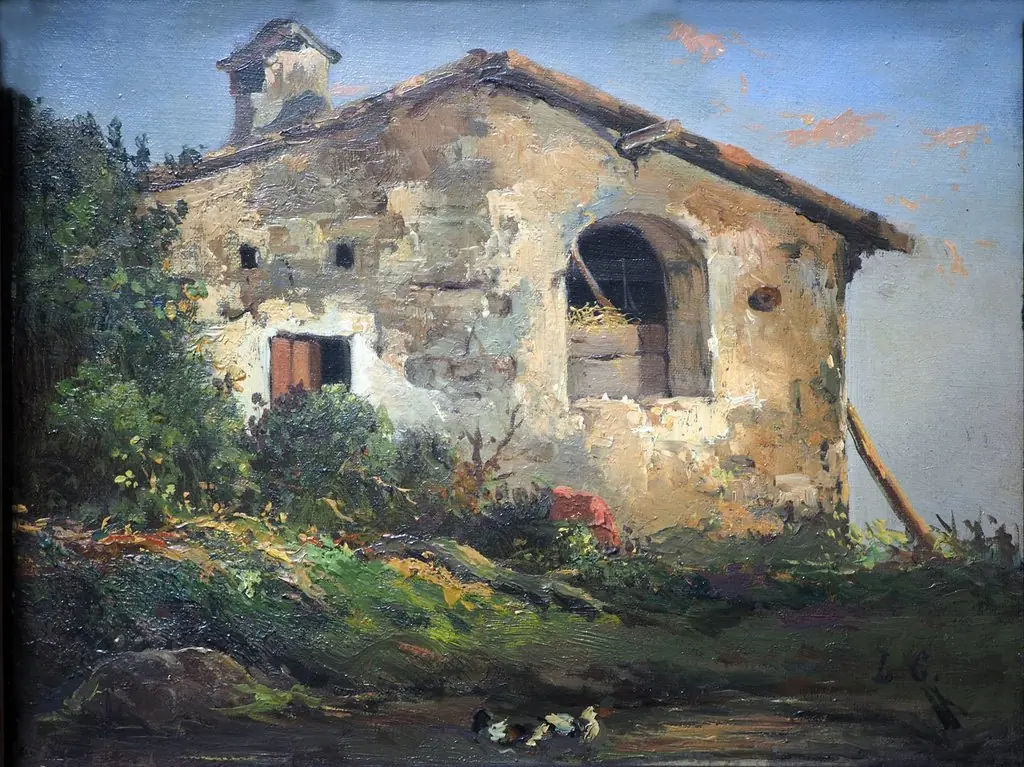
“Intrare la mănăstire,” painted by Adam Bălțatu in 1920, is part of the collection of the Museum of Ethnography. The canvas depicts a deteriorating stone structure partially concealed by foliage, its weathered walls punctuated by two dark openings. Sunlight streams through the surrounding trees, creating a contrast of illuminated patches and deep shadows across the scene.
Subject & Meaning
The composition presents an abandoned monastic entrance, suggesting themes of decay and the passage of time. The interplay of light and shadow emphasizes the building’s neglect, while the surrounding vegetation hints at nature’s gradual reclamation of human-made spaces, inviting reflection on the transience of religious institutions.
Technique & Style
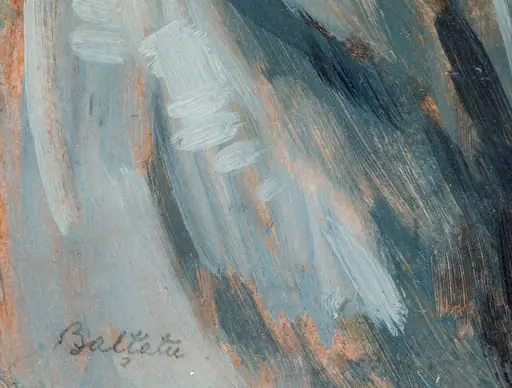
Bălțatu employs a pronounced impasto technique, applying thick, textured brushstrokes that give the surface a palpable relief. The palette relies on stark chiaroscuro, with dark tones defining the doorways and lighter hues highlighting sun‑dappled areas, enhancing the three‑dimensional quality of the stone and foliage.
History & Provenance
Created in the early post‑World War I period, the work entered the Museum of Ethnography’s holdings sometime after its completion, though exact acquisition details remain undocumented. Its presence in the museum aligns with the institution’s focus on cultural artifacts that illustrate rural and religious life in Romania.
Context
The painting emerges from a broader Romanian artistic movement of the 1920s that sought to document rural landscapes and traditional architecture. Bălțatu’s focus on a monastic ruin reflects contemporary interest in national heritage and the spiritual legacy embedded in the countryside.