Artwork
Frații Penescu
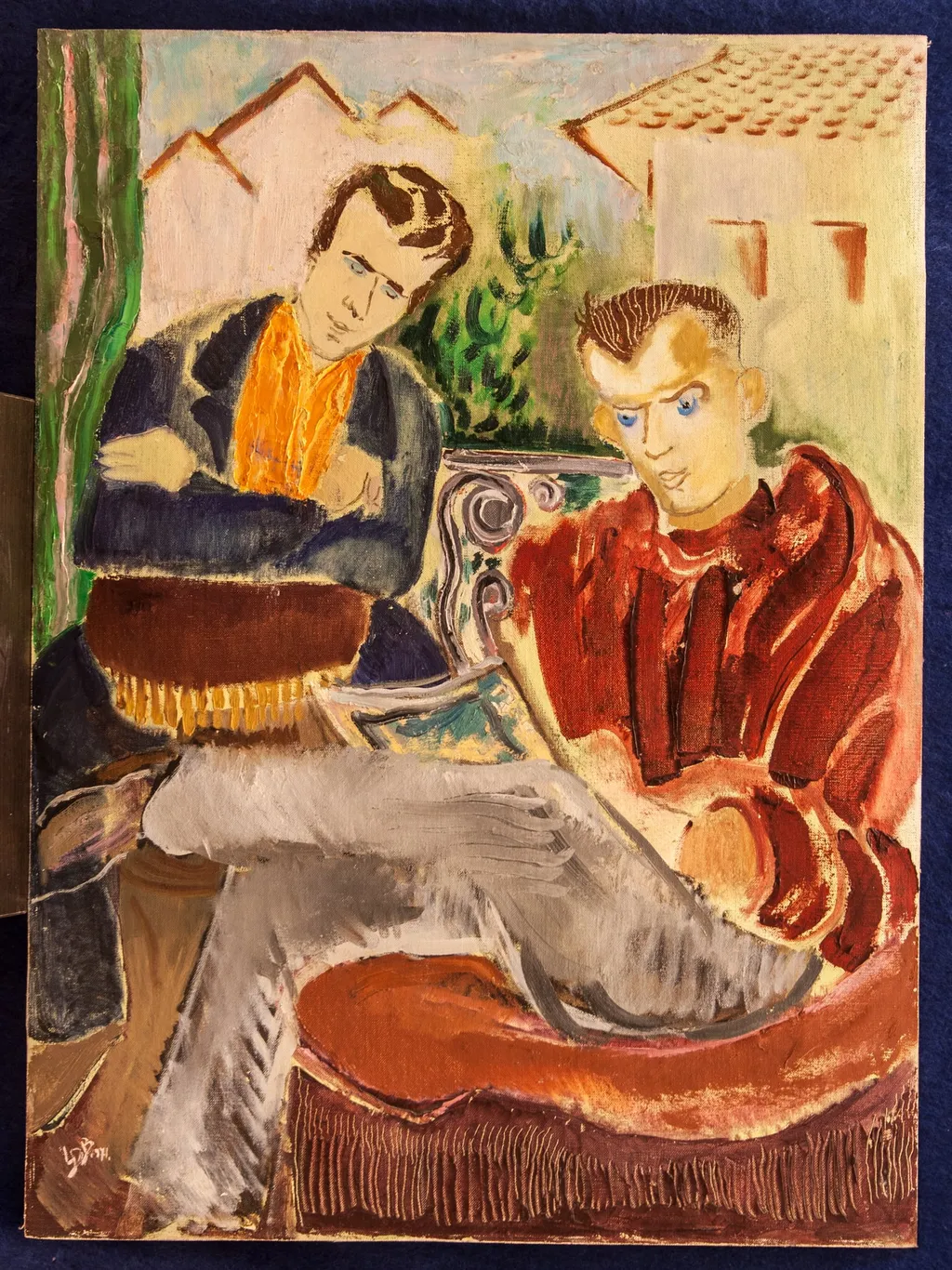
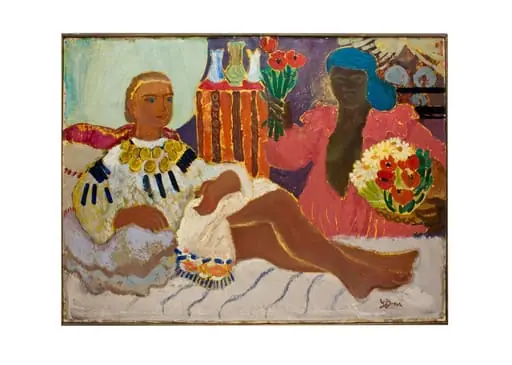
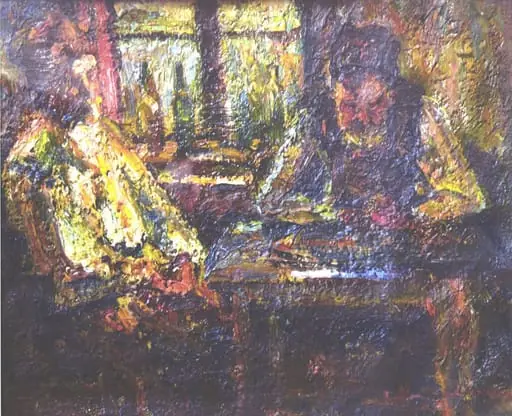
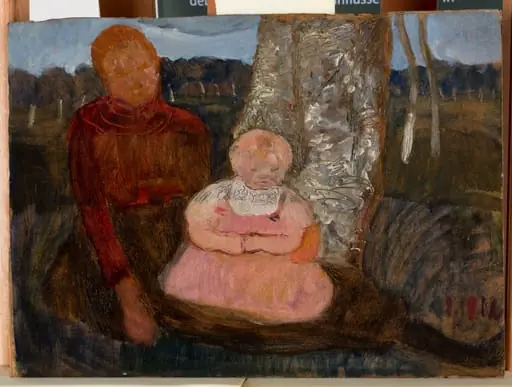
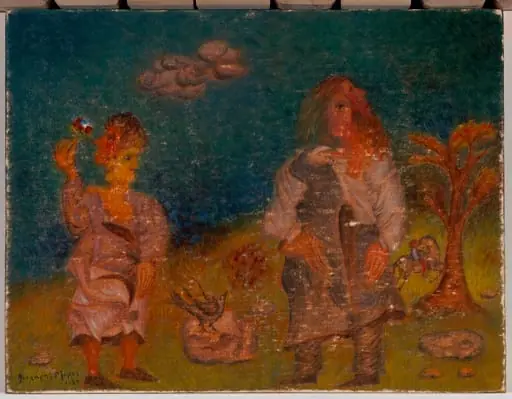
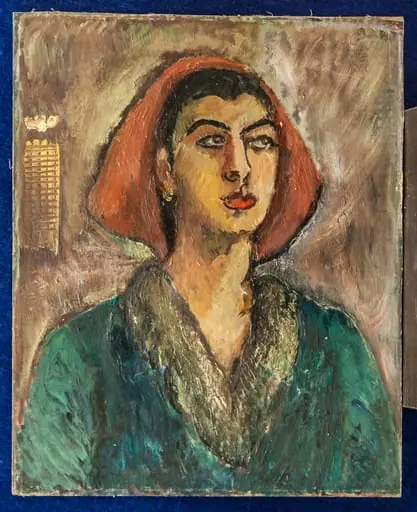
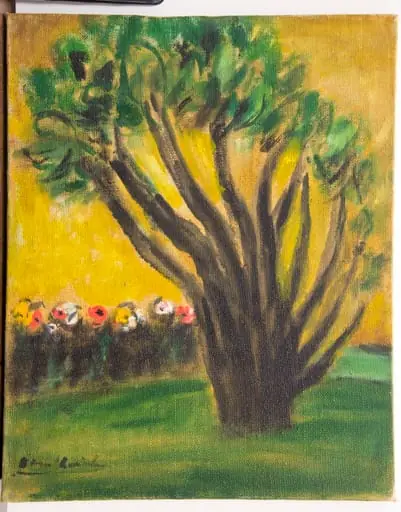
Frații Penescu is a print by Lucia Dem-Bălăcescu. It is held in the collection of the Gavrila Simion Eco-Museum Research Institute Tulcea. This painting depicts two figures seated together on an outdoor bench, engaged in a quiet, unspoken moment.
About this work
Overview
This painting depicts two figures seated together on an outdoor bench, engaged in a quiet, unspoken moment. The scene is set against modest domestic architecture and a single tree, suggesting a rural or suburban setting. The composition is grounded in everyday life, with no dramatic action, yet the physical presence of the subjects and their surroundings conveys a sense of stillness and intimacy.
Subject & Meaning
The two individuals, dressed in contrasting colors, a dark coat with a yellow collar and a red sweater, appear as companions, possibly brothers, sharing a simple moment. The table between them holds a bowl and a bottle, hinting at a shared meal or drink. Their posture and proximity suggest familiarity, but their expressions remain unreadable, leaving the emotional tone open to interpretation.
Technique & Style
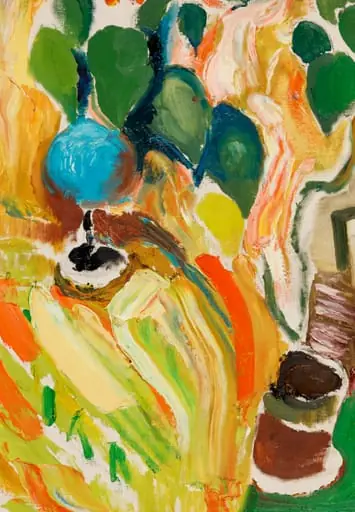
The artist employs impasto, applying paint thickly to create a tactile surface where brushstrokes remain clearly visible. Colors are applied with boldness and minimal blending, preserving their raw intensity. This technique lends the scene a sense of immediacy and physical presence, emphasizing texture over smooth realism and reinforcing the painting’s unpolished, human quality.
History & Provenance
The work is attributed to the Penescu brothers, Romanian artists active in the mid-20th century. It reflects their shared interest in depicting ordinary life with emotional honesty. While specific details of its creation and early ownership are not widely documented, it has remained within private collections in Romania, passed down through family lines.
Context
Created during a period of social and political change in Romania, the painting avoids overt political symbolism. Instead, it focuses on domestic tranquility, aligning with a broader trend among regional artists who turned to intimate, everyday scenes as a form of quiet resistance to state-mandated grandeur in art.
Legacy
The painting is recognized for its unembellished portrayal of human connection and its commitment to material honesty in paint. It stands as an example of how modest subjects, rendered with expressive technique, can carry enduring emotional weight without relying on narrative spectacle or idealization.
Artist & collection
Museum
Gavrila Simion Eco-Museum Research Institute Tulcea
Continue through works from the same source collection.