Artwork
Frescoes from the Villa Stati-Mattei
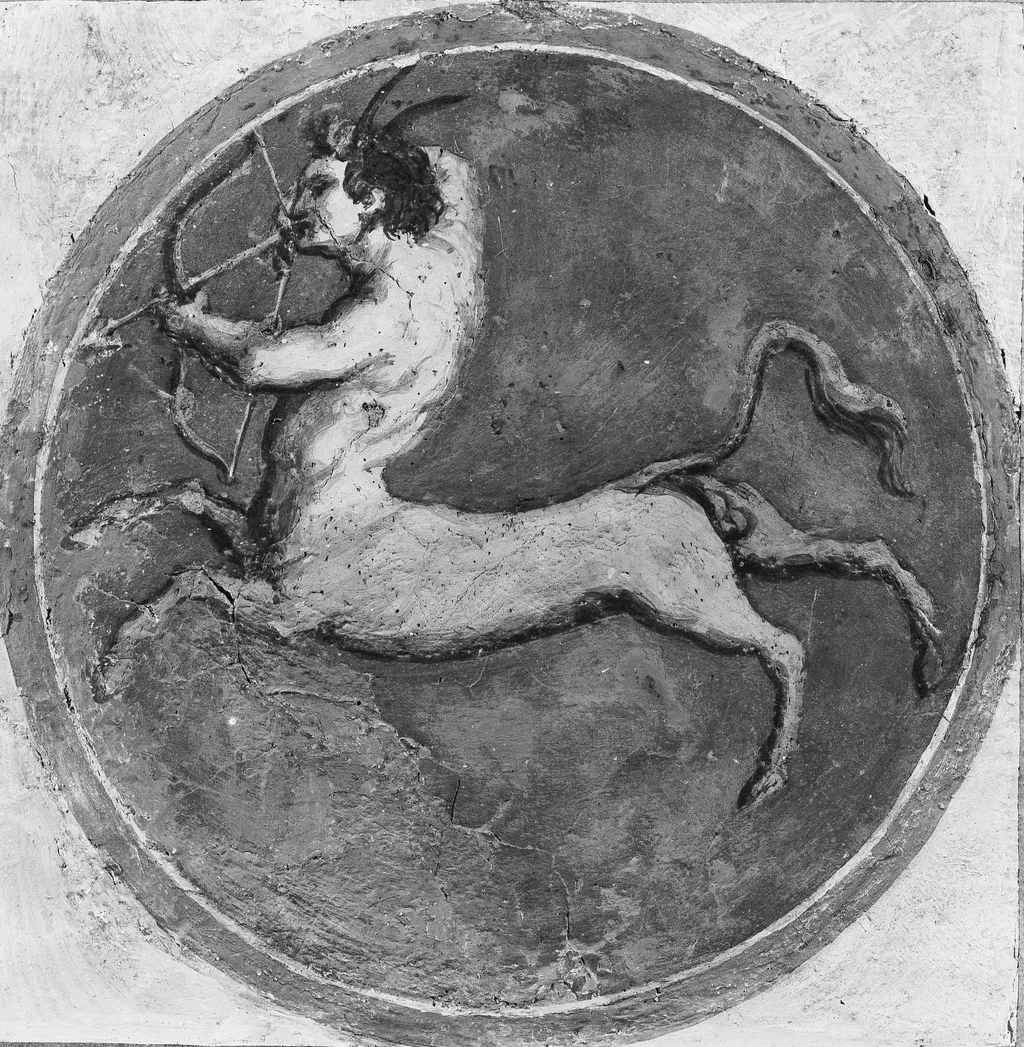
Frescoes from the Villa Stati-Mattei is an unspecified painting by the High Renaissance artist Baldassare Peruzzi. It dates from 1518 and is held in the collection of the Metropolitan Museum of Art.
About this work
Subject & Meaning
Together these images evoke an astrological or heavenly theme, emphasizing the zodiac band as a marker of cosmic order.
The fresco shows a bow and arrow, zodiac symbols, and a centaur figure. Together these images evoke an astrological or heavenly theme, emphasizing the zodiac band as a marker of cosmic order. The presence of the centaur, a creature straddling earth and sky, alongside archery equipment, reinforces the sense of a celestial narrative, possibly alluding to the influence of the stars on human affairs. The precise narrative remains uncertain, but the depicted elements clearly point to a zodiacal/astrological focus.
Technique & Style
The frescoes from the Villa Stati-Mattei, painted by Baldassare Peruzzi in 1518, are executed using the true fresco technique, wherein pigments are applied to fresh plaster and become integral to the support as it sets. The works, now housed in the Metropolitan Museum of Art, measure approximately 89.2 cm in height and 52.1 cm in width. Their composition features narrative elements such as a bow and arrow, zodiac symbols, and a centaur, reflecting Renaissance decorative conventions for astrological subject matter.
History & Provenance
The frescoes from the Villa Stati-Mattei, created by Baldassare Peruzzi in 1518, are currently held in the collection of the Metropolitan Museum of Art. The works are cataloged within the museum's holdings as paintings and are physically located at the institution. While the sources confirm the artist, date, and current repository, they do not provide specific inventory or accession numbers for these items.
The available documentation does not record any exhibition history for these frescoes. The works include depictions of mythological and astronomical subjects such as a centaur, the zodiac, and a bow and arrow.
Overview
These frescoes, created by the Sienese artist Baldassare Peruzzi in 1518, adorned the Villa Stati-Mattei in Rome during the High Renaissance. The series features a range of mythological and zodiacal imagery, including a notable depiction of a centaur. Peruzzi, a painter and architect, was a contemporary of prominent figures like Raphael and Bramante. Today, fragments of these significant wall paintings are preserved in The Metropolitan Museum of Art.
Context
Baldassare Peruzzi, born near Siena in 1481, established his artistic career in Rome, where he was active as both a painter and an architect. His involvement in major architectural undertakings, such as the new St. Peter’s Basilica, alongside luminaries like Donato Bramante and Raphael, underscores his significant standing within the artistic circles of the early 16th century. These frescoes are indicative of his broader contributions to the era.
Own this work as a print
Artist & collection
Artist
Baldassare Tommaso Peruzzi (7 March 1481 – 6 January 1536) was an Italian architect and painter, born in a small town near Siena (in Ancaiano, frazione of Sovicille) and died in Rome.

- Shield with Stag, Held by Wild Man
 Bas-relief in marble of a Salamander
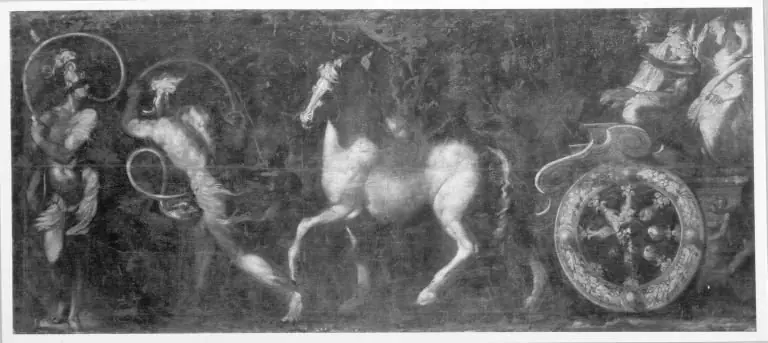 Der Wagen des Triumphators
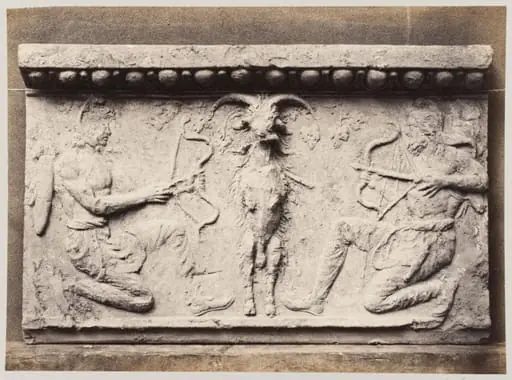 Bas-relief of a goat and two archers in terra cotta
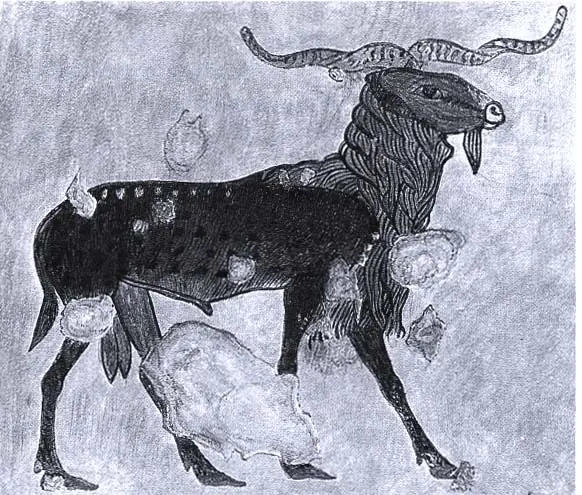 Detail of a Ram, Tomb of Khnumhotep
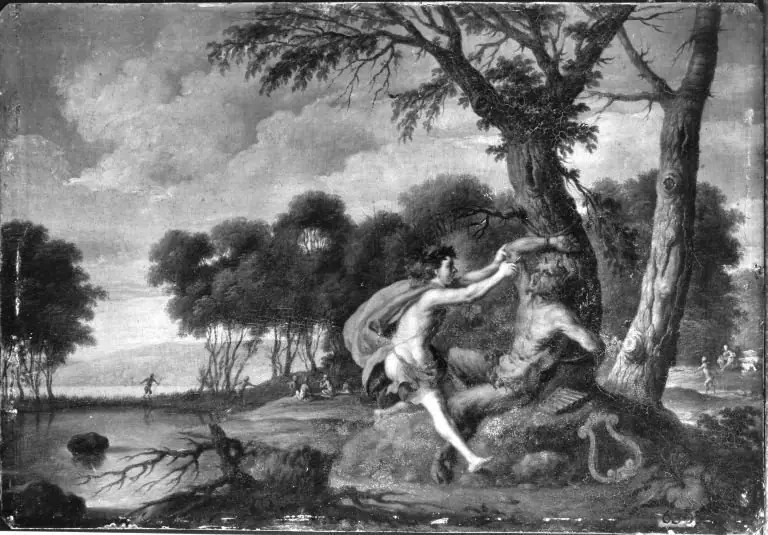 Schindung des Marsyas (?)
 Amorino
 Wild Man Holding a Shield with a Greyhound
 Johannes der Täufer
 The Labors of Hercules: Hercules and Nessus
 Ram near a Tree
 Triumph of Bacchus