Artist
Baldassare Peruzzi
Republic of Siena
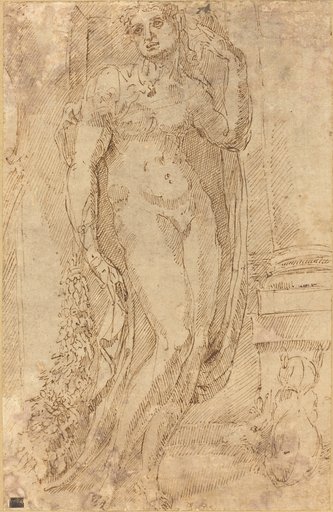
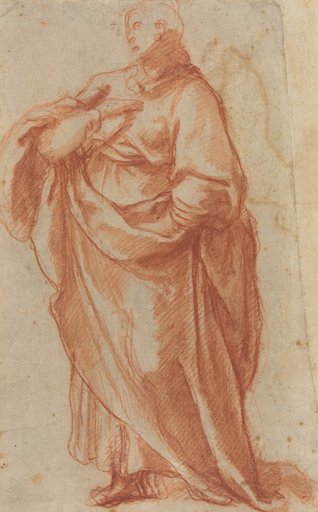
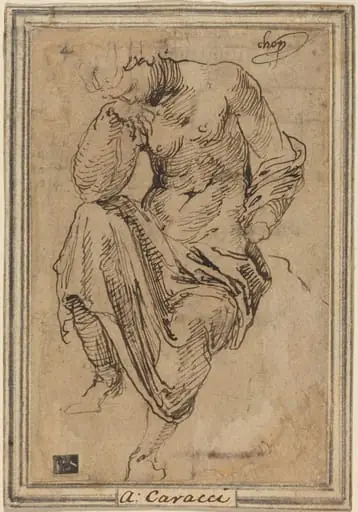
Baldassare Peruzzi is a Republic of Siena High Renaissance artist. 2 works are cataloged here, principally at National Gallery of Art.
Baldassare Tommaso Peruzzi (7 March 1481 – 6 January 1536) was an Italian architect and painter, born in a small town near Siena (in Ancaiano, frazione of Sovicille) and died in Rome. He worked for many years with Bramante, Raphael, and later Sangallo during the erection of the new St. Peter's. He returned to his native Siena after the Sack of Rome (1527) where he was employed as architect to the Republic. For the Sienese he built new fortifications for the city and designed (though did not build) a remarkable dam on the Bruna River near Giuncarico. He seems to have moved back to Rome permanently by 1535. He died there the following year and was buried in the Rotunda of the Pantheon, near Raphael. He was a painter of frescoes in the Cappella San Giovanni (Chapel of St John the Baptist) in the Duomo of Siena. His son Giovanni Sallustio was also an architect. Another son, Onorio, learned painting from his father, then became a Dominican priest in the convent of Santa Maria Sopra Minerva in Rome. He then stopped painting until requested by his superiors at San Romano di Lucca to paint the organ doors of the church.
Overview
Baldassare Tommaso Peruzzi (7 March 1481-6 January 1536) was an Italian architect, painter, and stage designer of the High Renaissance, born in Ancaiano, a small town near Siena, and active primarily in Rome. A versatile practitioner often regarded as a universal man comparable to Raphael and Michelangelo, he made significant contributions to architecture, painting, decorative design, and military engineering. He is best known for designing the Villa Farnesina in Rome, his innovative illusionistic frescoes in the Sala delle Prospettive, and his late masterpiece the Palazzo Massimo alle Colonne. His work bridged the High Renaissance and Mannerism, and his architectural drawings of antiquity became foundational for Sebastiano Serlio's influential architectural treatise.
Style & movement
Peruzzi operated within the High Renaissance and is considered a precursor of Mannerism. His architectural style was notably different from that of his contemporaries Bramante and Raphael: where theirs was monumental and grave, his was sophisticated and delicate. He was one of the earliest artists to pursue illusionist architectural painting, extending real architecture into imaginary space through perspective. This is most brilliantly demonstrated in the Sala delle Prospettive at the Villa Farnesina, where he revived and transformed the perspective schemes of Melozzo da Forli and Mantegna to create the illusion of an open-air terrace with a continuous landscape. His interest in antiquity was central to his research; he produced numerous drawings and surveys of ancient Roman buildings, reinterpreting Bramantian and Raphaelian themes with personal inventiveness. His late architecture, particularly the Palazzo Massimo alle Colonne, displays Mannerist characteristics in its curving facade and ingenious planning adapted to an irregular site. As a painter, he evolved from the manner of Pinturicchio toward a more classical Roman style under Raphael's influence, and his decorative work extended to mosaic and stage design.
Influences & students
Peruzzi's formative influences included his teachers Pinturicchio and Francesco di Giorgio Martini in Siena, as well as the Sienese artists Sodoma and the broader classical environment of his native city. In Rome, Bramante and Raphael profoundly shaped his development; he worked directly under Bramante on St. Peter's and was considered Bramante's best disciple, while Raphael's influence transformed his painting style. His own pupils and followers included Giovanni Battista Pelori, who succeeded him as architect to the Republic of Siena and learned his craft from Peruzzi. More significantly, his architectural drawings were passed to Sebastiano Serlio, who incorporated them into his Books of Architecture, published in Venice from the early 1530s onward. This treatise became the most widely read architectural text in the second half of the sixteenth century, disseminating Peruzzi's ideas throughout Europe.
Legacy
Peruzzi's posthumous reputation rests on his versatility and the wide diffusion of his architectural ideas through Serlio's publications. His drawings of ancient Roman buildings became foundational for Renaissance architectural theory, influencing later architects including Michelangelo and Andrea Palladio. His experimental approach to central-plan churches and polycentric spatial schemes, documented in drawings though often unrealized, positioned him as an important figure in the transition from High Renaissance to Mannerist architecture. The Palazzo Massimo alle Colonne is recognized as one of the most significant works of early Mannerism. Despite Vasari's observation that his retiring nature limited his material success, his impact on architectural drawing, perspective illusionism, and the revival of antique forms was considerable and long-lasting. His son Giovanni Sallustio Peruzzi continued the family profession as an architect, while another son, Onorio, learned painting from his father before becoming a Dominican priest and later painting organ doors at San Romano di Lucca.
Works by Baldassare Peruzzi
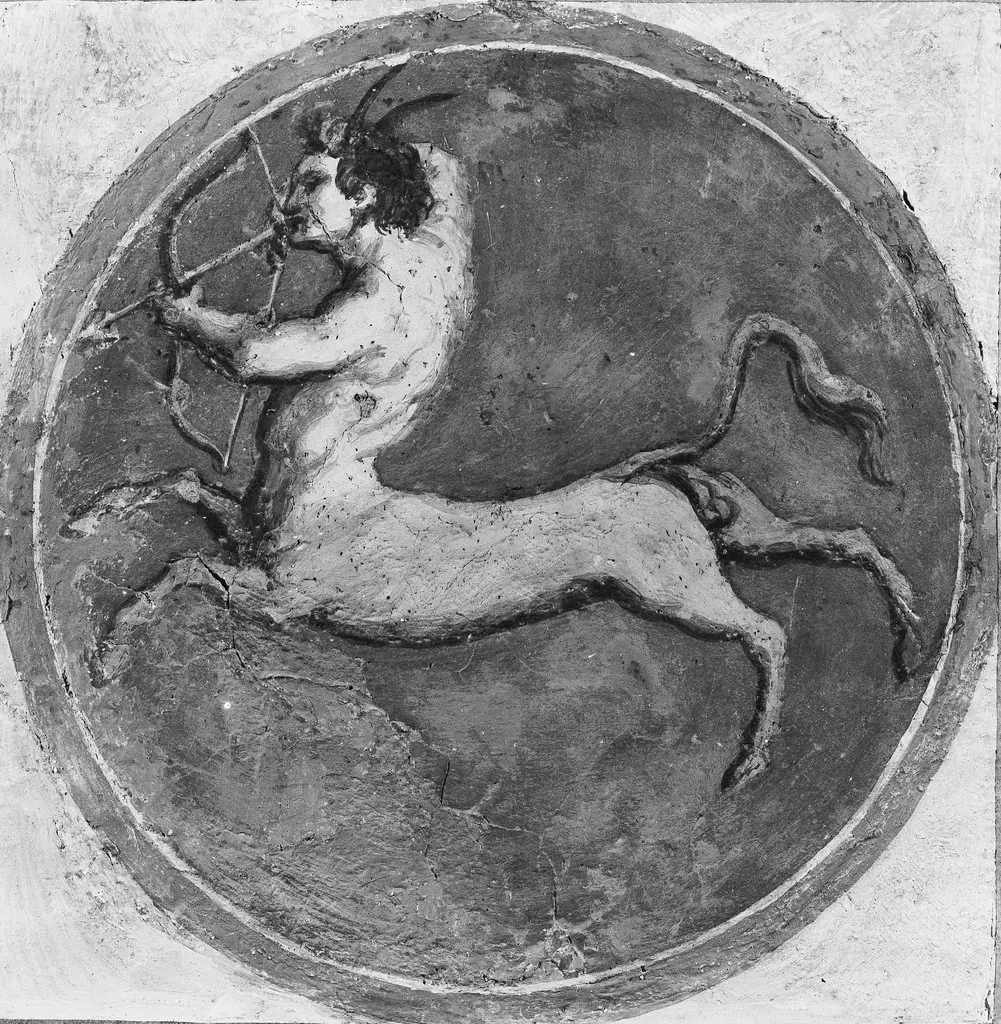
Collections represented


Artists in a similar vein