Artwork
Schindung des Marsyas (?)
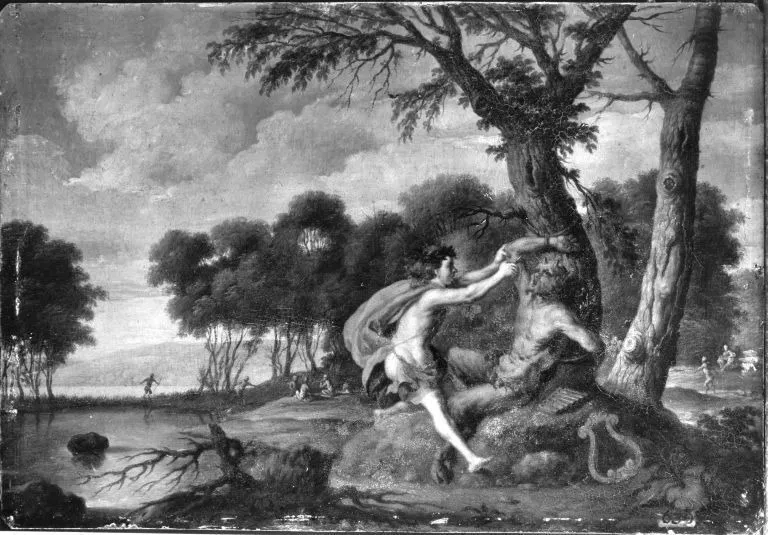
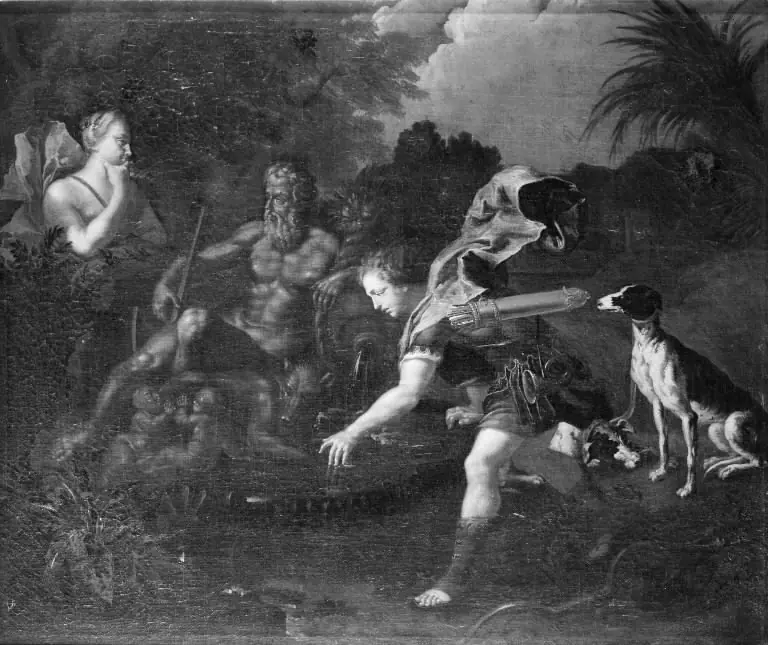
Schindung des Marsyas (?) is an unspecified painting by the Dutch Golden Age artist Gerard Hoet. It dates from 1696 and is held in the collection of the Bavarian State Painting Collections.
About this work
Subject & Meaning
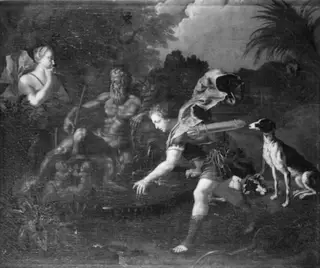
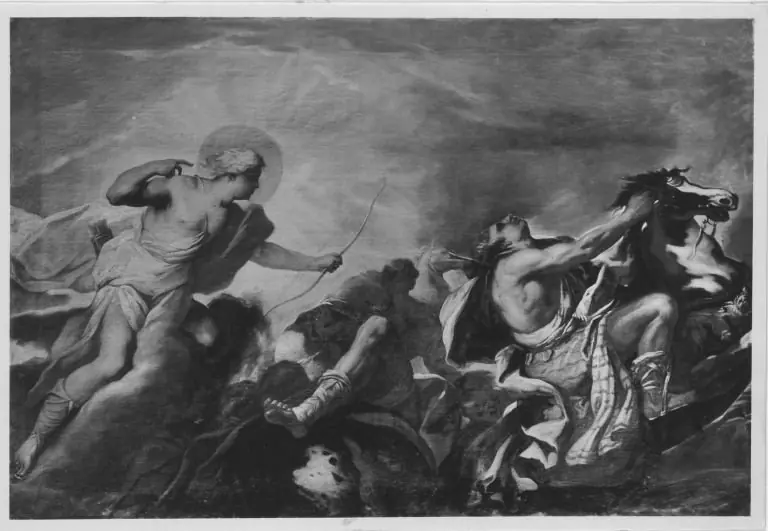
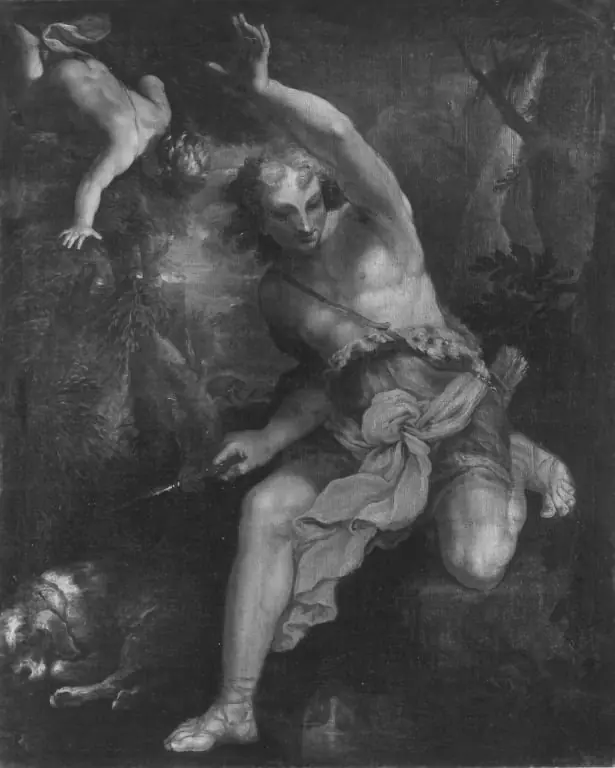
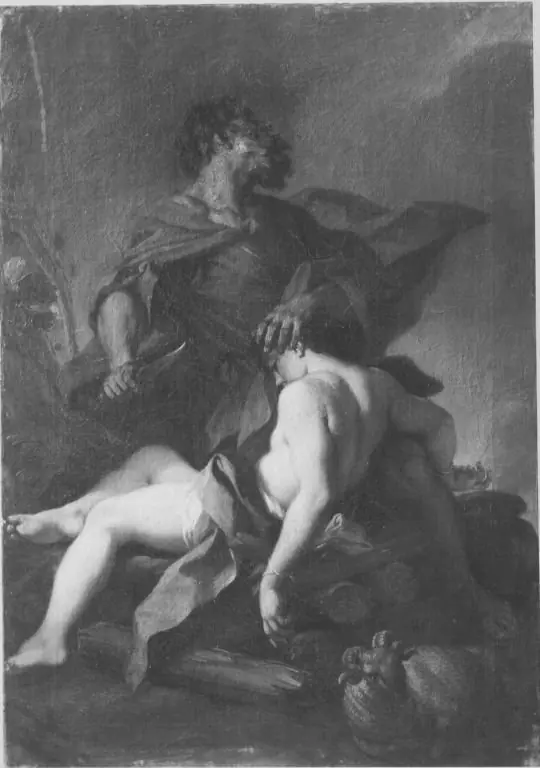
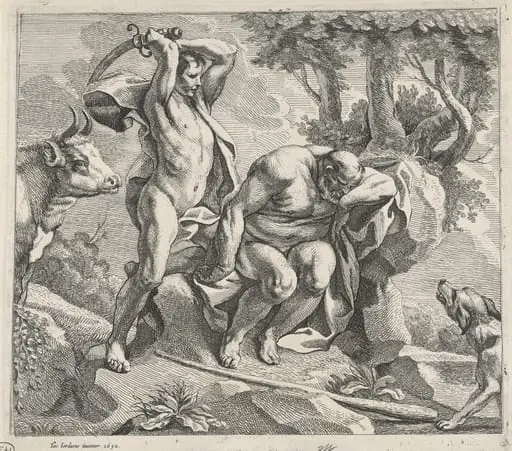
The work shows the central figures of Apollo and Marsyas together with the act of flaying itself, as identified in the documented iconography.
The painting depicts the flaying of Marsyas, a subject drawn from Greek mythology in which the satyr Marsyas, having challenged Apollo to a musical contest and lost, is punished by being skinned alive. The work shows the central figures of Apollo and Marsyas together with the act of flaying itself, as identified in the documented iconography. Gerard Hoet's small cabinet picture treats the myth as a vehicle for exploring themes of hubristic overreach and violent retribution, a tradition long favored in European art for its combination of dramatic physicality and moral allegory.
Technique & Style
The work is classified as a painting by Gerard Hoet, dated 1690. According to the Wikidata record, the panel measures 15.3 cm in height by 22.4 cm in width, and it is held by the Bavarian State Painting Collections at the Alte Pinakothek. The small dimensions are consistent with a cabinet-format easel painting rather than a large-scale decorative commission.
Its subject is the flaying of Marsyas by Apollo, a mythological scene that Hoet, working as a Dutch classicist painter, would have rendered with the polished finish and refined figure handling typical of late seventeenth-century history painting on a modest scale.
No further technical details regarding medium, support, handling, condition, or stylistic qualities are documented in the available sources.
History & Provenance
Schindung des Marsyas (?) was created by Gerard Hoet in 1690, as recorded in both the internal classification record and the Wikidata entry for the painting. The work entered the Bavarian State Painting Collections and is now held at the Alte Pinakothek in Munich, where it remains part of the museum's holdings. No further details about its commission, prior ownership, or chain of custody prior to its acquisition by the Bavarian State Painting Collections are documented in the available sources.
The painting is held in the Bavarian State Painting Collections and is located at the Alte Pinakothek in Munich. According to the available catalogue data, the work measures 15.3 cm in height by 22.4 cm in width and dates to 1690. No inventory or accession number is recorded in the consulted sources, and no exhibition history is documented.
Overview
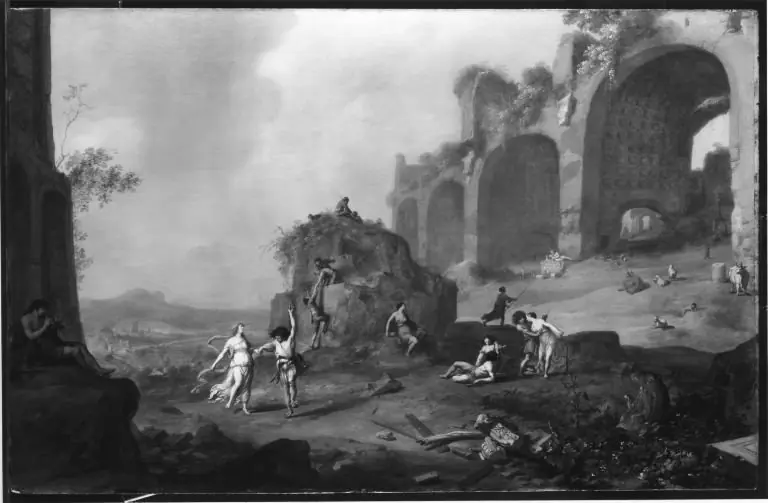
Created in 1696 by Dutch painter Gerard Hoet, this oil work portrays a violent mythological episode set in a dark, forested landscape. A partially clothed figure lies prone on the ground while a standing, dominant figure holds a long strip of flesh, suggesting a moment of execution. The composition is framed by dense trees, a distant waterway, and a storm‑laden sky that heightens the tension of the scene.
Artist & collection