Artwork
A Vase of Flowers
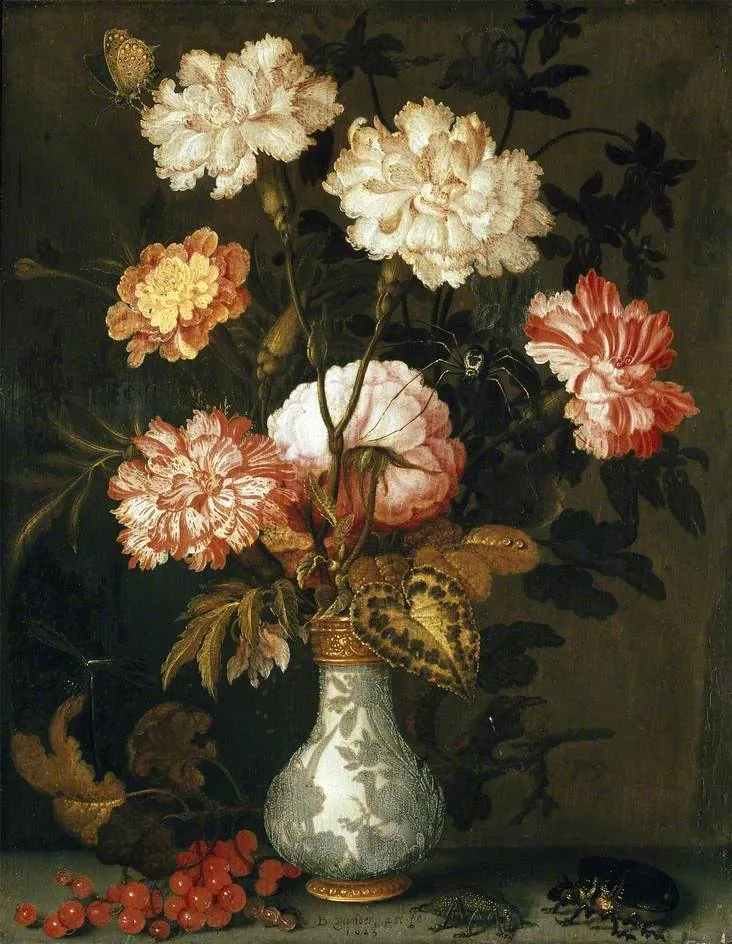
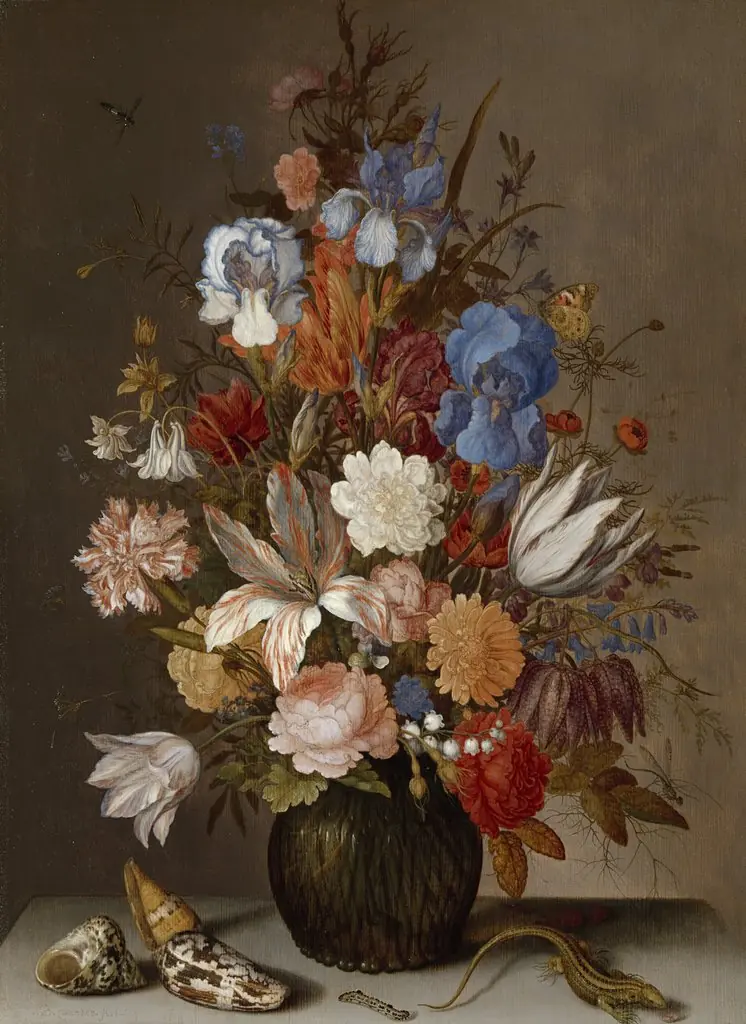
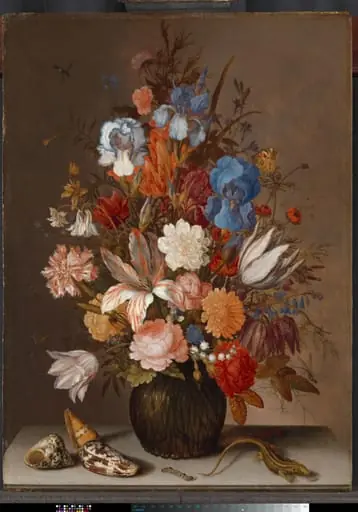
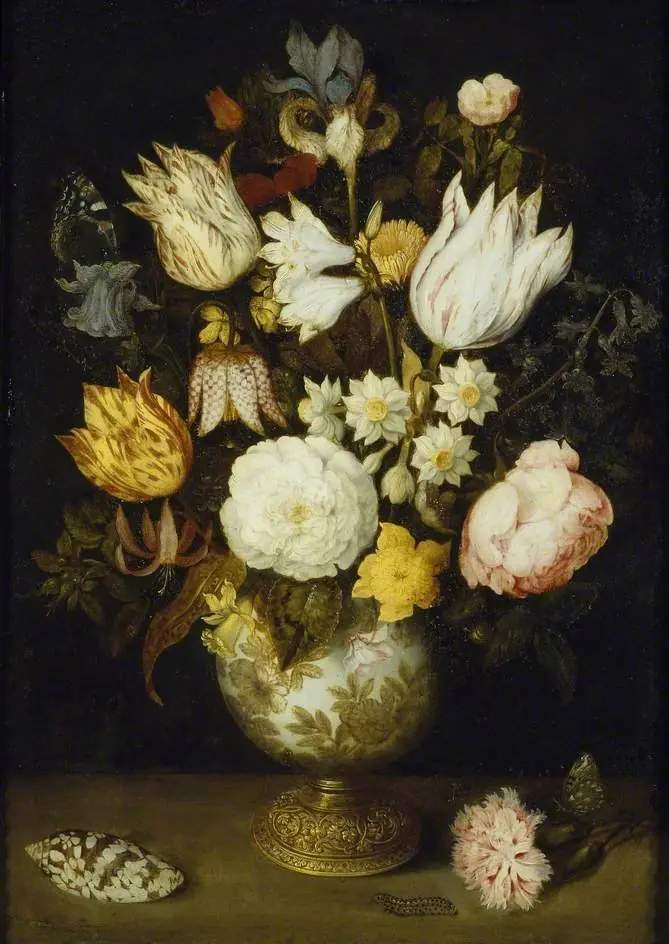
A Vase of Flowers is an oil painting by the Dutch Golden Age artist Balthasar van der Ast. It dates from 1620 and is held in the collection of the Ashmolean Museum.
About this work
Overview
The painting is held by the Ashmolean Museum in Oxford, where it entered the collection in 1939 as a bequest from Daisy Linda Ward.
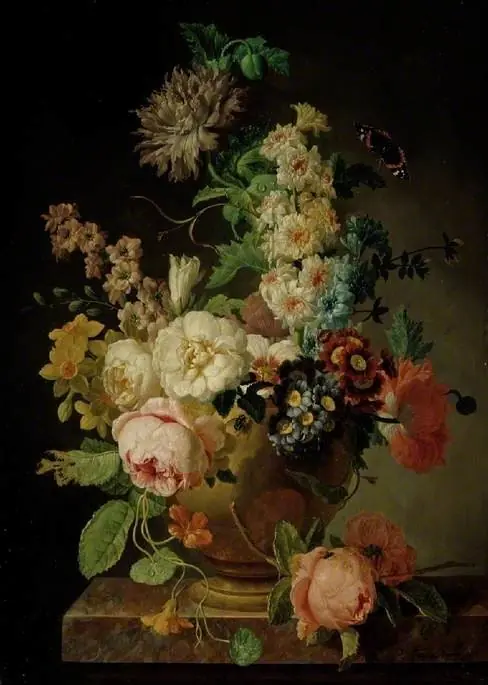
A Vase of Flowers is an oil painting on panel by the Dutch Golden Age flower painter Balthasar van der Ast, dated 1620. Measuring 30 by 24 cm, it is one of the earliest dated works in the artist's mature oeuvre and exemplifies the precise, luminous style of floral still life that he inherited from his teacher and brother-in-law, Ambrosius Bosschaert the Elder. The painting is held by the Ashmolean Museum in Oxford, where it entered the collection in 1939 as a bequest from Daisy Linda Ward.
Subject & Meaning
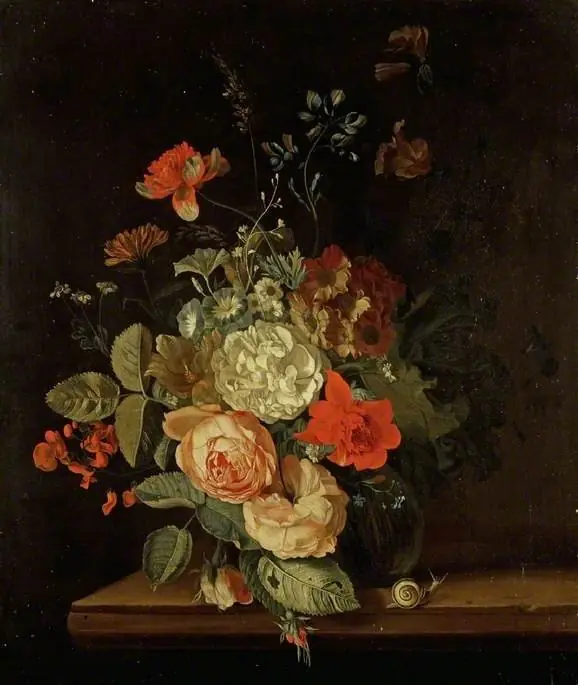
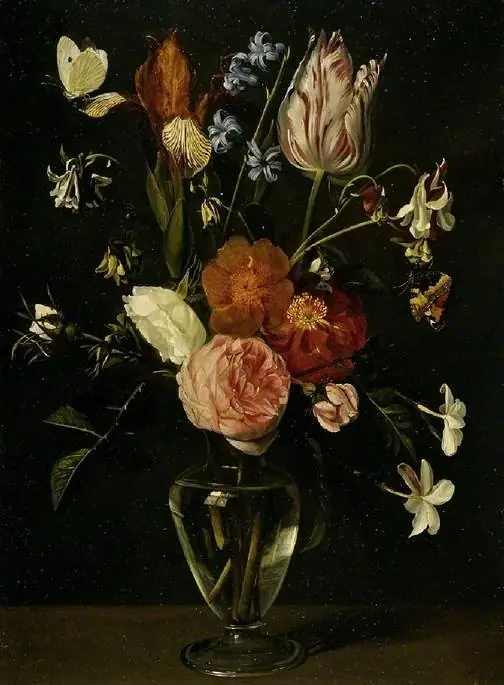
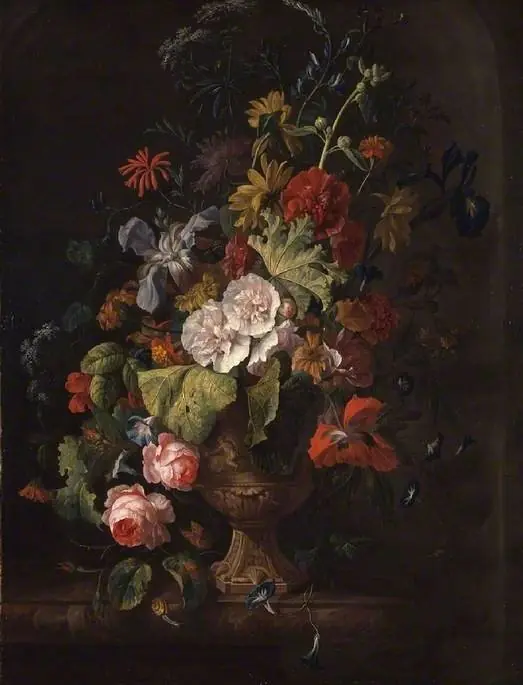
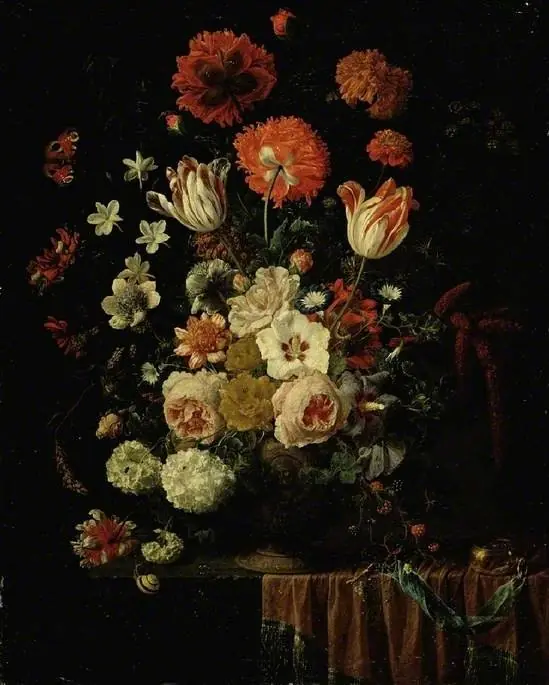
The painting depicts an abundant bouquet of carnations and peonies in white, pale pink, and deep rose, arranged in a tall ceramic vase with pale blue and white marbled patterning and gilt trim. The flowers rise vertically against a dark, muted background. At the base, the vase rests on a stone ledge where red currants cluster to the left, while two beetles crawl near the right edge. A butterfly hovers near the upper left bloom, and a spider descends on a thread near the center right. A single spotted leaf and dried brown foliage add texture among the green stems. The bouquet presents a carefully constructed fiction: flowers of different seasons are assembled together as an idealized, unfading vision of nature that could never exist in reality. This arrangement of disparate blooms served both aesthetic and symbolic purposes, reflecting the contemporary fascination with scientific observation while also alluding to the transience of earthly beauty through the inclusion of insects and signs of decay.
Technique & Style
Van der Ast executed the work in oil on panel, a support typical of Dutch cabinet pictures of this period. The palette is dominated by warm pinks and creams set against deep browns and blacks. Light falls from the upper left, illuminating the flowers and casting soft shadows behind the arrangement. The brushwork is precise and smooth, rendering delicate petal edges, insect anatomy, and the reflective glaze of the vase with almost microscopic attention to detail. This technique reflects the influence of the newly invented microscope on Dutch artists of the period, who combined artistic skill with scientific curiosity. The artist's signature and date appear at the lower center of the panel.
History & Provenance
The painting was bequeathed to the Ashmolean Museum in 1939 by Daisy Linda Ward, a notable collector whose gift enriched several British public collections. It bears the accession number WA1940.2.6. The work has not been documented in extensive exhibition history in the available sources, though it has remained in the Ashmolean's permanent collection since acquisition.
Context
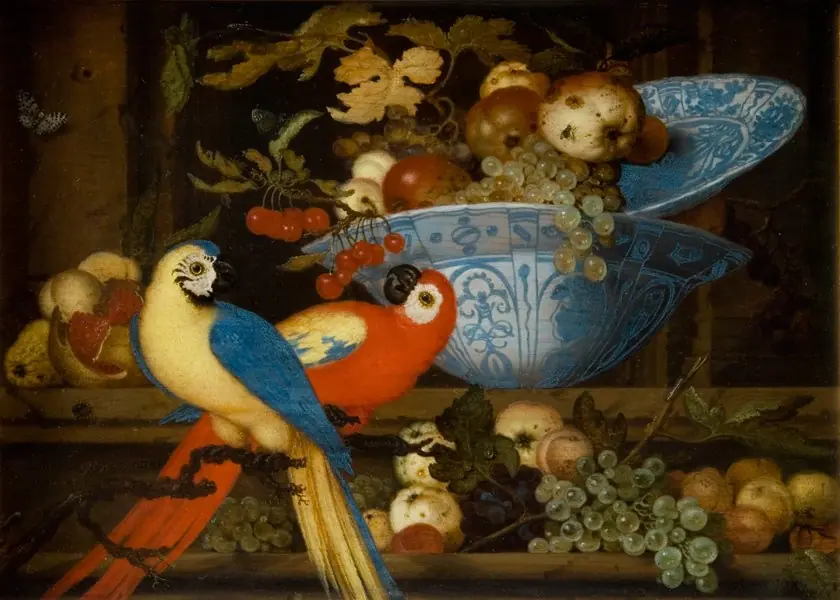
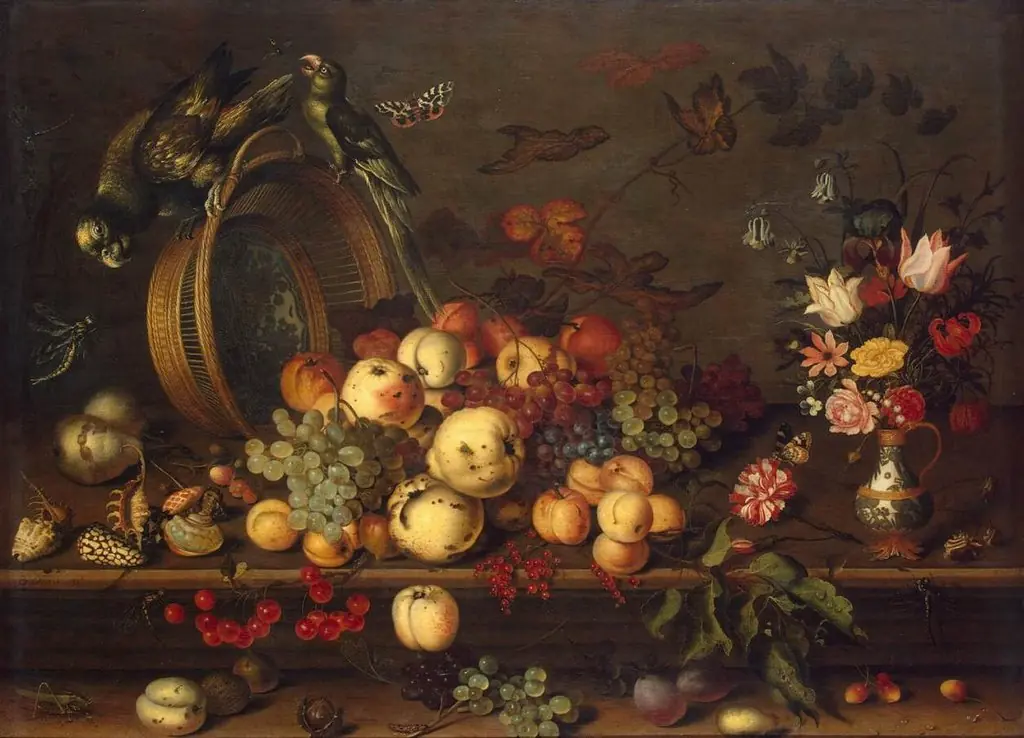
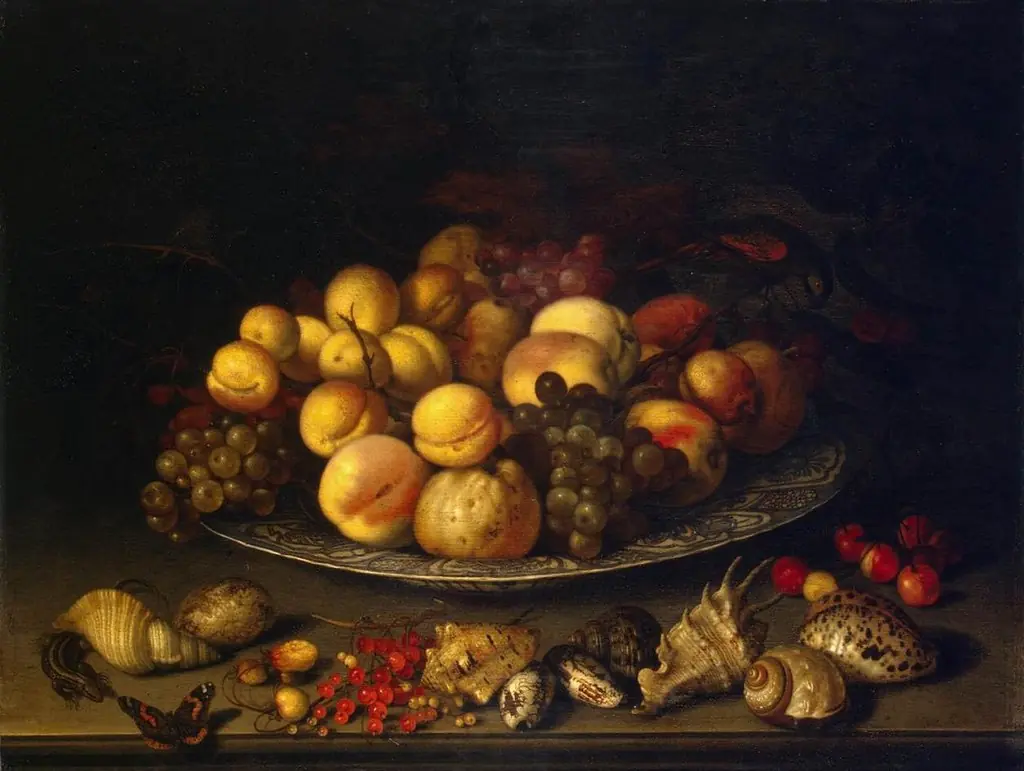
Balthasar van der Ast was born in Middelburg around 1593 or 1594. After his father's death in 1609, he entered the household of his sister Mari, who had married Ambrosius Bosschaert the Elder, the pioneering flower painter. Van der Ast trained in Bosschaert's studio and initially continued his teacher's precise style of fruit and flower description, with compositions carefully balanced in form and colour. In 1619 he moved to Utrecht, where he entered the Guild of Saint Luke, and in 1632 he settled in Delft, where he remained until his death in 1657. Over two hundred works by his hand are known. During his long career his compositions gradually became larger and more complex, often incorporating rare and exotic fruits, flowers, shells, and insects. He is considered a central member of the Bosschaert dynasty and one of the great flower painters of the Dutch Golden Age. His pupils may have included Bosschaert's sons Ambrosius the Younger, Johannes, and Abraham.
Legacy
Van der Ast's innovations in flower still life established conventions that remained popular for over a century. His combination of meticulously observed natural detail with artificially composed bouquets influenced subsequent generations of Dutch and Flemish flower painters, including Jan van Huysum and Rachel Ruysch, who continued to command high prices for their insect-laden floral pieces. The motif of flowers in exotic porcelain vases, which Van der Ast helped to popularize, became a staple of the genre. The Ashmolean painting, as one of his earliest dated works, holds particular significance for understanding the development of his style from the tight, balanced compositions of his apprenticeship to the more relaxed and natural arrangements of his maturity.
Artist & collection
Artist
Balthasar van der Ast (Middelburg, 1593/94 – Delft, 7 March 1657) was a Dutch Golden Age painter who specialized in still lifes of flowers and fruit, as well as painting a number of remarkable shell still lifes; he is…