Artwork
Still Life with Flowers
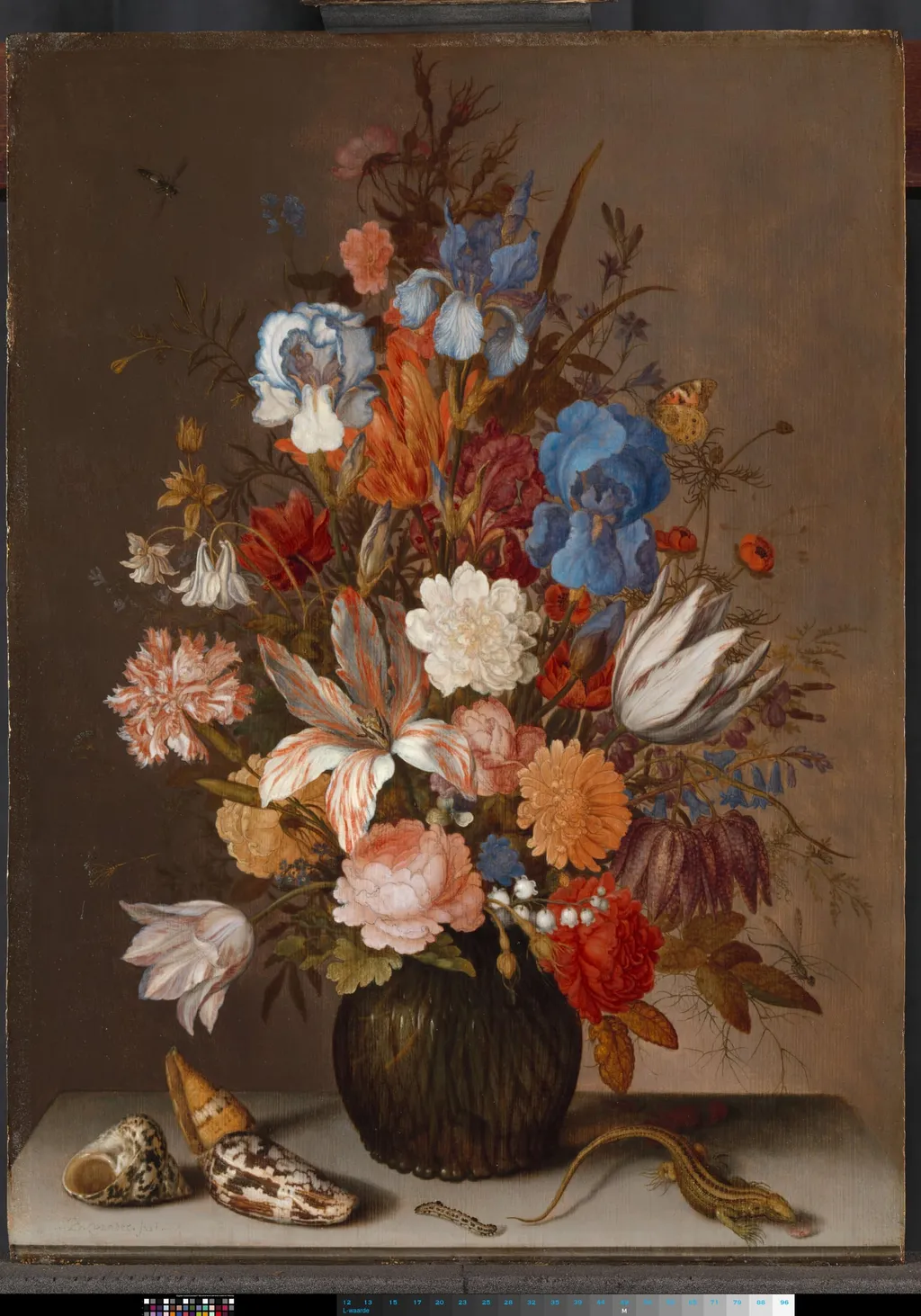
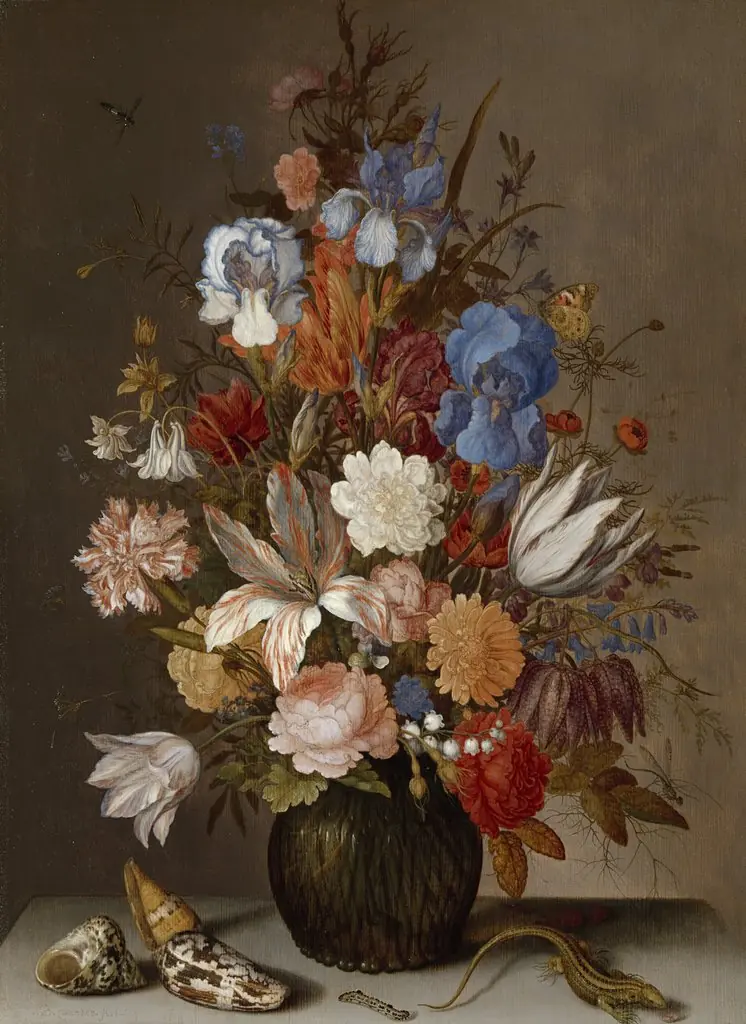
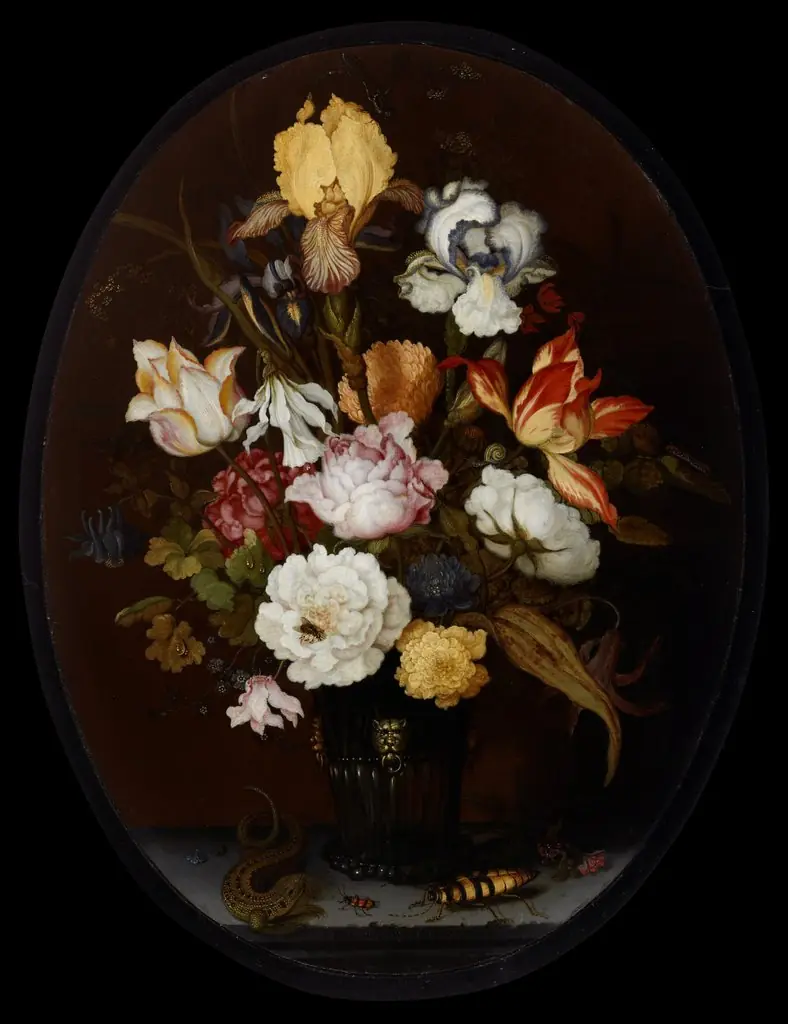
Still Life with Flowers is an unspecified painting by the Baroque artist Balthasar van der Ast. It dates from 1625 and is held in the collection of the Rijksmuseum. The work presents a glass vase brimming with a mixed bouquet that includes tulips, roses, irises, columbines and gillyflowers.
About this work
Subject & Meaning
Such works typically gathered blooms from different seasons into a single arrangement, defying natural chronology in favor of decorative abundance.
Still Life with Flowers belongs to the floral still life tradition of the Dutch Golden Age, a genre in which Balthasar van der Ast specialized alongside fruit and shell compositions. Such works typically gathered blooms from different seasons into a single arrangement, defying natural chronology in favor of decorative abundance.
Van der Ast's flower paintings characteristically include insects and small creatures, which carry symbolic weight. A delicate butterfly alludes to the swift transience of blossoms, while beetles and flies point to the perishability of fruit, embedding vanitas-like meditations on the fragility of life within the beauty of the bouquet.
The works also reflect the material world of wealthy Dutch patrons, incorporating prized Chinese porcelain vessels made accessible through expanding East Asian trade. For van der Ast, these refined objects and living creatures together transformed a floral display into a meditation on human destiny, blending naturalism with spiritual resonance.
History & Provenance
Still Life with Flowers is dated to approximately 1625–1630, aligning with Balthasar van der Ast’s mature period in Utrecht before his relocation to Delft in 1632. The work was created during his tenure in the Utrecht Guild of St. Luke, where he refined his still-life techniques under the influence of Ambrosius Bosschaert the Elder and Roelandt Savery.
No definitive commission or early ownership records for this specific painting have been documented in the available sources. Its creation coincides with van der Ast’s specialization in floral and shell still lifes, often featuring insects and symbolic motifs, a hallmark of his Utrecht output.
Context
Balthasar van der Ast is recognized as a pivotal figure in the Dutch Golden Age who specialized in floral and shell still lifes, earning the distinction of being a pioneer in the genre of shell painting. His artistic development was deeply rooted in the "Bosschaert dynasty," having trained under his brother-in-law Ambrosius Bosschaert the Elder and subsequently instructing Bosschaert's own sons, thereby sustaining a crucial lineage of floral artistry. While his early works reflect Bosschaert's influence, van der Ast also absorbed tonalities from Roelandt Savery and later influenced major figures such as Jan Davidsz de Heem and the van Aelst family.
Contemporary observers, including an Amsterdam doctor, praised his ability to render flowers, shells, and lizards with exceptional beauty. Art historians credit him with playing a deterministic role in the evolution of the Dutch still life, balancing meticulous naturalism with decorative concerns that bridged the gap to later masters like Jan van Huysum.
Legacy
Still Life with Flowers exemplifies Balthasar van der Ast’s flower still lifes, a genre in which he pioneered detailed depictions of blossoms, shells and small creatures. His approach influenced his immediate pupils, Ambrosius, Johannes and Abraham Bosschaert, Anthony Claesz and Johannes Baers, and likely Jan Davidsz. de Heem, who adopted his tonal concerns. Through the Bosschaert dynasty and later Delft painters such as Willem and Evert van Aelst, van der Ast’s emphasis on precise rendering and subtle vanitas symbols endured, securing the work’s place within the lasting legacy of Dutch Golden Age still-life painting.
Overview
The work presents a glass vase brimming with a mixed bouquet that includes tulips, roses, irises, columbines and gillyflowers. Some blossoms are fully opened while others remain in bud, creating a varied visual rhythm. The composition balances the translucency of the vase with the dense foliage, inviting close observation of the delicate forms.
Technique & Style
Before applying pigment, the artist rendered a meticulous drawing of each petal and leaf directly onto a primed wooden panel. This preparatory underdrawing guided the subsequent layers of oil paint, allowing precise rendering of texture and light. The careful planning reflects a disciplined approach typical of Northern European still-life traditions.
Own this work as a print
Artist & collection
Artist
Balthasar van der Ast (Middelburg, 1593/94 – Delft, 7 March 1657) was a Dutch Golden Age painter who specialized in still lifes of flowers and fruit, as well as painting a number of remarkable shell still lifes; he is…

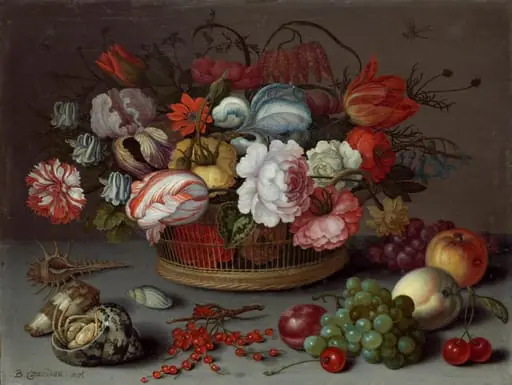
- Still Life of a Vase with Flowers
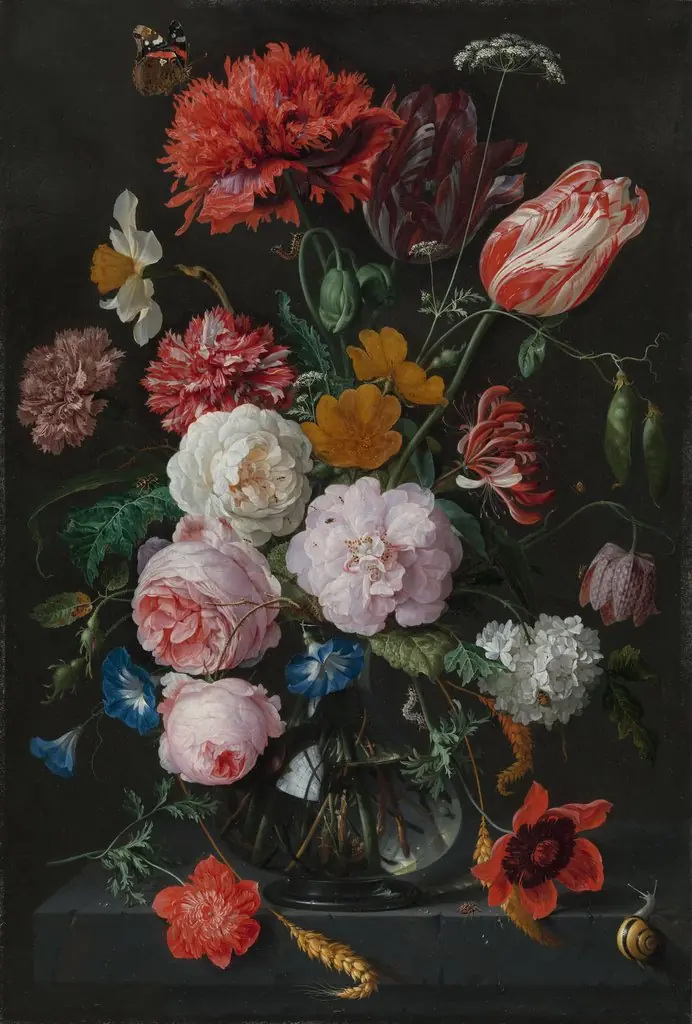 Still life with flowers in a glass vase
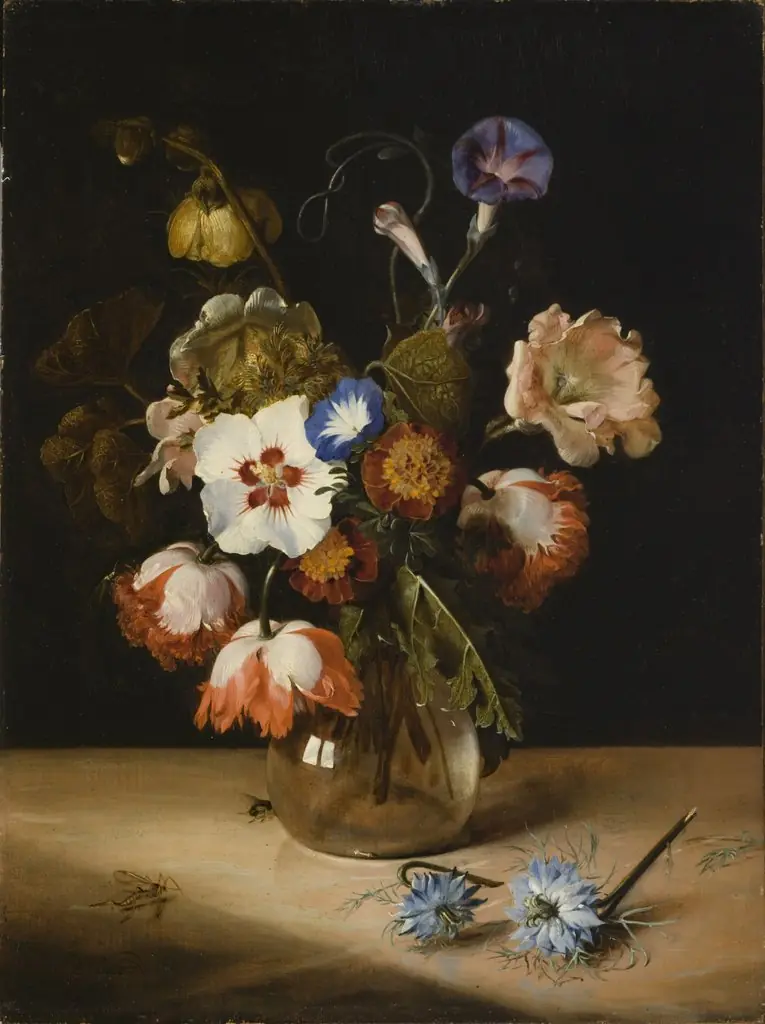 Flowers in a Glass Vase
 Flower Still Life in a Glass Vase
 Still Life with Flowers in a Glass Vase
 Flowers in a Glass Vase
 Still Life with Flowers in a Vase
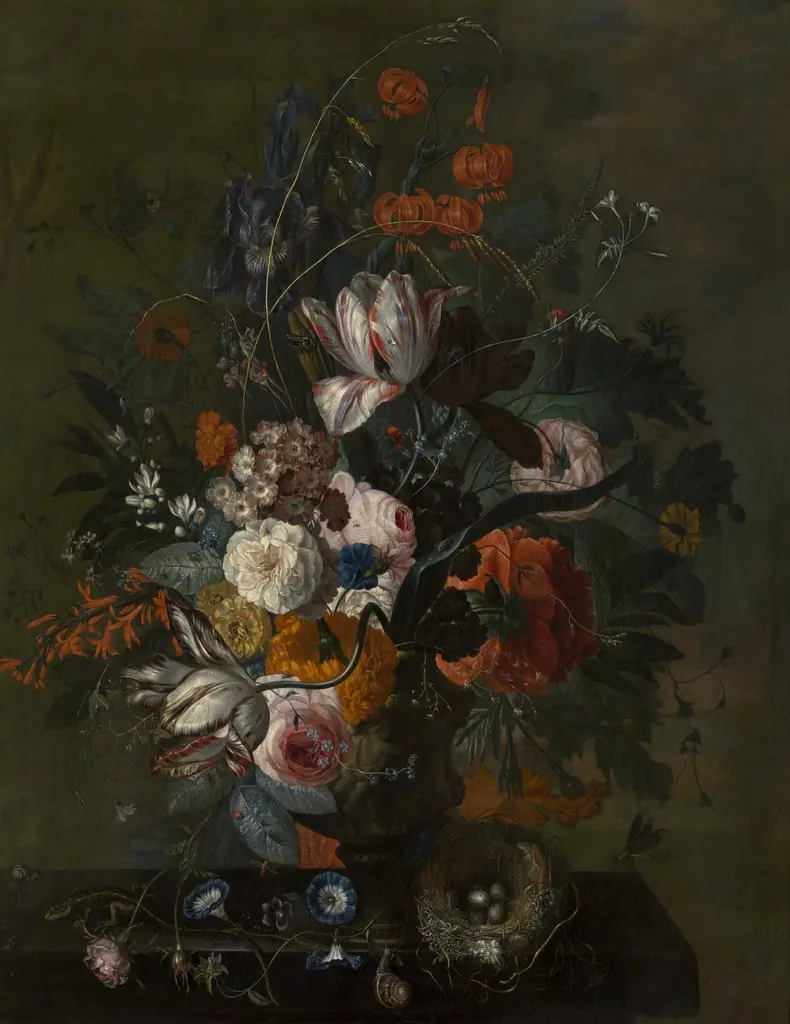 Still Life of flowers in a terracotta vase on a stone plinth
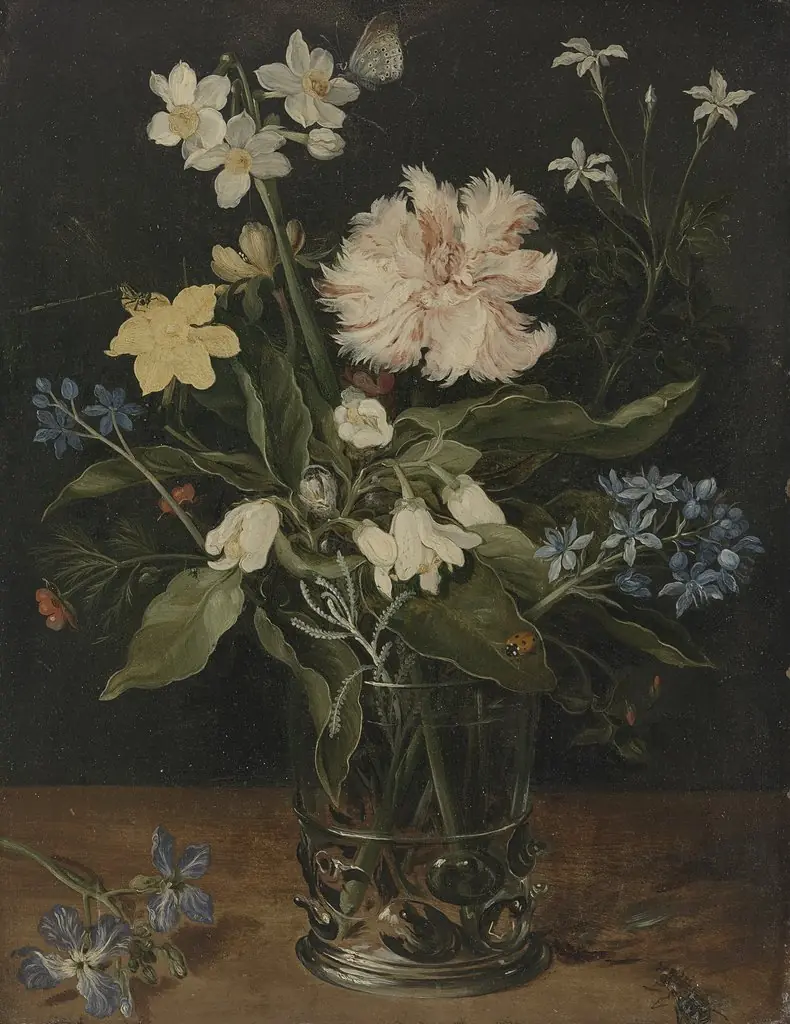 Still Life with Flowers in a Glass