Artwork
Steamer "St. Lawrence"
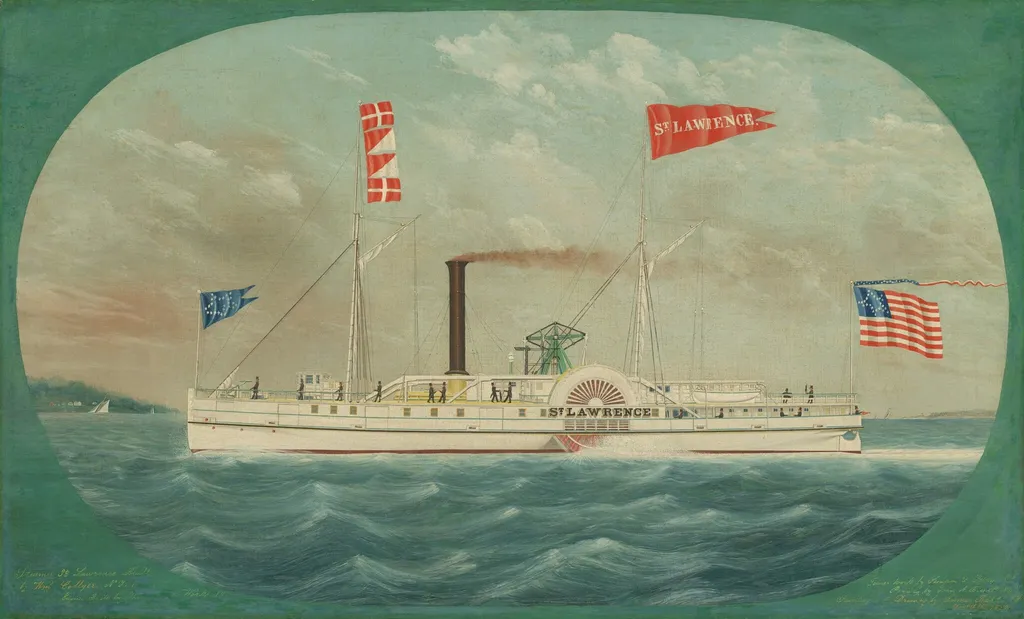
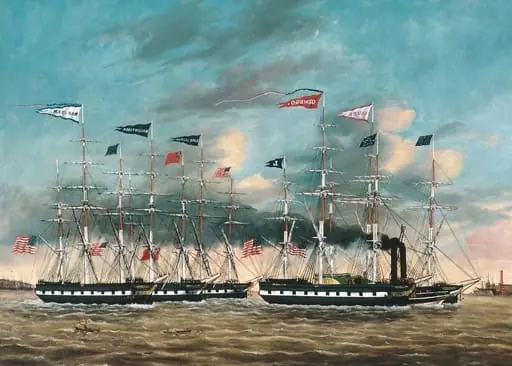
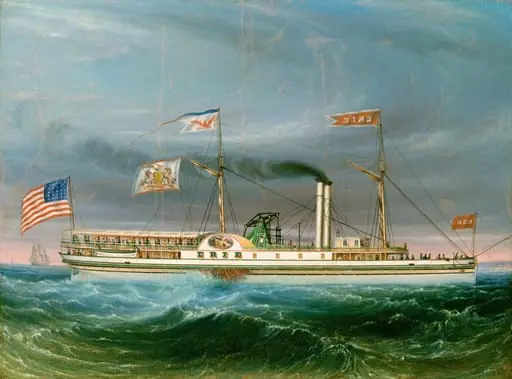
Steamer "St. Lawrence" is an oil painting by the American Folk Art artist James Bard. It dates from 1850 and is held in the collection of the National Gallery of Art.
- Inscription
- Inscribed:lower left: Steamer St Lawrence Built / by Wm Collyer NY.[ ] / Engine Built by The [Morgan Iro]n Works N ; lower right: Joiner Work by Sampson & Perry. [NY?] / Painting by John A. Bowell NY / Painting [an]d Drawing by James Bard, N.Y. / Decr th 18th, 1850; on banner: ST LAWRENCE.; on ship: ST LAWRENCE
About this work
Subject & Meaning
The painting presents a side‑view of the side‑wheel steamer "St.
The painting presents a side‑view of the side‑wheel steamer "St. Lawrence," identified as a boat in the work’s descriptive data. As a representation of a commercial steamboat, it evokes the era’s reliance on steam navigation for trade and travel along inland waterways, symbolizing technological progress and the economic vitality of mid‑19th‑century American maritime activity. The piece was created by James Bard in 1850 and entered the National Gallery of Art collection through a 1953 gift from Edgar William and Bernice Chrysler Garbisch.
Technique & Style
The work is executed in oil on canvas, a medium typical of mid-19th-century American maritime painting. The support measures approximately 73.3 cm in height by 121.9 cm in width.
Formal handling emphasizes the vessel’s profile and rigging with precise, linear detailing characteristic of James Bard’s documented style. The composition centers on the steamer’s hull and paddle-wheel, rendered with careful attention to the play of light on water and the vessel’s structural details. No visible abrasions or losses are reported in the source records.
History & Provenance
James Bard created the oil-on-canvas painting titled Steamer 'St. Lawrence' in 1850. The work initially entered the art market from Massachusetts before being acquired in 1952 by the collectors Edgar William and Bernice Chrysler Garbisch. The following year, the couple donated the piece to the National Gallery of Art in Washington, D.C., where it remains part of the permanent collection.
The painting is held in the collection of the National Gallery of Art in Washington, D.C. Its provenance traces back to Massachusetts before being purchased in 1952 by Edgar William and Bernice Chrysler Garbisch. The couple donated the work to the museum the following year, in 1953.
No specific inventory numbers or details regarding the work's exhibition history are provided in the available records.
Context
James Bard’s 1850 oil on canvas Steamer “St. Lawrence” exemplifies mid‑nineteenth‑century American marine painting, combining precise draftsmanship with atmospheric lighting. The work entered the National Gallery of Art in 1953 through the gift of Edgar William and Bernice Chrysler Garbisch, reflecting the Garbisch collection’s focus on early American art. As part of Bard’s limited oeuvre, the painting is frequently cited in scholarship on maritime art, illustrating the transition from commercial vessel representation to more expressive coastal scenes.
Its status as a documented piece in the NGA collection underscores its significance within the broader narrative of 19th‑century U.S. marine painting.
Overview
James Bard's oil on canvas painting, Steamer "St. Lawrence", created in 1850, exemplifies the artist's dedication to depicting American watercraft. This work captures a specific steamboat on calm waters, reflecting the era's reliance on river transportation. Bard was a prominent figure among 19th-century marine artists, celebrated for his meticulous attention to the details of these vessels, often working within the American folk art tradition.
Own this work as a print
Artist & collection

Artist
James Bard (1815–1897) was a marine artist of the 19th century. He is known for his paintings of watercraft, particularly of steamboats. His works are sometimes characterized as naïve art. Although Bard died poor and…