Artwork
The Tow Boat Conqueror
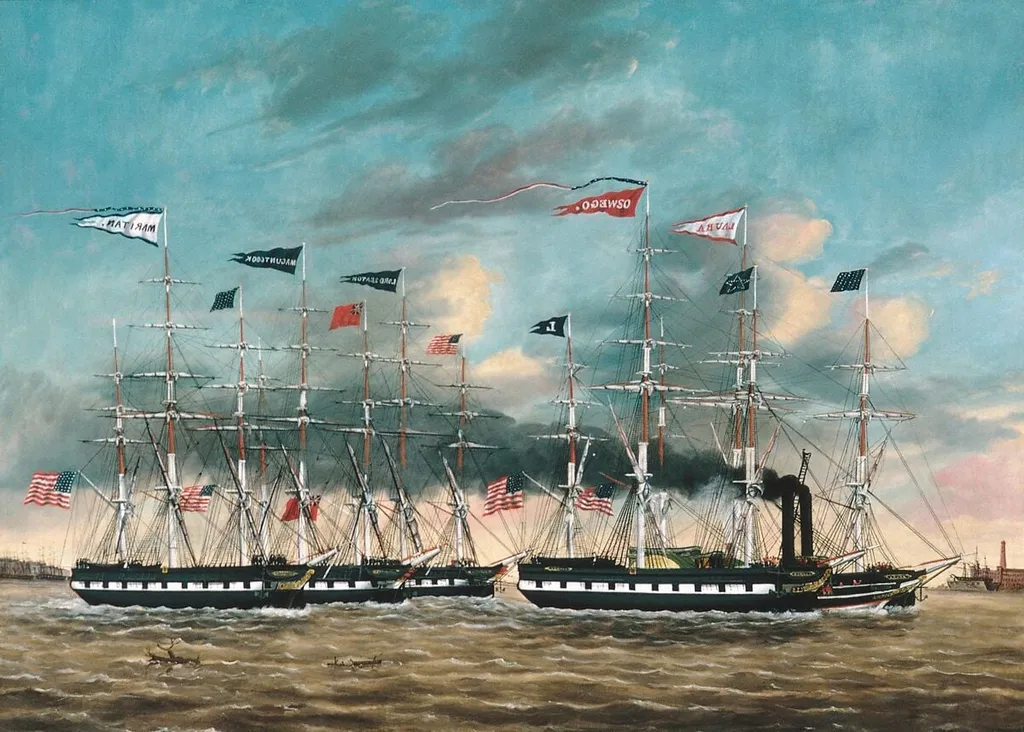
The Tow Boat Conqueror is an oil painting by the Impressionist artist James Guy Evans. It dates from 1852 and is held in the collection of the Metropolitan Museum of Art.
About this work
A steam tugboat pushes through choppy water, black smoke trailing from its tall chimney under a gray sky. The boat is the Conqueror, built in New York in 1849 and one of the earliest tugs painted from life rather than from memory. Evans signed his name right on the paddle box.
Subject & Meaning
The composition includes a ship equipped with a mast and flies the flag of the United States, explicitly grounding the work in an American context.
James Guy Evans's 1852 oil painting depicts a marine scene centered on a tow boat, identified by the presence of a prominent chimney emitting smoke, which signals the vessel's steam-powered propulsion. The composition includes a ship equipped with a mast and flies the flag of the United States, explicitly grounding the work in an American context. The iconography juxtaposes traditional sailing elements, such as the mast, with industrial features like the smoking chimney, representing the technological transition in mid-19th-century maritime transport.
The title, The Tow Boat Conqueror, combined with the national flag, suggests a symbolic celebration of American industrial progress and the dominance of steam technology over earlier methods of navigation.
Technique & Style
The Tow Boat Conqueror, executed by James Guy Evans in 1852, is an oil painting on canvas support. The work measures 100.3 cm in height and 127 cm in width. Stylistically, the piece falls within the marine genre, characterized by a detailed depiction of a steam-powered vessel.
The composition features specific formal elements including the ship's mast, a prominent chimney emitting smoke, and the flag of the United States. The medium of oil paint allows for the rendering of these maritime details, capturing the industrial aspects of the tow boat against the canvas surface. The painting is currently held within the collection of the Metropolitan Museum of Art, specifically in the American Wing.
History & Provenance
The Tow Boat Conqueror was created in 1852 by American marine painter James Guy Evans, who executed the work in oil on canvas. The painting’s inception is recorded as 1852-01-01, and it has been part of the Metropolitan Museum of Art’s collection, where it is currently housed in the American Wing. No earlier owners or commission details are documented in the available sources, so the known provenance traces directly from the artist’s studio to the museum.
Overview
James Guy Evans's The Tow Boat Conqueror, painted in 1852, depicts the steam tugboat Conqueror navigating choppy waters under an overcast sky. The vessel, constructed in New York in 1849, is rendered with specific attention to its industrial mechanics, including a tall chimney emitting black smoke and a visible paddle wheel. Evans, an American marine painter active in the mid-19th century, signed his name directly onto the boat's paddle wheel within the composition.
This work is notable for being one of the earliest marine paintings to portray a specific tugboat from life rather than relying on memory or generalized sketches. The painting captures the dynamic interaction between the steam-powered vessel and the turbulent sea, emphasizing the technological advancements of the era. By focusing on a contemporary working vessel with such precision, Evans contributed to the documentation of American maritime industry during a period of rapid industrialization.
The oil-on-canvas medium allows for the detailed rendering of the smoke and water texture, grounding the scene in a realistic, observational style characteristic of the artist's approach to marine subjects.
Context
This artwork resides within the American Wing, reflecting a broader interest in maritime subjects during the period. The painting contributes to a rich tradition of ship portraiture, a genre that documented vessels with precision and often celebrated their engineering and utility. The Conqueror offers insight into the working vessels that facilitated commerce and navigation in American waterways, expanding the scope of traditional ship paintings to include industrial craft.
Artist & collection
Artist
James Guy Evans (1809 or 1810 – 1859) was an American naval mariner and artist. Self-taught as an artist, Evans is known for his paintings of 19th century sailing ships, which are held in numerous museum collections.

- The Britannia Entering Boston Harbor
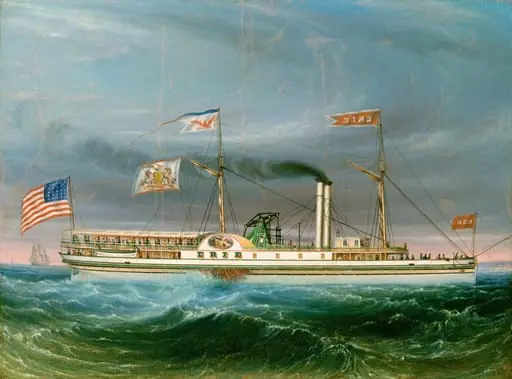 Steamship "Erie"
 Ship Southern Cross in Boston Harbor, 1851
 The United States Frigate "President" Engaging the British Squadron, 1815
 Dashing Wave Clipper Ship off Boston Light
 The Tern Schooner "Minnie G. Loud"
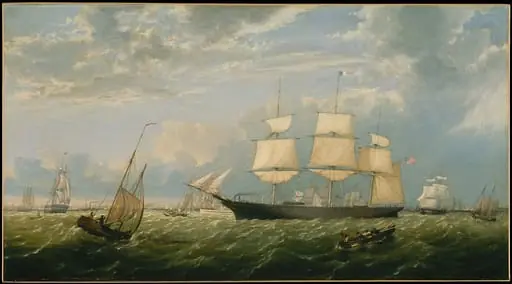 The Golden State Entering New York Harbor
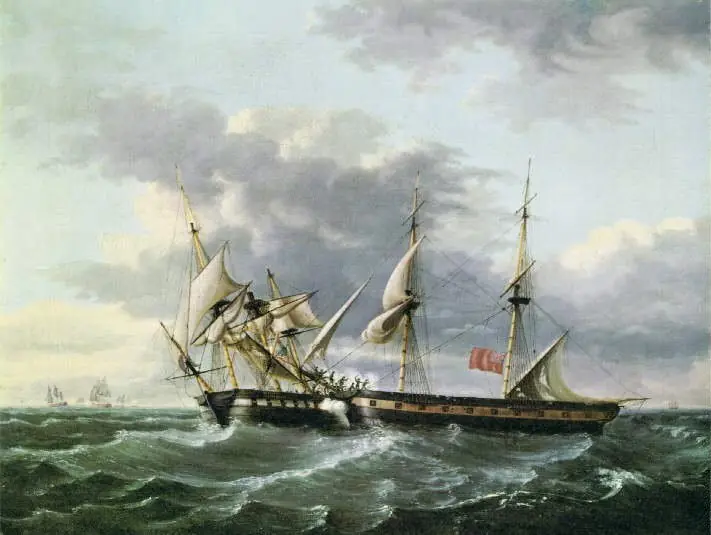 U.S.S. WASP Boarding H.M Brig FROLIC
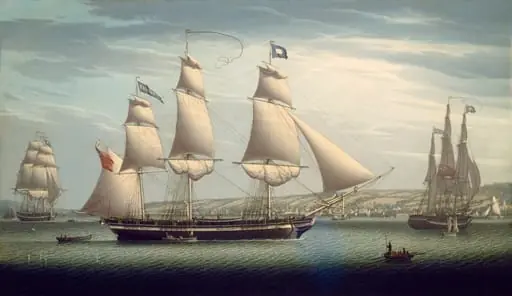 The Ship "Favorite" Maneuvering Off Greenock
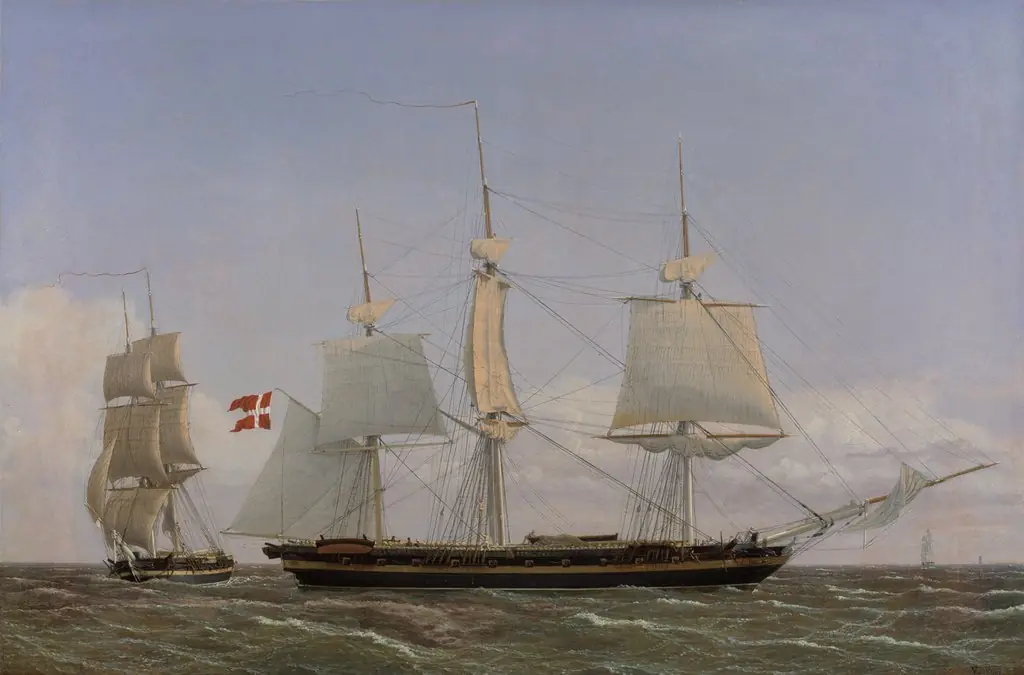 A Danish Corvette Laying t in order to Confer with a Danish Brig: The Scene Being Set in West Indian Waters
 Veleiro de três mastros (atribuído)
 Return of Napoleon from Elba
 Lake Lucerne
 View from Mount Holyoke, Northampton, Massachusetts, after a Thunderstorm—The Oxbow
 New York Harbor with Pilot Boat "George Washington"
 Marine Landscape
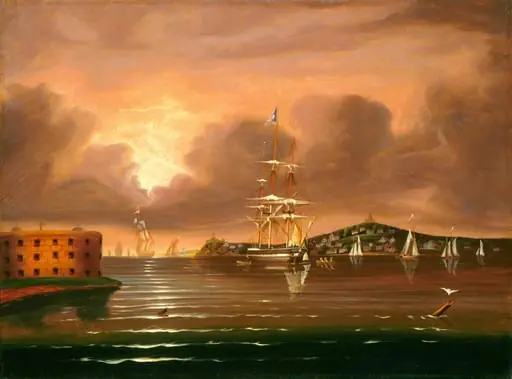 Threatening Sky, Bay of New York
 Lake George and the Village of Caldwell
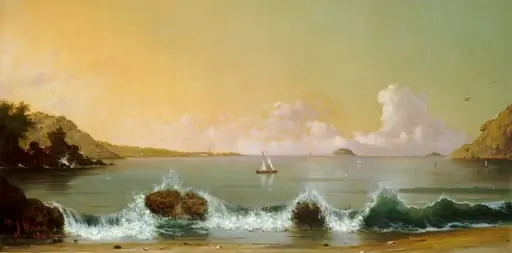 Rio de Janeiro Bay
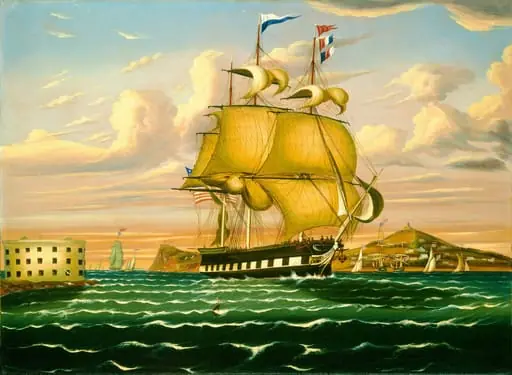 Packet Ship Passing Castle Williams, New York Harbor