Artwork
The Thomas Hunt and the America
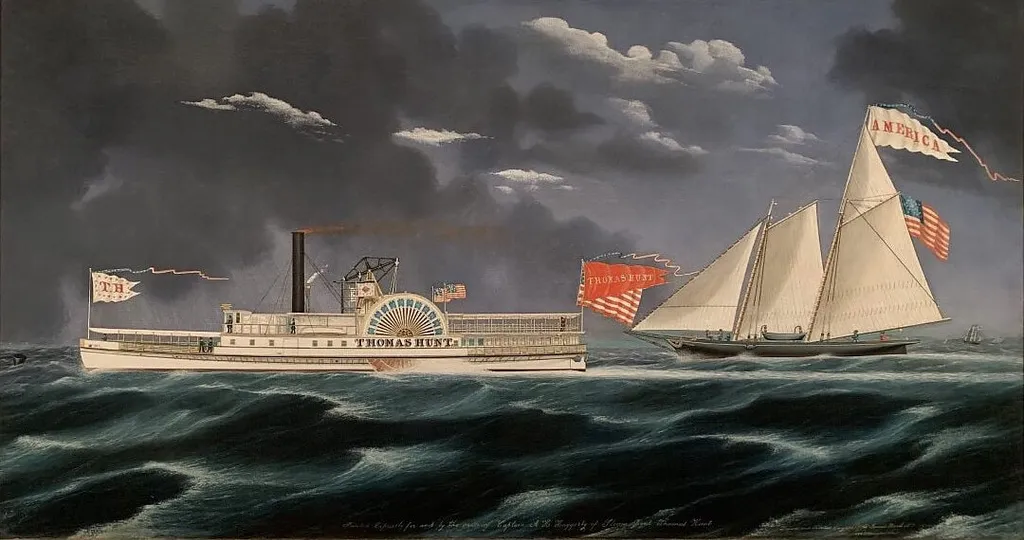
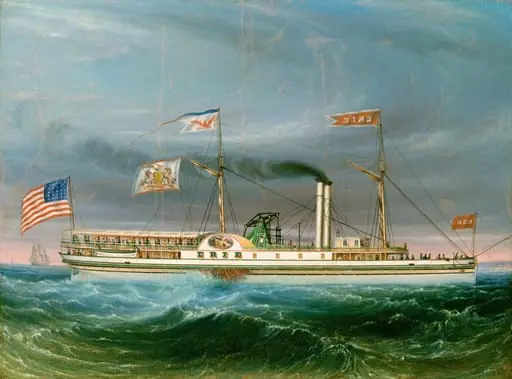
The Thomas Hunt and the America is an oil painting by the American Folk Art artist James Bard. It dates from 1852 and is held in the collection of the Metropolitan Museum of Art.
About this work
Technique & Style
James Bard’s 1852 oil painting The Thomas Hunt and the America employs oil on canvas, a medium suited to the genre’s demands for luminous color and fine detail.
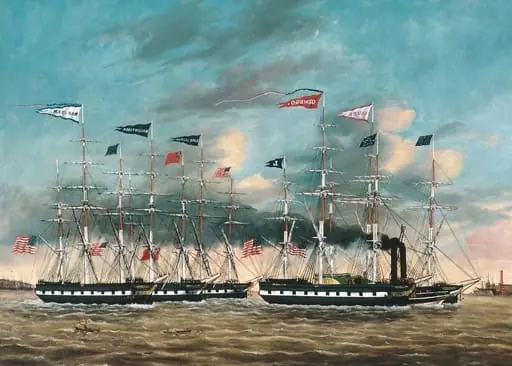
James Bard’s 1852 oil painting The Thomas Hunt and the America employs oil on canvas, a medium suited to the genre’s demands for luminous color and fine detail. The handling is precise, with smooth blending in the sky and rigging that conveys the stillness of a calm day, while sharper, controlled brushwork defines the crisp folds of the Stars and Stripes and the taut lines of the ship’s spars. The composition balances the verticality of the flagpole against the horizontal sweep of the hull and water, reinforcing the vessel’s stately presence.
Stylistically, the work adheres to mid-19th-century marine portraiture conventions, emphasizing clarity and verisimilitude to celebrate American maritime pride.
History & Provenance
The Thomas Hunt and the America was painted by James Bard in 1852 as an oil on canvas work depicting a boat, flag, and ship. It is currently held in the Metropolitan Museum of Art’s American Wing collection, as indicated by its classification and listing in the museum’s holdings. The sources provide no information about the painting’s original commission, earlier owners, or subsequent provenance beyond its present location at the Met.
The painting is held by the Metropolitan Museum of Art, where it is classified within The American Wing. According to Wikidata records, the work is part of the museum's collection and is located there. No specific inventory or accession number is provided in the available sources.
Likewise, the sources do not document any exhibition history for the work, including loans, displays, or prior showings beyond its current placement at the Metropolitan Museum of Art.
Overview
James Bard, a nineteenth-century American marine painter, completed The Thomas Hunt and the America in 1852. Executed in oil on canvas, this work exemplifies his characteristic focus on detailed depictions of watercraft. Bard's artistic approach is often associated with American folk art traditions, characterized by a direct and sometimes described as naïve style. He was known for his precise rendering of ships and steamboats.
Subject & Meaning
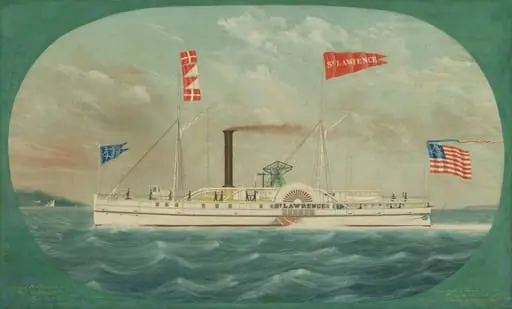
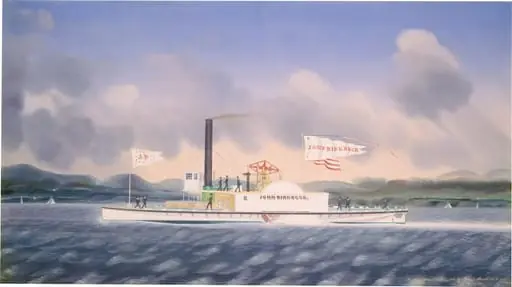
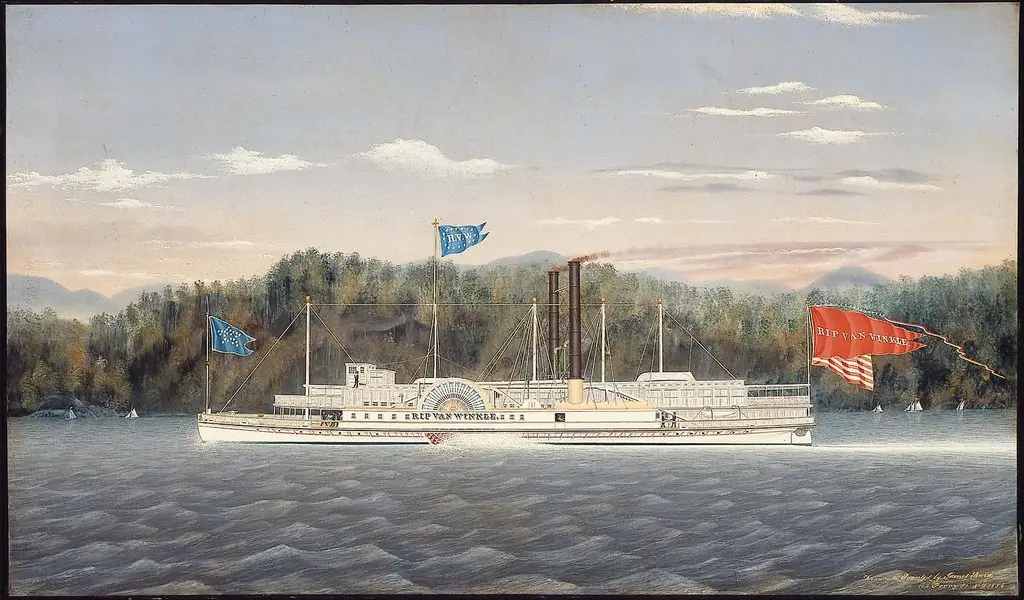
The painting prominently features the steamship Thomas Hunt, a three-masted vessel shown with an American flag fluttering from its mast. Smoke billows from its tall stack, and its side-wheels churn the water, indicating motion. Bard meticulously rendered details such as individual planks and ropes, even including small figures of sailors on deck. This ship served as a vital conveyance for passengers and mail during the 1850s.
Context
The Thomas Hunt represents a significant mode of transportation during the mid-nineteenth century, a period preceding the advent of modern communication technologies like radio and radar. Bard's depiction offers a glimpse into the daily operations of such vessels, which were crucial for connecting communities and facilitating commerce by carrying both people and correspondence across waterways.
Artist & collection

Artist
James Bard (1815–1897) was a marine artist of the 19th century. He is known for his paintings of watercraft, particularly of steamboats. His works are sometimes characterized as naïve art. Although Bard died poor and…