Artwork
The Nativity
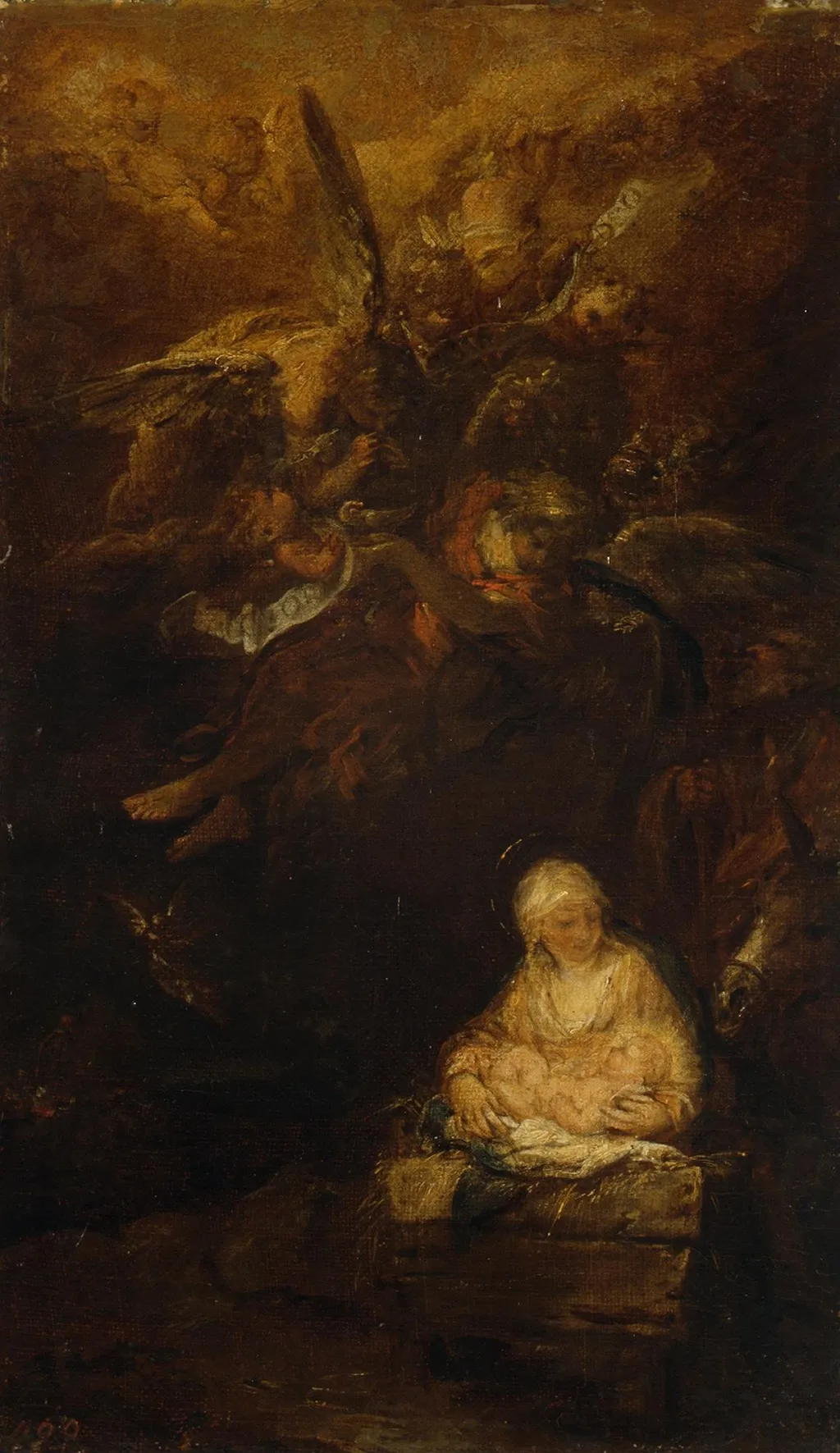
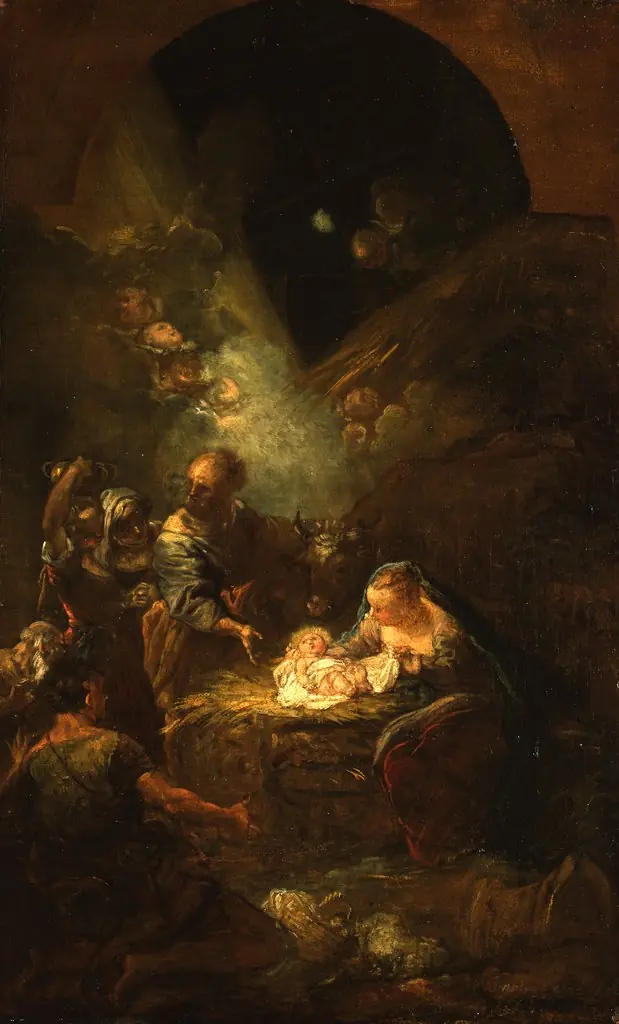
The Nativity is an oil painting by the Early Baroque Italian artist Bartolomeo Biscaino. It is held in the collection of the Hermitage Museum.
About this work
Overview
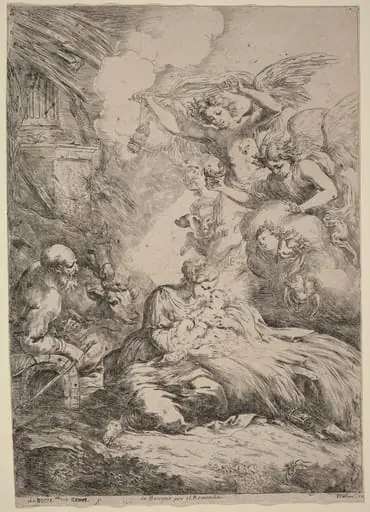
The Nativity is a religious artwork by the Genoese artist Bartolomeo Biscaino, existing in both painted and etched forms.
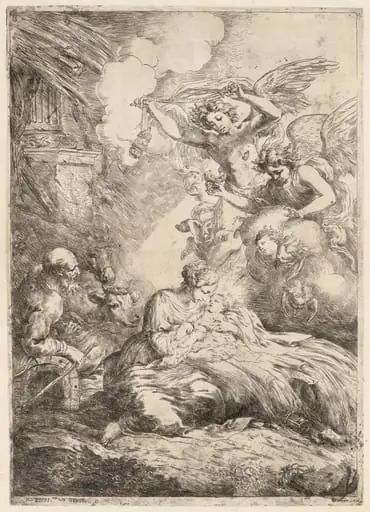
The Nativity is a religious artwork by the Genoese artist Bartolomeo Biscaino, existing in both painted and etched forms. The painting, executed in oil on canvas, measures 42 by 25 centimeters and is dated to 1700 in institutional records, though this posthumous date likely reflects the work's reception or cataloging rather than its actual creation, given Biscaino's death in 1657. The painted version resides in the Hermitage Museum. Biscaino also produced a widely circulated etching of the same subject, titled The Nativity with Angels or The Nativity with Adoration of Angels, created during the 1650s. The etching exists in multiple states and is held by institutions including the National Gallery of Art in Washington and the Metropolitan Museum of Art in New York.
Subject & Meaning
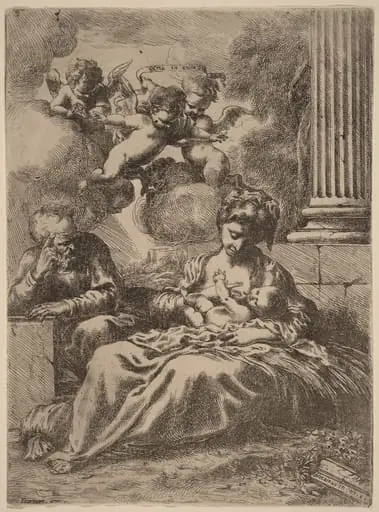
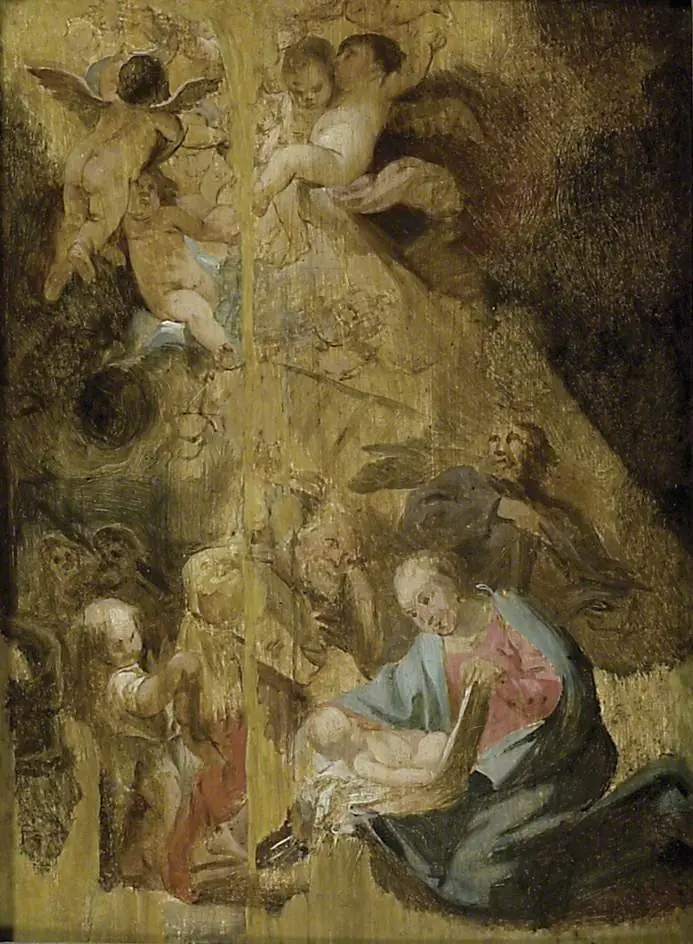
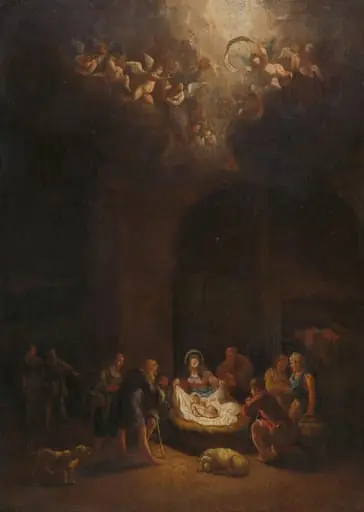
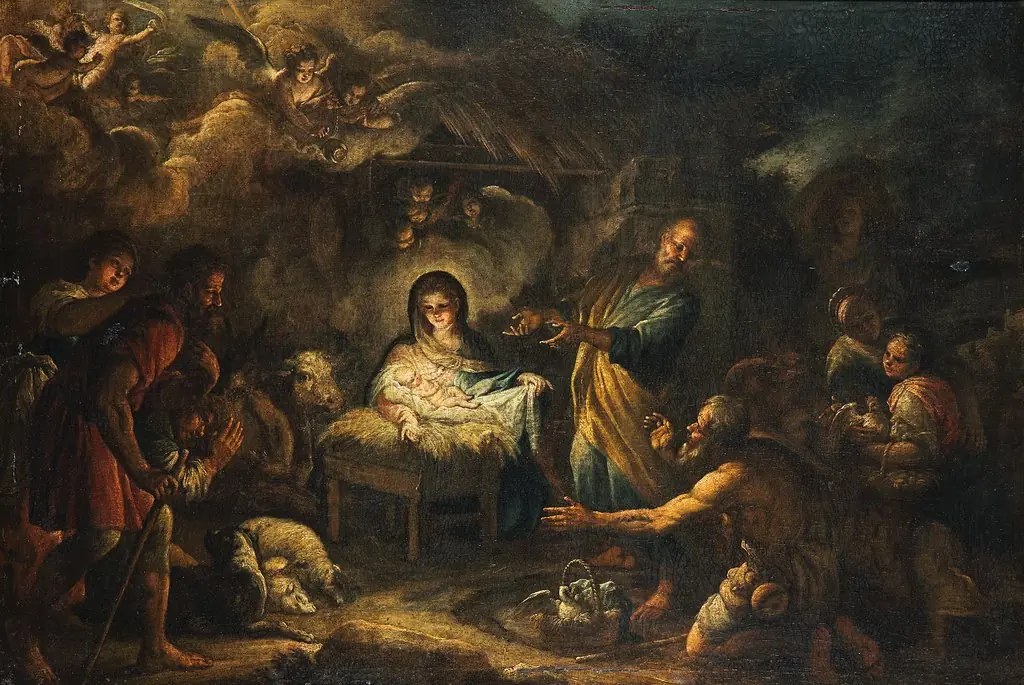
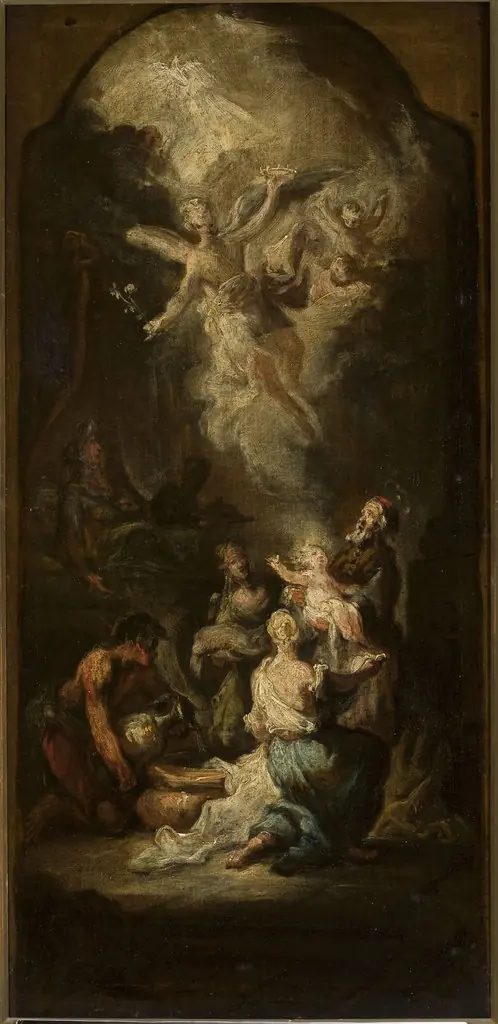
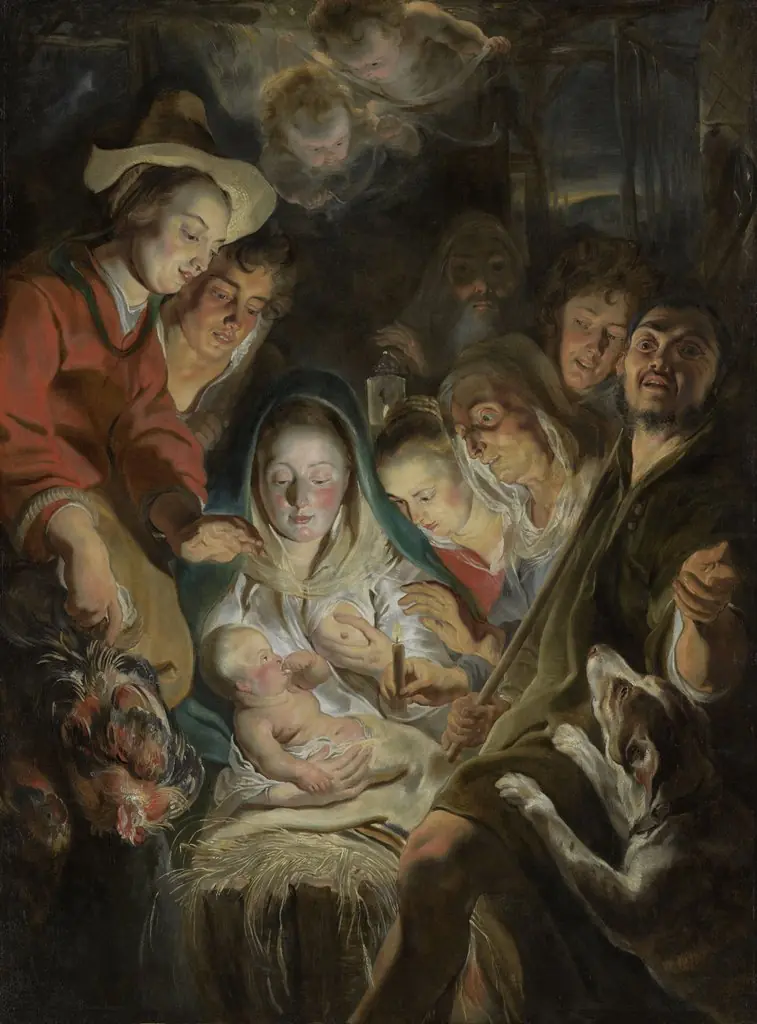
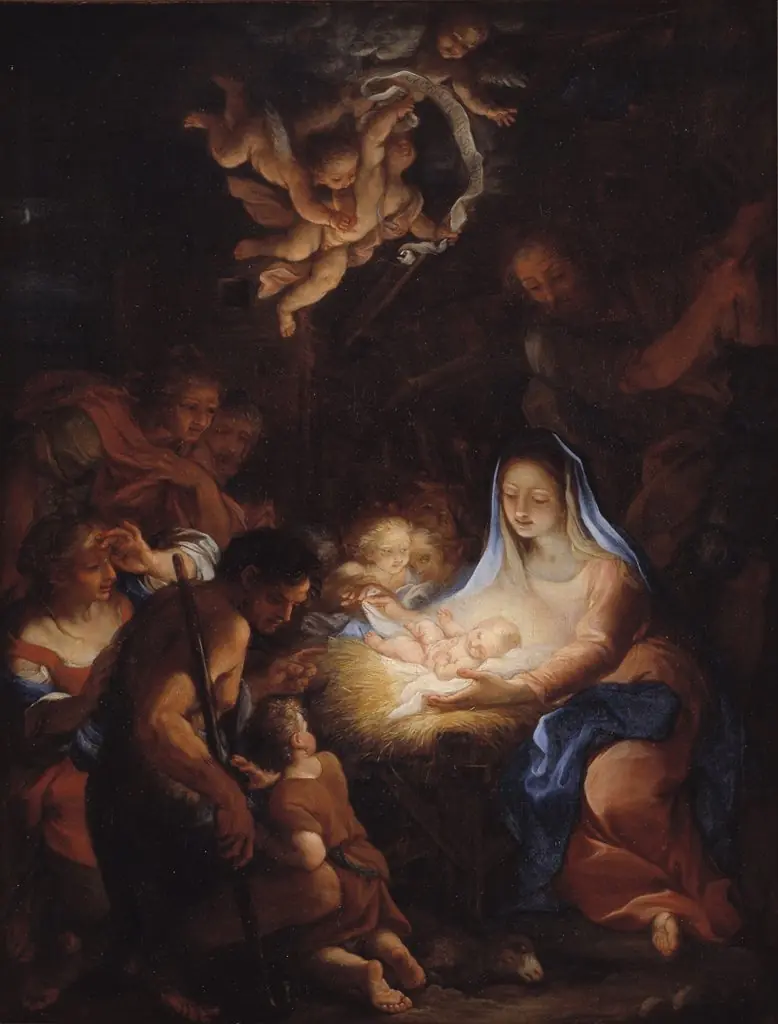
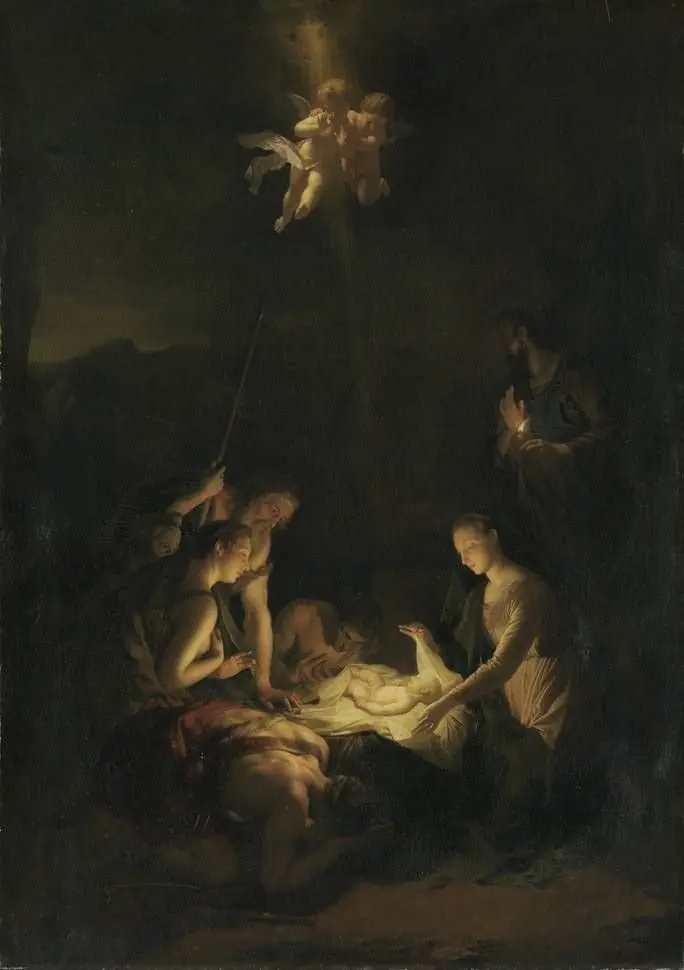
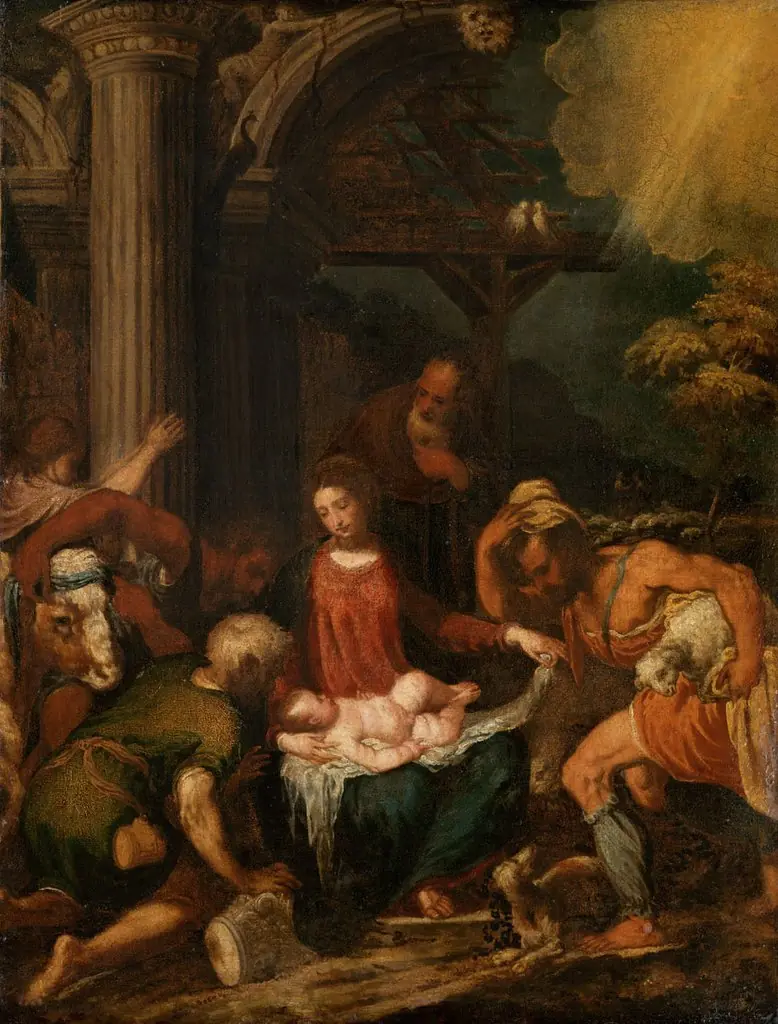
The artwork depicts the Nativity of Jesus, focusing on the Virgin Mary and the Christ Child. In the painted version, Mary sits in pale garments, looking downward at the swaddled infant resting on a cloth-covered surface. Above her, two winged figures hover with large feathered wings, while additional faint forms emerge from golden-brown clouds in the uppermost register. The etched version expands this iconography to include a soaring heavenly angelic choir, doves perching on an improbable beam, and a manger juxtaposed with broken classical columns. The broken column carries symbolic weight, traditionally found in tomb sculpture to indicate a life cut short, here anticipating the crucifixion of Christ and poignantly mirroring Biscaino's own premature death. The column may also allude to Psalm XI, 3, asking, If the foundations be destroyed, what can the righteous do?
Technique & Style
The painted version features a vertical composition dominated by deep browns, warm umbers, and dark shadows. Light falls selectively from above, illuminating the central figures of Mary and the child while the background recedes into obscurity. The brushwork is loose and sketchy, utilizing thin paint application with visible underdrawing in places, and the surface shows age and some abrasion. In his broader oeuvre, Biscaino favored softer forms, broader brushstrokes, and more delicate colors compared to the violent contrasts and fiery color of his teacher Valerio Castello. His etchings reflect a brilliant drawing style characterized by a sophisticated play of light and shade. Art historians note the inspiration of earlier practitioners like Correggio and Federico Barocci in his work, alongside the profound influence of Giovanni Benedetto Castiglione on his printmaking iconography and technique.
History & Provenance
The etching of The Nativity with Angels was likely published posthumously by a little-known Frenchman named Daman, who acquired Biscaino's plates. The etching plates bear inscriptions identifying the artist as BISCAI.VS GENVE. F, with Daman credited lower right. The National Gallery of Art holds a second state of three of this etching, acquired from P. and D. Colnaghi and Co. in London in 1985. The Metropolitan Museum of Art holds a first state of eight. The etching was exhibited in Eva/Ave: Woman in Renaissance and Baroque Prints at the National Gallery of Art in 1990, and in The Baroque Genius of Giovanni Benedetto Castiglione at the same institution in 2012. It was also cataloged as number 69 in the 2020 exhibition A Superb Baroque: Art in Genoa, 1600-1750, though the Washington venue was canceled. The painted version in the Hermitage Museum has dimensions of 42 by 25 centimeters.
Context
Bartolomeo Biscaino was a Genoese artist born in 1629 whose life was cut short by the plague in 1657. Little is known about his biography. He first trained with his father, a landscape painter, before entering the workshop of Valerio Castello in the late 1640s. Giovanni Benedetto Castiglione proved a vital influence on Biscaino, particularly regarding the iconography and technique of his prints, as well as his rendering of animals, figures, and naturalistic settings in his later paintings. Scholars frequently date Biscaino's canvases based on his forty catalogued etchings, and he remains best known today for his drawings and prints. The 1700 date associated with the Hermitage painting in institutional records stands apart from his established lifespan and likely represents a later cataloging artifact rather than the true date of creation.
Artist & collection