Artwork
'Christ! I have been many times to church!'
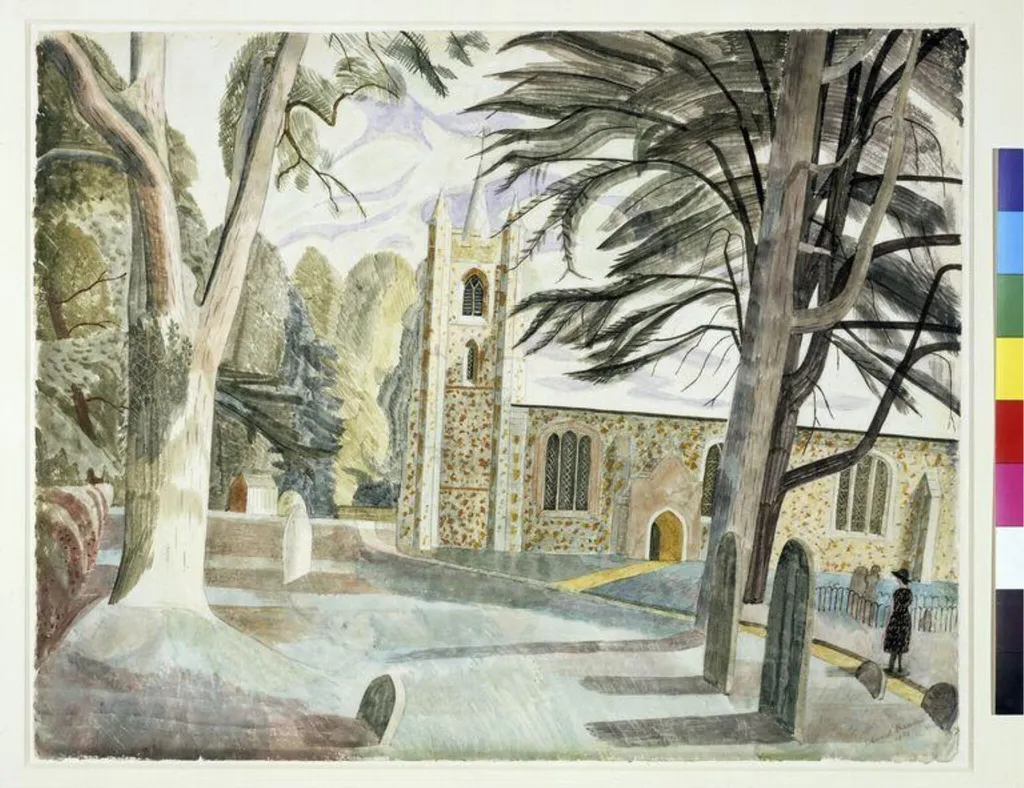
'Christ! I have been many times to church!' is a watercolor work on paper by the Social Realist artist Edward Bawden. It dates from 1933 and is held in the collection of the Victoria and Albert Museum.
About this work
Overview
Edward Bawden created this watercolour in 1933, capturing a quiet churchyard scene with restrained precision. The work is signed and dated by the artist, confirming its origin in that year. Executed in transparent watercolour, it reflects his interest in everyday English landscapes and the subtle rhythms of rural life. The composition balances stillness and motion, inviting quiet contemplation.
Subject & Meaning
A solitary figure in dark clothing approaches the church along a narrow path, their small scale emphasizing solitude within the landscape. The church, framed by leaning trees and scattered gravestones, suggests a place of ritual and memory. The figure’s intent is unclear, perhaps devotion, mourning, or routine, but the scene resists narrative closure, focusing instead on atmosphere and presence.
Technique & Style
Bawden employed loose, fluid brushwork to convey wind moving through the trees, with quick strokes suggesting rustling leaves and shifting light.
Bawden employed loose, fluid brushwork to convey wind moving through the trees, with quick strokes suggesting rustling leaves and shifting light. The watercolour medium allowed for translucent layers, creating soft contrasts between the church’s pale stone and the muted greens and blues of the surrounding foliage. Delicate linework defines gravestones and architectural details without overstatement.
History & Provenance
The watercolour was completed in 1933 and remains in documented circulation since its creation. It is held in the collection of the Victoria and Albert Museum, where it has been preserved as part of Bawden’s broader body of work documenting British architecture and landscape. No record of prior ownership or exhibition prior to its acquisition by the museum is publicly available.
Context
In the early 1930s, Bawden was developing his distinctive style, blending modernist economy with traditional English topographical subjects. This piece aligns with his interest in vernacular architecture and the emotional weight of quiet places. It reflects a broader interwar trend among British artists to find dignity in ordinary, often overlooked scenes of rural life.
Legacy
The work contributes to Bawden’s reputation as a keen observer of English landscapes and architecture. Its understated tone and technical clarity have influenced later generations of watercolourists interested in capturing atmosphere through minimal means. It remains a representative example of his ability to infuse everyday scenes with quiet resonance.
Artist & collection
Artist
Edward Bawden made bold prints and watercolors rooted in 20th-century English life, often capturing quiet corners with sharp lines and bright colors.

- St. Edmund's Church, Tendring, Nr. Harwich
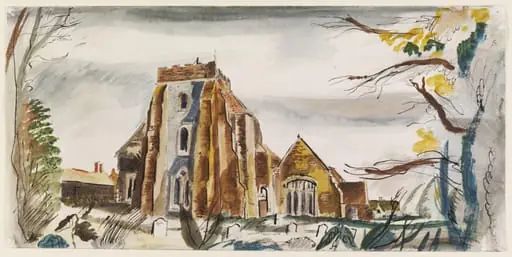 St. Osyth's Church
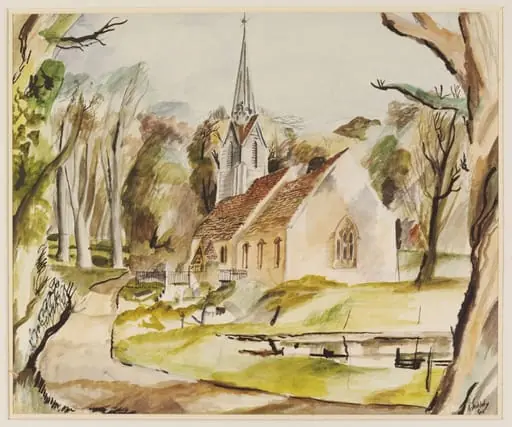 Middleton Church
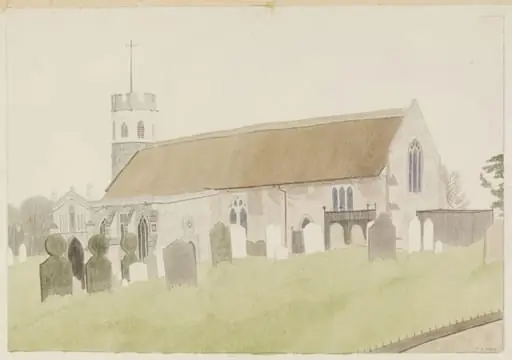 St. Peter's Church, Theberton
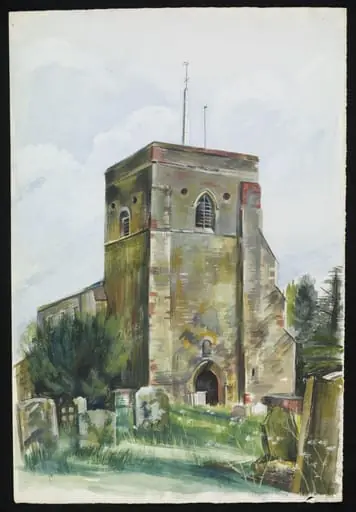 Redbourn Church
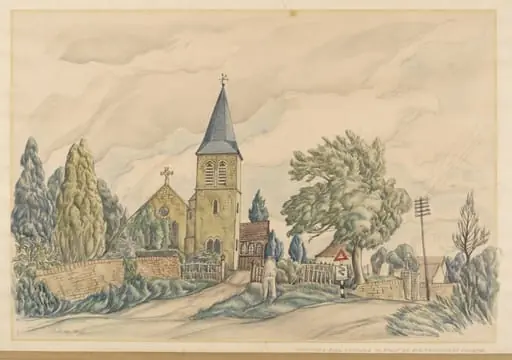 Old Fernhurst Church
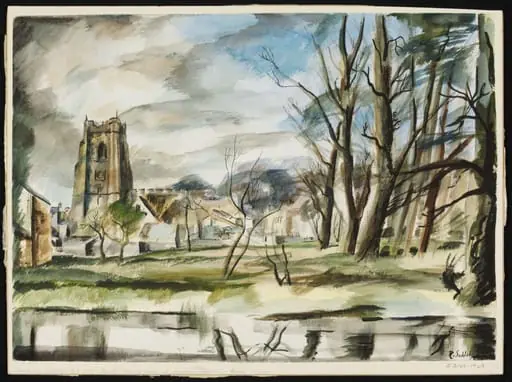 All Saints Church, from the Meadows, Sudbury
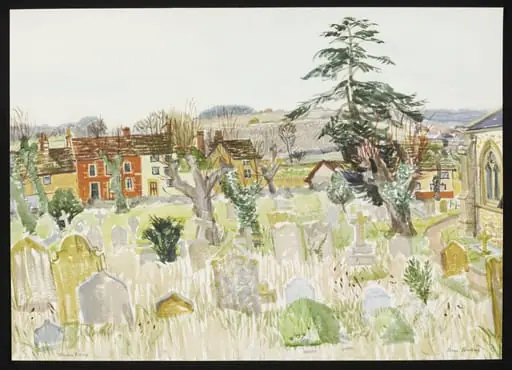 Standon Village from the Churchyard
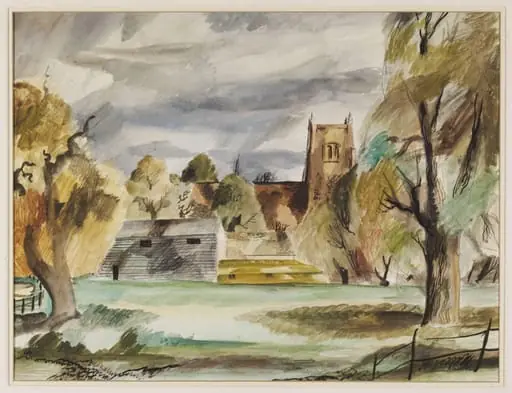 Wickham St. Paul's Church
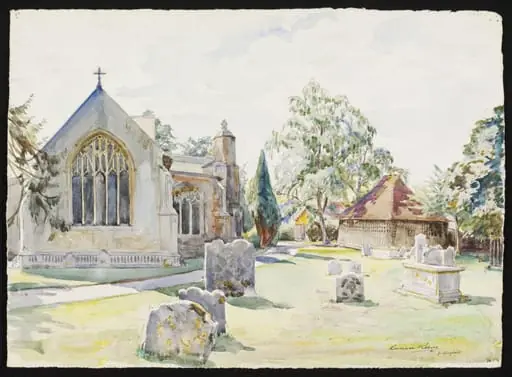 East Bergholt Church and Bell Cage
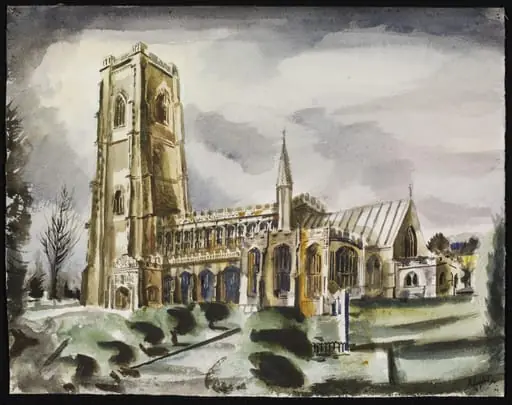 Church of SS. Peter & Paul, Lavenham
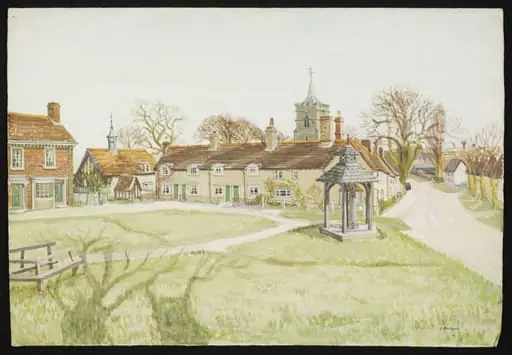 The Village Green, Westmill