Artwork
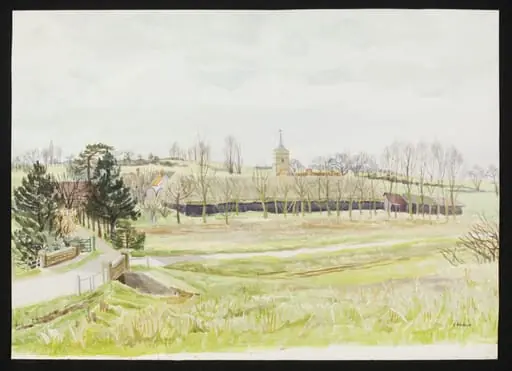
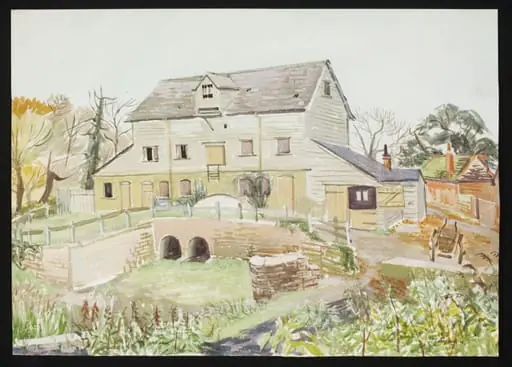
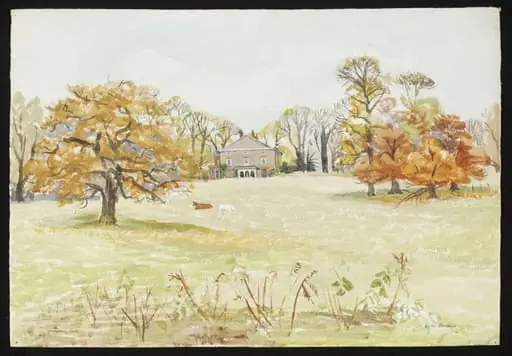
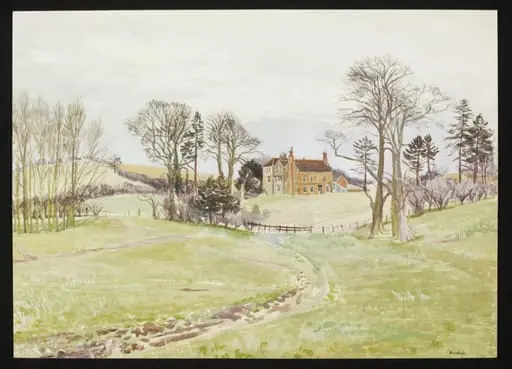
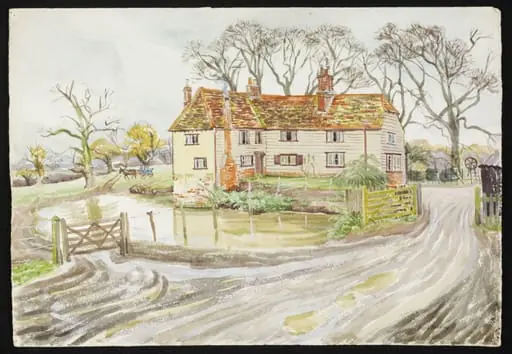
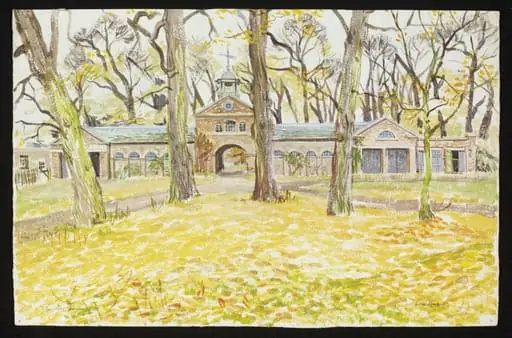
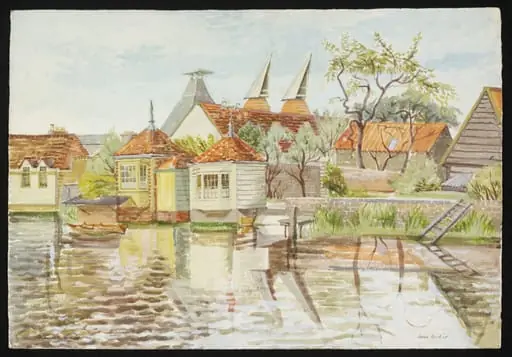
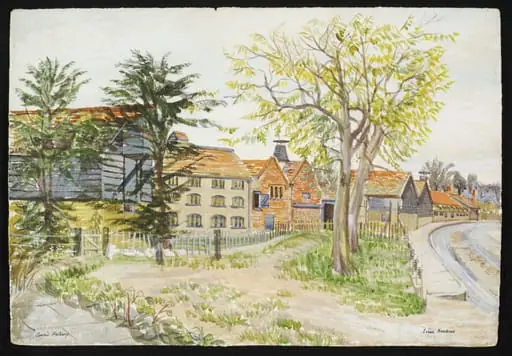
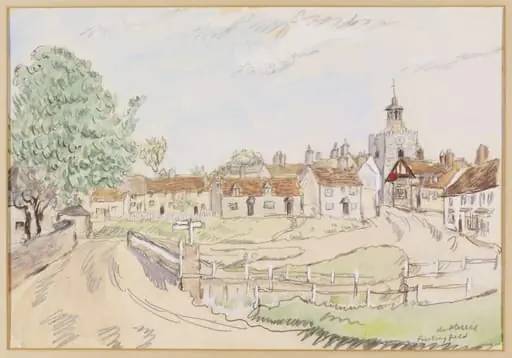
The Village Green, Westmill
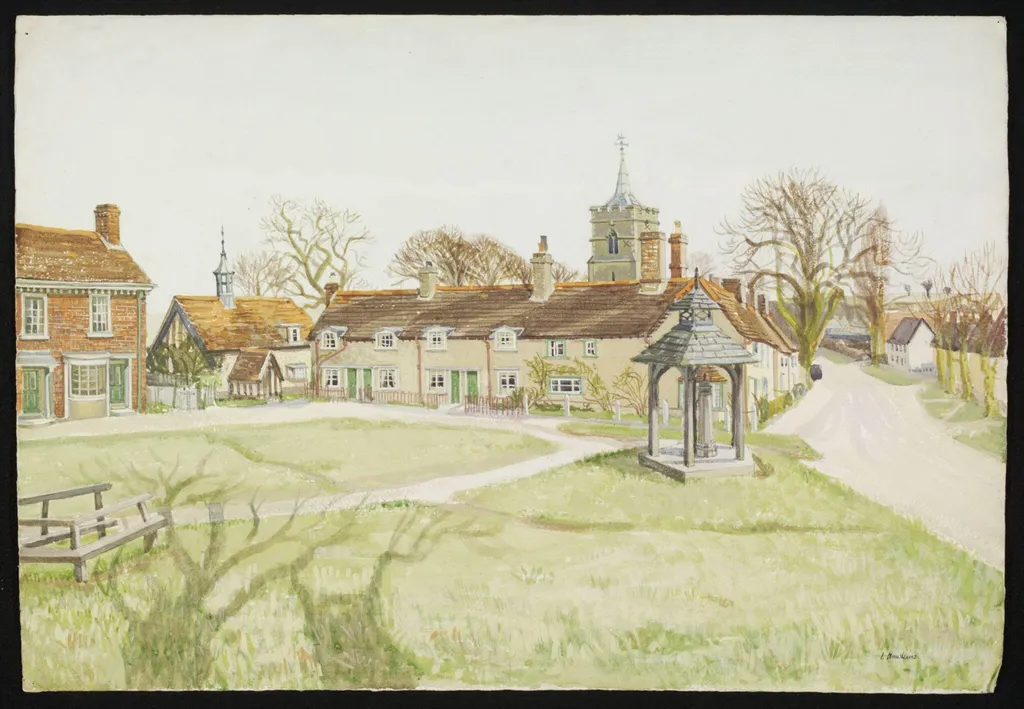
The Village Green, Westmill is a watercolor work on paper by the Social Realist artist Hawkins. It is held in the collection of the Victoria and Albert Museum.
About this work
Overview
The Village Green, Westmill is a 1940 watercolour by Hawkins, depicting a tranquil village scene.
Subject & Meaning
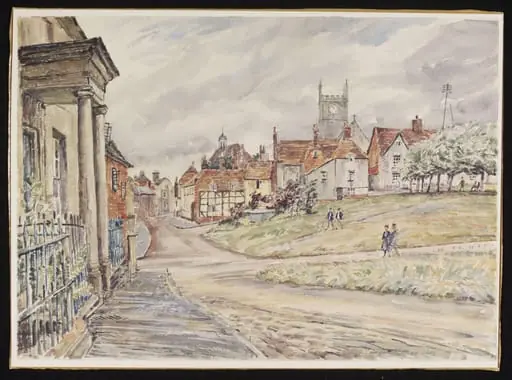
The painting shows cottages on Westmill's village green, with St Mary's Church tower in the background. It captures a serene atmosphere, with muted earthy tones and soft brushwork.
Technique & Style
The artist employed watercolour to achieve a gentle, calm effect, using earthy greens and browns to convey a sense of peacefulness.
History & Provenance
Created as part of the Recording Britain project, a wartime initiative to document the British landscape, the work was commissioned between 1940 and 1943, funded by the Pilgrim Trust and administered by the Committee for the Employment of Artists in Wartime.
Context
The Recording Britain project, directed by Sir Kenneth Clark, aimed to record the British landscape amid fears of wartime destruction and social change.
Own this work as a print
Artist & collection
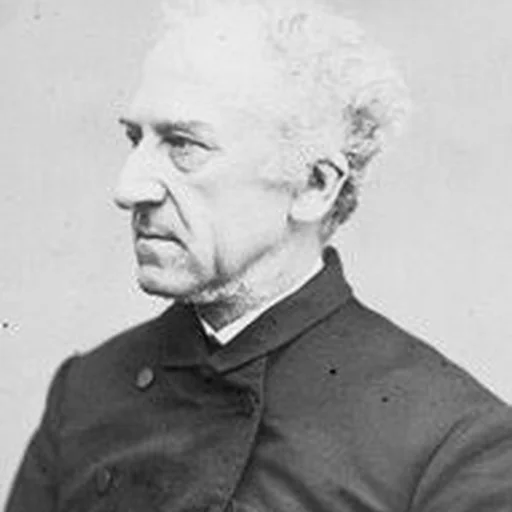
Artist
Benjamin Waterhouse Hawkins (8 February 1807 – 27 January 1894) was an English sculptor and natural history artist renowned for his work on the life-size models of dinosaurs in the Crystal Palace Park in south London.