Artwork
Reptiliary and Main Entrance
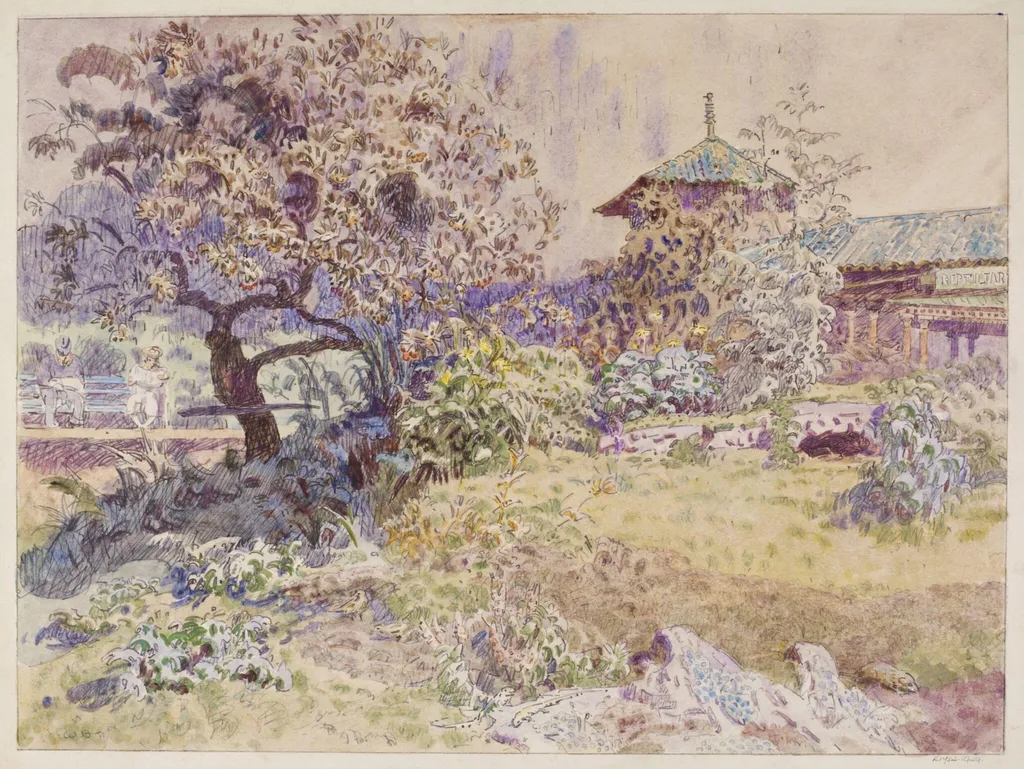
Reptiliary and Main Entrance is a watercolor work on paper by the Art Brut artist Bayes. It dates from 1940 and is held in the collection of the Victoria and Albert Museum.
About this work
Overview
The scene includes a prominent tree with sprawling branches, understated foliage, and a distant structure marked by a sign.
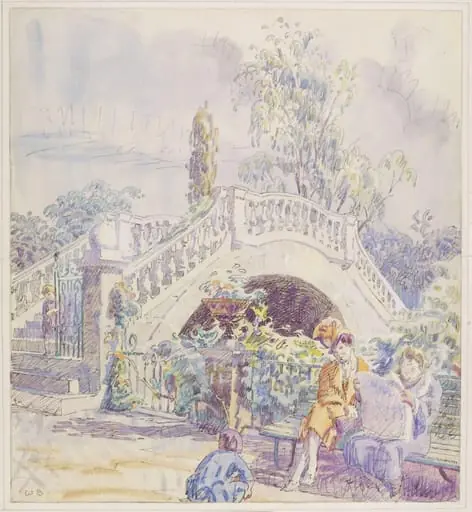
This 1940 watercolour by Bayes captures the Reptiliary building at London Zoo, rendered with quiet precision. The scene includes a prominent tree with sprawling branches, understated foliage, and a distant structure marked by a sign. Two figures sit on a bench, their presence subtle against the calm environment.
Executed in soft, muted tones of green, brown, and grey, the work reflects the delicate, observational style typical of topographical watercolour from this period.
Subject & Meaning
The Reptiliary, a functional zoo structure, is portrayed not as a spectacle but as a quiet corner of urban nature. The reptiles on the rock are minor elements, dwarfed by the surrounding vegetation and human activity. The painting suggests a moment of stillness amid wartime Britain, where everyday spaces, zoos, gardens, benches, became vessels for continuity and quiet resilience. The absence of drama emphasizes ordinary life as worthy of documentation.
Technique & Style
Bayes employed transparent watercolour washes to achieve a light, airy texture, allowing the paper’s surface to contribute to the tonal gradations. Brushwork is restrained, with soft edges and minimal detail, particularly in the background figures and architectural elements. The muted palette and lack of sharp contrast reflect a deliberate restraint, aligning with the project’s aim to record rather than dramatize the British landscape.
History & Provenance
Created in 1940 as part of the Recording Britain initiative, this work was commissioned by the Pilgrim Trust under the direction of Sir Kenneth Clark. The project sought to preserve visual records of Britain’s architectural and natural heritage amid the threat of wartime destruction. Bayes’s contribution, like others in the series, was later acquired by the Victoria and Albert Museum, where it remains part of a broader archive of wartime topographical art.
Context
During the early 1940s, as Britain faced aerial bombardment and social upheaval, the Recording Britain project emerged as a cultural preservation effort. Artists were sent across the country to document buildings, landscapes, and public spaces at risk of loss. The Reptiliary, though not a grand monument, represented the everyday institutions that defined communal life, zoos, parks, and gardens, seen as integral to national identity.
Legacy
Bayes’s watercolour contributes to a significant archive of British topographical art from the Second World War. Its understated quality reflects a broader aesthetic shift in wartime documentation: away from heroism toward quiet observation. Today, works like this are valued not for their novelty but for their testimony to ordinary places preserved during a time of uncertainty, offering insight into how Britain saw itself in moments of pause.
Artist & collection
Artist
Walter John Bayes was an English painter and illustrator who was a founder member of both the Camden Town Group and the London Group and also a renowned art teacher and critic.

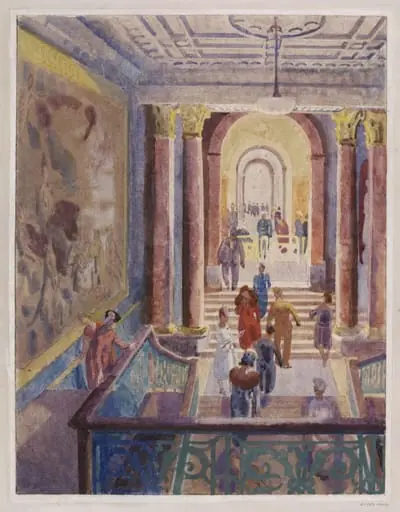
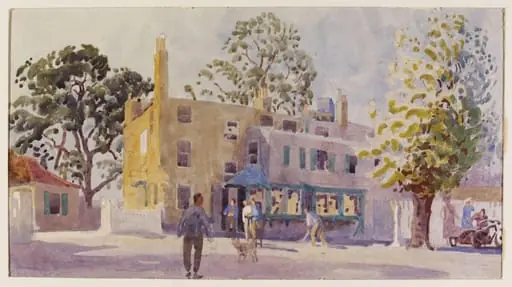
- Isleworth
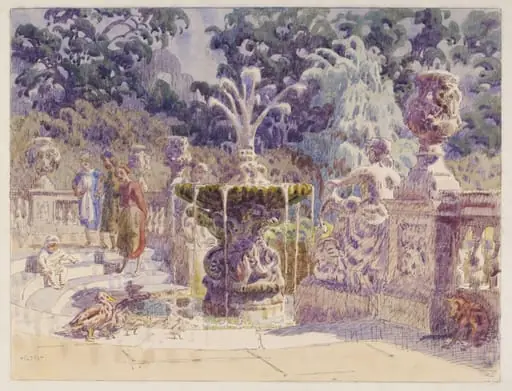 Fountain in Kensington Gardens
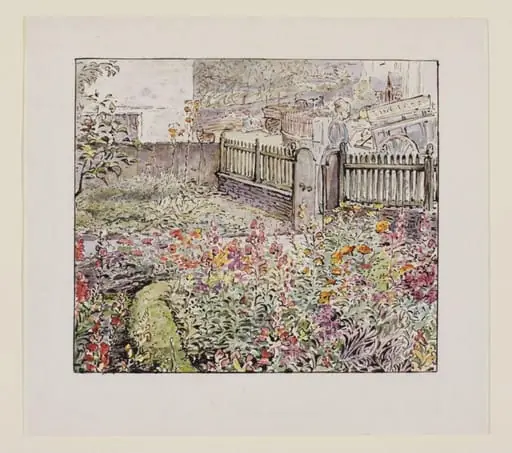 Garden in Sawrey
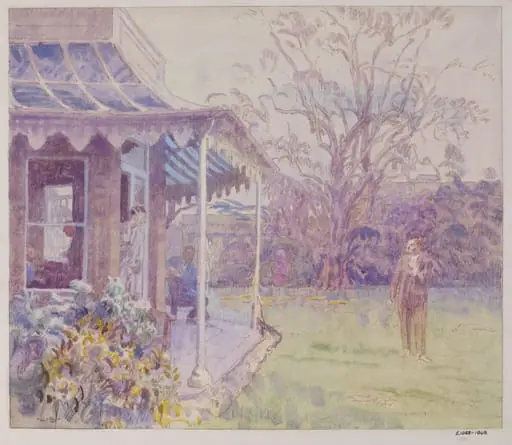 Porch of the Senior Common-room, Reading University
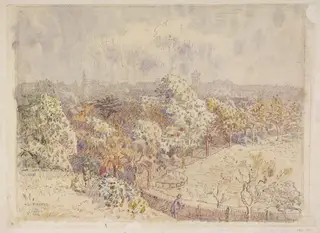 Colchester from the North Station
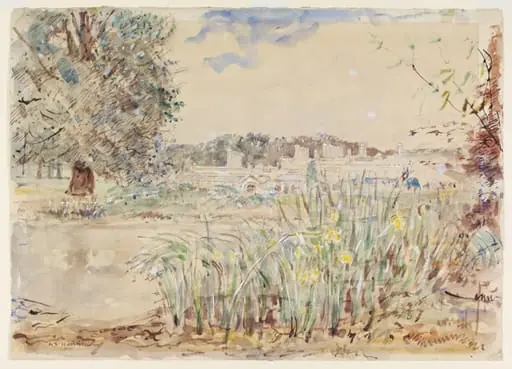 Gunnersbury House, Brentford
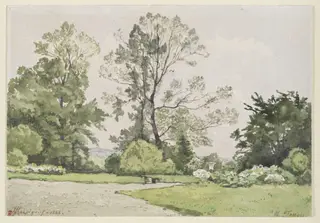 Famars, near Valenciennes
 Parmelee Estate in Bloom
![Phlox [a corner of a country garden], by Ernest Albert Chadwick](https://artifactworldgallery.com/img/ernest-albert-chadwick--phlox-a-corner-of-a-country-garden--692a6ad859748433-w320.webp) Phlox [a corner of a country garden]
Phlox [a corner of a country garden] Sketch of the garden at Gwaynynog for the frontispiece of <i>The Tale of the Flopsy Bunnies</i>
 The Guest House, Cerne Abbas