Artwork
Charitas (Charity)
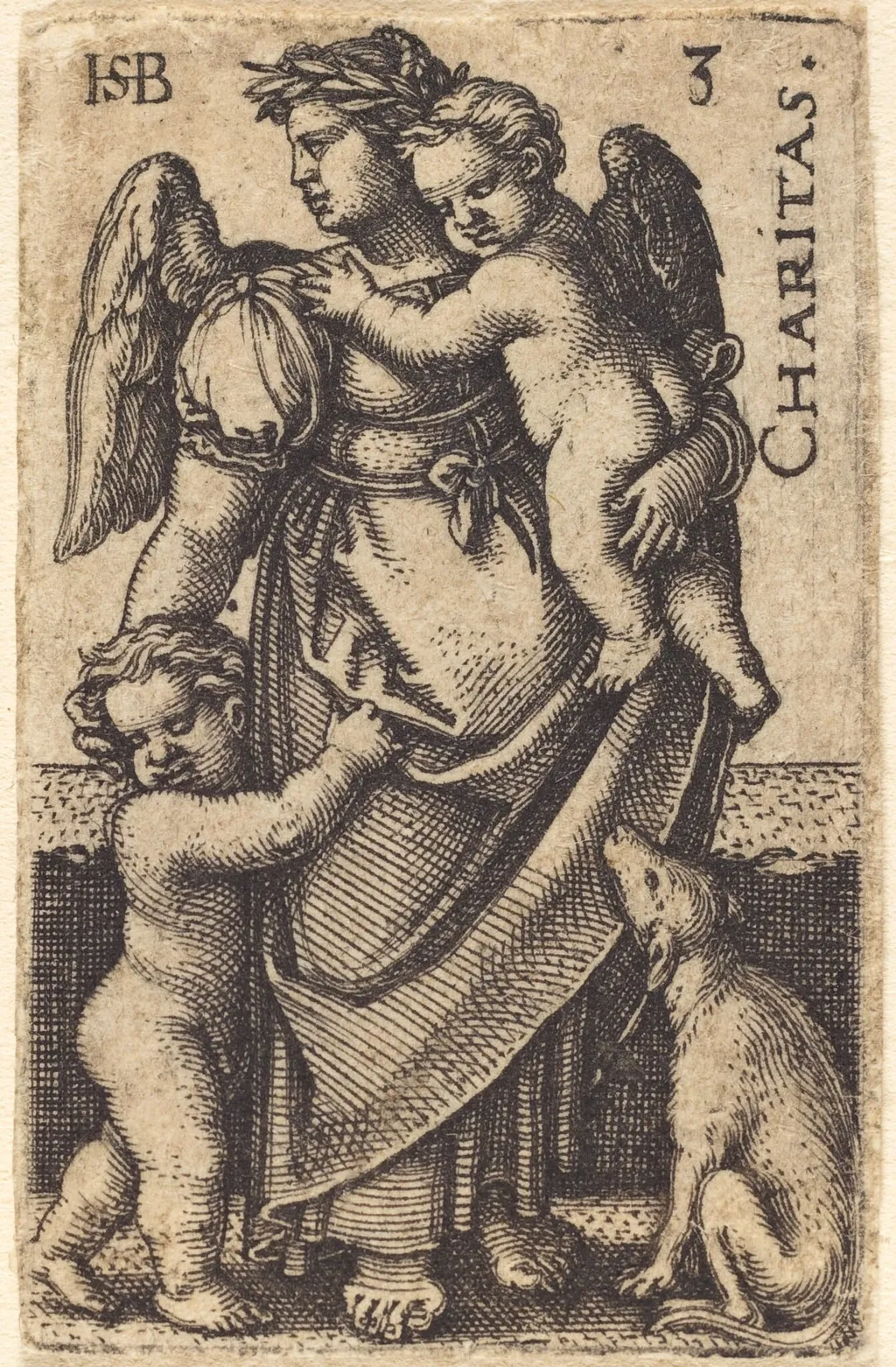
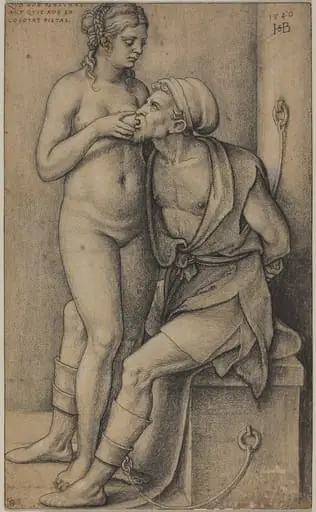
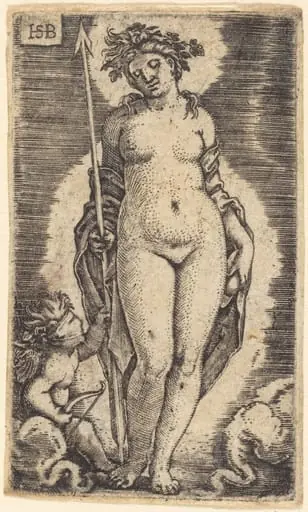
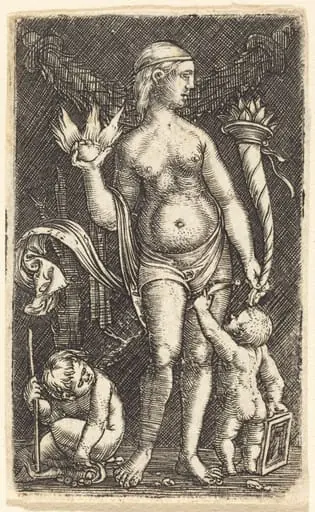
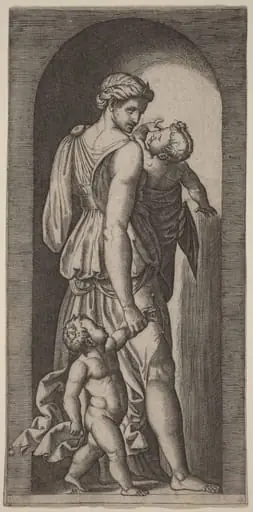
Charitas (Charity) is an ink print by the Renaissance artist Sebald Beham. It dates from 1539 and is held in the collection of the National Gallery of Art.
About this work
Overview
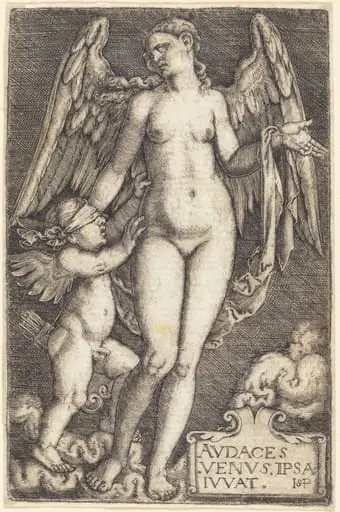
Sebald Beham’s 1539 engraving Charitas presents a compact, meticulously rendered scene in which two cloaked figures assist a child rising from the ground. Executed on a small copper plate, the print exemplifies the precision and fine detail characteristic of Beham’s work during his later years in Frankfurt.
Subject & Meaning
The composition depicts a winged figure shielding her face with a cloth and a second figure bending to support the child, suggesting an allegorical representation of charitable aid. The Latin title, meaning “charity,” reinforces the interpretation of the image as a visual embodiment of benevolent action.
Technique & Style
Beham achieved depth through a dense network of incised lines, employing cross‑hatching and stippling to model forms and suggest subtle shadows. The engraving’s modest scale and intricate line work align it with the “Little Masters” tradition of producing highly detailed, miniature prints that demand close viewing.
History & Provenance
Born in Nuremberg, Beham was active in the generation following Albrecht Dürer and later settled in Frankfurt, where he produced many of his finest prints. Charitas is documented as part of his output from the late 1530s, a period marked by his focus on small‑format engravings for a market of collectors and connoisseurs.
Context
The work reflects the broader German Renaissance interest in moralizing subjects and the technical advancements in printmaking that allowed artists to disseminate complex allegories widely. By integrating a compassionate narrative with refined engraving methods, Beham contributed to the era’s dialogue between artistic skill and didactic content.
Own this work as a print
Artist & collection
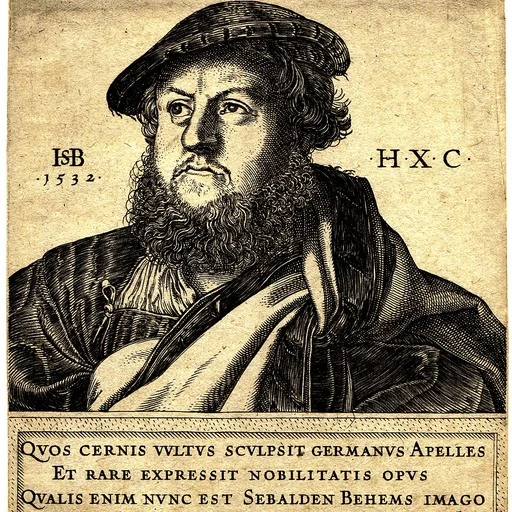
Artist
Sebald Beham (1500–1550) was a German painter and printmaker, mainly known for his very small engravings.