Artwork
The Neva Gate at the Peter and Paul Fortress
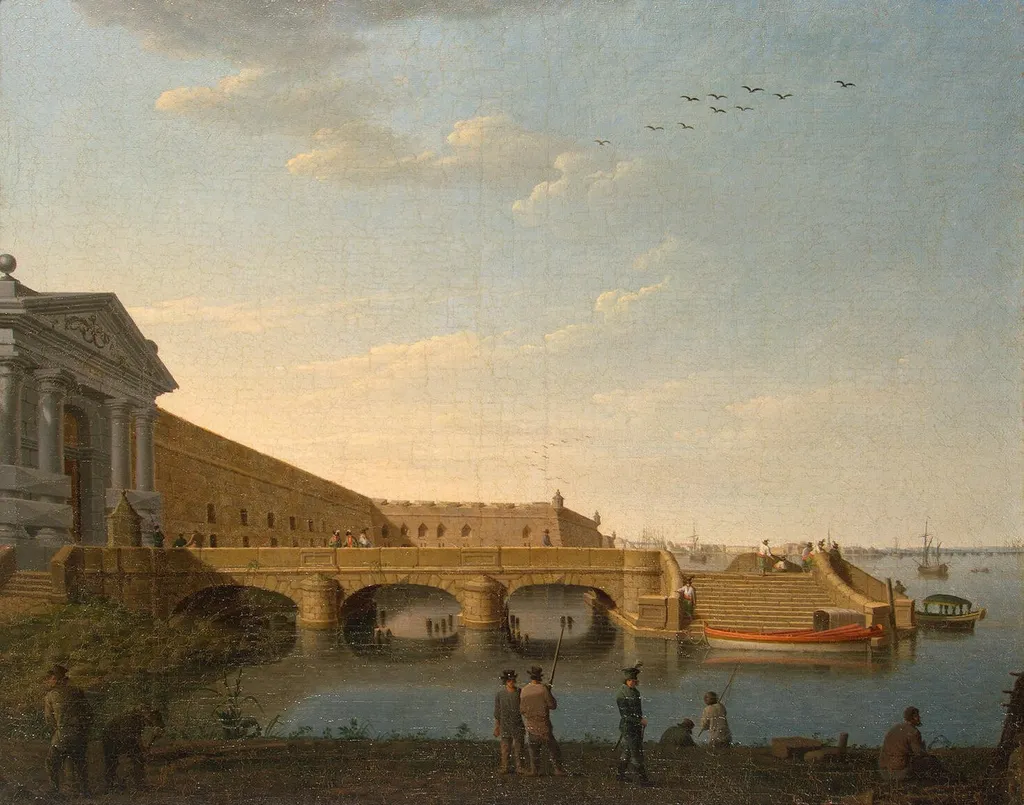
The Neva Gate at the Peter and Paul Fortress is an oil painting by the Neoclassicist artist Benjamin Patersen. It dates from 1799 and is held in the collection of the Hermitage Museum.
About this work
Overview
The Neva Gate at the Peter and Paul Fortress is an oil-on-canvas cityscape painted by the Swedish-born Russian artist Benjamin Patersen in 1797.
The Neva Gate at the Peter and Paul Fortress is an oil-on-canvas cityscape painted by the Swedish-born Russian artist Benjamin Patersen in 1797. Measuring 68.5 by 85 centimetres, the work depicts a fortified riverfront entrance in Saint Petersburg and is held in the collection of the Hermitage Museum. The painting exemplifies Patersen's documentary approach to recording the architecture and atmosphere of the Russian imperial capital at the turn of the nineteenth century, a period when his topographical views served as important visual records of the city's rapid development. As one of more than 100 cityscapes Patersen produced, this work contributes to an irreplaceable historical archive of late eighteenth-century Saint Petersburg, most of which remains preserved in the Hermitage.
Subject & Meaning
The painting portrays the Neva Gate, a fortified entrance of the Peter and Paul Fortress, the historic military complex commissioned by Peter the Great on Hare Island in Saint Petersburg. The composition is dominated by a long stone fortification wall extending from the left toward a rounded bastion at the centre, where a classical portico with columns and a triangular pediment marks the gate itself. Below this architectural feature, a three-arched stone bridge spans calm water, while to the right a broad stone staircase descends to the river's edge. Several figures populate the scene, some in military-style uniforms with hats, standing on the bridge, stairs, and shore, with additional men gathered near the water's edge in the foreground, one holding a long staff. A small boat with a red-orange hull is moored beside the stairs. The distant horizon reveals masts and small boats, suggesting active river traffic. The iconography emphasizes the fortress's dual function as both defensive structure and ceremonial entrance, with the classical portico signalling imperial authority and Enlightenment ideals. The vast sky, filled with soft clouds and a flock of birds, together with the reflective water, creates a contemplative atmosphere that elevates the military subject beyond mere documentation toward a meditation on the relationship between human construction and natural setting.
Technique & Style
Patersen executed the work in oil on canvas, employing a smooth, detailed brushwork for the architectural elements that contrasts with looser handling in the sky and water. Light enters from the left, casting gentle shadows and bathing the scene in a warm, diffused glow that unifies the composition. The palette consists of muted blues, warm ochres, and soft grays, with the red-orange hull of the moored boat providing a deliberate accent. The surface shows fine craquelure throughout, consistent with its age. The defined horizon line, a characteristic feature of Patersen's cityscapes, divides the canvas between architecture and atmosphere, while the sky and waters of the Neva occupy significant compositional weight. This approach reflects the artist's training in topographical precision combined with an emerging sensitivity to atmospheric effects that would influence Russian landscape painting. The handling of reflected light on water and the careful delineation of stonework demonstrate technical accomplishment within the conventions of late eighteenth-century European vedute painting.
History & Provenance
The painting is dated to 1797, a period when Patersen had established himself in Saint Petersburg after arriving in 1787. One source suggests a slightly broader dating of 'before 1797,' though the consensus favours the specific year. The work was acquired by the State Russian Museum by 1950, according to one record, though the authoritative corpus source and Wikidata indicate its present location as the Hermitage Museum. This apparent discrepancy may reflect transfers between state collections or cataloguing variations in Soviet-era museum reorganisations. The painting's dimensions of 68.5 by 85 centimetres are consistently recorded across sources. No detailed exhibition history is documented in the available sources, though Patersen regularly submitted works to the Royal Swedish Academy of Arts exhibitions from 1790 onward, and was elected to that institution in 1798.
Context
Benjamin Patersen (1748/1750-1815) was born in Varberg, Sweden, to a family of customs clerks. He received his artistic training in Gothenburg under Simon Fick, becoming a member of the Local Art Society before travelling through Poland, Latvia, and Lithuania in the late 1770s. He resided in Riga from 1774 or 1784 until 1786, then settled permanently in Saint Petersburg in 1787, where he advertised his services in the Sankt-Peterburgskie Vedomosti newspaper on 22 January 1787. Though he began as a portraitist, he shifted focus to cityscapes at about age 38 and eventually produced over 100 views of Saint Petersburg in oil, watercolor, and tinted engraving. Around 1800, Tsar Paul I commissioned a series of works depicting the banks of the Neva, which led to Patersen's appointment as court painter. The Neva Gate painting belongs to this mature period, when imperial patronage enabled sustained documentary projects. Patersen's work occupies a significant position in Russian art history as the most comprehensive visual record of late eighteenth-century Saint Petersburg, bridging Swedish topographical traditions and Russian imperial cultural production. His election to the Royal Swedish Academy of Arts in 1798, despite his residence in Russia, testifies to his international reputation.
Legacy
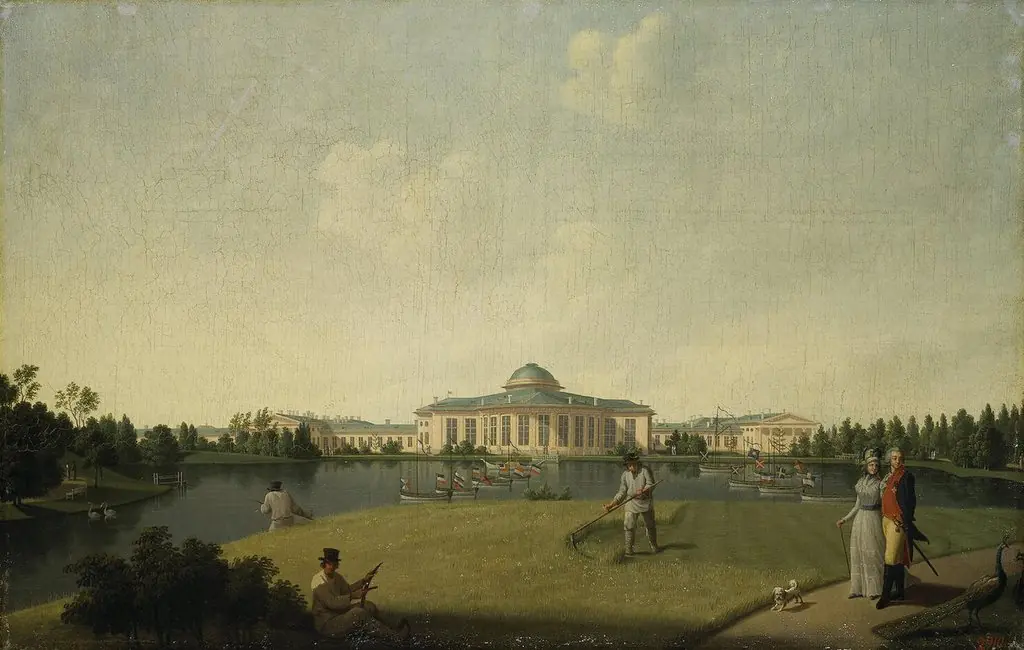
Patersen's cityscapes collectively constitute what scholars recognise as an irreplaceable historical record of Saint Petersburg at the turn of the nineteenth century. The Neva Gate at the Peter and Paul Fortress participates in this broader documentary achievement, preserving architectural details and spatial relationships that have since been altered or destroyed by urban development. The work's afterlife is intertwined with the institutional history of Russian museum collections, having entered state holdings by the mid-twentieth century. As part of the Hermitage collection, it continues to serve researchers examining the visual culture of imperial Russia, the history of Saint Petersburg's fortifications, and the international circulation of artistic talent in the Baltic region during the Enlightenment. Patersen's broader legacy rests on the sheer comprehensiveness of his urban archive, with his depictions of landmarks including the St. Michael's Castle, the Imperial Academy of Arts, and the Tauride Palace providing comparative material for understanding how the Neva Gate painting fits within his systematic project of recording the imperial capital.
Artist & collection
Artist
Benjamin Patersen, or Patersson (Russian: Бенжамен Патерсен; 2 September 1748/50, in Varberg 1815, in Saint Petersburg), was a Swedish-born Russian painter and engraver known primarily for his cityscapes.

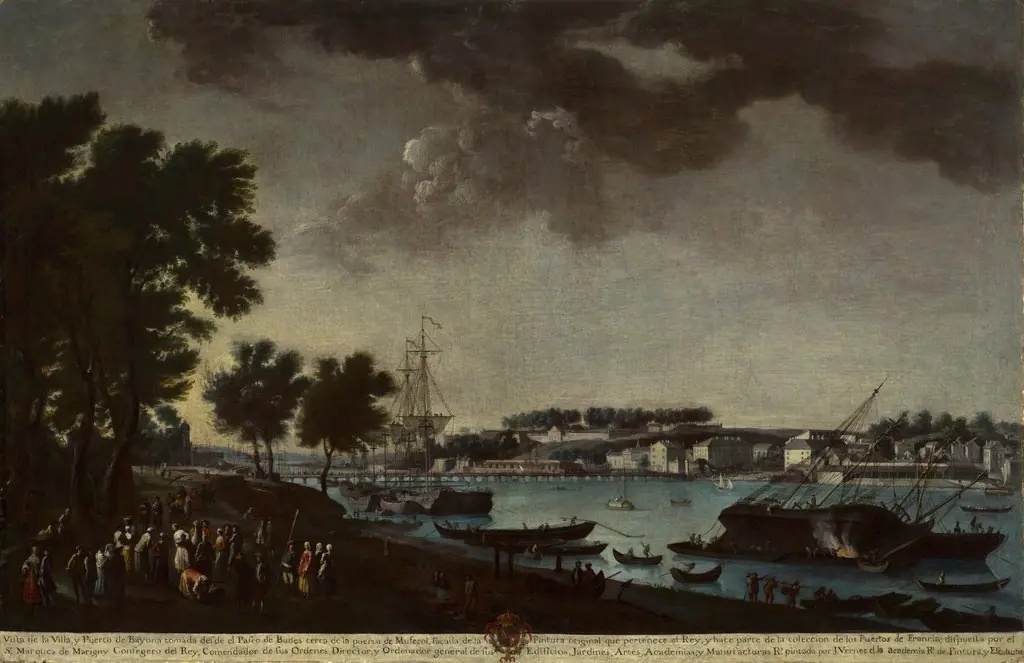 View of the Town and Port of Bayonne from the Pathways of Boufflers (La villa y puerto de Bayona tomada desde el paseo de Boufflers)
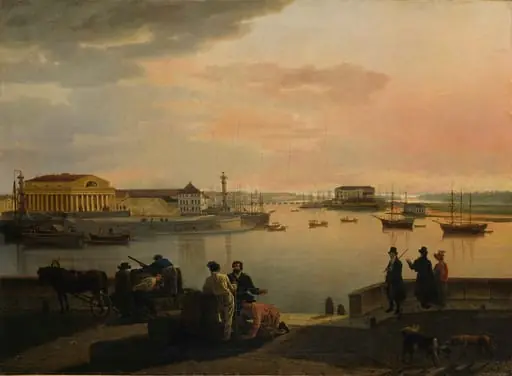 Näkymä Pietarista
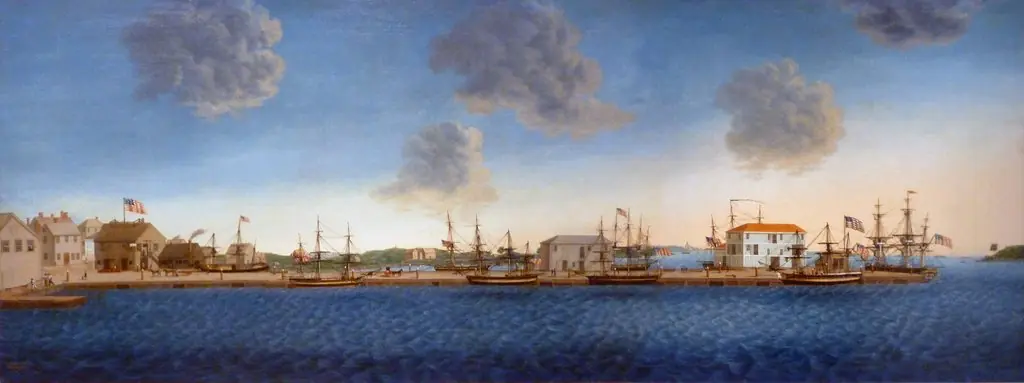 Crowninshield's Wharf
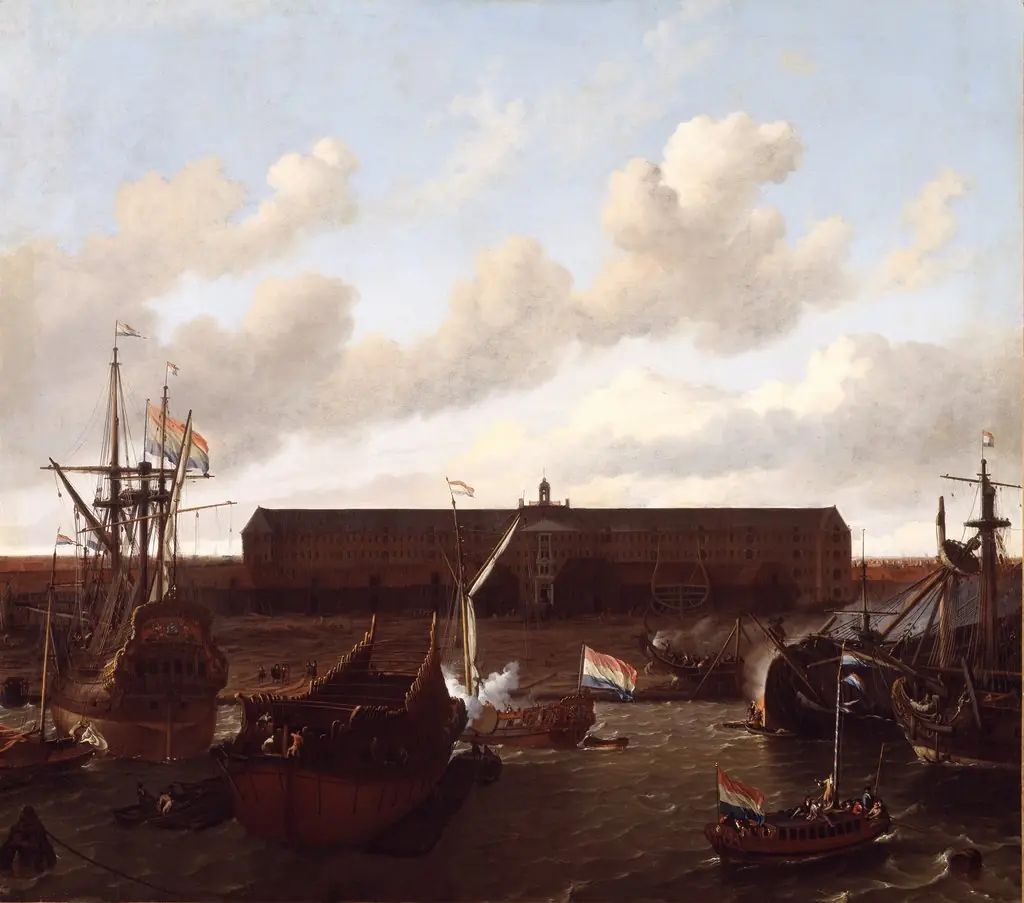 The dock of the Dutch East India Company at Amsterdam
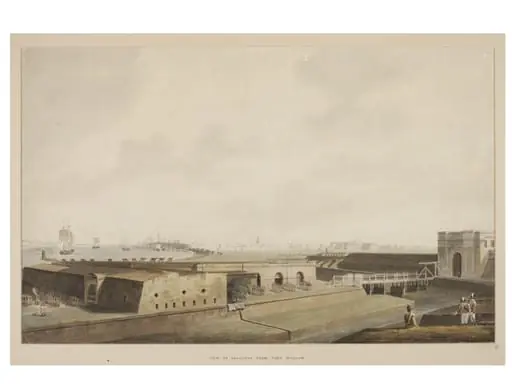 View of Calcutta from Fort William
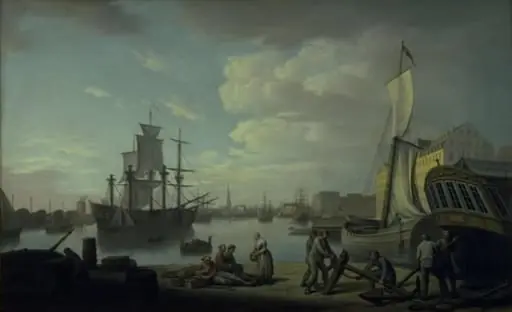 Københavns havn set fra Larsens Plads
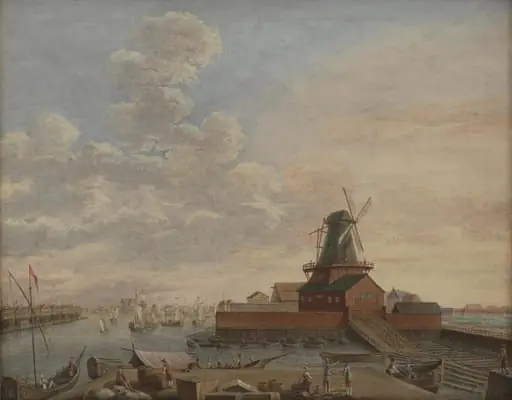 The Naval Dockyards at Christianshavn
 View of Bristol
 The Thames at the Tower of London with London Bridge and St. Paul's in the Distance
 A View of Greenwich from the River
 Вид Москвы. Воспитательный дом