Artwork
Regele Mihai I
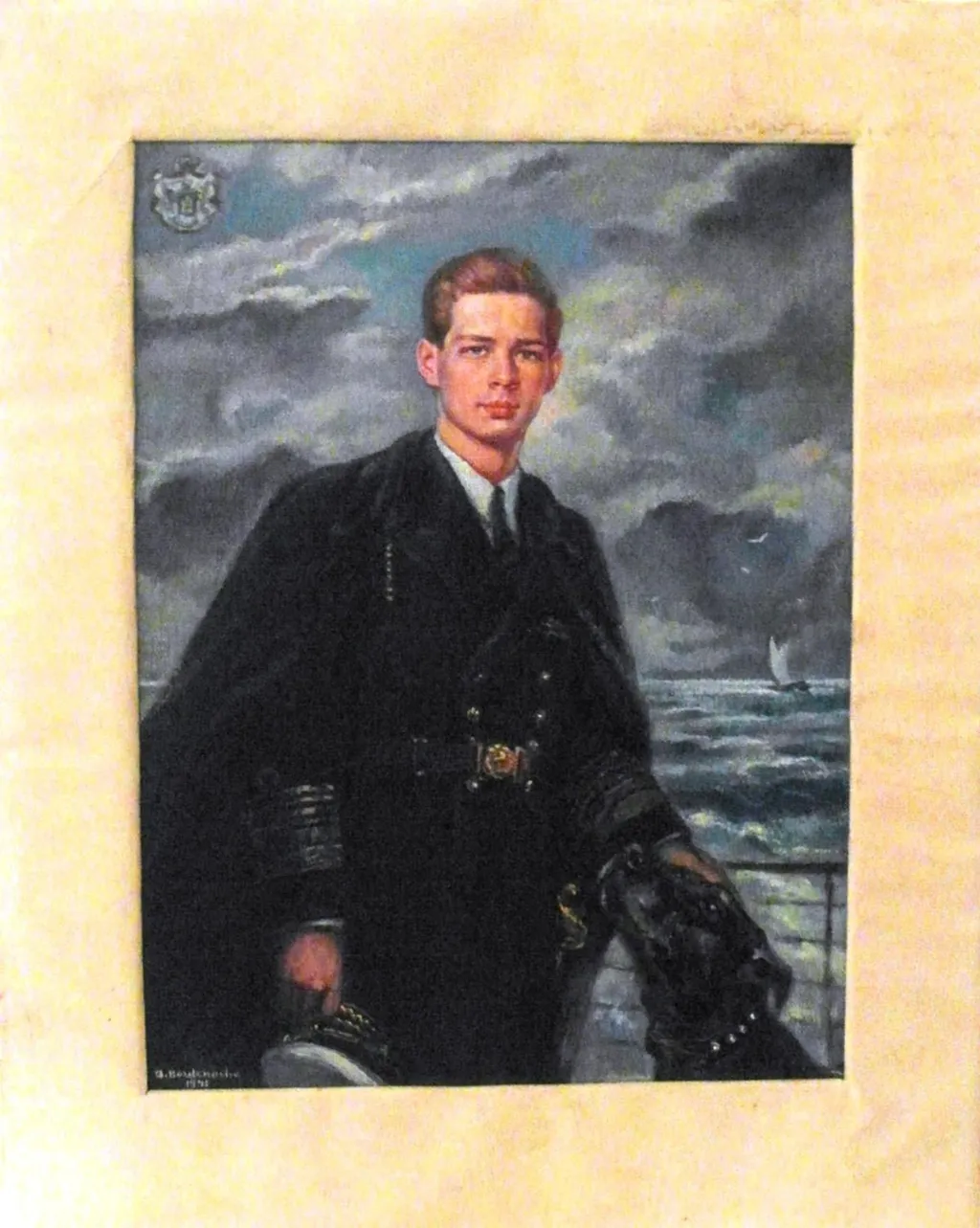
Regele Mihai I is a print by Aurel Bordenache. It dates from 1941 and is held in the collection of the National Museum of Romanian History.
About this work
Overview
Created in 1941 by Aurel Bordenache, this portrait depicts King Michael I of Romania in his early twenties, dressed in military uniform. The setting is a windswept coastline, where the sea and sky convey tension. The image is rendered in a graphic, tonal style that emphasizes contrast and mood over detail, reflecting the political gravity of the era.
Subject & Meaning
The young king is portrayed alone on a rugged shore, facing forward with a composed, solemn gaze. His uniform, marked by polished buttons and insignia, signals authority, while the barren landscape and distant boat suggest isolation and uncertainty. The composition avoids grandeur, instead conveying quiet responsibility during a turbulent period in Romania’s history.
Technique & Style
Bordenache employs strong chiaroscuro to define the king’s face and uniform, using sharp contrasts between light and shadow to model form. The sea and sky are rendered with loose, energetic strokes, creating a sense of movement and instability. The background’s rough texture contrasts with the precise rendering of the uniform, directing focus to the figure’s stillness.
History & Provenance
Produced in 1941, during Michael I’s first reign under Axis-aligned Romania, the portrait likely served a propagandistic function, reinforcing his image as a steady, youthful leader. Its circulation was limited to state-approved media. The work’s survival suggests it was preserved in institutional or private collections aligned with the monarchy’s legacy.
Context
In 1941, Romania was under the influence of fascist-aligned regimes, and the monarchy’s role was being strategically cultivated. This image emerged amid shifting alliances and rising militarization. Unlike overtly heroic depictions, it opts for restraint, possibly reflecting the king’s precarious position between national tradition and external pressures.
Legacy
The portrait remains a rare visual record of Michael I during his early reign, distinct from later, more propagandistic imagery. Its subdued tone and emphasis on psychological presence offer a counterpoint to the era’s bombastic visual culture. It is now referenced in historical studies of Romanian royal iconography and wartime visual politics.
Artist & collection
Artist

 Head of Gregory
 Achille De Gas in the Uniform of a Cadet
 Sven Grönvall
 Portrætskitse. Formodentlig kunstnerens søn Thorald Jerichau
 Portrait of a Young Man
 Autoportret Aurel Băeșu
 Portrait of Svend Hammershøi, the Artist´s Brother
 Autoportret
 Tânăr din familia Cantacuzino
 Savel Rădulescu
 Radu Vasilescu
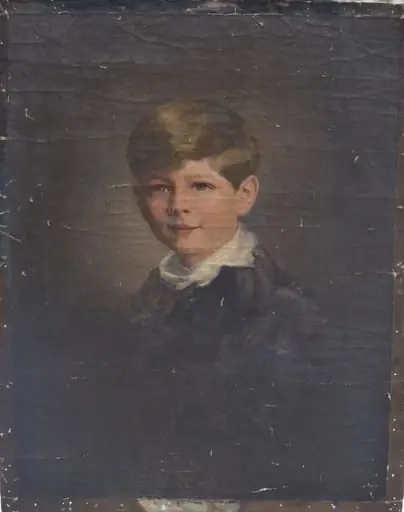
- Mihai (Regele Mihai copil)