Artwork
Fair in Brittany
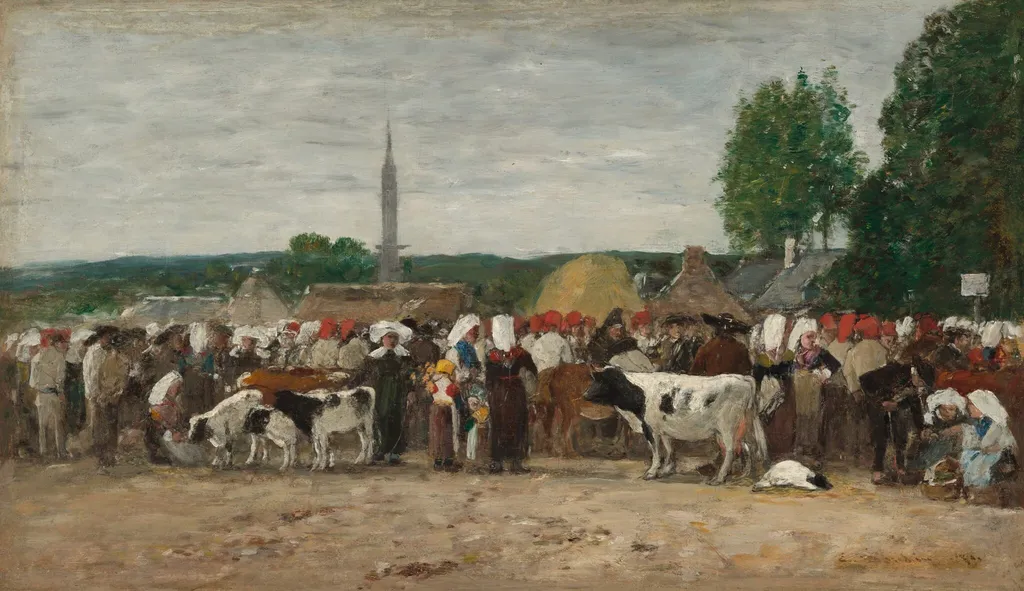
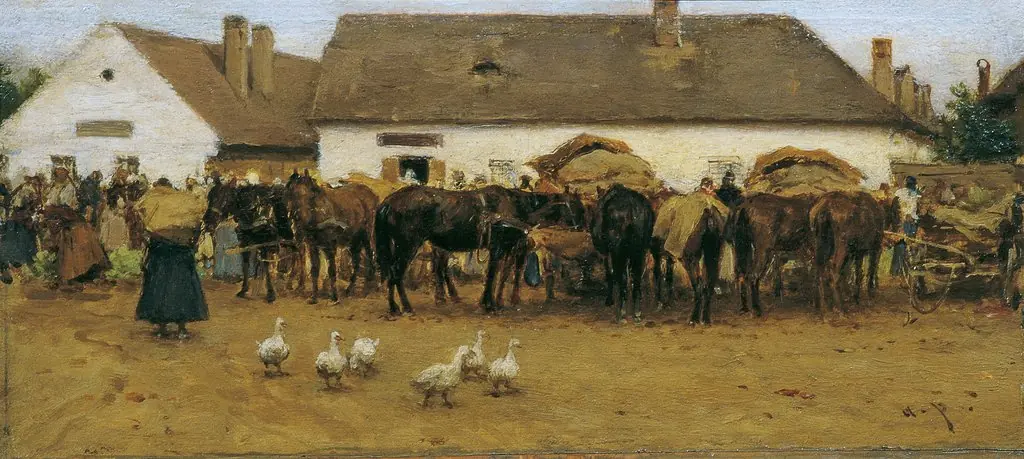
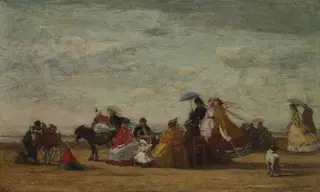
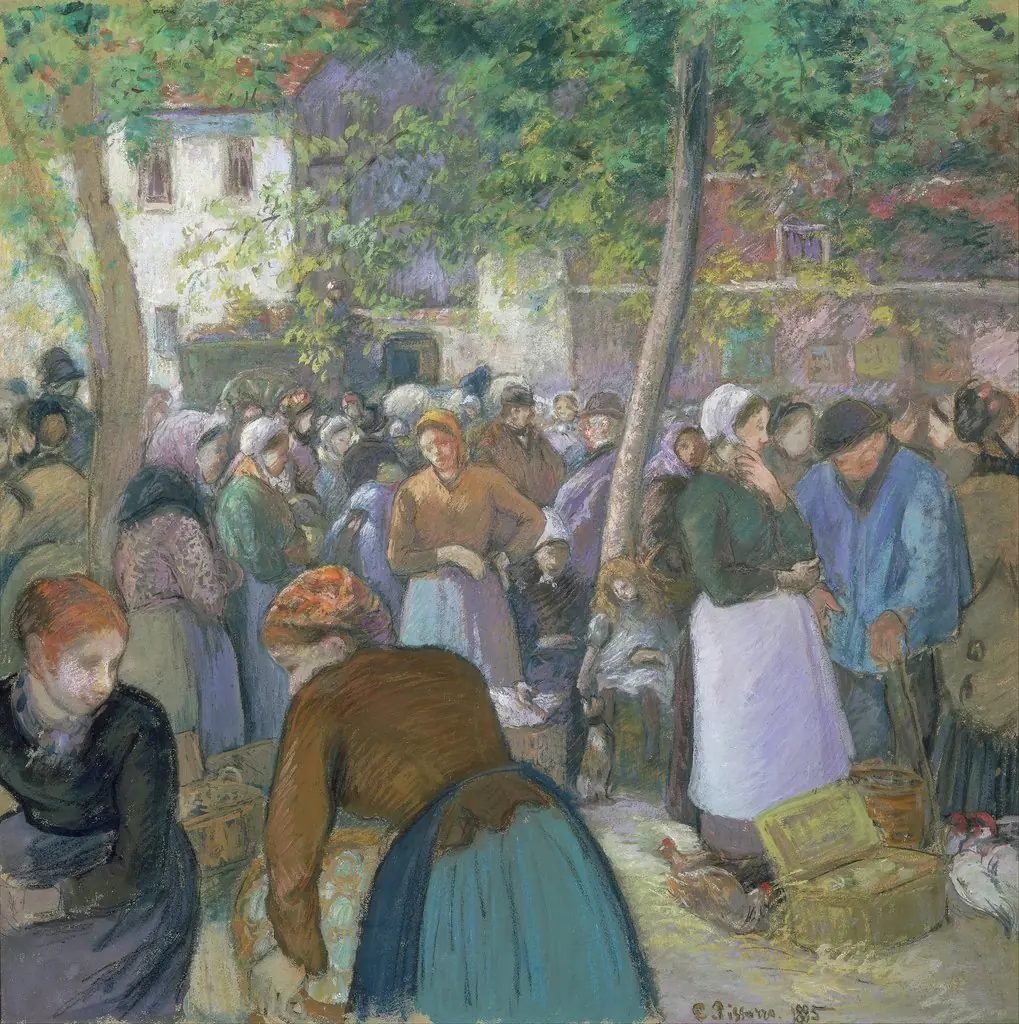
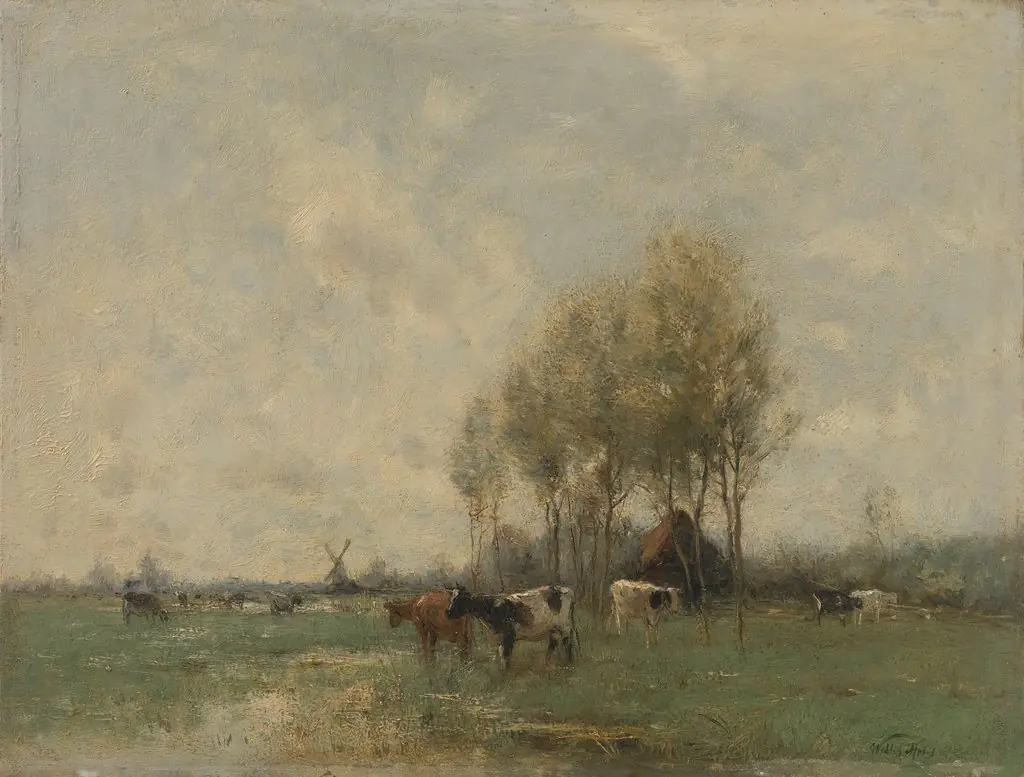
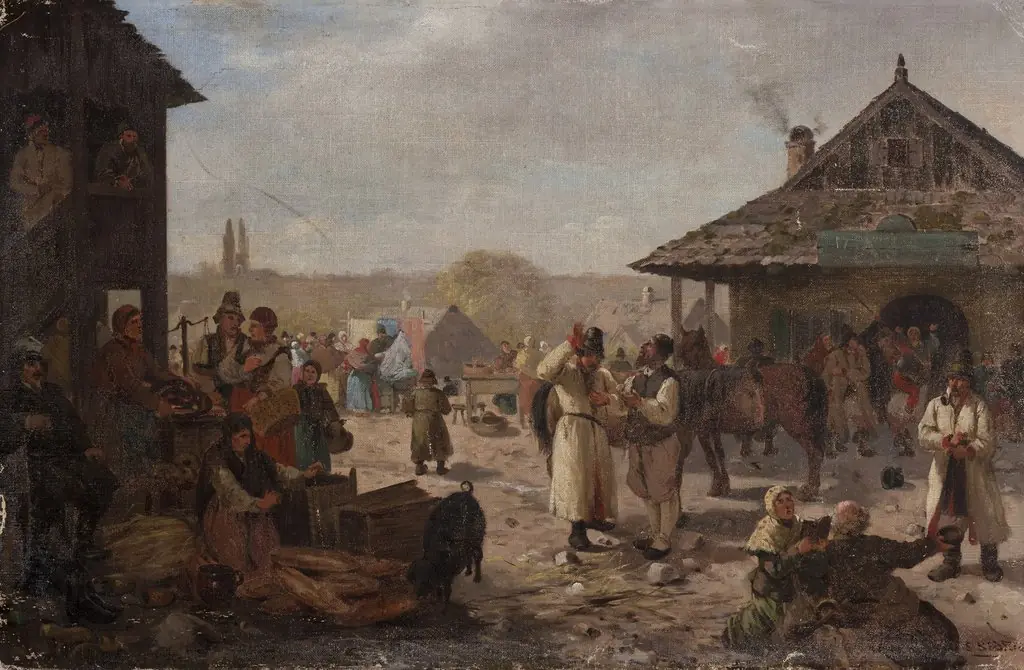
Fair in Brittany is an oil painting by the Impressionist artist Eugène Louis Boudin. It dates from 1874 and is held in the collection of the National Gallery of Art.
- Inscription
- Inscribed:lower right: E. Boudin 18[illegible]
About this work
Subject & Meaning
Its representation of communal activity reflects Boudin's interest in the social fabric of coastal communities, linking economic exchange to local identity.
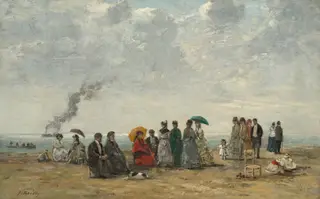
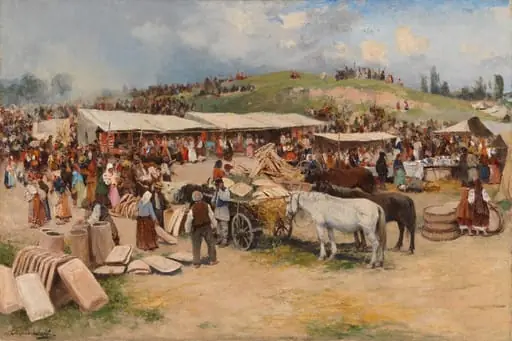
Eugène Boudin depicted a lively market scene in Brittany, capturing everyday commerce with characteristic Impressionist brushwork. The painting shows vendors and townspeople gathered around stalls, a motif recurring in his regional genre scenes that celebrate provincial life. Its representation of communal activity reflects Boudin's interest in the social fabric of coastal communities, linking economic exchange to local identity.
The work measures 26.67 cm in height and 45.72 cm in width, an oil on wood panel produced in 1874.
Provenance traces from Durand‑Ruel in Paris to a sale in New York (1887), then to William A. Clark, who bequeathed it to the Corcoran Gallery of Art in 1926; it entered the National Gallery of Art in Washington in 2015.
Technique & Style
Eugène Boudin's Fair in Brittany, created in 1874, is executed in oil paint on a wood panel support. The work measures 26.67 cm in height and 45.72 cm in width. Classified as a painting, the piece utilizes the medium of oil applied to a rigid panel surface, a common choice for the artist's studies and finished works of this period.
History & Provenance
Eugène Boudin painted Fair in Brittany in 1874 using oil on wood. The work first appeared in the art market through the Paris dealer Durand-Ruel. It was potentially offered as number 5 in the sale of the Durand-Ruel Collection at Moore's Art Galleries in New York on May 5–6, 1887, where it sold for $210, though the buyer remains unrecorded.
Following this transaction, the painting returned to Durand-Ruel's New York gallery. It was acquired in 1898 by William A. Clark, a New York collector, and was included in an exhibition at the Durand-Ruel Galleries that same year. Upon Clark's death in April 1926, the painting was bequeathed to the Corcoran Gallery of Art in Washington, D.C. The National Gallery of Art subsequently acquired the work in 2015.
Fair in Brittany has been part of the National Gallery of Art collection in Washington, D.C. since 2015, having been acquired that year from the Corcoran Gallery of Art. The Corcoran had received the painting in April 1926 as part of the bequest of William A. Clark, who had purchased it in 1898 from Durand-Ruel in New York. Earlier provenance traces through Durand-Ruel in Paris, with a possible appearance at the May 1887 sale of the Durand-Ruel Collection of French Paintings at Moore's Art Galleries in New York, where a painting of this title sold for $210. The work was also included in an 1898 exhibition at the Durand-Ruel Galleries prior to Clark's purchase.
Overview
Eugène Boudin’s Fair in Brittany (1874) is an oil painting executed on a wooden panel. The work captures a bustling open-air market beneath a muted sky, populated by figures in period dress, modest tents, and a few grazing cows on the horizon. Boudin, a French landscape specialist, rendered the scene directly from observation, reflecting his commitment to painting outdoors.
Context
Fair in Brittany belongs to the broader Impressionist tendency to depict ordinary subjects illuminated by natural light. Boudin’s focus on coastal scenes and marine life, praised by contemporaries such as Baudelaire and Corot, positioned him as a forerunner of the movement, influencing younger artists who later expanded these techniques.
Artist & collection

Artist
Eugène Louis Boudin (French: ; 12 July 1824 – 8 August 1898) was one of the first French landscape painters to paint outdoors.