Artwork
Village by a River
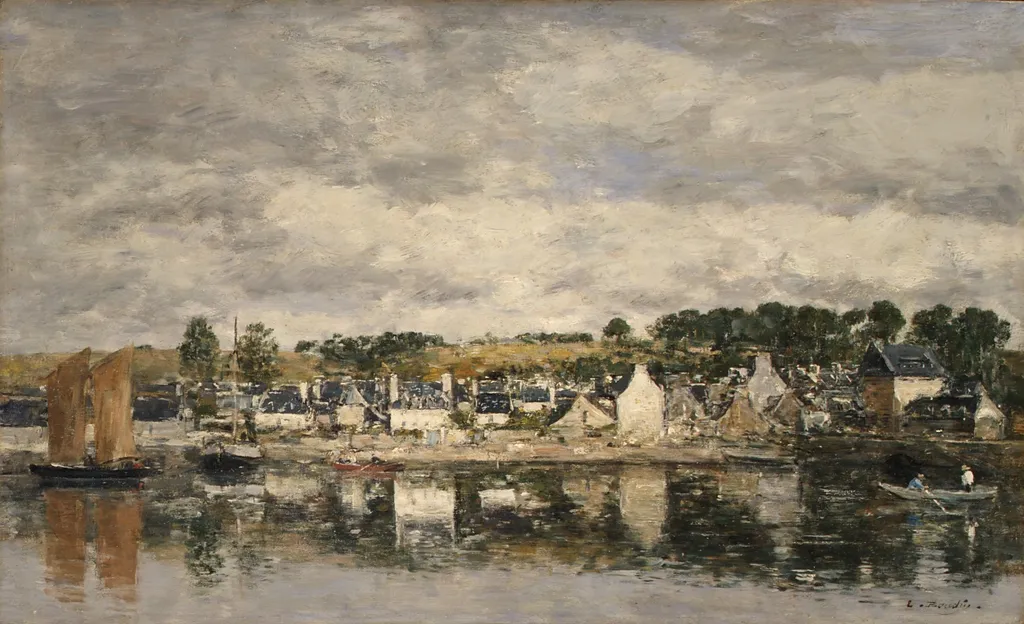
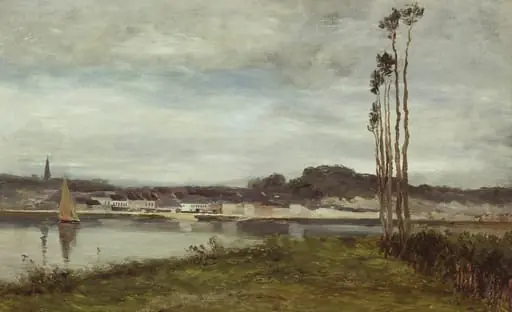
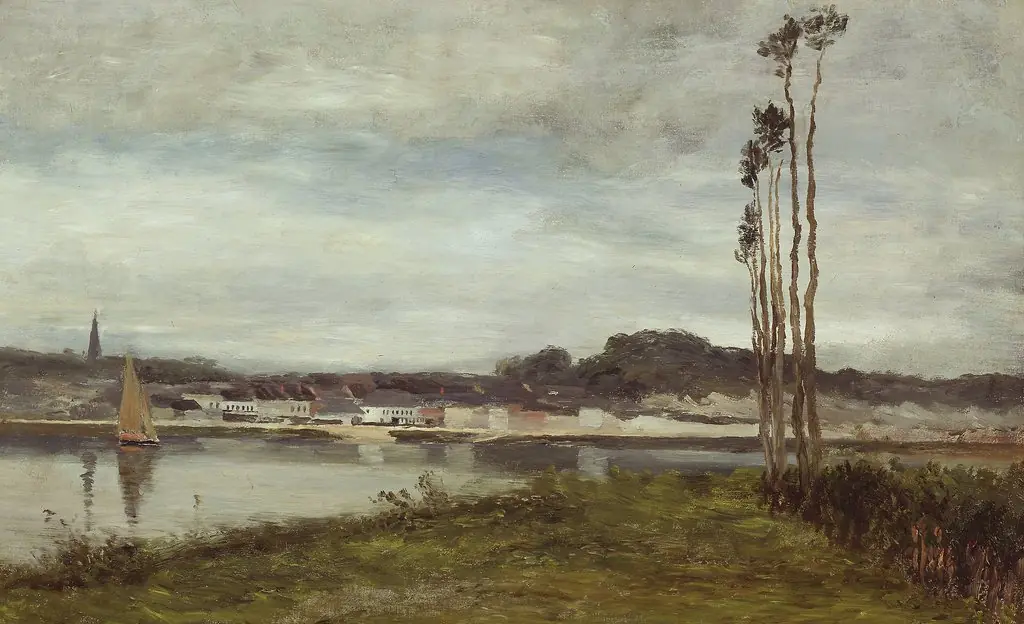
Village by a River is an oil painting by the Impressionist artist Eugène Louis Boudin. It dates from 1867 and is held in the collection of the Metropolitan Museum of Art.
About this work
Subject & Meaning
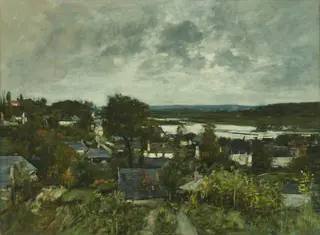
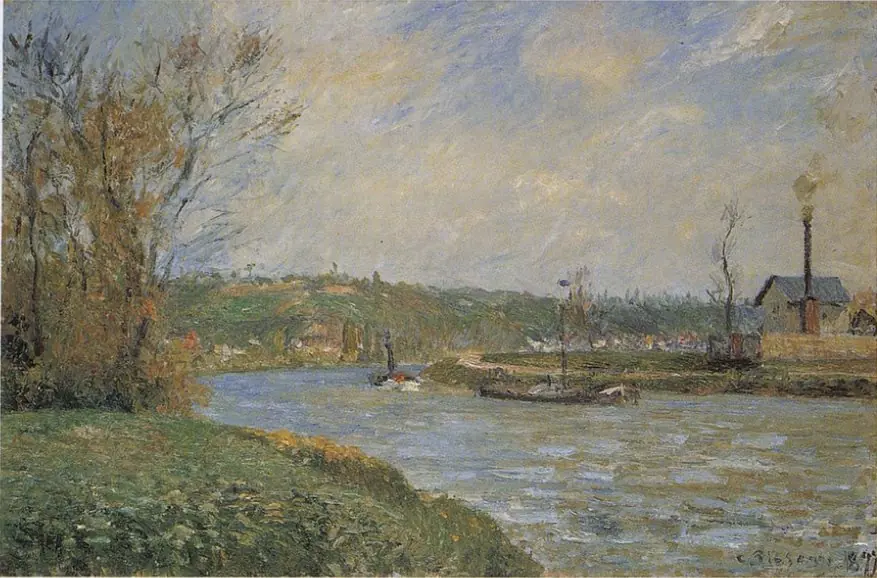
Village by a River is a landscape painting that depicts a rural settlement situated alongside a river.
Village by a River is a landscape painting that depicts a rural settlement situated alongside a river. The composition centers on the village and the surrounding natural environment, capturing the everyday character of the French countryside as observed by Eugène Louis Boudin in 1867. Working in oil on panel, Boudin presents the scene as a landscape painting, using the river as a defining geographical feature that organizes the relationship between the built settlement and the open terrain.
The work belongs to the tradition of plein-air landscape observation, in which the artist records the appearance of a specific locale rather than constructing an allegorical or narrative scene. As a depiction of a village and river within a landscape, the painting represents Boudin's interest in the modest, inhabited rural settings of mid-nineteenth-century France, presenting the locality itself as the principal subject.
Technique & Style
Village by a River is an oil painting created in 1867 and executed on a wooden panel, as documented in the work’s material record. The painting belongs to the landscape genre and depicts a river alongside a village, reflecting Boudin’s interest in rural scenery. Its formal composition balances the linear elements of the riverbank with the surrounding topography, while the use of oil paint contributes to its surface. The work is part of the Metropolitan Museum of Art collection.
History & Provenance
Created in 1867 by the French artist Eugène Louis Boudin, Village by a River is an oil painting executed on panel. The work depicts a landscape featuring a village situated along a river. While specific details regarding its original commission or intermediate ownership history are not provided in the available records, the painting is currently held in the collection of the Metropolitan Museum of Art in New York.
The piece measures 35.6 cm in height and 58.4 cm in width, representing Boudin's landscape genre from the mid-19th century.
Context
The 1867 oil-on-panel painting Village by a River, attributed to Eugène Louis Boudin, exemplifies the French landscape genre prevalent in the mid‑19th century. Documented in the Metropolitan Museum of Art’s collection, the work measures 35.6 × 58.4 cm and depicts a riverine village scene, reflecting Boudin’s focus on rural environments. Its classification as a landscape painting and the recorded material details confirm its significance within Boudin’s oeuvre and the broader trajectory of French landscape art leading toward modernist approaches to light and atmosphere.
Overview
Eugène Louis Boudin's Village by a River, an oil painting from 1867, captures a tranquil landscape. This work exemplifies the French artist's dedication to depicting natural environments, particularly his renowned skill in rendering open-air scenes. The painting, featuring a river winding through a village, is now part of The Metropolitan Museum of Art's collection, representing a significant example of his contributions to 19th-century landscape art.
Artist & collection

Artist
Eugène Louis Boudin (French: ; 12 July 1824 – 8 August 1898) was one of the first French landscape painters to paint outdoors.

- La Touques near Deauville
 La Touques near Deauville
 The Pont de l'Estacade, Paris
 On the Seine
 On the Seine
 Saint-Mammès, Morning
 Trouville, the harbor
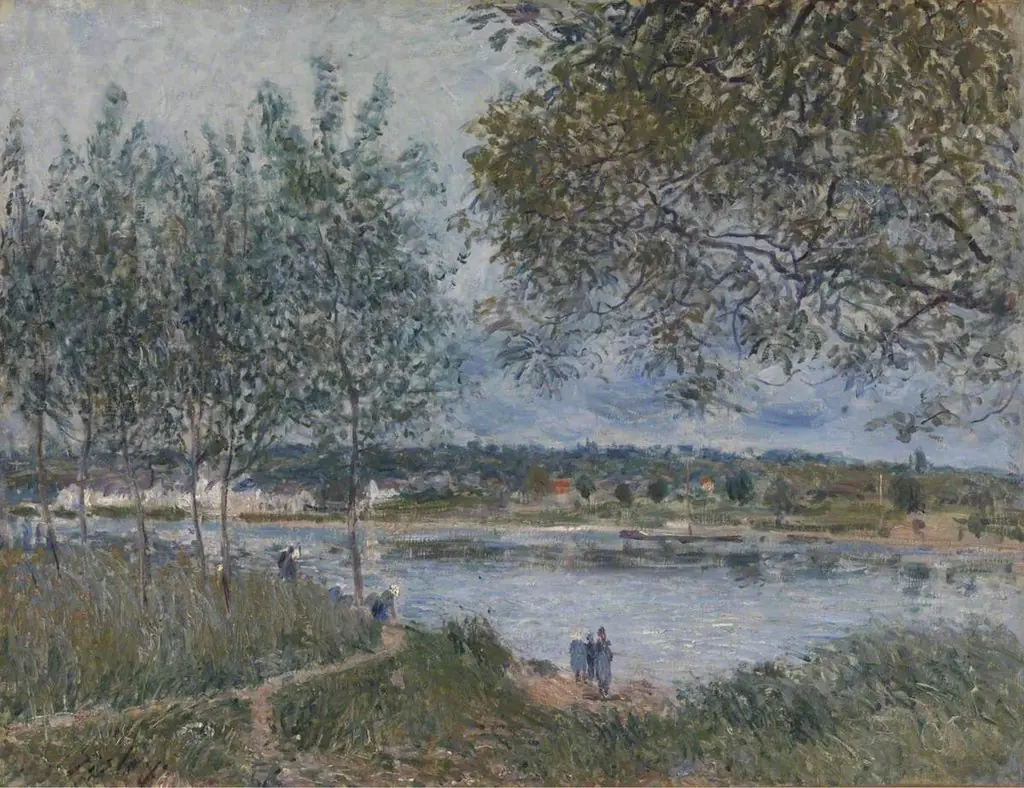 The Path to the Old Ferry at By
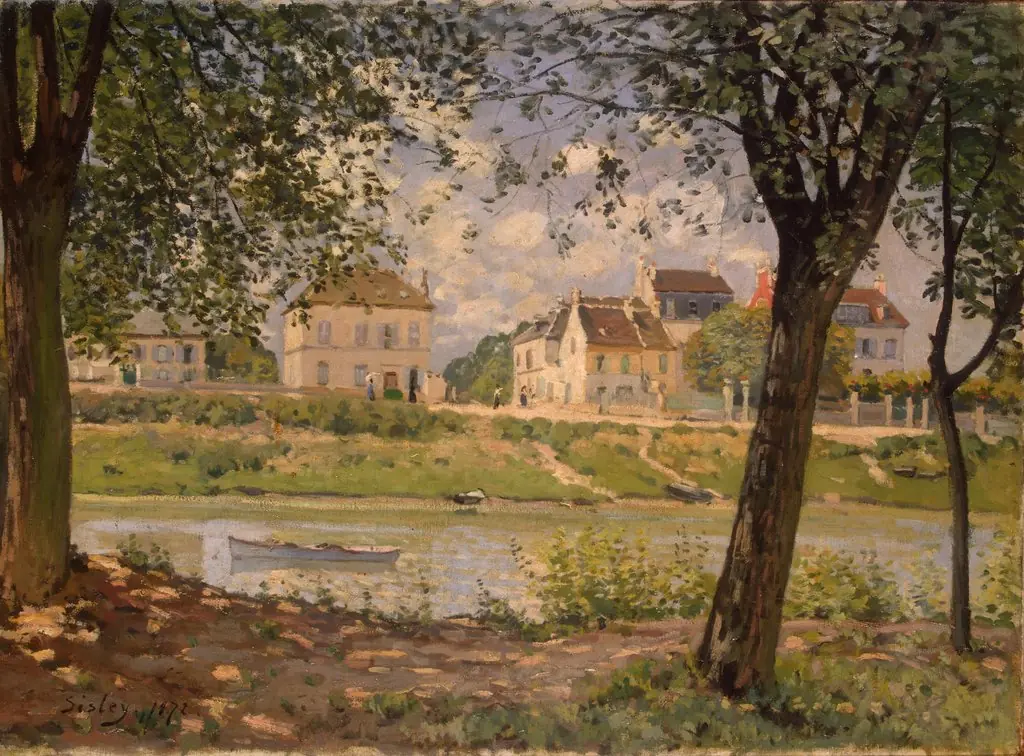 Village on the Banks of the Seine
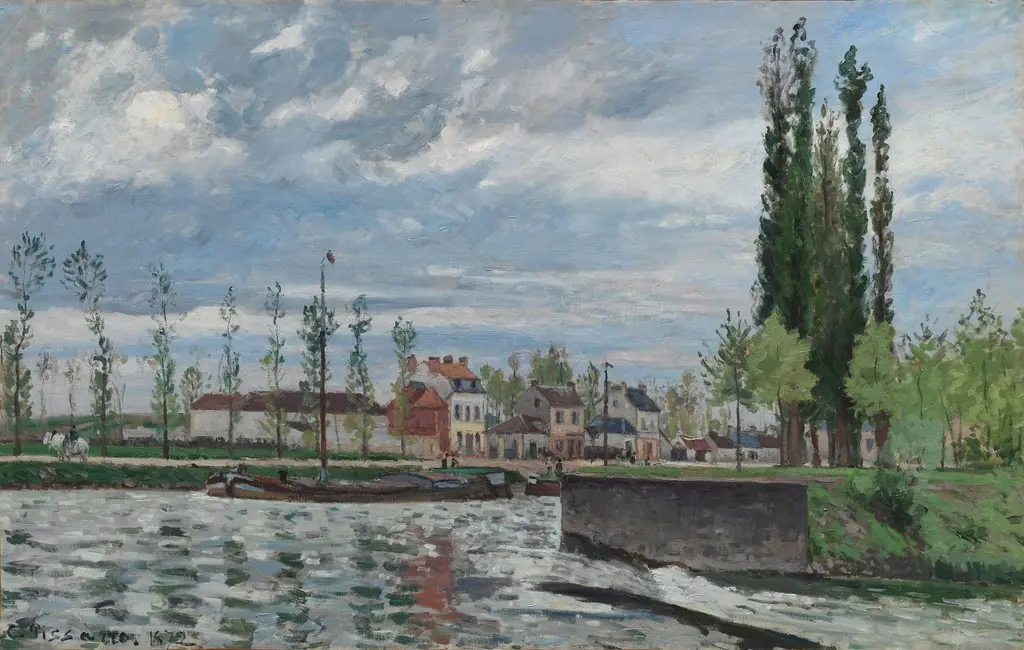 The Lock at Pontoise
 View of the Port of Saint-Valéry-sur-Somme
 Bords de l'Oise près de Pontoise