Artwork
Schiță pentru ciocan de ușă - față
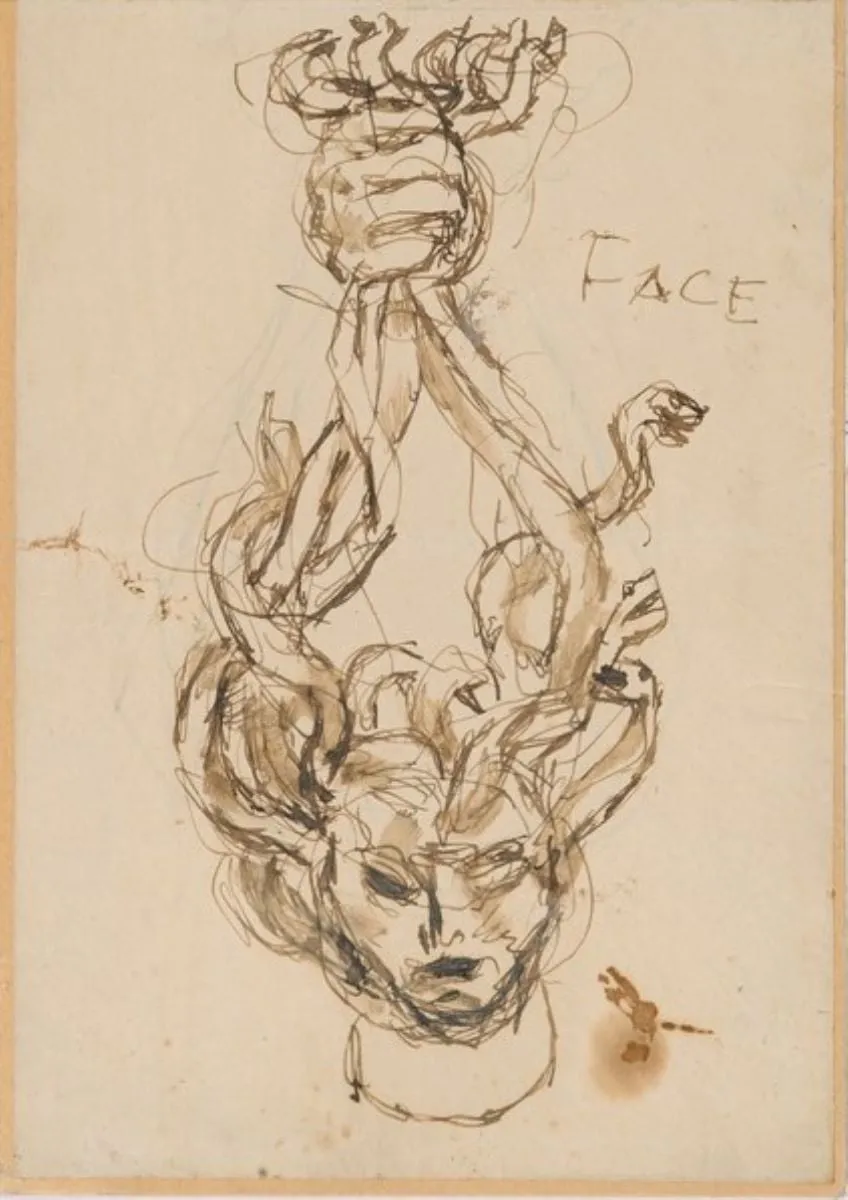
Schiță pentru ciocan de ușă - față is a drawing by Émile-Antoine Bourdelle. It dates from 1922 and is held in the collection of the National Museum of Art of Romania.
About this work
Overview
The surface bears signs of use, smudges, creases, and stains, suggesting it was handled frequently during the design process.
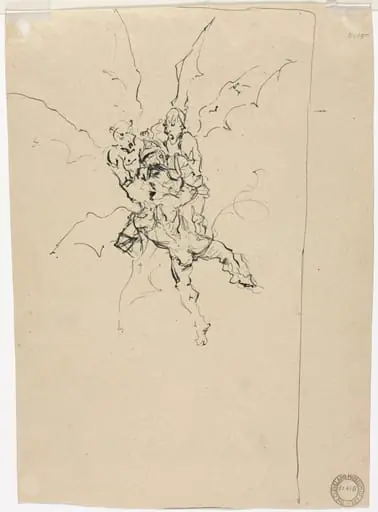
This 1922 sketch by Émile-Antoine Bourdelle is a rapid, gestural study for a door knocker design. Executed in ink or graphite on paper, it captures a face in motion rather than form. The surface bears signs of use, smudges, creases, and stains, suggesting it was handled frequently during the design process. The inscription 'FACE' in the corner implies a functional, working note rather than a finished composition.
Subject & Meaning
The subject is an abstracted human face, reduced to essential marks: eyes, nose, and mouth are suggested rather than defined. The swirling forms around the head may represent hair, a headdress, or pure expressive energy. The lack of detail invites interpretation, emphasizing emotional intensity over realism. The label 'FACE' anchors the image as a functional reference, not a symbolic portrait.
Technique & Style
Bourdelle employed swift, overlapping lines to construct the face, avoiding contour or shading. The drawing’s energy comes from its spontaneity, lines intersect, fray, and overlap as if drawn without lifting the tool. The paper’s texture and wear enhance the rawness of the gesture.
This approach reflects his habit of using sketching as a tool for exploring form in real time, not for presentation.
History & Provenance
Created in 1922, this sketch belongs to a series of preparatory drawings Bourdelle made for decorative metalwork, including door hardware. Likely produced in his Paris studio, it was part of a practical workflow rather than an independent artwork. Its condition suggests it remained in the artist’s possession, used and referenced during the development of the final object.
Context
In the early 20th century, Bourdelle frequently bridged sculpture and applied arts, designing architectural elements alongside monumental works. This sketch reflects a broader trend among sculptors who treated functional objects as opportunities for expressive form. His sketches from this period often prioritize movement and rhythm over finish, revealing how ideas evolved from gesture to metal.
Legacy
Though not widely exhibited, such sketches illuminate Bourdelle’s creative process and his commitment to integrating art into everyday spaces. They demonstrate how his sculptural language, bold, tactile, and dynamic, extended beyond public monuments into domestic objects. These working drawings remain valuable for understanding the transition from idea to crafted form in modern decorative arts.
Artist & collection

![Los Supporting the Sun [recto], by William Blake](https://artifactworldgallery.com/img/william-blake--los-supporting-the-sun-recto--1ec2341f6af36294-w320.webp)