Artwork
Rosetta, Egypt
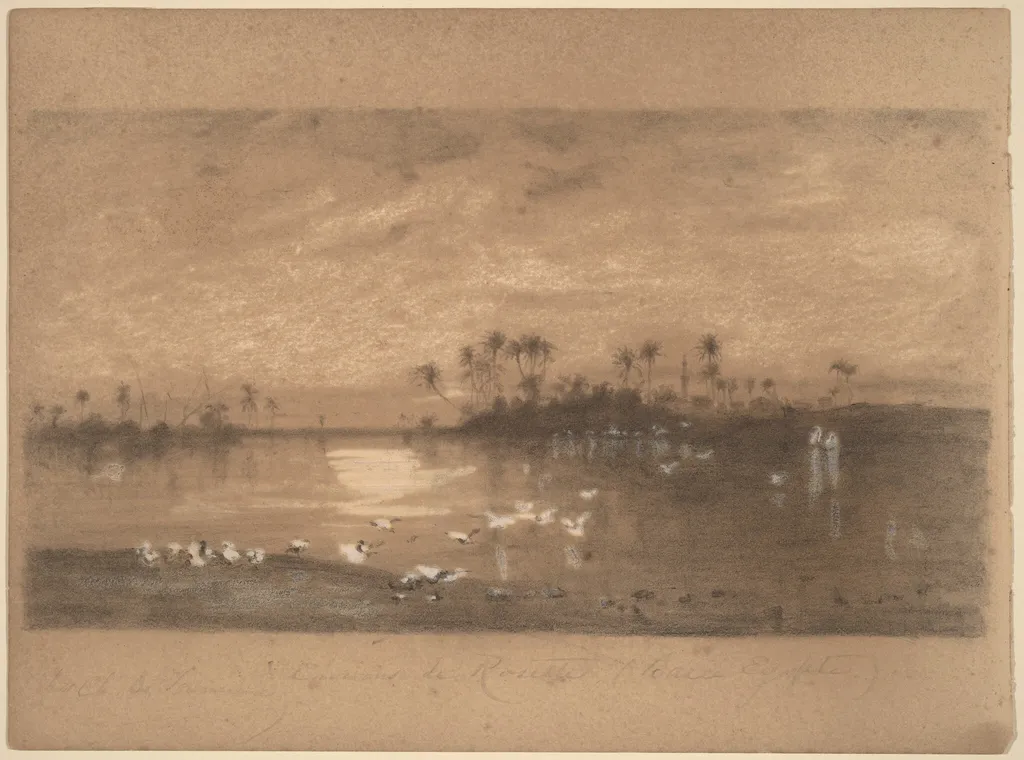
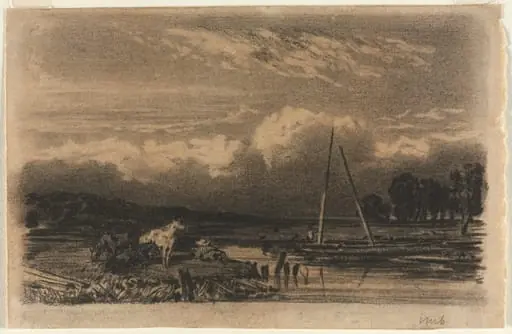
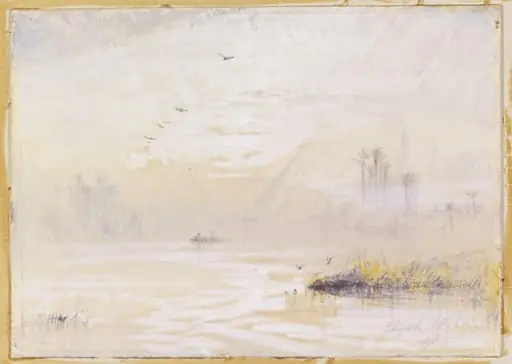
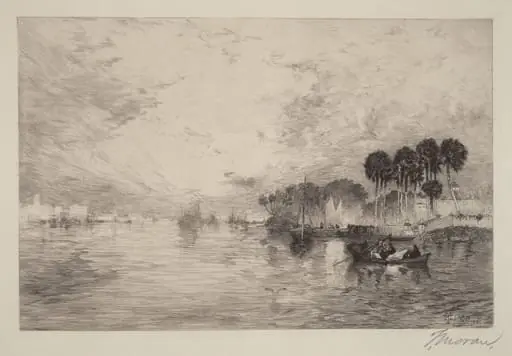
Rosetta, Egypt is a graphite drawing by the Impressionist artist Charles J. Bridgman. It dates from 1872 and is held in the collection of the National Gallery of Art. Charles J.
- Inscription
- Inscribed:across bottom in graphite: (a Ch. De Tournemine) Environs de Rossetta (Ba[sse?] Egypt); upper left verso in graphite by unknown hand: [not deciphered] / from 1871-1875 sketchbook / given to my husband Joe. 1943 by [not deciphered]
About this work
Overview
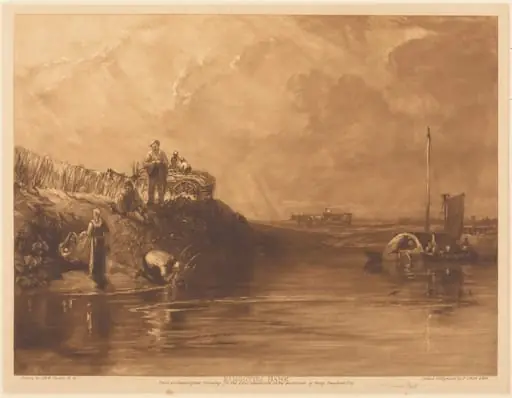
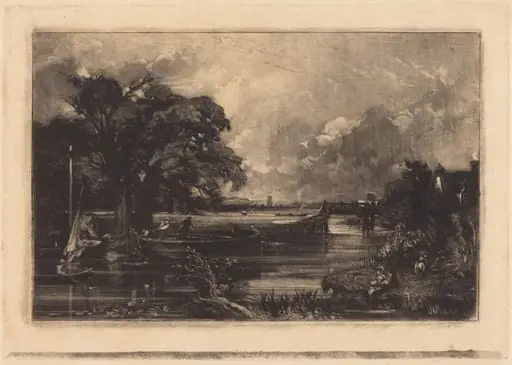
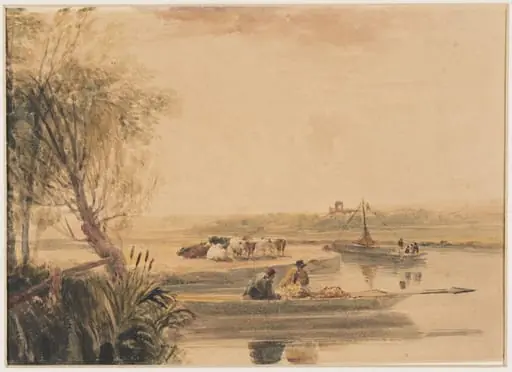
Charles J. Bridgman’s drawing titled Rosetta, Egypt dates from around 1872. Executed on wove paper, the work combines graphite, black crayon and cream chalk to render a quiet desert scene. The composition presents a flat, sun‑baked plain punctuated by a few palm silhouettes on the horizon, with subtle indications of wet ground near the lower edge and a few distant birds in a lightly washed sky.
Subject & Meaning
The image captures a moment of stillness in an Egyptian landscape, emphasizing the contrast between arid terrain and the occasional presence of water or mud. The sparse vegetation and muted sky suggest a heat‑laden atmosphere, while the scattered birds introduce a sense of life moving through an otherwise desolate environment.
Technique & Style
Bridgman employs soft, smudged lines that blend the edges of forms, creating a hazy, atmospheric quality reminiscent of sfumato. The interplay of dark graphite and black crayon against the cream chalk highlights the palm trunks and shadows, while the light wash of color in the sky provides a gentle tonal transition across the composition.
History & Provenance
Created circa 1872, the drawing reflects Bridgman’s interest in North African and Middle Eastern subjects during a period of heightened Western travel and documentation of exotic locales. The work has remained in private collections before being acquired by the museum, where it serves as an example of 19th‑century travel sketching techniques.
Own this work as a print
Artist & collection