Artwork
Untitled
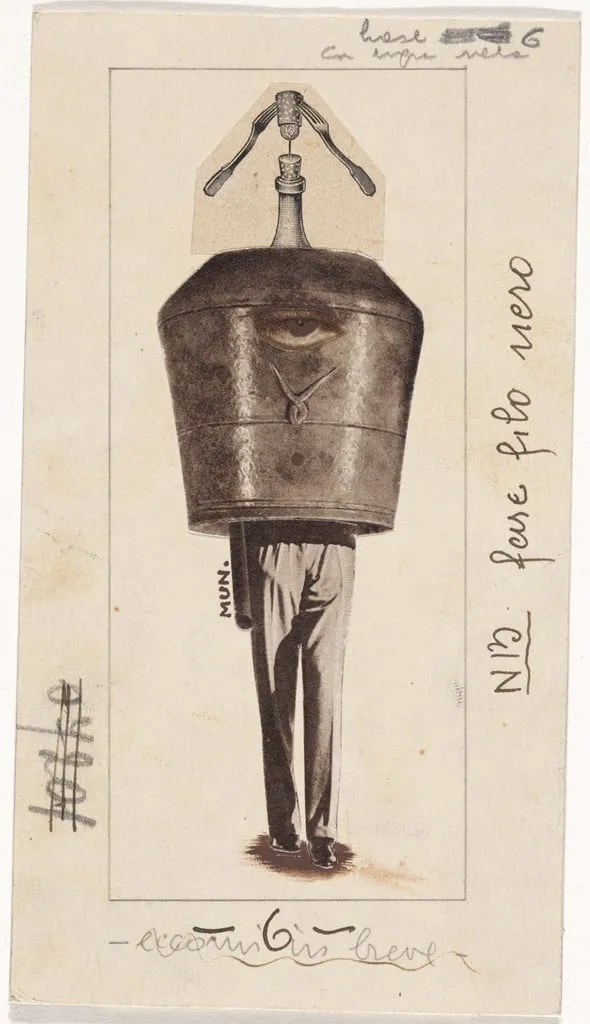
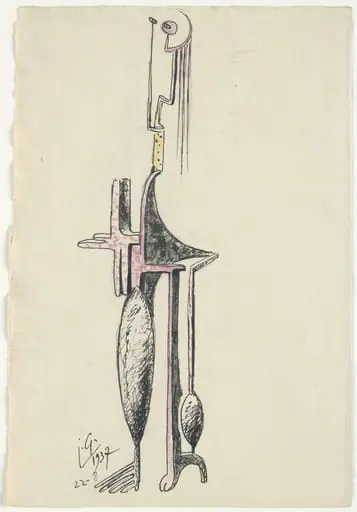
Untitled is a gouache drawing by Bruno Munari. It dates from 1938 and is held in the collection of the Museum of Modern Art.
About this work
Overview
Created around 1938, this drawing by Bruno Munari combines cut-and-pasted printed paper with ink, pencil, and gouache on a plain sheet.
Created around 1938, this drawing by Bruno Munari combines cut-and-pasted printed paper with ink, pencil, and gouache on a plain sheet. It belongs to a body of work in which Munari explored visual language through collage and abstraction, rejecting traditional representation in favor of simplified, constructed forms. The piece reflects his interest in merging artistic experimentation with everyday materials and visual logic.
Subject & Meaning
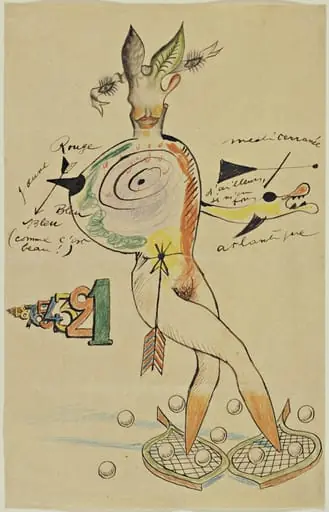
The figure resembles a human form reimagined as a bottle: the torso becomes the vessel, the neck supports tongs, and the limbs are elongated and slender. The single central eye replaces facial features, stripping the figure of individuality and suggesting an objectified presence. This transformation blurs boundaries between person and commodity, inviting reflection on identity, function, and the absurdity of mechanical repetition in modern life.
Technique & Style
Munari employed collage as a primary method, layering printed paper fragments to construct the figure’s form. Ink and pencil defined contours and details, while gouache added flat, opaque color. The composition avoids depth or shading, relying on clean lines and geometric simplification. This approach aligns with concrete art principles, prioritizing structure and material honesty over illusion or narrative.
History & Provenance
This work emerged during Munari’s active engagement with Italian modernist circles in the late 1930s, a period when he was moving away from Futurist dynamism toward more restrained, object-based abstraction. Though specific ownership history is not widely documented, the piece is recognized as part of his broader exploration of visual poetry and typographic experimentation during his years in Milan.
Context
In late 1930s Italy, Munari was part of a generation redefining art’s role beyond the gallery. Influenced by Bauhaus ideals and concrete art, he sought to dissolve hierarchies between fine art, design, and daily experience. This drawing reflects his belief that visual play could reveal new ways of seeing, turning mundane materials into tools for critical and imaginative inquiry.
Legacy
Munari’s use of collage and anthropomorphic abstraction in works like this influenced later generations of designers and artists interested in visual semantics and playful form. His integration of humor, simplicity, and material awareness helped shape postwar Italian design education and expanded the possibilities of drawing as a conceptual medium rather than a representational one.
Artist & collection
Artist
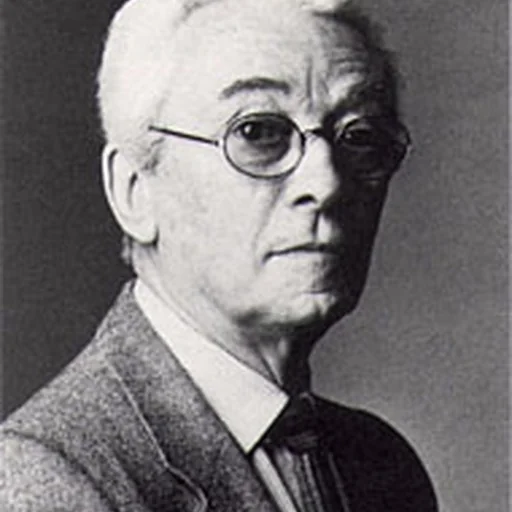
Bruno Munari (24 October 1907 – 29 September 1998) was "one of the greatest actors of 20th-century art, design and graphics".