Artwork
Le Bruit de deux sabots trainant...
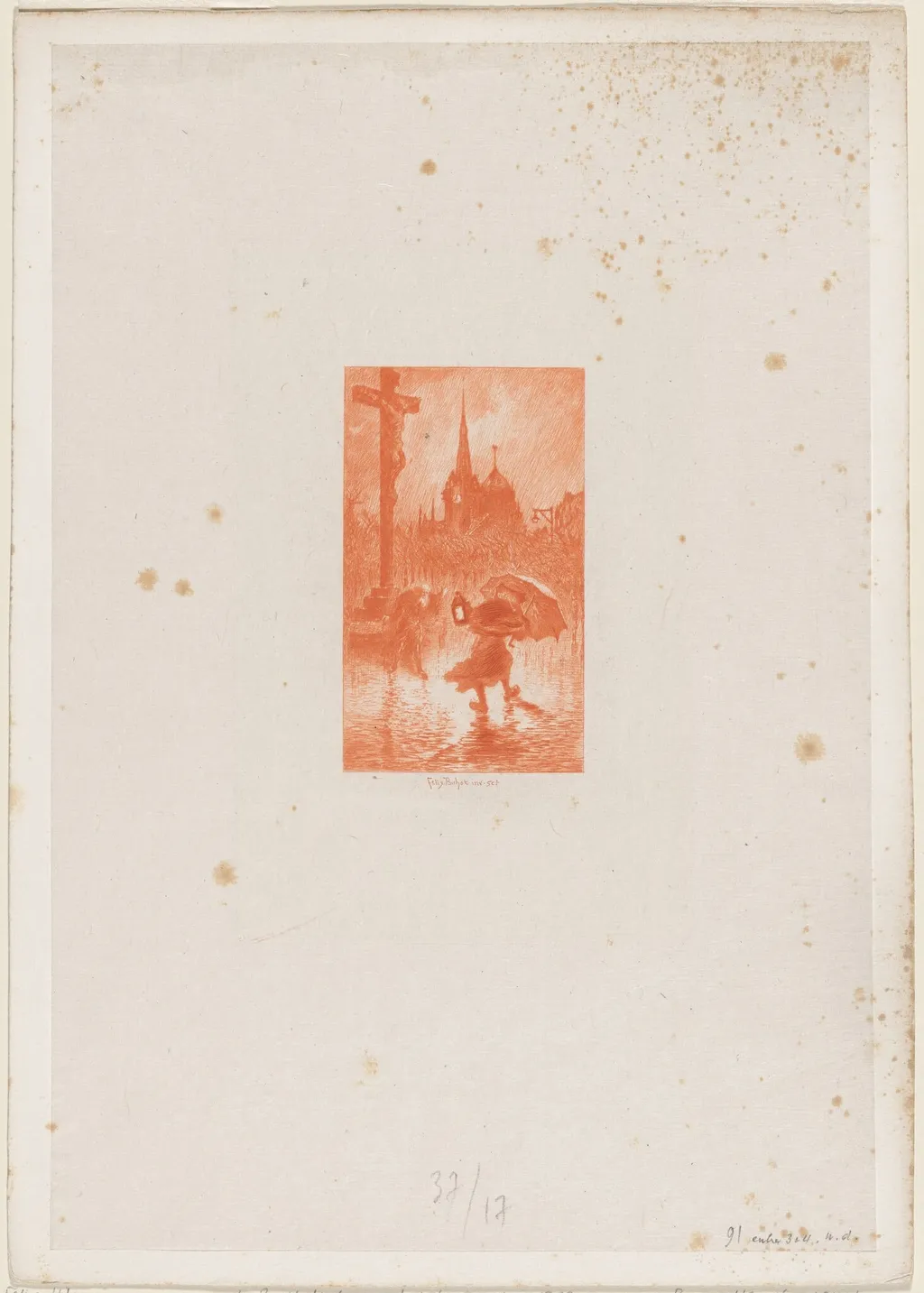
Le Bruit de deux sabots trainant... is an ink print by the Romanticist artist Félix-Hilaire Buhot. It dates from 1878 and is held in the collection of the National Gallery of Art.
About this work
Overview
The piece stands as a significant example of his mature style, where the interplay of line and tone creates a narrative of quiet melancholy and rural life.
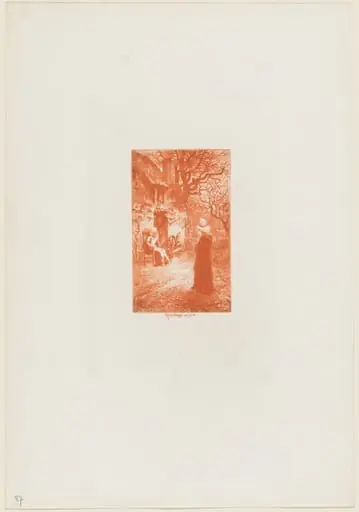
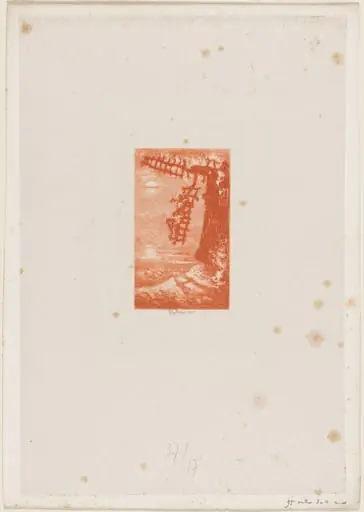
Created in 1878, 'Le Bruit de deux sabots traînant' is a monochromatic etching and drypoint by the French artist Félix-Hilaire Buhot, executed in red ink on thin Japan paper. The composition depicts a desolate, atmospheric landscape dominated by a large cross on the left and a church receding into the background. In the foreground, a solitary figure wades through water, their movement suggested by the title's reference to the sound of dragging wooden clogs.
Buhot, a pivotal figure in the 19th-century French print revival, is renowned for his experimental techniques and mastery of atmospheric effects. This work exemplifies his interest in capturing the mood of rural Brittany and the psychological weight of solitude. The use of red ink and the specific choice of Japan paper highlight his innovative approach to printmaking, moving beyond traditional black-and-white conventions to evoke a specific, somber tone.
The piece stands as a significant example of his mature style, where the interplay of line and tone creates a narrative of quiet melancholy and rural life.
Subject & Meaning
The scene depicts a lone individual navigating a wet landscape while holding an umbrella, suggesting inclement weather or a ritual passage. The prominent cross and the church evoke religious symbolism, perhaps alluding to themes of pilgrimage, contemplation, or the sound of distant hoofbeats implied by the title.
Technique & Style
Buhot employed both etching and drypoint, allowing for fine line work alongside richer, more textured marks. The use of red ink on delicate Japan paper creates a warm tonal field, while the contrast between smooth water surfaces and the rough architectural elements highlights his skill in rendering varied textures within a single monochrome palette.
History & Provenance
The print was produced in 1878, during the later phase of Buhot’s career when he explored atmospheric effects in printmaking. It remains catalogued among his etchings and drypoints, though specific ownership records prior to its inclusion in museum collections are not widely documented.
Context
Created at the height of the Romantic movement, the work reflects the period’s fascination with mood, nature, and the sublime. The emphasis on a solitary figure amid a misty environment aligns with contemporary artistic interests in evoking emotional resonance through landscape and religious motifs.
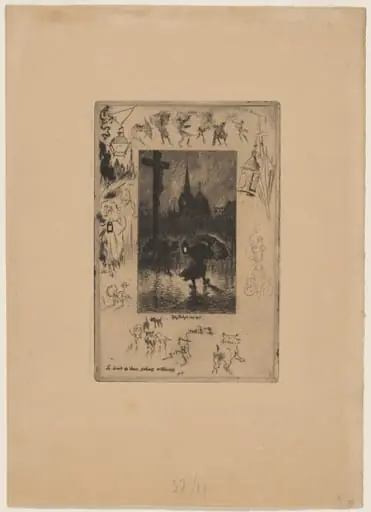
Own this work as a print
Artist & collection

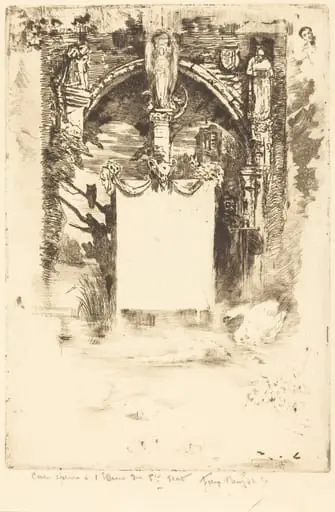 Ex-Libris pour "L'Ensorcelée" (Bookplate for "L'Ensorcelée")
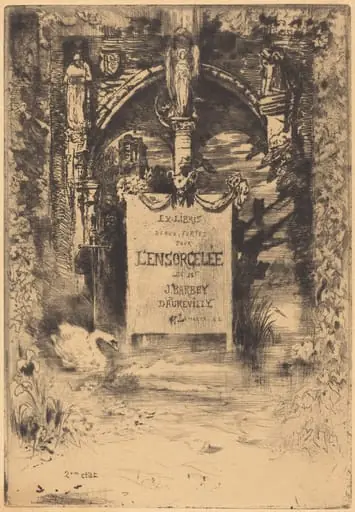 Ex-Libris pour "L'Ensorcelée" (Bookplate for "L'Ensorcelée")
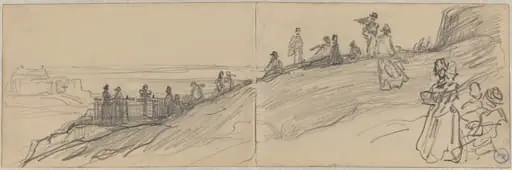 Figures on Top of a Hill, Overlooking the Sea
 Ebury Street
 A Gathering in an Interior; A Curtained Doorway
 Frontispiece for L'Illustration Nouvelle: The Burial of the Burin
 Fan with Wildflowers and Butterflies against the Norman Coast
![Gillingham Pier, London [verso], by Félix-Hilaire Buhot](https://artifactworldgallery.com/img/felix-hilaire-buhot--gillingham-pier-london-verso--641e03dd7de8217b-w320.webp) Gillingham Pier, London [verso]
Gillingham Pier, London [verso]