Artwork
Untitled
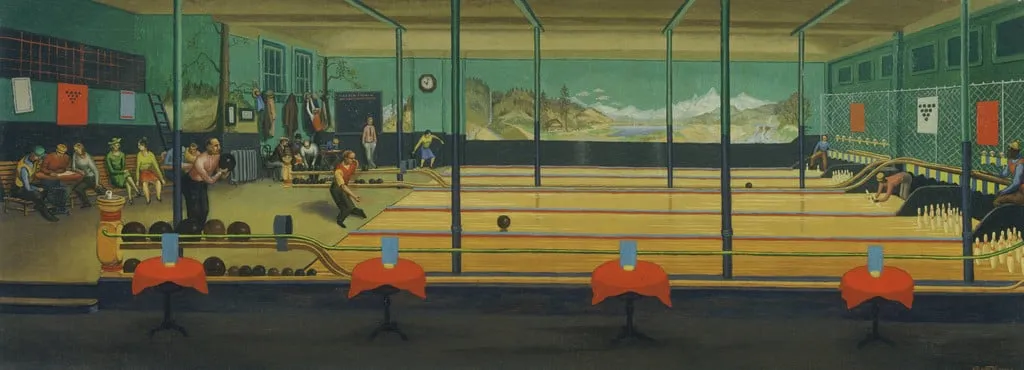
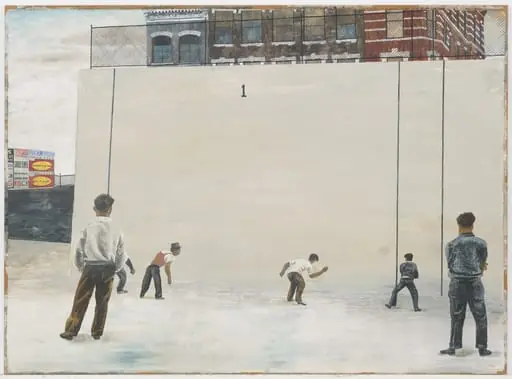
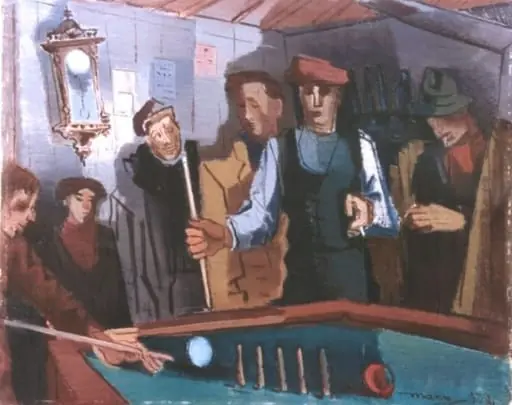
Untitled is an oil painting by the Regionalist artist Byron Thomas. It dates from 1939 and is held in the collection of the Museum of Modern Art.
About this work
Overview
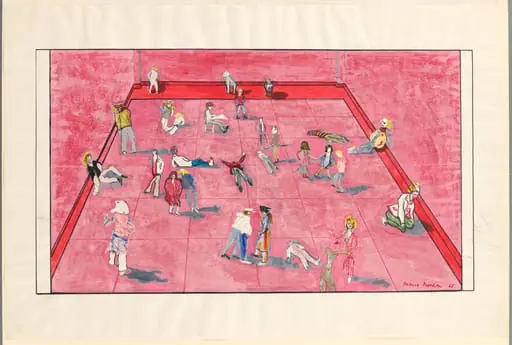
Painted in 1939, this oil on canvas work by Byron Thomas depicts an interior space that resembles a bowling alley. The composition captures a moment of quiet activity, with figures distributed across the scene in loose groupings. The painting is part of the permanent collection at The Museum of Modern Art, where it is noted for its distinctive use of simplified forms and unmodulated color.
Subject & Meaning
The scene presents a commercial leisure space during daylight hours, with patrons engaged in varied behaviors: some bowling, others observing or conversing.
The scene presents a commercial leisure space during daylight hours, with patrons engaged in varied behaviors: some bowling, others observing or conversing. The painted mural on the rear wall, featuring mountains and a lake, contrasts with the artificial environment, suggesting a yearning for nature amid urban recreation. The arrangement implies order within casualness, reflecting mid-century American social habits without overt narrative.
Technique & Style
Thomas employed flat, saturated hues, bright yellows, oranges, and reds, applied with minimal shading to define forms. Shapes are cleanly outlined, and perspective is flattened, emphasizing pattern over depth. The brushwork is deliberate and even, avoiding texture or impasto. This approach creates a graphic clarity that aligns with early modernist tendencies toward stylization and visual economy.
History & Provenance
The painting was completed in 1939 and entered The Museum of Modern Art’s collection shortly thereafter. It has remained in the museum’s holdings since, with no documented public exhibitions between the 1940s and 1970s. Its acquisition reflects the institution’s interest in American scenes that blend realism with abstraction during the interwar period.
Context
Created during the late Depression era, the painting reflects a growing American interest in accessible public recreation. Bowling alleys, as emerging social hubs, offered a sense of normalcy and community. Thomas’s depiction avoids idealization, instead presenting the space as a functional, slightly surreal environment, neither gritty nor glamorous, but quietly observed.
Legacy
Though not widely reproduced, the work is recognized in scholarly discussions of American regional modernism. Its restrained palette and compositional discipline influenced later artists exploring everyday interiors with formal precision. It remains a quiet example of how mundane spaces could be transformed through deliberate visual structure.
Artist & collection