Artwork
City Landscape
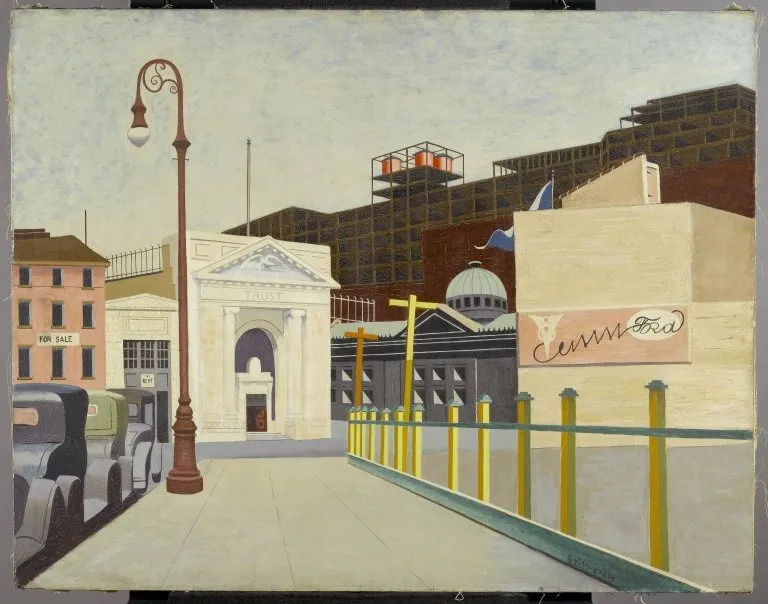
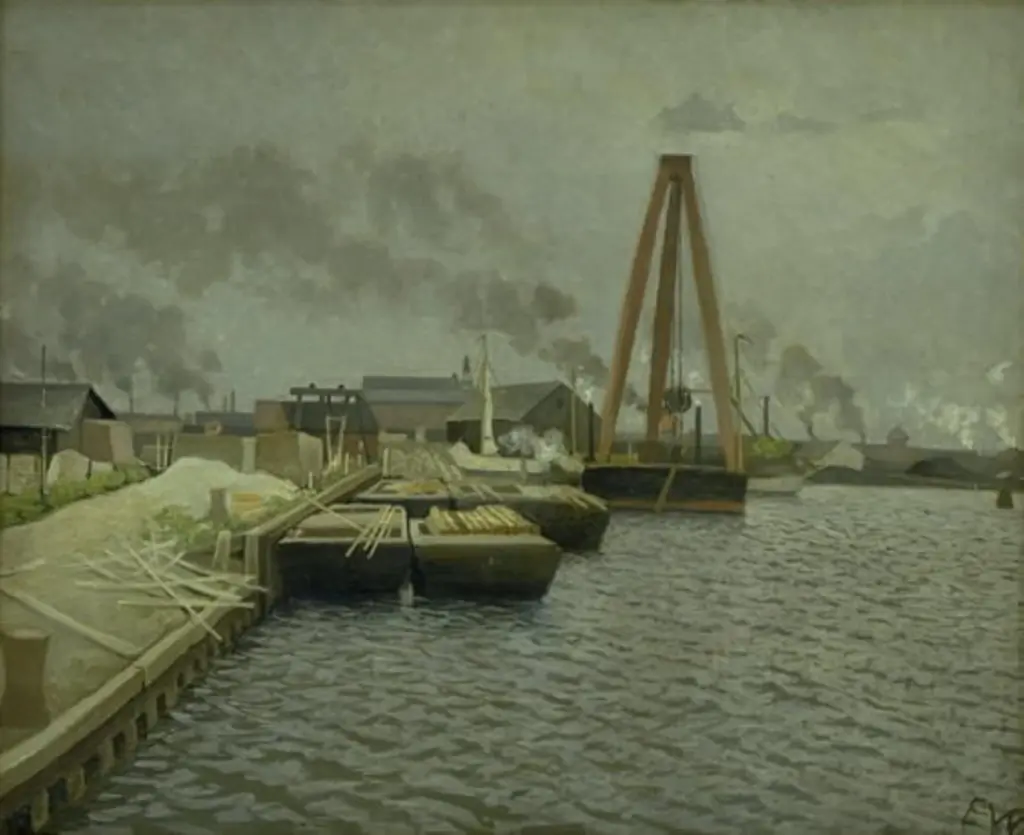
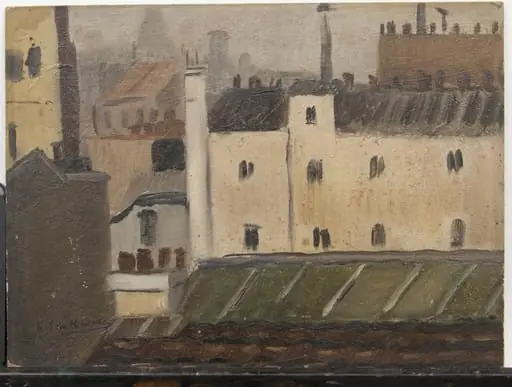
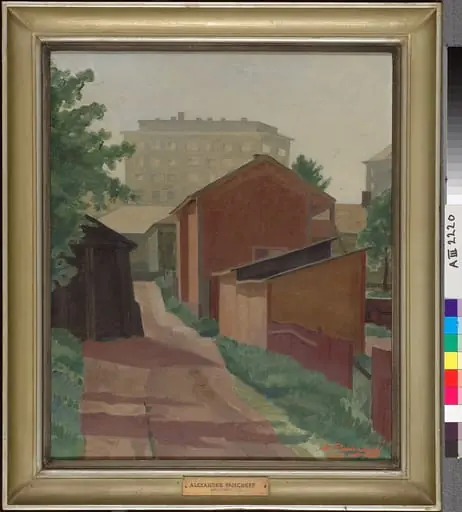
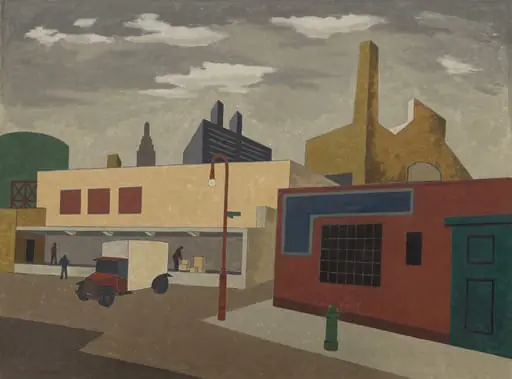
City Landscape is an oil painting by the American Impressionist artist Francis Criss. It dates from 1934 and is held in the collection of the Brooklyn Museum.
About this work
Overview
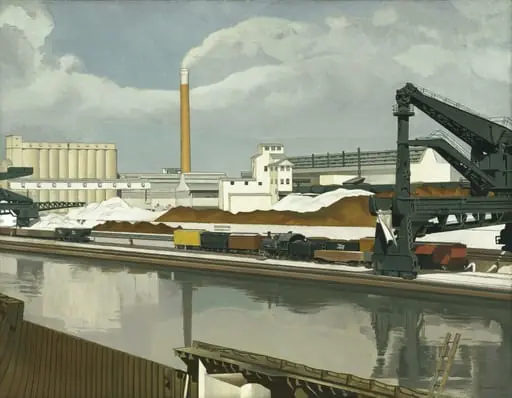
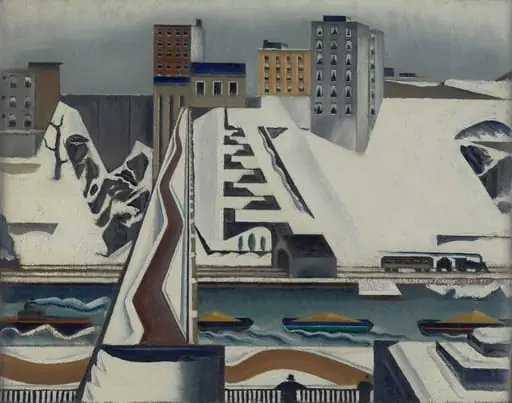
Francis Criss painted City Landscape in 1934 using oil on canvas, capturing an urban scene devoid of people. The work aligns with the Precisionist tendency of the 1930s, emphasizing architectural forms through simplified geometry and restrained color. Its quiet, almost still atmosphere distinguishes it from more dynamic depictions of the modern city, focusing instead on structure and atmosphere.
Subject & Meaning
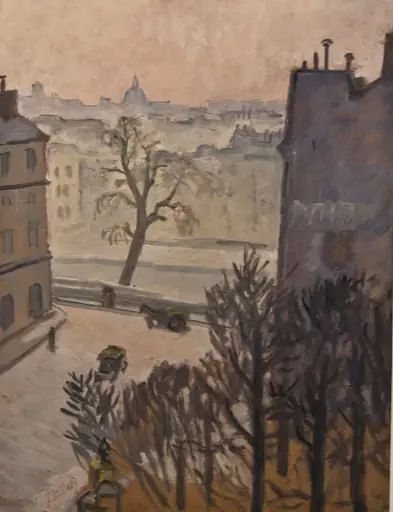
The painting presents a quiet street lined with parked automobiles and a row of buildings, one featuring a prominent dome. The absence of human activity suggests a pause in urban life, inviting contemplation rather than movement. The muted palette and overcast sky contribute to a sense of solitude, reflecting a contemplative view of the city as a composed, impersonal environment.
Technique & Style
Criss rendered buildings and vehicles with precise, clean lines and subtle modeling, avoiding overt abstraction while still distorting spatial relationships. The perspective is slightly skewed, enhancing the sense of order without realism. Colors are subdued, grays, browns, and soft blues, creating a tonal harmony that emphasizes form over narrative, characteristic of Precisionist aesthetics.
History & Provenance
Created in 1934, City Landscape entered the collection of the Brooklyn Museum, where it remains today. Criss, active primarily in New York during the interwar years, was part of a small circle of artists examining urban architecture with detached precision. The painting’s preservation in a major public institution underscores its recognition within early 20th-century American art circles.
Context
In the early 1930s, American artists increasingly turned to the built environment as a subject, influenced by industrialization and modernist ideals.
In the early 1930s, American artists increasingly turned to the built environment as a subject, influenced by industrialization and modernist ideals. Criss’s work shares affinities with Charles Demuth and Charles Sheeler, though his tone is quieter, less celebratory. City Landscape reflects a moment when cities were seen as both monuments and machines, worthy of study for their formal qualities rather than their social energy.
Legacy
Though Criss is less widely known than his Precisionist peers, City Landscape exemplifies a quiet strain within the movement, one that prioritized atmosphere and structure over spectacle. The painting contributes to a broader understanding of how American artists interpreted urban life in the decades before World War II, offering a restrained alternative to more dramatic portrayals of modernity.
Artist & collection
Artist
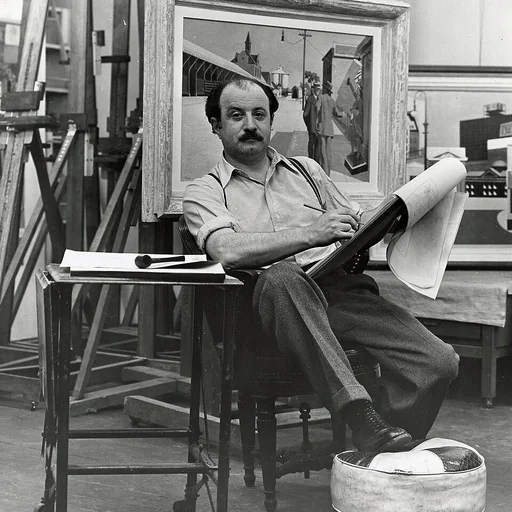
Francis Hyman Criss (1901 - 1973) was an American painter. Criss's style is associated with the American Precisionists like Charles Demuth and his friend Charles Sheeler. The work from his best-known years, the 1930s…