Artwork
Cucorongna and Pernoualla
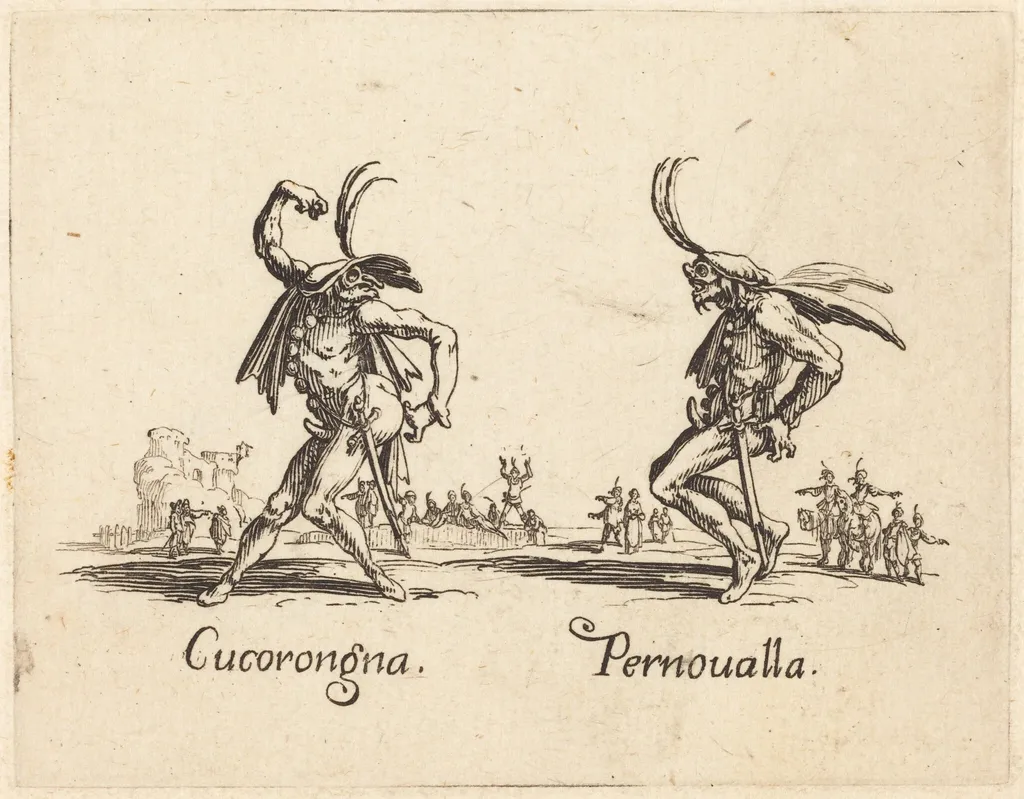
Cucorongna and Pernoualla is an ink print by the Baroque artist Jacques Callot. It dates from 1622 and is held in the collection of the National Gallery of Art.
About this work
Overview
Created around 1622, this etching by Jacques Callot depicts two fantastical, insectoid figures named Cucorongna and Pernoualla.
Created around 1622, this etching by Jacques Callot depicts two fantastical, insectoid figures named Cucorongna and Pernoualla. Executed on laid paper, the work belongs to a series of imaginative prints that blend observation with invention. Callot, a prolific draftsman from Lorraine, often fused real-world details with surreal elements, using the etching medium to explore both the mundane and the monstrous.
Subject & Meaning
The two towering, winged beings with elongated limbs and human faces appear to be invading a small town. Figures below flee or cower, while one distant individual raises arms in supplication. The names inscribed beneath them suggest these are not random monsters but named entities, possibly drawn from folkloric or theatrical traditions.
The scene evokes anxiety and disorder, reflecting broader anxieties about chaos, invasion, or divine retribution in early 17th-century Europe.
Technique & Style
Callot employed fine, incised lines to render the grotesque forms with sharp clarity, enhancing the sense of movement and tension. The etching technique allowed him to achieve intricate detail in both the figures’ textured bodies and the chaotic urban backdrop. His use of dense cross-hatching and abrupt contrasts heightens the drama, transforming a simple print into a vivid, almost theatrical tableau of panic and wonder.
History & Provenance
This print is part of Callot’s broader output, which included over 1,400 etchings documenting social life, military campaigns, and fantastical subjects. While the exact provenance of this specific work is not fully documented, it aligns with his known interest in marginal figures and imagined creatures. It likely circulated among collectors and artists in Lorraine and beyond, valued for its inventive vision rather than its narrative clarity.
Context
In the early 1600s, Europe was marked by war, religious strife, and shifting social hierarchies. Callot’s prints often mirrored these tensions through allegory and satire. Cucorongna and Pernoualla may reference contemporary fears, of plague, foreign invasion, or supernatural forces, filtered through popular imagery from fairs, puppet theater, or folk tales, offering a visual commentary on instability without direct political reference.
Legacy
Callot’s imaginative prints, including this one, influenced later generations of artists interested in the grotesque and the satirical. His technical precision and willingness to depict the bizarre expanded the possibilities of printmaking beyond mere illustration. Though not widely known today, works like this reveal his role in bridging documentary realism with the surreal, anticipating developments in both print and visual storytelling.
Own this work as a print
Artist & collection
Artist
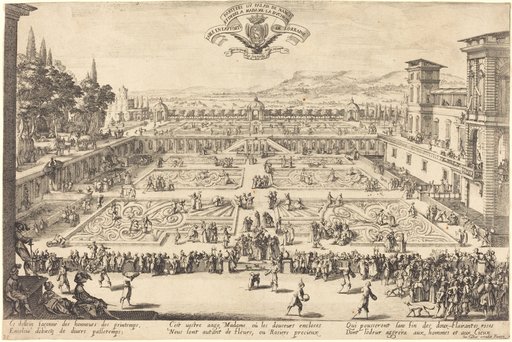
Jacques Callot (French: ; c. 1592 – 1635) was a baroque printmaker and draftsman from the Duchy of Lorraine. He is an important person in the development of the old master print. He made more than 1,400 etchings that…

 Holy Family at supper
 Restoration of the Aqueduct at Pisa
 Restoration of the Aqueduct at Pisa
 Square in Paris with Many Figures
 Square in Paris with Many Figures
 Horsemen Attacked by Robbers
 HOW WILL A COVERED PART BE CORRECTED?HOW WIKA A COVERED HEART DEED CORRECTED?
![Christ Walking on the Water [second plate], by Jacques Callot](https://artifactworldgallery.com/img/jacques-callot--christ-walking-on-the-water-second-plate--2069f3bfe4cb2126-w320.webp) Christ Walking on the Water [second plate]
Christ Walking on the Water [second plate]
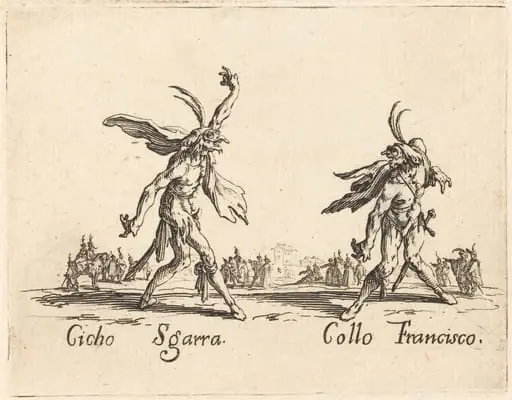 Cicho Sgarra and Collo Francisco
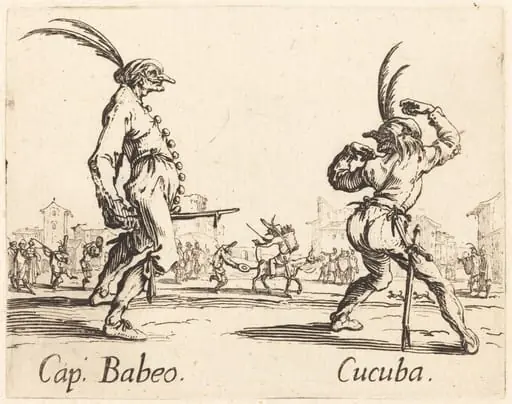 Cap. Babeo and Cucuba
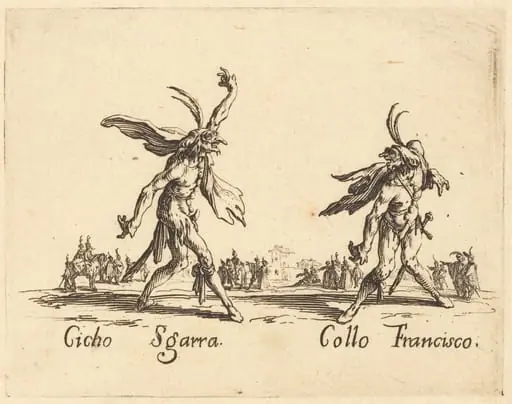 Cicho Sgarra and Collo Francisco
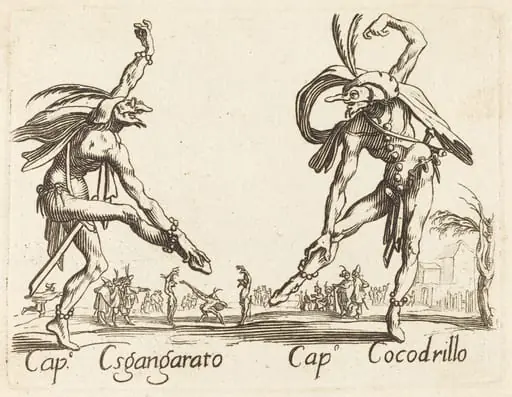 Cap. Esgangarato and Cap. Cocodrillo
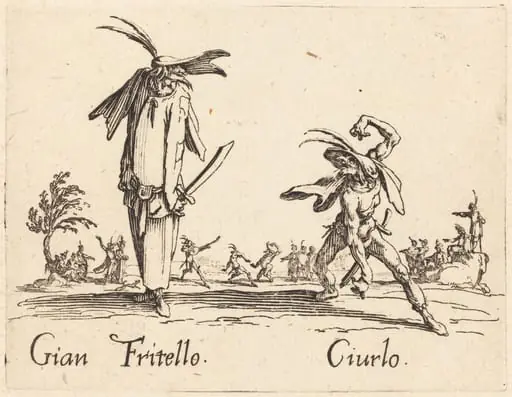 Gian Fritello and Ciurlo
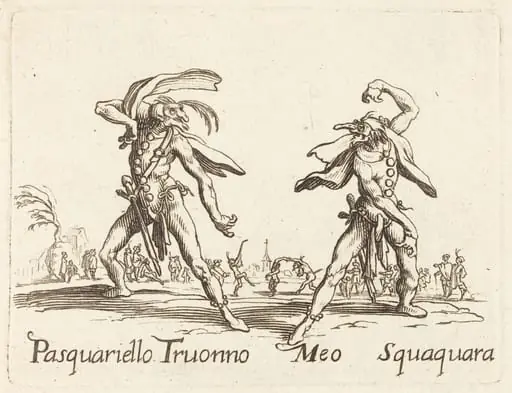 Pasquariello Truonno and Meo Squaquara
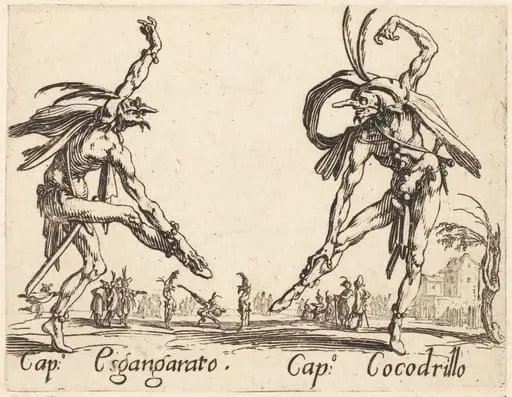 Cap. Esgangarato and Cap. Cocodrillo
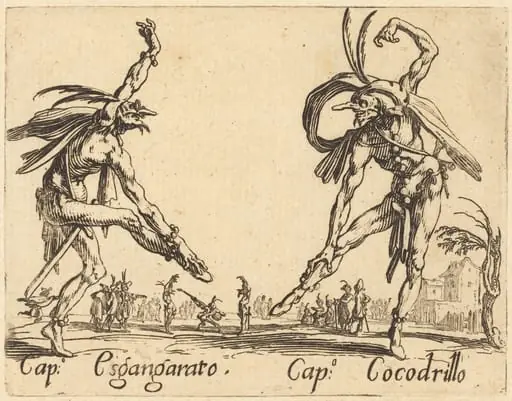 Cap. Esgangarato and Cap. Cocodrillo
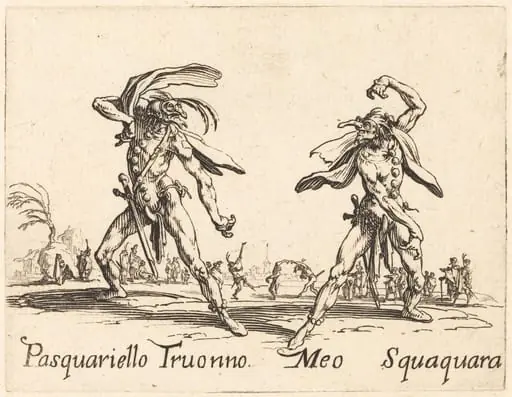 Pasquariello Truonno and Meo Squaquara
 Gentleman and His Page