Artwork
Dawn
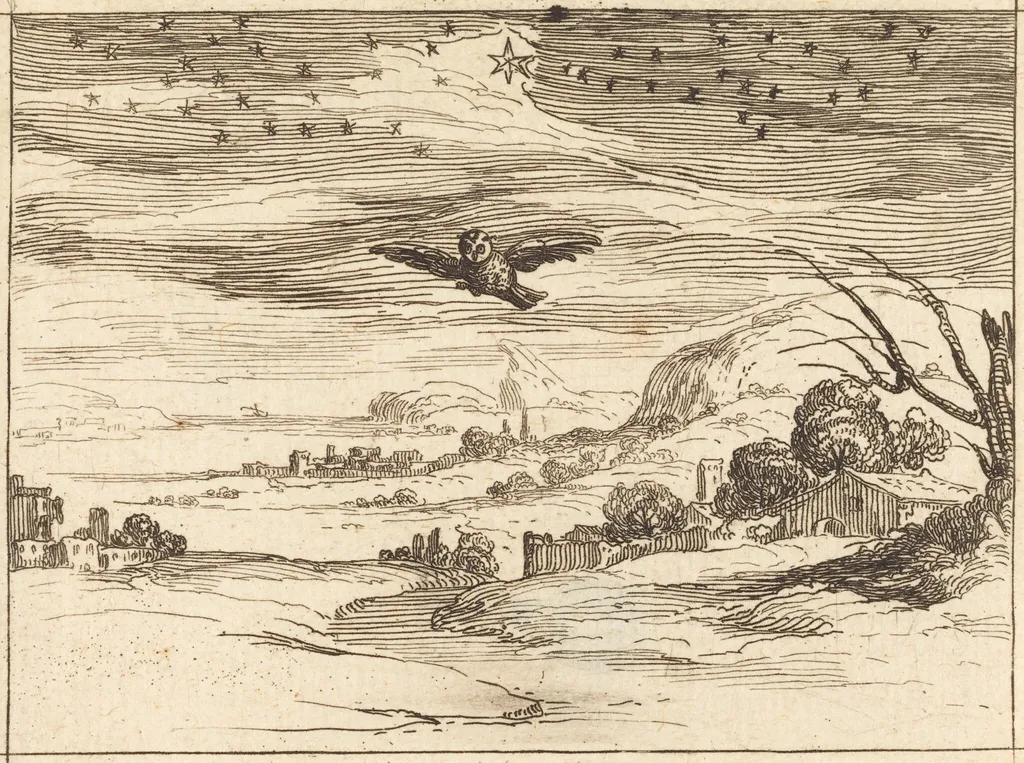
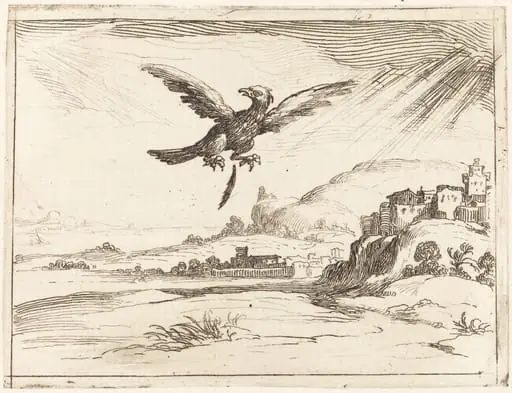
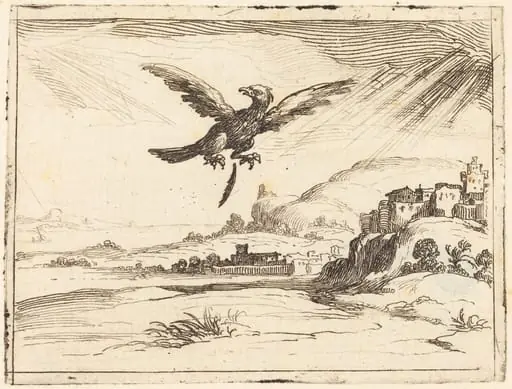
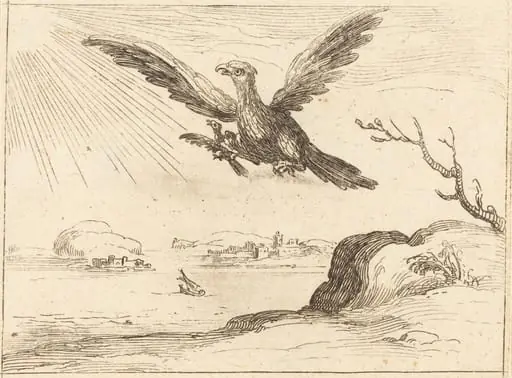
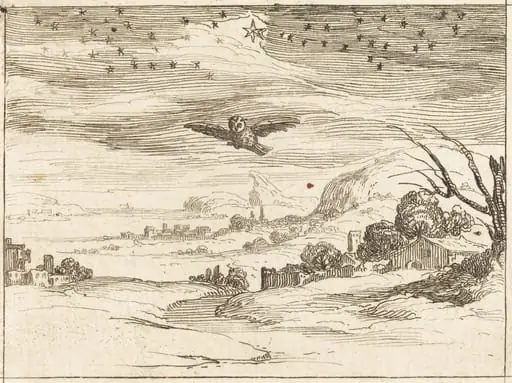
Dawn is an ink print by the Renaissance artist Jacques Callot. It dates from 1628 and is held in the collection of the National Gallery of Art.
About this work
Overview
As a printmaker from the Duchy of Lorraine, Callot produced over a thousand works documenting everyday life in early 17th-century Europe.
Jacques Callot’s Dawn, created in 1628, is an etching on laid paper that exemplifies his mastery of the medium. As a printmaker from the Duchy of Lorraine, Callot produced over a thousand works documenting everyday life in early 17th-century Europe. This piece stands apart for its quiet atmosphere, contrasting with his more dramatic depictions of war and social disorder. It captures a moment of transition between night and day with restrained precision.
Subject & Meaning
The scene depicts a tranquil landscape at daybreak, with rolling hills, sparse trees, and a faintly visible owl in flight. Stars linger in the softening sky, suggesting the quiet end of night. Unlike Callot’s usual focus on human activity, this work emphasizes nature’s stillness.
The owl, a traditional symbol of vigilance or wisdom, may hint at watchfulness over the coming day, reinforcing the theme of transition without overt narrative.
Technique & Style
Callot employed fine, controlled etching lines to model form with subtle gradations of tone. The monochromatic palette and delicate hatching create depth without heavy contrast, enhancing the sense of calm. His use of laid paper, with its characteristic chain lines, adds texture that complements the naturalistic mood.
The composition avoids clutter, focusing on horizontal bands of land and sky, a deliberate choice to evoke serenity through simplicity.
History & Provenance
Created during Callot’s mature period in Nancy, Dawn belongs to a lesser-known group of his landscape-oriented prints, distinct from his famous series on war or carnival scenes. While its early ownership is undocumented, it has been preserved in institutional collections since at least the 19th century. Its survival reflects a growing appreciation for Callot’s range beyond social commentary, recognizing his sensitivity to natural quietude.
Context
In the 1620s, Europe was deeply affected by the Thirty Years’ War, yet Callot occasionally turned from violence to contemplative subjects. Dawn may reflect a personal or spiritual retreat from the chaos of his time. Its peaceful imagery aligns with broader European interests in natural philosophy and the sublime, even as it remains grounded in the observed world rather than idealized landscapes.
Legacy
Though less celebrated than Callot’s battle scenes, Dawn illustrates his technical versatility and emotional range. It influenced later printmakers who sought to convey mood through minimal means, demonstrating that etching could express stillness as powerfully as action. The work remains a quiet testament to his ability to find depth in simplicity, expanding the expressive potential of the medium.
Own this work as a print
Artist & collection
Artist
Jacques Callot (French: ; c. 1592 – 1635) was a baroque printmaker and draftsman from the Duchy of Lorraine. He is an important person in the development of the old master print. He made more than 1,400 etchings that…

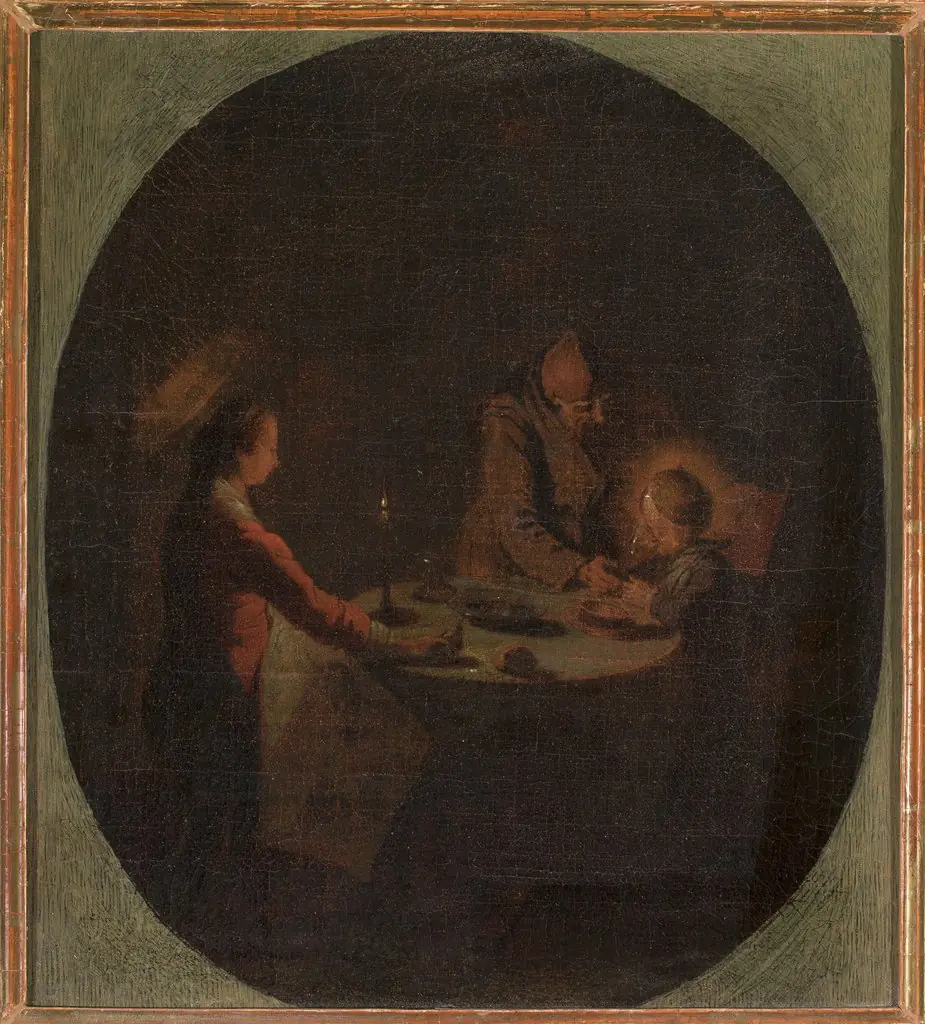 Holy Family at supper
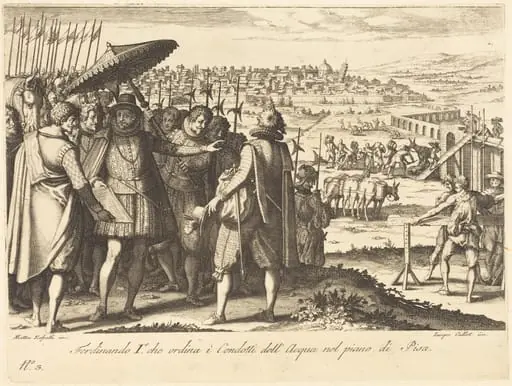 Restoration of the Aqueduct at Pisa
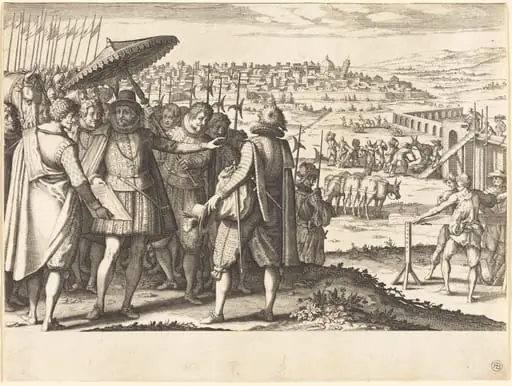 Restoration of the Aqueduct at Pisa
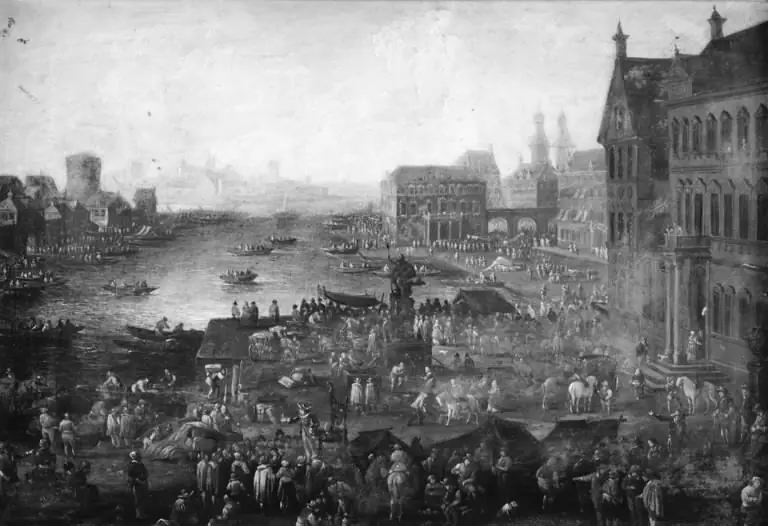 Square in Paris with Many Figures
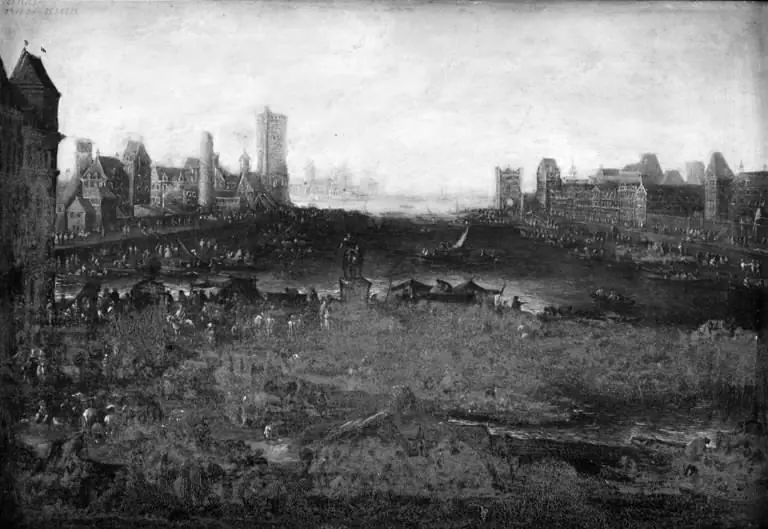 Square in Paris with Many Figures
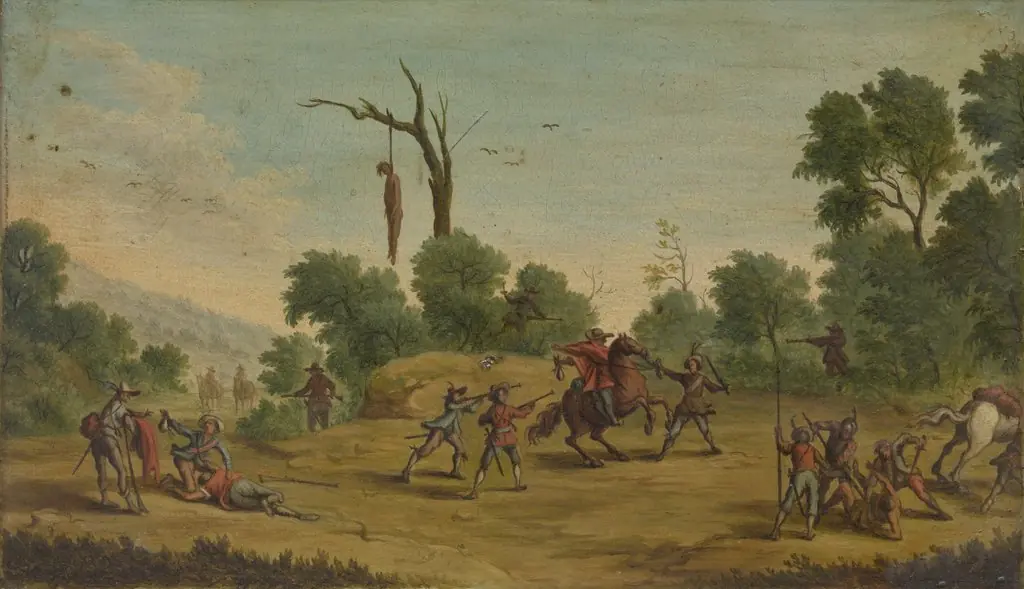 Horsemen Attacked by Robbers
 HOW WILL A COVERED PART BE CORRECTED?HOW WIKA A COVERED HEART DEED CORRECTED?
![Christ Walking on the Water [second plate], by Jacques Callot](https://artifactworldgallery.com/img/jacques-callot--christ-walking-on-the-water-second-plate--2069f3bfe4cb2126-w320.webp) Christ Walking on the Water [second plate]
Christ Walking on the Water [second plate]