Artwork
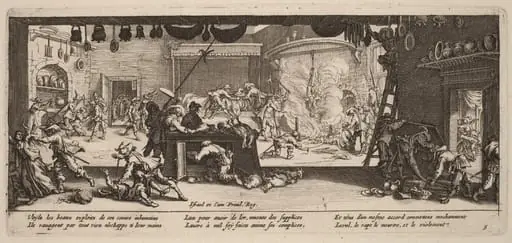
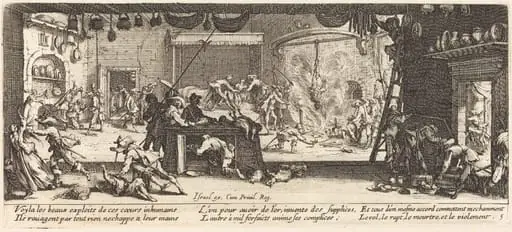
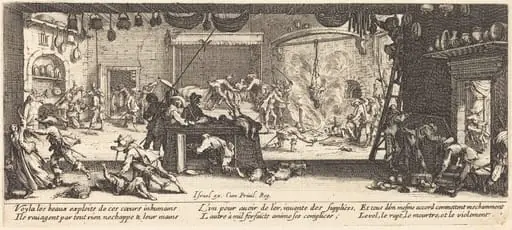
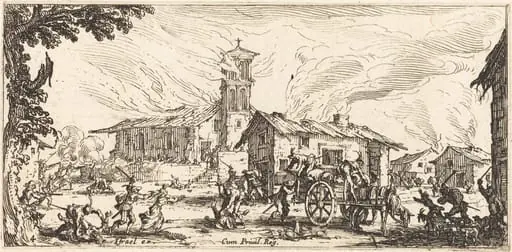
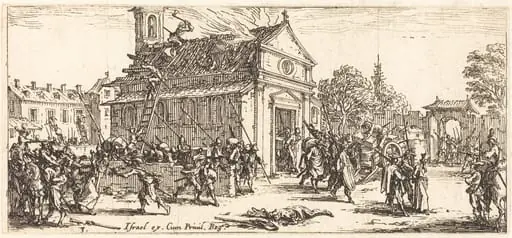
Destruction of a Convent
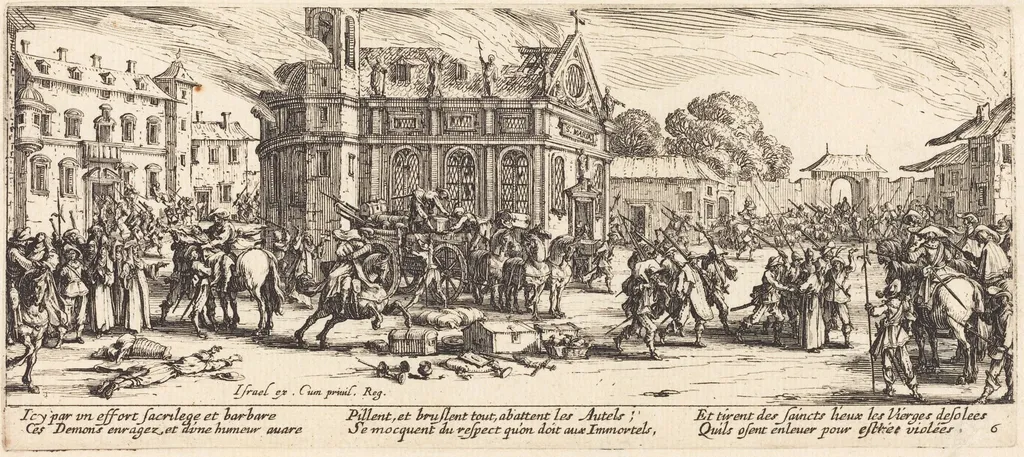
Destruction of a Convent is an ink print by the Baroque artist Jacques Callot. It dates from 1633 and is held in the collection of the National Gallery of Art.
About this work
Overview
Destruction of a Convent is an etching on laid paper created by Jacques Callot, a French printmaker, around 1633. It is one of over 1,400 etchings produced by Callot, who documented various aspects of contemporary life.
Subject & Meaning
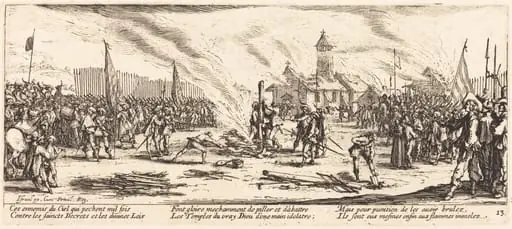
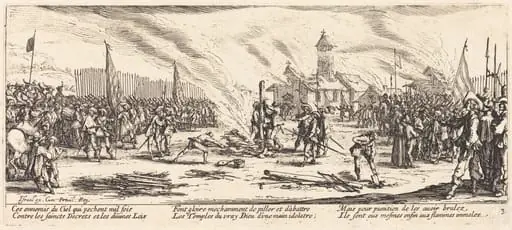
The etching depicts a chaotic scene of a convent under attack by armed individuals on horseback and on foot. The attackers are breaking down doors and windows, while several figures lie injured or dead in the foreground. The work reflects Callot's practice of recording historical and social events.
Technique & Style
The etching is characterized by a detailed and realistic style, with intricate textures and shading. Dark colors and dramatic lighting enhance the sense of tension and chaos in the scene, showcasing Callot's skill with etching techniques.
Artist & collection
Artist
Jacques Callot (French: ; c. 1592 – 1635) was a baroque printmaker and draftsman from the Duchy of Lorraine. He is an important person in the development of the old master print. He made more than 1,400 etchings that…

 Holy Family at supper
 Restoration of the Aqueduct at Pisa
 Restoration of the Aqueduct at Pisa
 Square in Paris with Many Figures
 Square in Paris with Many Figures
 Horsemen Attacked by Robbers
 HOW WILL A COVERED PART BE CORRECTED?HOW WIKA A COVERED HEART DEED CORRECTED?
![Christ Walking on the Water [second plate], by Jacques Callot](https://artifactworldgallery.com/img/jacques-callot--christ-walking-on-the-water-second-plate--2069f3bfe4cb2126-w320.webp) Christ Walking on the Water [second plate]
Christ Walking on the Water [second plate]