Artwork
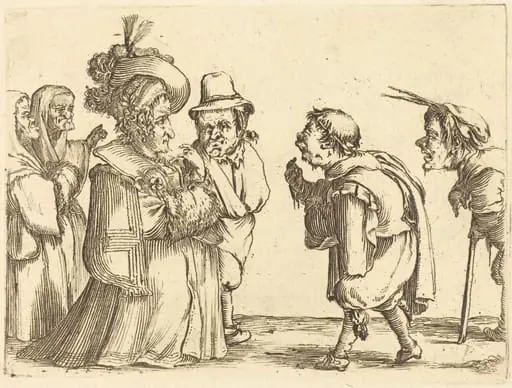
Frontispiece for "Varie Figure Gobbi" (Various Hunchback Figures)
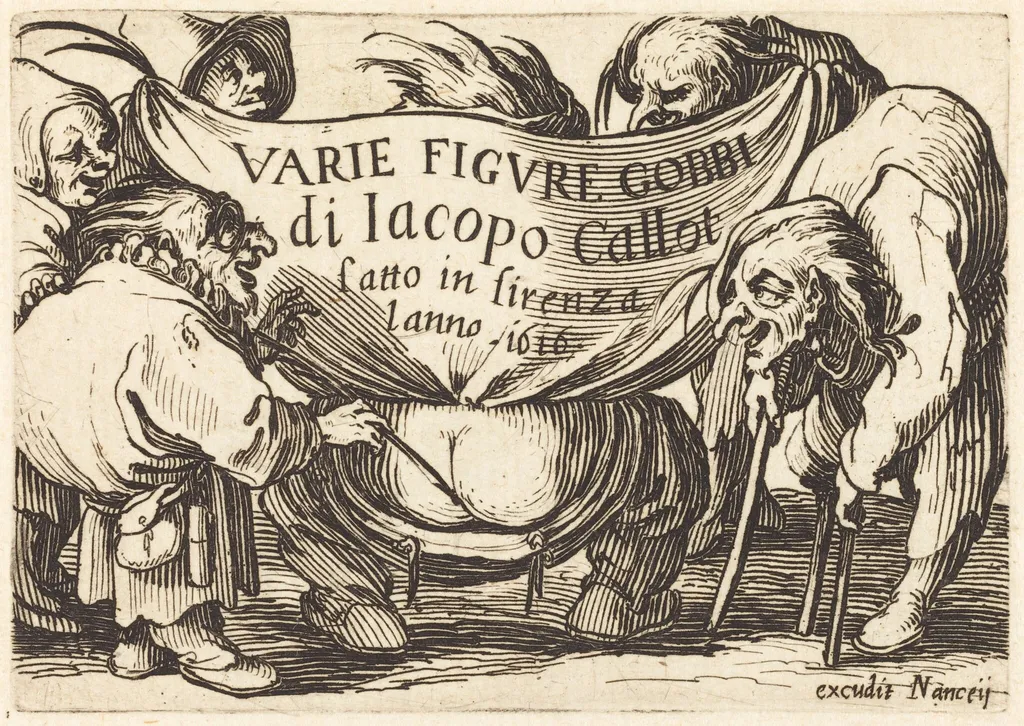
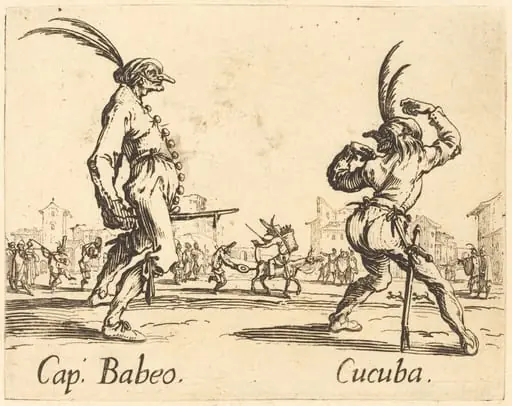
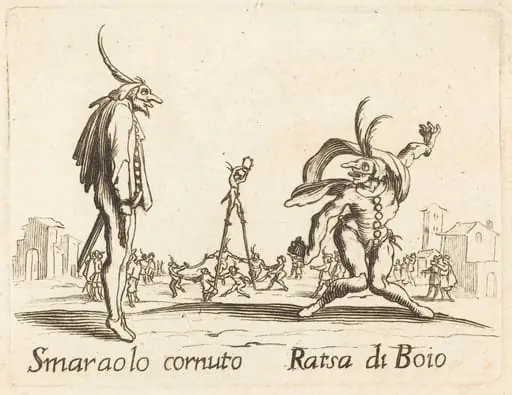
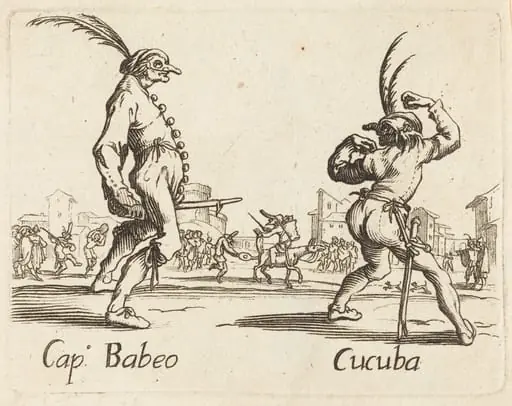
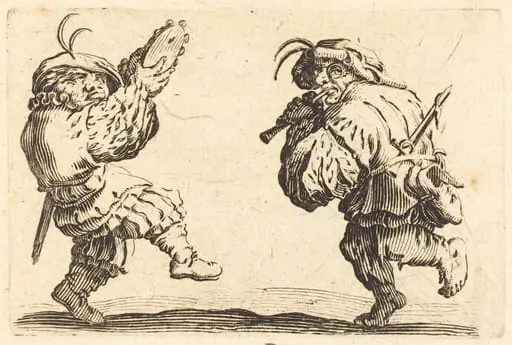
Frontispiece for "Varie Figure Gobbi" (Various Hunchback Figures) is an ink print by the Baroque artist Jacques Callot. It dates from 1622 and is held in the collection of the National Gallery of Art.
About this work
Overview
' Callot, a printmaker from the Duchy of Lorraine, produced over 1,400 prints in his career, many focused on the social margins of early 17th-century Europe.
Created around 1622 by Jacques Callot, this etching and engraving on laid paper serves as the frontispiece to a series titled 'Varie Figure Gobbi.' Callot, a printmaker from the Duchy of Lorraine, produced over 1,400 prints in his career, many focused on the social margins of early 17th-century Europe. This work introduces a group of figures with physical differences, reflecting his fascination with human diversity and everyday life beyond the elite.
Subject & Meaning
The central figure is a hunchbacked individual, surrounded by others with distinctive physiognomies, possibly performers or marginalized members of society. Rather than caricature, the composition suggests observation and empathy, aligning with Callot’s broader interest in documenting non-idealized human types. The grouping implies a community or troupe, hinting at the role such figures played in public entertainments or street life of the period.
Technique & Style
Callot employed fine-line etching and engraving to render intricate details across a crowded composition. His mastery of the medium allowed precise control over line weight and texture, enabling subtle modeling of fabric, posture, and facial expression. The figures are arranged with careful spatial logic, each rendered with individualized gestures, demonstrating his ability to animate complex scenes within a small format.
History & Provenance
The print was part of a small series produced in Florence, where Callot worked between 1612 and 1621. Though the full series is now dispersed, this frontispiece survives in several institutional collections. Its publication likely coincided with the circulation of similar anatomical or grotesque studies in Italian courts, reflecting a broader European interest in the human form beyond classical norms.
Context
In early 17th-century Europe, depictions of physical difference were common in courtly entertainment and popular prints. Callot’s approach diverged from pure mockery; his figures retain dignity through nuanced posture and expression. His work reflects the influence of Italian Renaissance naturalism and the growing curiosity about human variation, paralleling developments in anatomy and ethnography of the time.
Legacy
Callot’s series influenced later printmakers in their treatment of social types and the grotesque. His technical innovations in etching, including the use of the 'stopping-out' varnish, became standard practice. While the specific series 'Varie Figure Gobbi' was not widely reproduced, its emphasis on observational realism contributed to the evolution of genre printmaking in Northern and Southern Europe.
Own this work as a print
Artist & collection
Artist
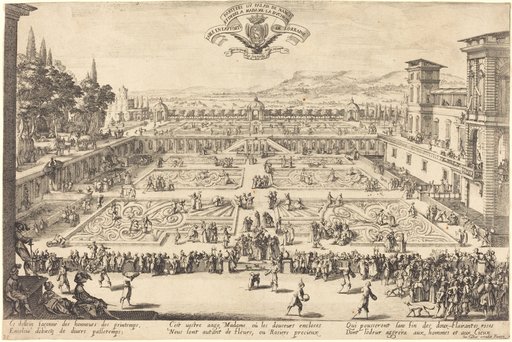
Jacques Callot (French: ; c. 1592 – 1635) was a baroque printmaker and draftsman from the Duchy of Lorraine. He is an important person in the development of the old master print. He made more than 1,400 etchings that…

 Holy Family at supper
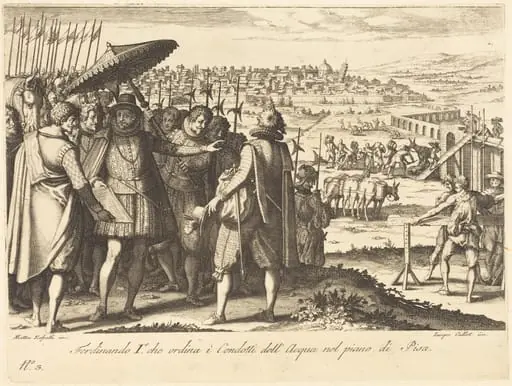 Restoration of the Aqueduct at Pisa
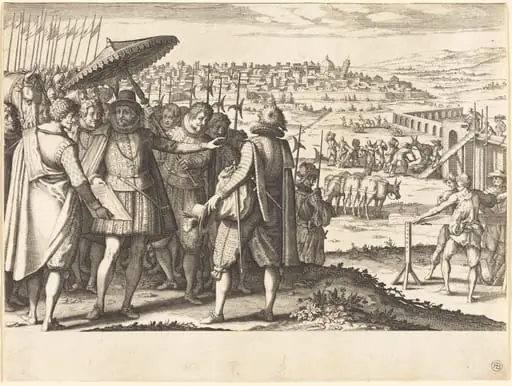 Restoration of the Aqueduct at Pisa
 Square in Paris with Many Figures
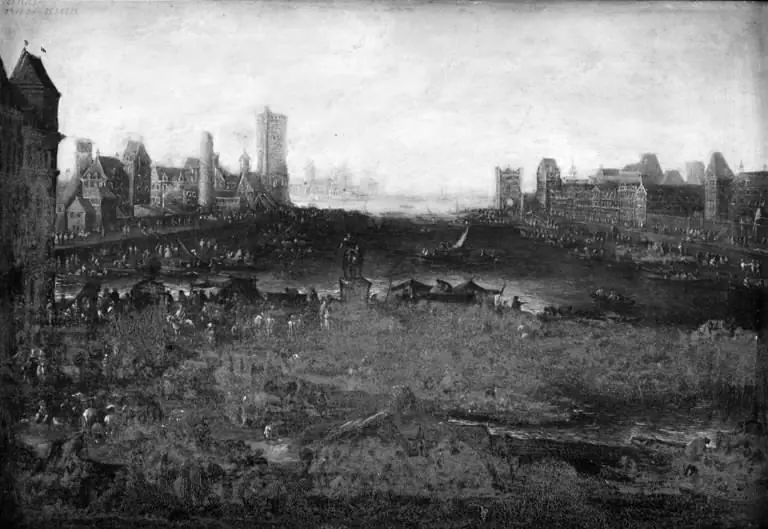 Square in Paris with Many Figures
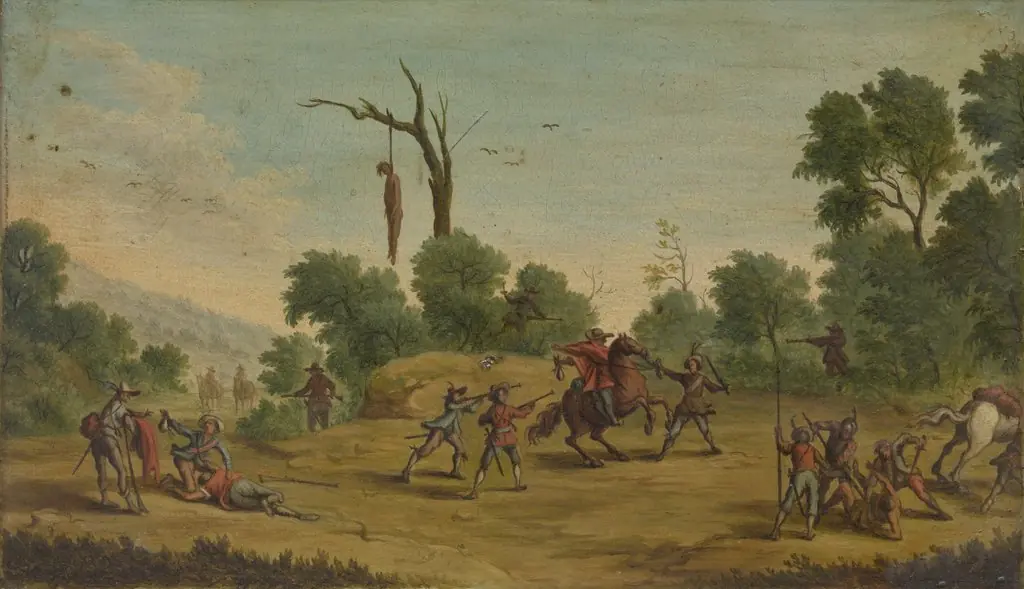 Horsemen Attacked by Robbers
 HOW WILL A COVERED PART BE CORRECTED?HOW WIKA A COVERED HEART DEED CORRECTED?
![Christ Walking on the Water [second plate], by Jacques Callot](https://artifactworldgallery.com/img/jacques-callot--christ-walking-on-the-water-second-plate--2069f3bfe4cb2126-w320.webp) Christ Walking on the Water [second plate]
Christ Walking on the Water [second plate]