Artwork
Horses Running
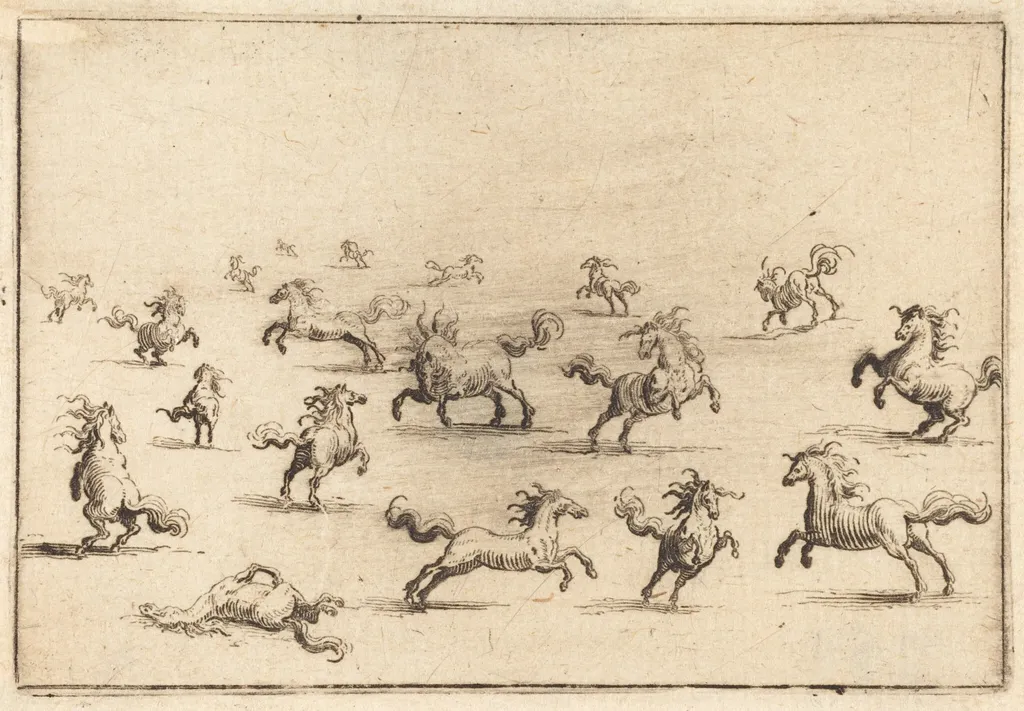
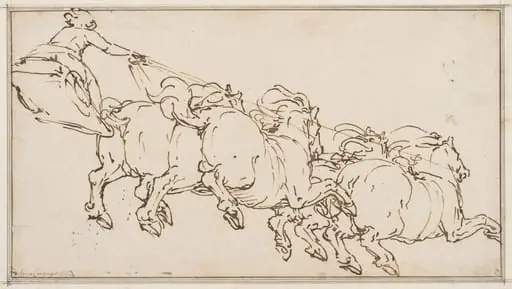
Horses Running is an ink print by the Baroque artist Jacques Callot. It dates from 1622 and is held in the collection of the National Gallery of Art.
About this work
Overview
Created around 1622, Horses Running is an etching on laid paper by Jacques Callot, a prolific printmaker from the Duchy of Lorraine.
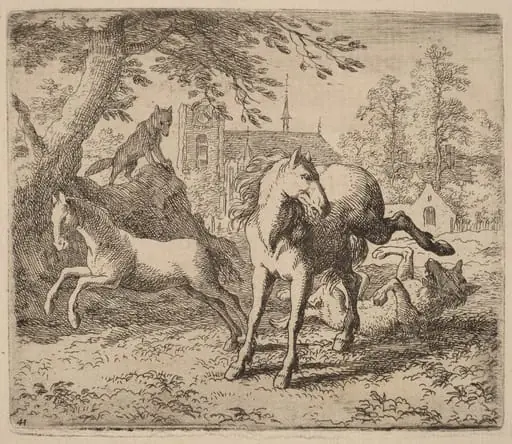
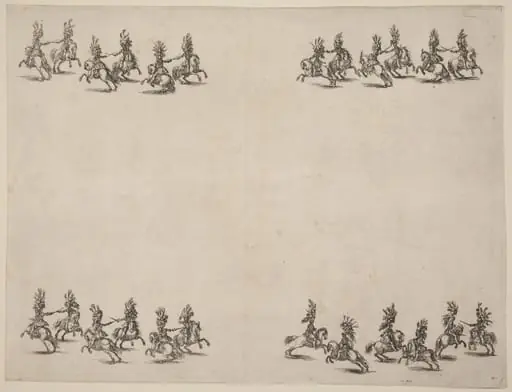
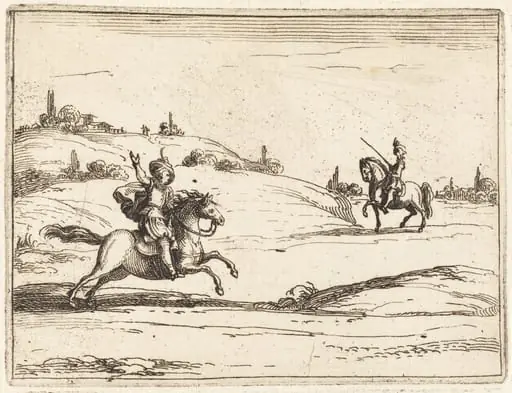
Created around 1622, Horses Running is an etching on laid paper by Jacques Callot, a prolific printmaker from the Duchy of Lorraine. Part of a vast body of over 1,400 prints, this work exemplifies Callot’s focus on movement and observation of everyday life. The image captures a group of horses in motion, rendered with precision and attention to anatomical detail, reflecting his broader interest in documenting the physical world through print.
Subject & Meaning
The scene depicts a loose gathering of horses in varied postures, some galloping, others rearing, suggesting a moment of uncontrolled energy rather than a staged event. There is no clear narrative or symbolic intent; instead, the focus lies in the observation of animal behavior. Callot’s interest in capturing transient motion aligns with his broader documentation of rural and equestrian life in early 17th-century Europe.
Technique & Style
Callot employed fine, controlled etching lines to define the horses’ musculature, flowing manes, and dynamic limbs. The contrast between the dark ink and the pale laid paper enhances the sense of form and movement. His use of varied line weight and density creates depth and texture without relying on shading, demonstrating mastery of the etching medium and an acute sensitivity to anatomical structure.
History & Provenance
The work originates from Callot’s active period in Nancy and Florence, where he developed his technical innovations in etching. While the specific provenance of this print is not documented, it belongs to a series of animal studies he produced during the early 1620s. These works circulated among collectors and artists, contributing to his reputation as a leading printmaker of his time.
Context
In early 17th-century Europe, equestrian imagery was common in art, often tied to nobility or warfare. Callot diverged from such conventions by focusing on horses in informal, unidealized settings. His prints reflect a growing interest in natural observation, influenced by scientific curiosity and the rise of empirical study, making his work a bridge between artistic tradition and emerging realism.
Legacy
Callot’s detailed animal studies, including Horses Running, influenced later printmakers through their technical precision and observational rigor. His ability to convey motion and anatomy with minimal lines set a standard for etching as a medium for recording the natural world. Though not widely exhibited today, his prints remain important references in the history of printmaking and animal depiction.
Own this work as a print
Artist & collection
Artist
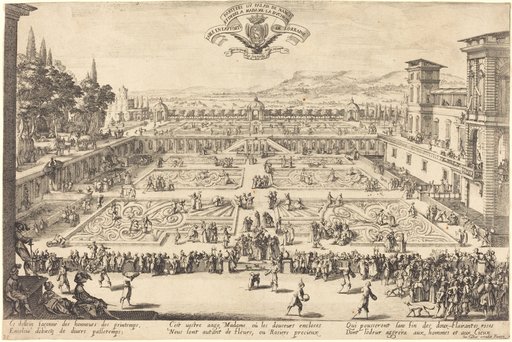
Jacques Callot (French: ; c. 1592 – 1635) was a baroque printmaker and draftsman from the Duchy of Lorraine. He is an important person in the development of the old master print. He made more than 1,400 etchings that…

 Holy Family at supper
 Restoration of the Aqueduct at Pisa
 Restoration of the Aqueduct at Pisa
 Square in Paris with Many Figures
 Square in Paris with Many Figures
 Horsemen Attacked by Robbers
 HOW WILL A COVERED PART BE CORRECTED?HOW WIKA A COVERED HEART DEED CORRECTED?
![Christ Walking on the Water [second plate], by Jacques Callot](https://artifactworldgallery.com/img/jacques-callot--christ-walking-on-the-water-second-plate--2069f3bfe4cb2126-w320.webp) Christ Walking on the Water [second plate]
Christ Walking on the Water [second plate]