Artwork
Mrs. E. Hunt
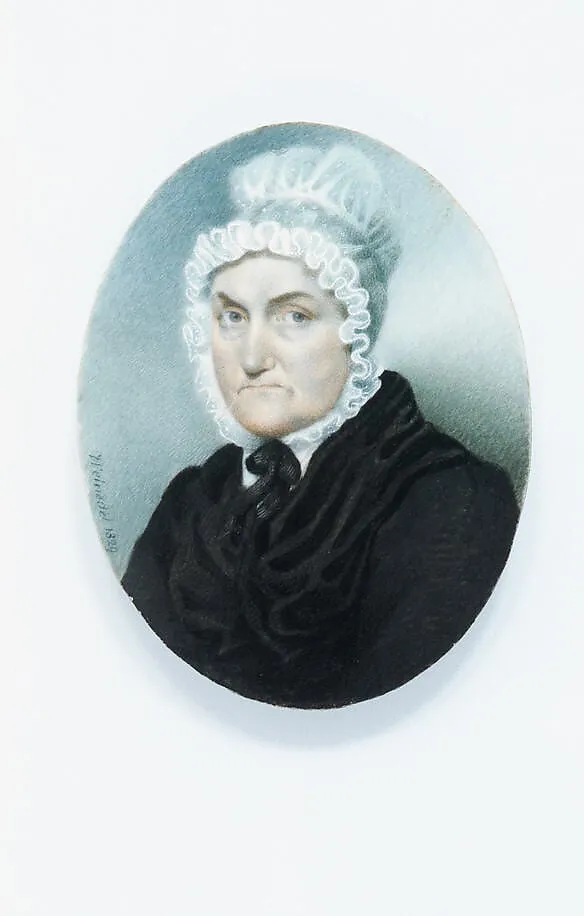
Mrs. E. Hunt is a watercolor painting by the Biedermeier artist Carl Weinedel. It dates from 1829 and is held in the collection of the Metropolitan Museum of Art. This watercolor portrait, titled Mrs.
About this work
A woman in a black dress looks straight at you. Her lace collar is so fine you can almost feel it. Tiny brushstrokes on ivory make her skin glow.
This is a miniature, small enough to hold in your hand. In 1829, people carried these like photos. Watercolor on ivory was tricky; one wrong stroke and the whole thing was ruined.
If you like tiny portraits, look up the subject of portraits.
Subject & Meaning
6 units, reflect the intimate function of such likenesses, designed for private display or sentimental exchange rather than public exhibition.
Mrs. E. Hunt is a portrait miniature depicting a woman, identified by its title as the sitter Mrs. E. Hunt. Executed in watercolor on ivory by Carl Weinedel in 1829, the work belongs to the genre of portraiture, presenting the female subject in a small-scale format typical of personal keepsakes of the period. The miniature's diminutive dimensions, approximately 5.9 by 4.6 units, reflect the intimate function of such likenesses, designed for private display or sentimental exchange rather than public exhibition.
As a portrait, the work's primary meaning lies in commemorating the individual identity of its named female sitter, preserving her likeness through the refined technique of watercolor on ivory.
Technique & Style
Mrs. E. Hunt is a watercolor portrait painted on an ivory support by Carl Weinedel in 1829. The work measures roughly 5.9 inches in height by 4.6 inches in width, as recorded in the Metropolitan Museum of Art’s collection data. Executed in the early‑American portrait genre, the piece exemplifies the delicate brushwork and subtle tonal modulation characteristic of watercolor miniatures of the period.
Its formal qualities include a restrained palette, precise delineation of facial features, and a composition that emphasizes the sitter’s dignified presence within a compact format.
History & Provenance
As of the latest records, Mrs. E. Hunt (1829) by Carl Weinedel is held in the Metropolitan Museum of Art, where it is part of the American Wing’s collection of portrait miniatures. The work is accessioned under the museum’s inventory system, though the precise accession number is not publicly detailed in available sources. The watercolor on ivory has been housed at the Met since its acquisition, reflecting its classification as a significant example of early 19th-century American portraiture.
No major exhibition history beyond its inclusion in the museum’s permanent displays has been documented in the provided sources.
Overview
This watercolor portrait, titled Mrs. E. Hunt, was created by Carl Weinedel in 1829. Rendered on ivory, it presents a woman gazing directly forward. The artwork exemplifies the detailed craftsmanship characteristic of miniature painting from the early 19th century, a period when such intimate portraits served as personal keepsakes.
Context
In the early 19th century, miniature portraits like Mrs. E. Hunt functioned as cherished personal objects, often carried by their owners. Before the advent of photography, these small-scale artworks offered a portable means of preserving and sharing the likenesses of loved ones. Their intimate size and precious materials made them highly valued during this era.
Artist & collection

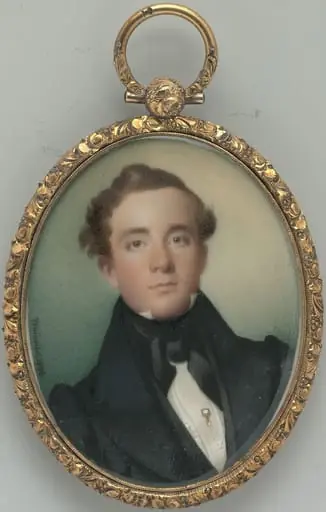
- Portrait of an old woman
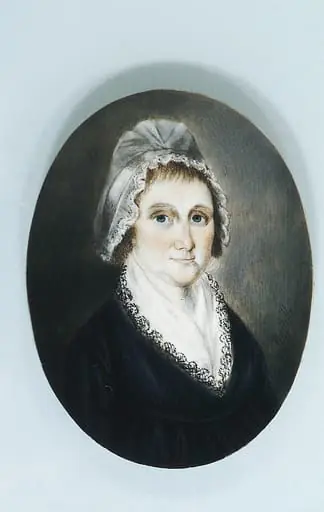 Mrs. Joseph White (Elizabeth Stone)
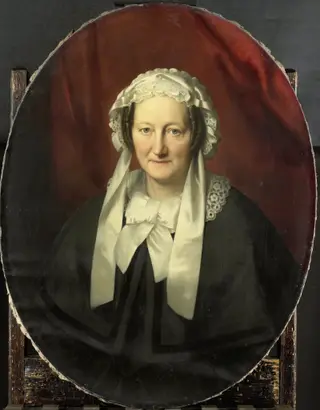 Portrait of Johanna Maria Parvé, Wife of Hendrik André Cornelis Tierens
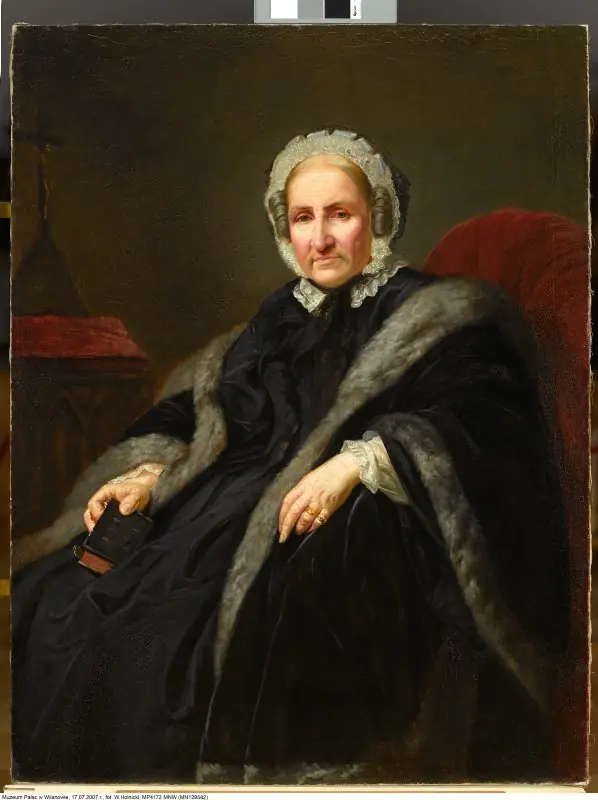 Portrait of countess Róża Sobańska
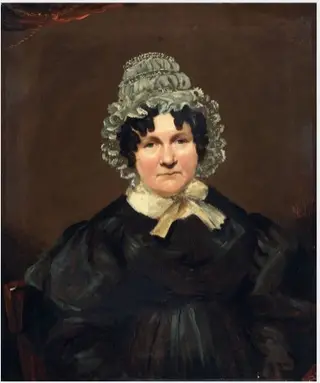 Portrait of Anastasia Moore (née Codd), Mother of Thomas Moore
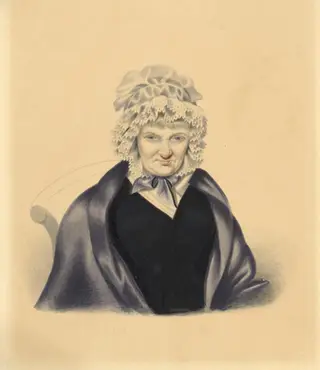 Hannah Gwynne
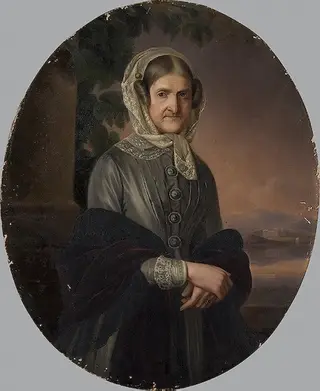 Portrait of A.P. Vasilchikova
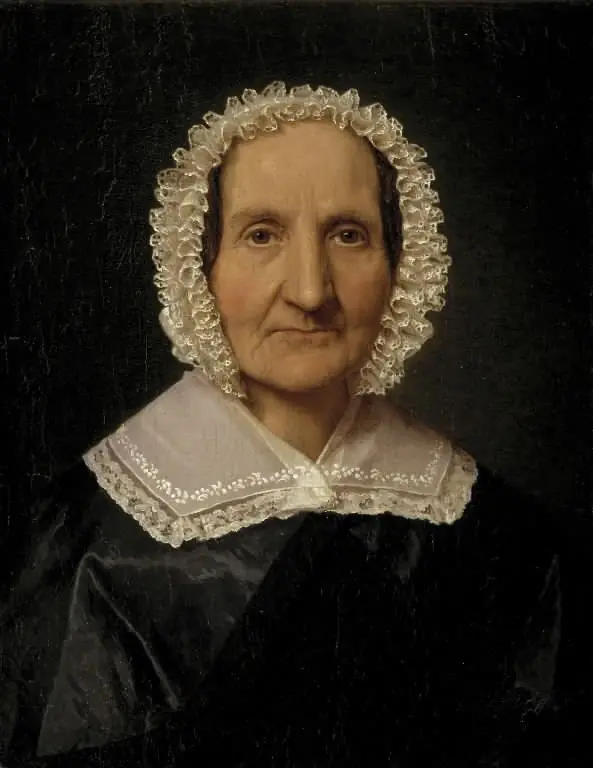 Juliane Dorothea Købke, née Ratz, the Artist's Mother-in-Law
 Marea clucereasă Maria Oteteleșanu
 Margaret Pryse
 Madame Gabriel Cotte
 Catherine Roberts, Gwraig Robert Roberts