Artwork
Mrs. William Astor (Caroline Webster Schermerhorn, 1831–1908)
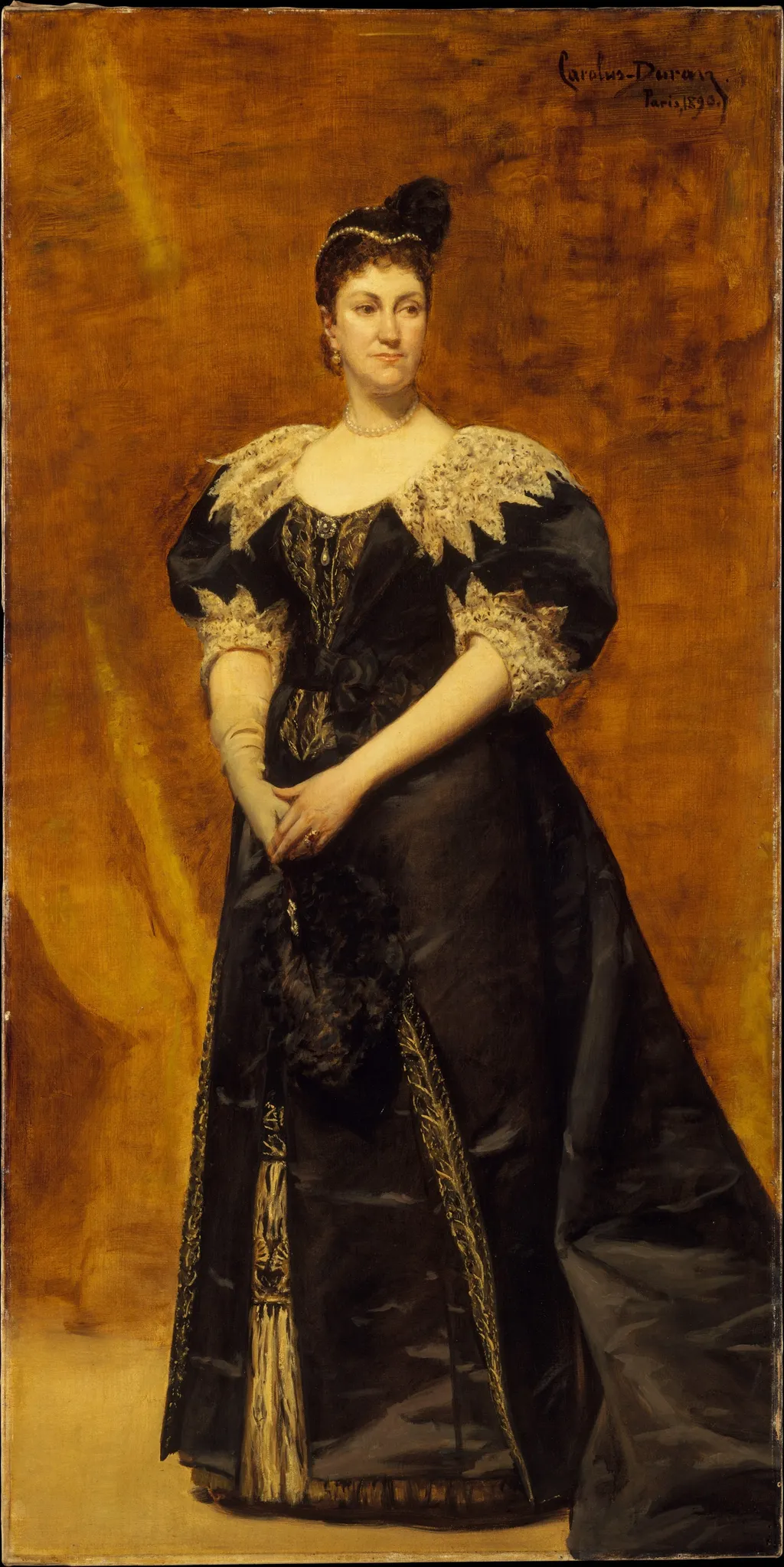
Mrs. William Astor (Caroline Webster Schermerhorn, 1831–1908) is an oil painting by the Impressionist artist Carolus-Duran. It dates from 1896 and is held in the collection of the Metropolitan Museum of Art.
About this work
Technique & Style
The portrait employs oil paint on a prepared canvas, executed in a fluid, alla prima handling typical of Carolus-Duran’s mature style.
The portrait employs oil paint on a prepared canvas, executed in a fluid, alla prima handling typical of Carolus-Duran’s mature style. The composition emphasizes linear grace and restrained modeling, with a muted palette of silvery grays, soft whites, and subtle rose tones that convey the sitter’s poised demeanor. Brushwork is deliberately delicate in passages such as the lace collar and facial features, while broader, more assertive strokes define the dark gown and background, creating a rhythmic contrast.
The vertical format and the sitter’s three-quarter pose, directed slightly to the viewer’s left, reinforce the portrait’s formal elegance and psychological reserve. No evidence of significant overpainting or structural damage is recorded in the source data.
History & Provenance
The portrait of Mrs. William Astor (Caroline Webster Schermerhorn) was painted by Carolus-Duran in 1890, executed in oil on canvas. The work was created as a formal portrait of the prominent New York society figure Caroline Webster Schermerhorn Astor. The painting is now held in the collection of the Metropolitan Museum of Art, where it remains on view.
No additional details regarding the original commission, intermediate ownership, or acquisition history are documented in the available sources.
Legacy
The portrait of Caroline Webster Schermerhorn Astor by Carolus‑Duran, painted in 1890, is part of the Metropolitan Museum of Art’s holdings, which underscores its continued recognition as a representative image of New York’s Gilded Age aristocracy. Its presence in a major public collection has allowed scholars to reference the work when discussing portraiture that codified social status among elite families. The painting’s technical execution and the sitter’s prominence have contributed to its reputation as a benchmark of late‑19th‑century American portraiture, frequently cited in studies of cultural identity and visual representation of wealth.
Overview
Carolus-Duran completed this oil portrait of Caroline Webster Schermerhorn Astor, known as Mrs. William Astor, in 1896. The painting captures a prominent figure of late 19th-century New York society, presenting her in a formal, upright pose. It is currently housed in The Metropolitan Museum of Art.
Subject & Meaning
The subject, Caroline Webster Schermerhorn Astor, was a leading socialite in Gilded Age New York. The portrait depicts her standing erect, adorned in an elaborate black gown featuring gold and white lace trim and distinctive puffed sleeves. Her refined appearance, with hair neatly styled and a high collar framing her face, conveys a sense of dignity and social standing appropriate for her public persona.
Artist & collection


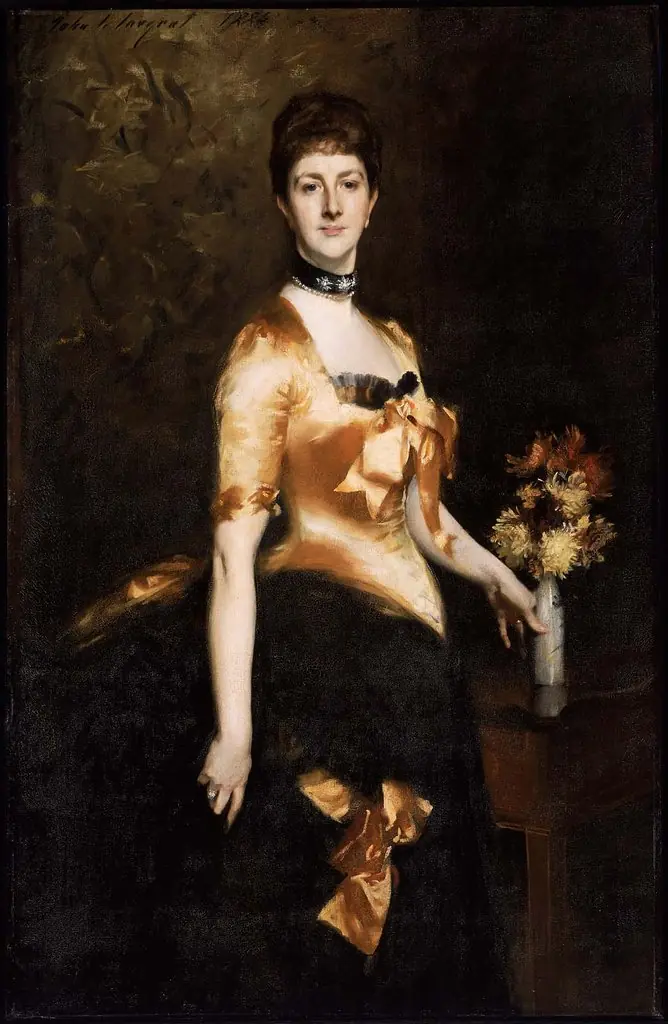 Edith, Lady Playfair (Edith Russell)
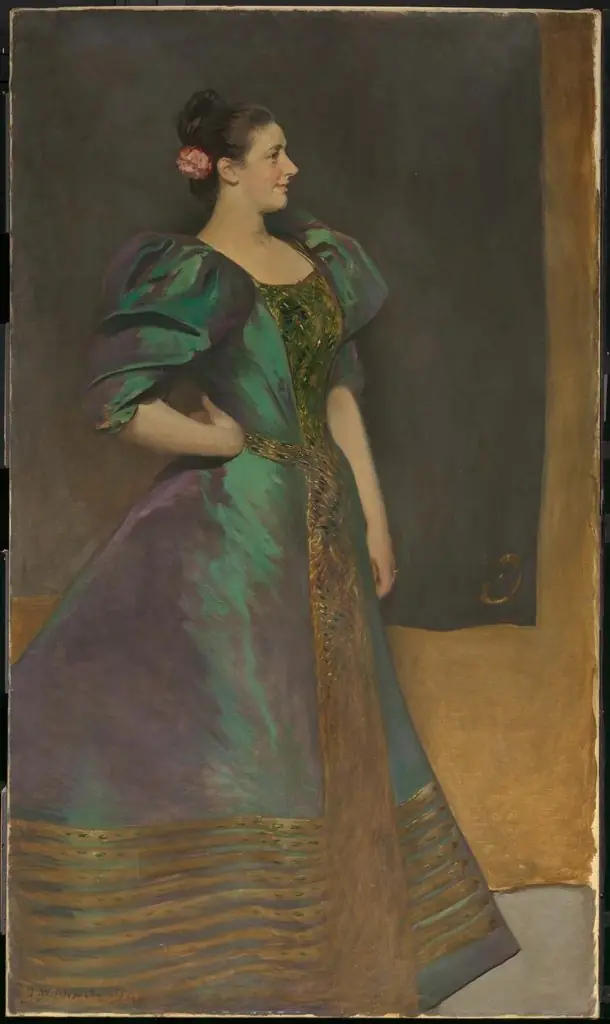 Mrs. J. Randolph Coolidge, Jr. (Mary Hamilton Hill)
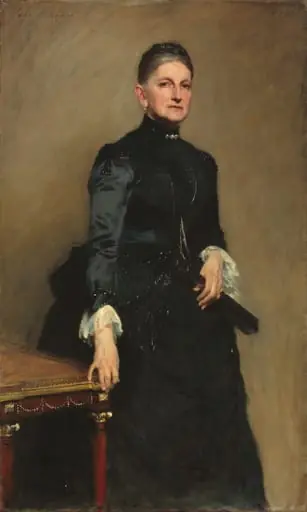 Eleanora O'Donnell Iselin (Mrs. Adrian Iselin)
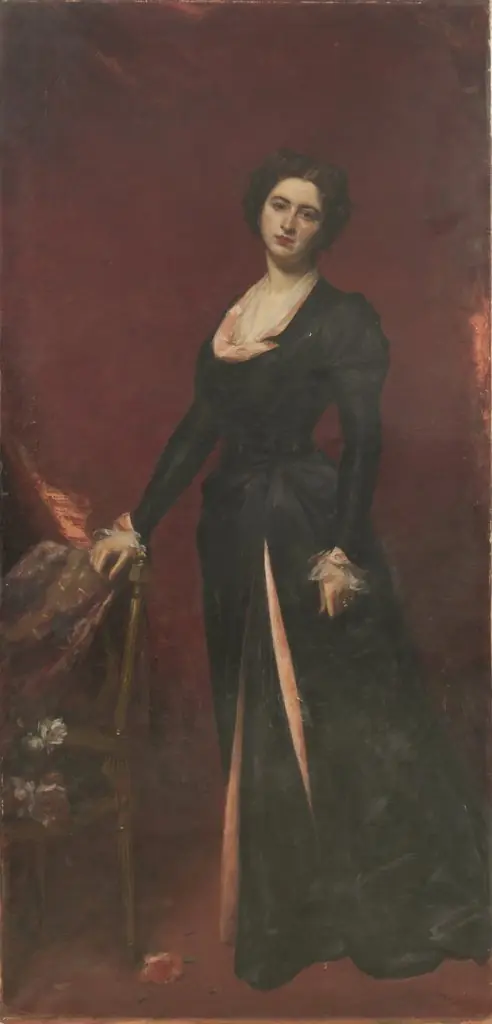 (Retrato de María del Carmen Reyna y Roballos de Fernández Blanco), Retrato de María Reyna de Fernández Blanco
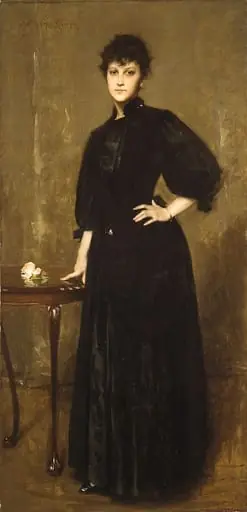 Lady in Black
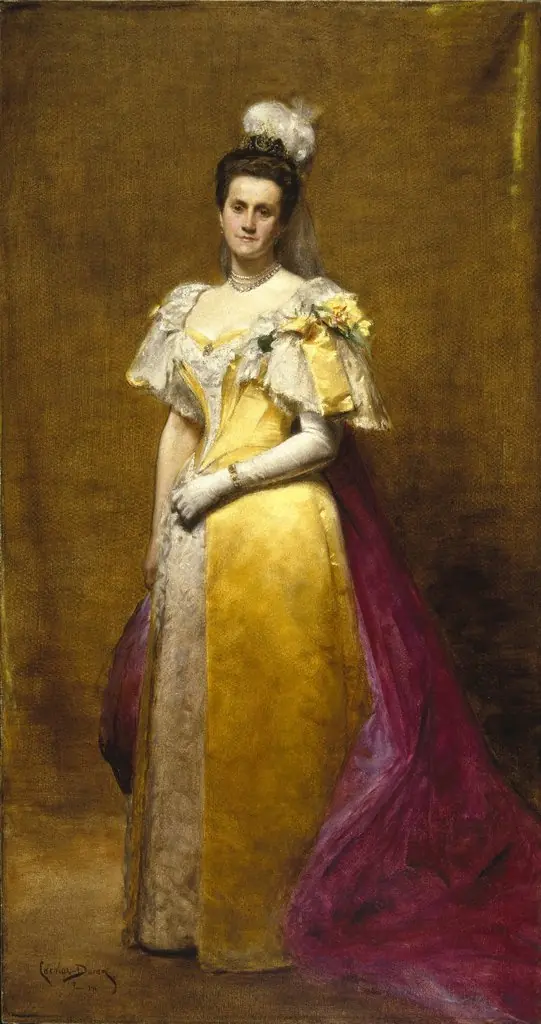 Portrait of Emily Warren Roebling
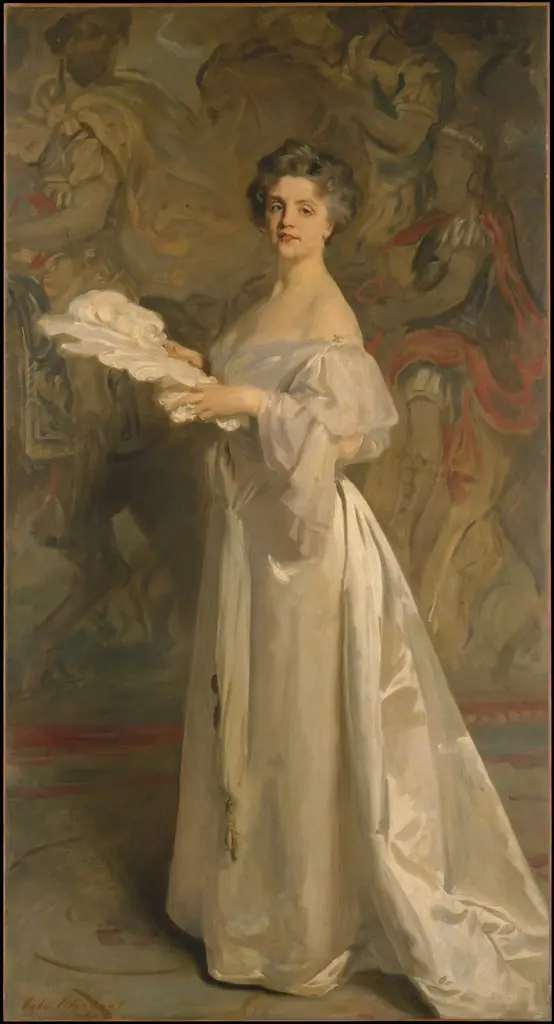 Ada Rehan
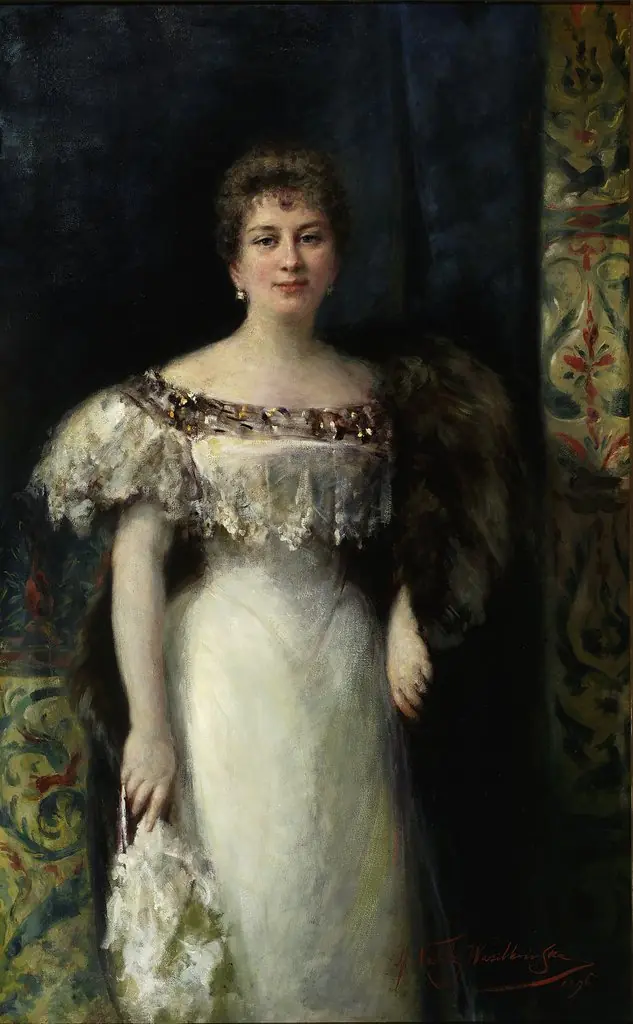 Portrait of Mrs. W.R.
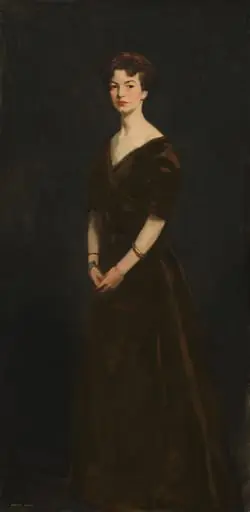 Edith Reynolds
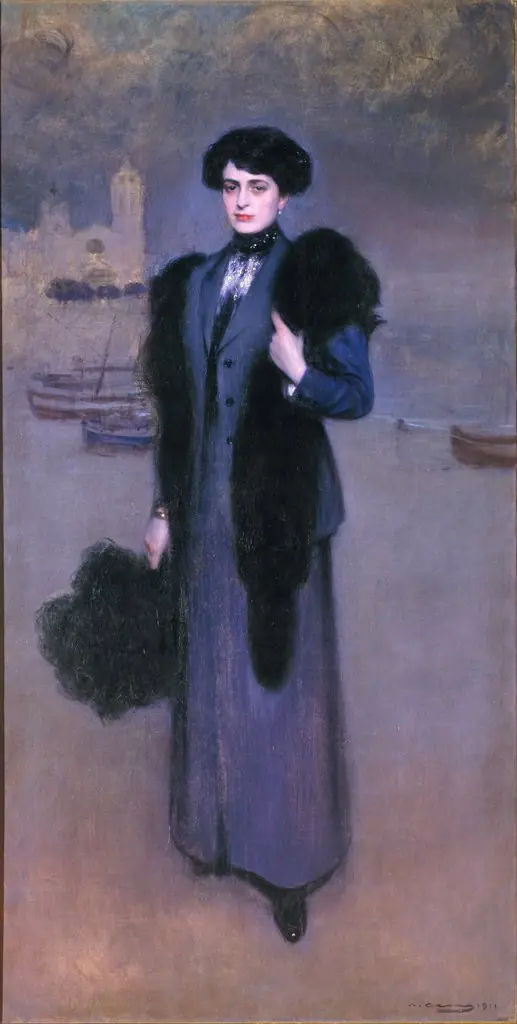 Portrait of Dolors Vidal
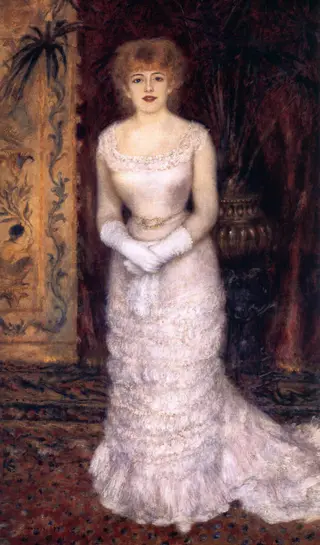 Portrait of Jeanna Samary
- Mrs. Henry Galbraith Ward