Artwork
Portrait of Jeanna Samary
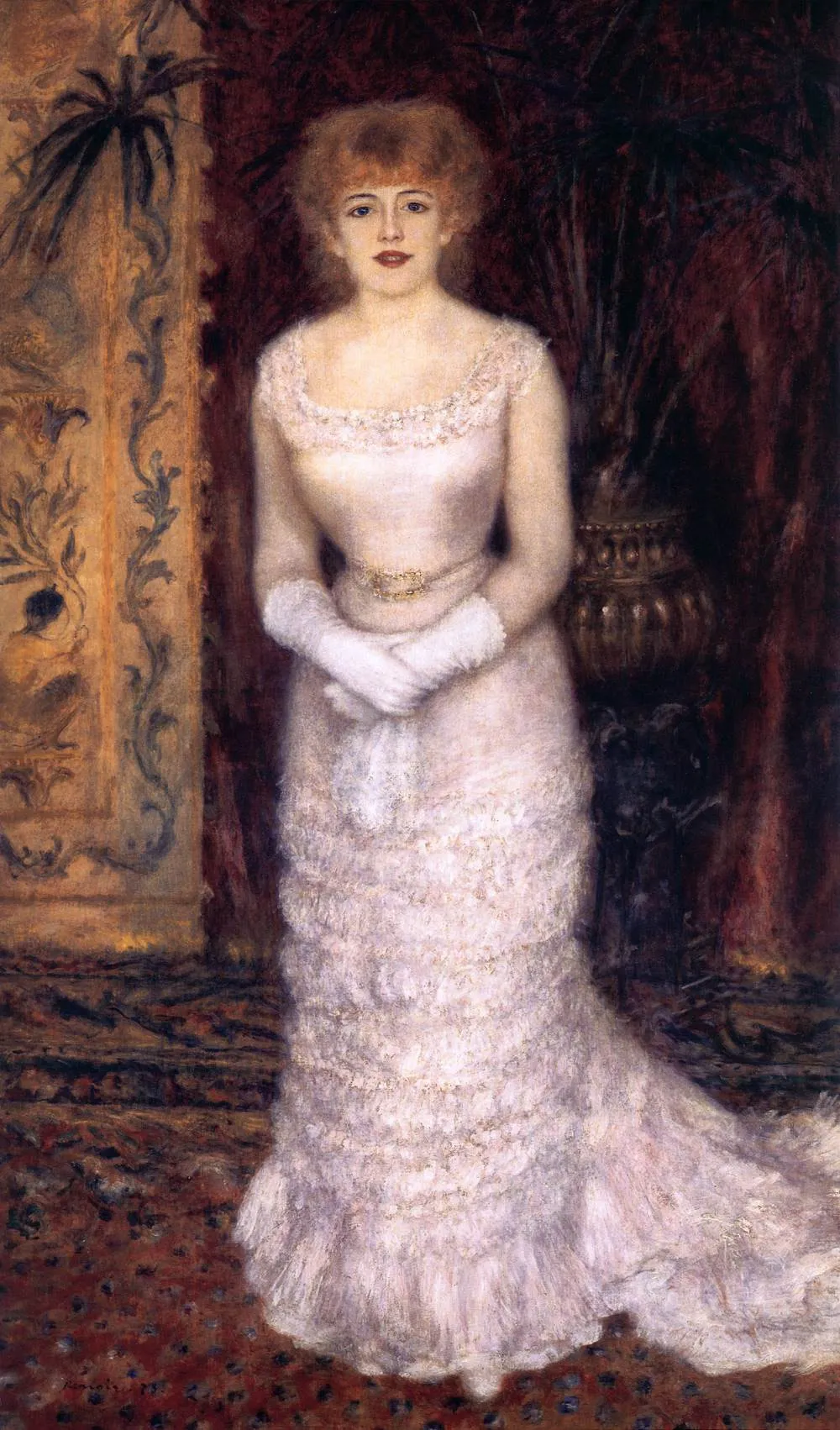
Portrait of Jeanna Samary is an oil painting by the Impressionist artist Pierre-Auguste Renoir. It dates from 1890 and is held in the collection of the Hermitage Museum.
About this work
Overview
Portrait of Jeanna Samary is an oil on canvas painting by the French Impressionist Pierre-Auguste Renoir, executed in 1878 and now held in the Hermitage Museum in Saint Petersburg. Measuring 174 by 105 centimeters, this full-length portrait of the celebrated French actress Jeanne Samary was exhibited at the Paris Salon of 1879, where it attracted scant critical attention. The work occupies a significant place in Renoir's oeuvre as his second attempt to portray this prominent subject, following the critical failure of an earlier portrait, and it exemplifies the tensions between Impressionist innovation and the demands of academic portraiture in late nineteenth-century France.
Subject & Meaning
When compared with contemporary photographs, the painting indeed reveals a deliberate softening and idealization of the sitter's features.
The subject, Jeanne Samary, was a rising star of the Comédie-Française whose fame at the time rivaled that of Sarah Bernhardt. In this portrait, she stands at full length facing forward, her hands clasped at her waist, wearing a pale sleeveless floor-length gown with a low square neckline, a gold belt, and long white gloves. Her light-colored hair is styled loosely about her head. The composition carries subtle tensions between public image and private reality. Contemporary observers noted that Renoir idealized Samary's figure; Madame Charpentier, hostess of a prominent Parisian salon, observed that the portrait failed to correspond to the actress's actual corpulence, accusing Renoir of sacrificing verisimilitude to decorum. When compared with contemporary photographs, the painting indeed reveals a deliberate softening and idealization of the sitter's features. This idealization so offended Samary that she refused to purchase the work and subsequently commissioned portraits from more academically inclined painters such as Bastien-Lapage. The background is divided between a decorative panel with painted foliage and a palm frond on the left and dark heavy drapery to the right, with a large ornate vessel containing tall grasses positioned behind her right shoulder, elements that frame the sitter within a theatrical yet intimate atmosphere.
Technique & Style
The painting is executed in oil on canvas with a matte and textured finish rather than a highly polished surface. The palette is dominated by soft whites and creams in the figure's gown against deep browns, russets, and blacks in the background, with a patterned carpet in dark reds and blues beneath her feet. Renoir's brushwork is loose and visible, particularly in the dress and background, producing a soft, atmospheric, slightly blurred effect. Light falls evenly on the figure while shadows pool in the background, creating a gentle modeling that avoids sharp contrasts. The handling of paint reflects Renoir's Impressionist technique, prioritizing atmospheric effect and chromatic harmony over precise draftsmanship. This approach to form, which deliberately softened and idealized the sitter's appearance, proved controversial among contemporaries who expected greater fidelity to physical reality in commissioned portraiture.
History & Provenance
Renoir painted this work in 1878 in France, following the unsuccessful reception of his earlier portrait of Jeanne Samary, titled La Rêverie, which had been exhibited at the Impressionist exhibition of 1877. Determined to make good on this failure, he produced a more elaborate portrait that he submitted to the Paris Salon of 1879. Despite his ambitions, the painting passed almost unnoticed by critics, partly due to its unfortunate placement high on the wall. The work entered the collection of Ivan Morozov, the prominent Russian collector, before being seized by the Soviet state after the October Revolution as part of the nationalization of Morozov's art collection. It is now held in the Hermitage Museum in Saint Petersburg, where it remains on public display.
Context
The portrait emerges from a pivotal moment in Renoir's career and in the broader development of French painting. In the late 1870s, Renoir was negotiating his position between the emerging Impressionist movement and the established academic traditions of the Paris Salon. His choice to submit this portrait to the Salon of 1879 rather than to an independent Impressionist exhibition indicates his continued desire for official recognition. The work also reflects the cultural prominence of actresses in Third Republic France, when the theater served as a crucial arena for the negotiation of female public identity. Samary's status as what one contemporary source called an enfant gâté of the French theater made her a desirable subject for portraitists, yet also subjected any representation to intense public scrutiny. The critical indifference that greeted the painting at the Salon suggests the difficulty Renoir faced in satisfying both avant-garde and conservative expectations. The portrait's subsequent passage into Russian collections, first through Morozov's patronage and then through Soviet nationalization, mirrors the broader trajectory of Impressionist works from French private hands into major international museum collections.
Legacy
While the Portrait of Jeanna Samary did not achieve the immediate critical success Renoir sought, its legacy lies in what it reveals about the pressures and contradictions of Impressionist portraiture. The painting documents a turning point in Renoir's relationship with his subject: after this second unsatisfactory collaboration, Samary definitively broke with the artist, turning to academic painters who could offer more flattering and conventional representations. This rupture illustrates the commercial and social precarity of Impressionist portraiture, where innovative technique could conflict with patrons' desires for social affirmation. The work's eventual home in the Hermitage Museum, alongside other masterpieces seized from Morozov's collection, has ensured its preservation and accessibility, though it remains less celebrated than Renoir's group portraits of the same period. The painting continues to serve as a case study for scholars examining the tensions between artistic innovation and portraiture's traditional obligations, as well as the gendered dynamics of representation in nineteenth-century French art.
Artist & collection
Artist
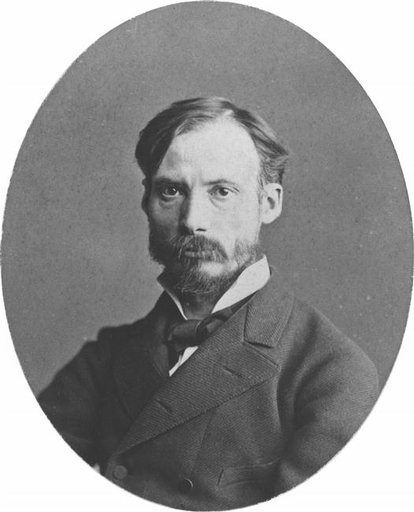
Pierre-Auguste Renoir was a French artist who was a leading painter in the development of the Impressionist style.

- Portrait of Mrs. W.R.
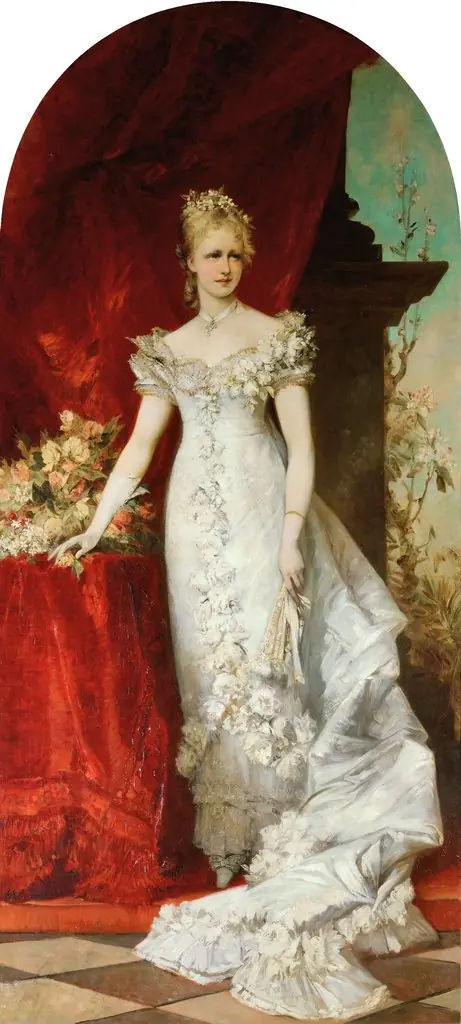 Kronprinzessin Stephanie (1864-1945) in einer Ballrobe aus hellem Satin
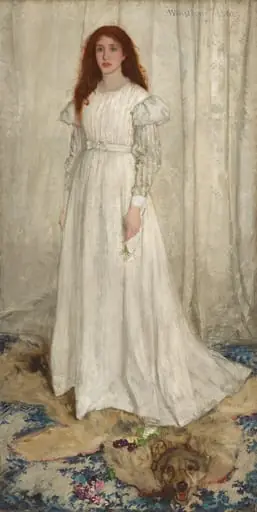 Symphony in White, No. 1: The White Girl
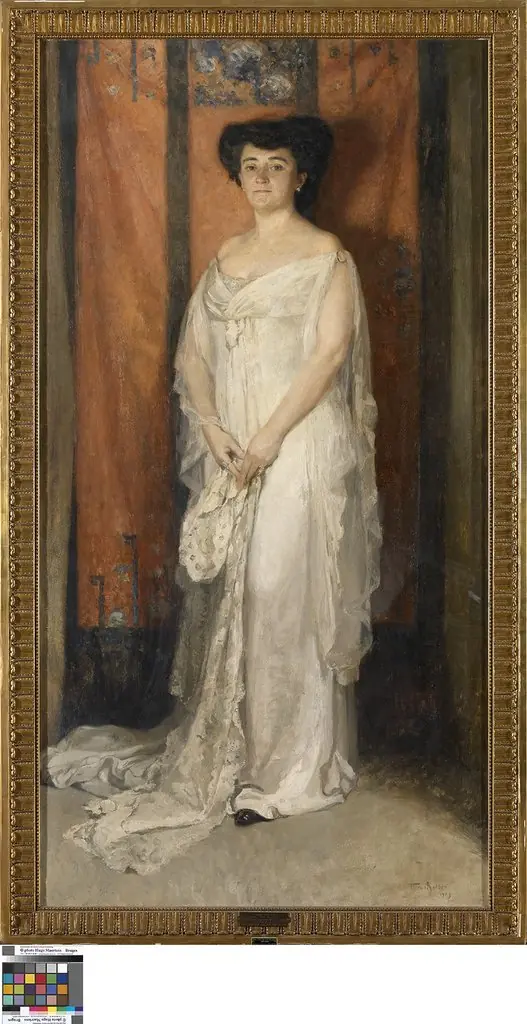 Portret van mevrouw A. Ganshof van der Meersch
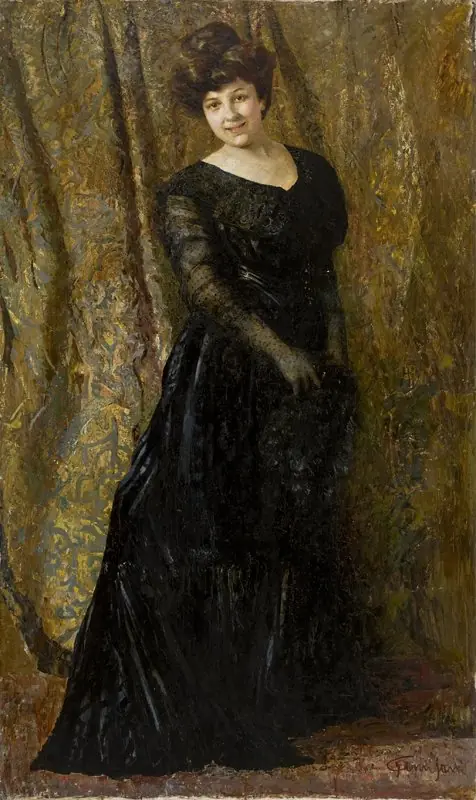 Standing lady
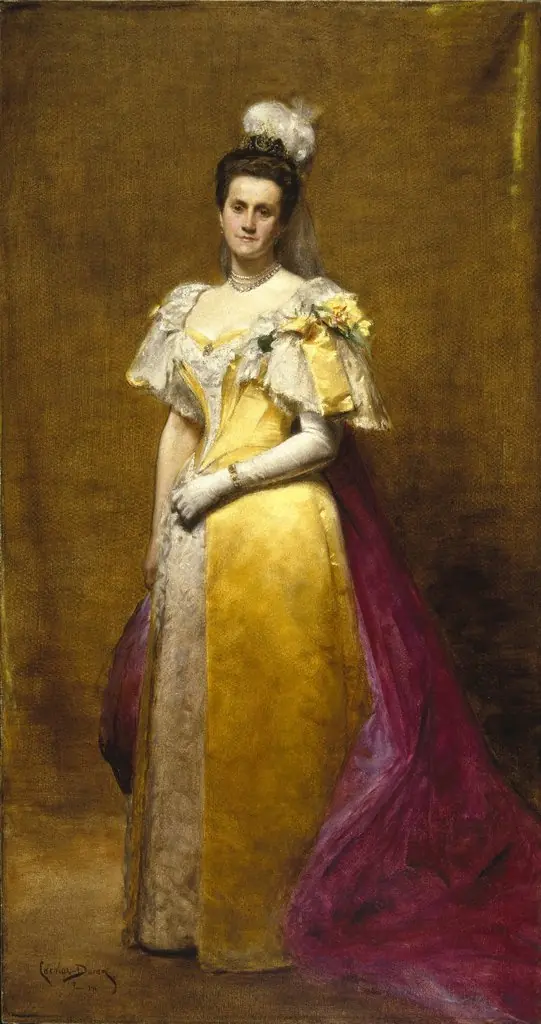 Portrait of Emily Warren Roebling
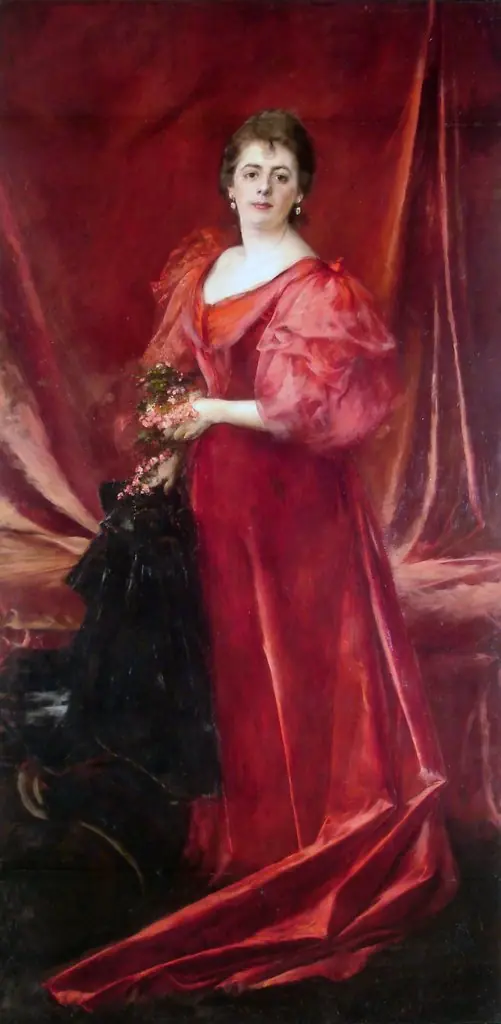 Retrato de la Sra. Maria de la Cárcova de Ferrari
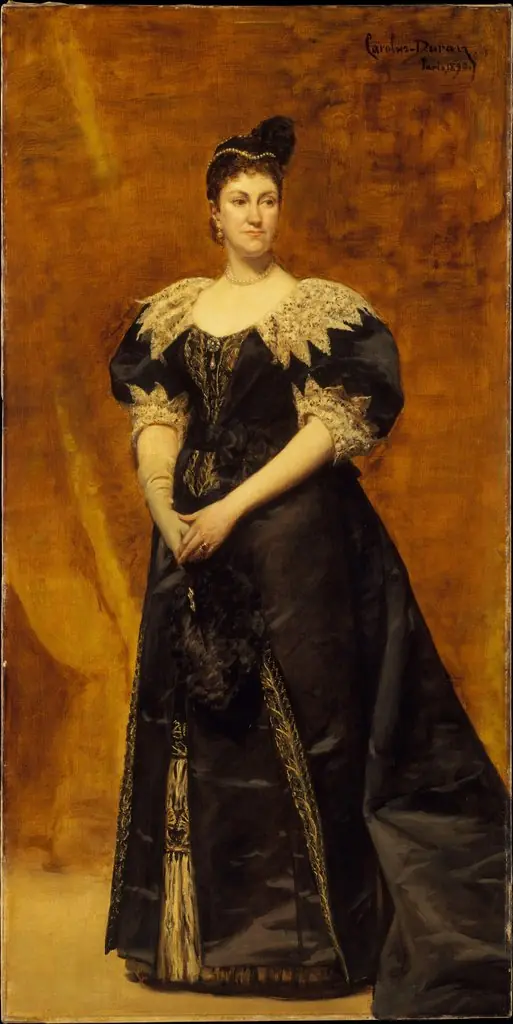 Mrs. William Astor (Caroline Webster Schermerhorn, 1831–1908)
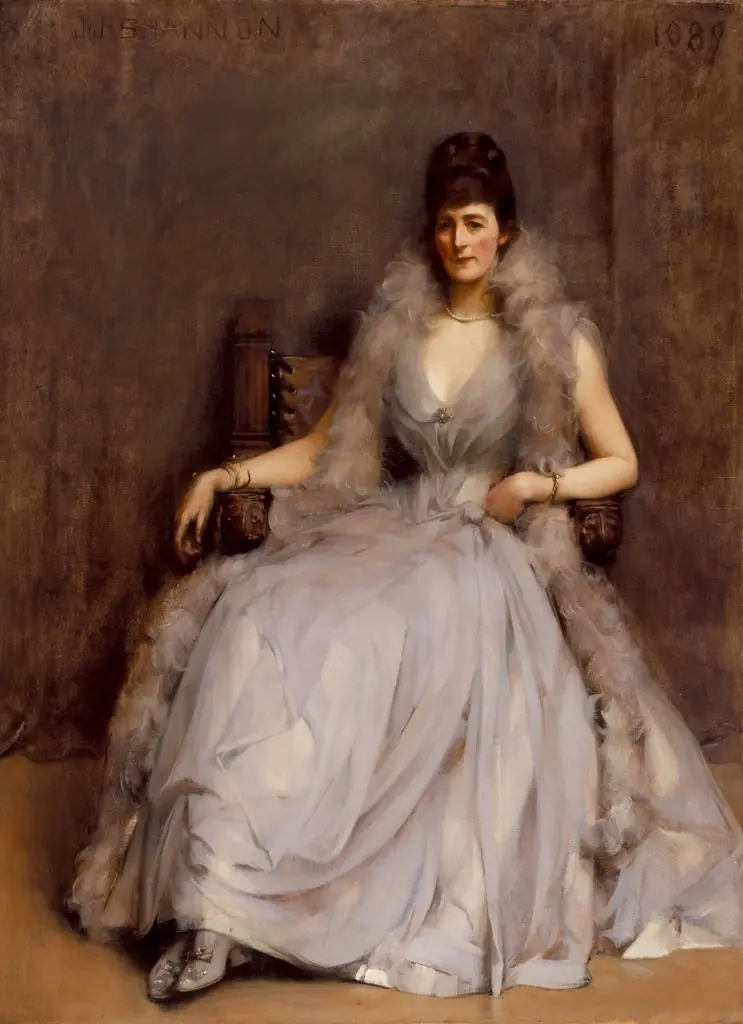 Portrait of Cecilia Tower
 Lady in Black
 Portrait of a lady
 Portret de femeie