Artwork
Cornaline
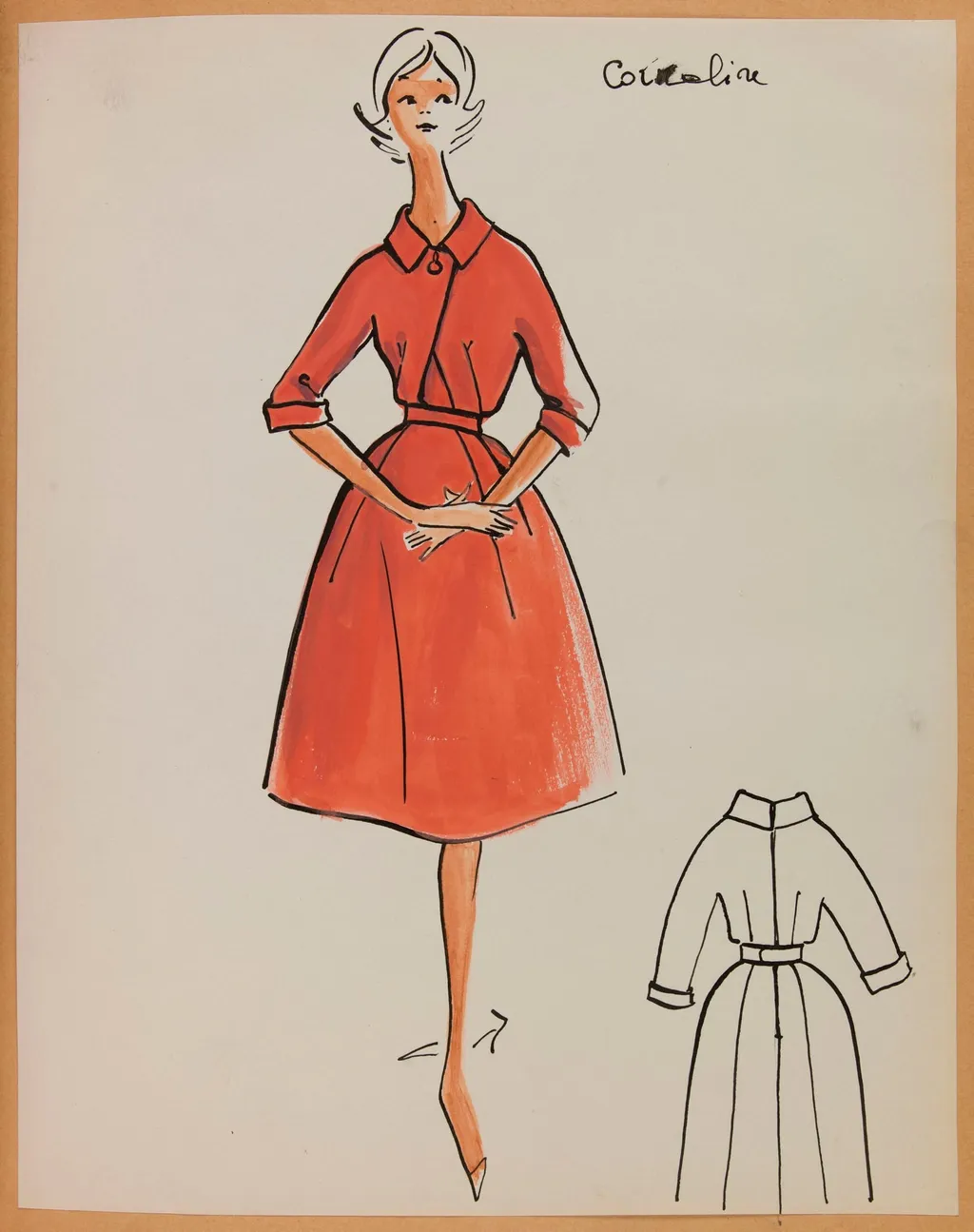
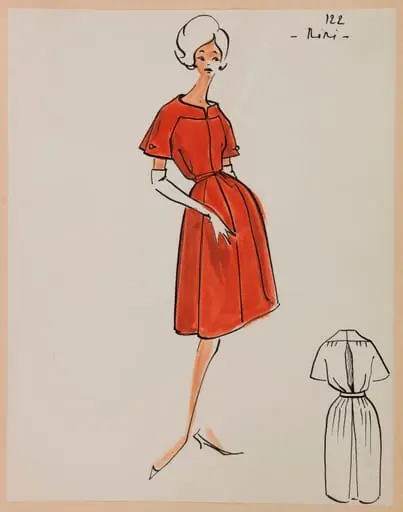
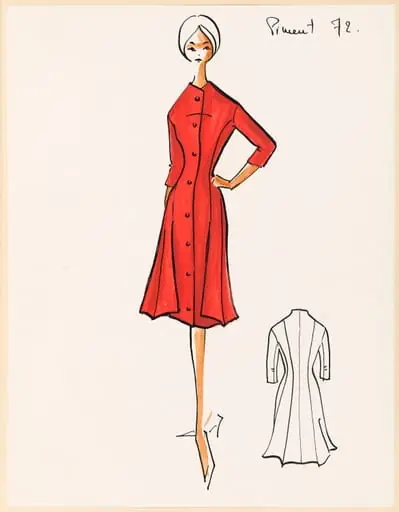
Cornaline is a drawing by Carven. It dates from 1958 and is held in the collection of the Palais Galliera - Musée de la Mode de la Ville de Paris.
About this work
Overview
The title, inscribed in the corner, likely references the deep red hue of the fabric, suggesting a deliberate link between color and identity.
Created around 1958 by the designer Carven, Cornaline is a pencil drawing on paper that functions as a fashion study. It resides in the collection of the Museum of Ethnography. The work presents a frontal view of a woman in a tailored red ensemble, accompanied by a smaller profile sketch of the same garment.
The title, inscribed in the corner, likely references the deep red hue of the fabric, suggesting a deliberate link between color and identity.
Subject & Meaning
The figure depicted is a stylized woman wearing a coordinated jacket and skirt with a defined waistline, suggesting mid-century Parisian fashion. Her upright posture and hands on hips convey quiet confidence, avoiding theatricality. The inclusion of a rear view of the outfit indicates an interest in structural clarity rather than narrative.
The name Cornaline may allude to the gemstone’s rich red tone, reinforcing the garment’s visual priority over the wearer’s individuality.
Technique & Style
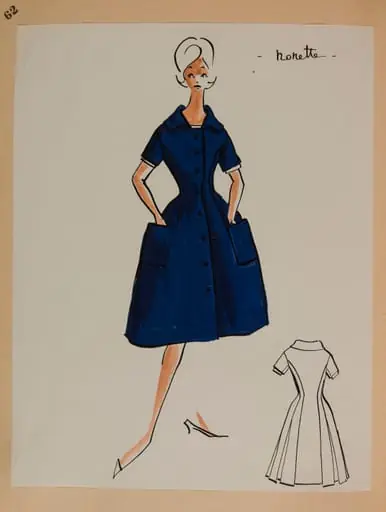
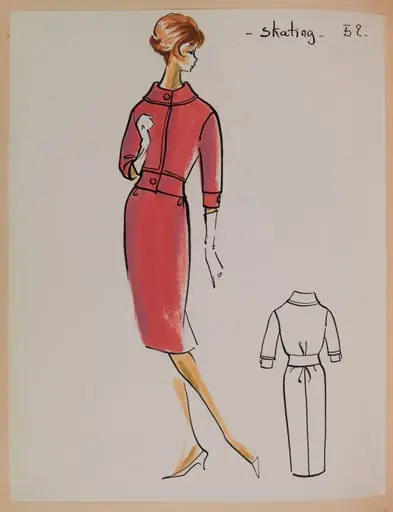
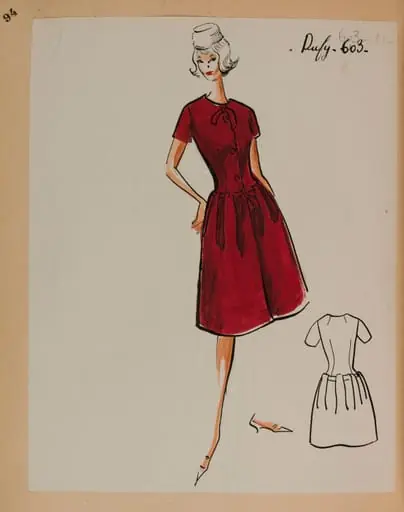
The drawing employs clean, precise lines with minimal shading, characteristic of technical fashion illustration. The absence of facial features or background elements directs focus entirely to the silhouette and cut of the clothing. The supplementary rear sketch, rendered in the same linear style, serves as a functional complement, emphasizing the garment’s three-dimensional form. The overall aesthetic is restrained, prioritizing accuracy over expressive flourish.
History & Provenance
The drawing entered the Museum of Ethnography’s collection as part of a broader acquisition of mid-century fashion materials. Its origin traces to Carven’s design studio in Paris, where such studies were used to communicate garment construction to ateliers. While not publicly exhibited frequently, it remains a documented artifact of the house’s design process during the late 1950s, reflecting the studio’s methodical approach to tailoring.
Context
In the late 1950s, Parisian fashion houses emphasized precision in garment design, with sketches serving as essential tools for production. Carven, known for refined silhouettes and accessible luxury, produced numerous such studies to standardize construction. Cornaline aligns with this practice, distinguishing itself through its clarity and lack of ornamentation, mirroring the era’s shift toward functional elegance over excessive decoration.
Legacy
Cornaline endures as a representative example of mid-century fashion documentation, valued for its clarity and functional intent. It contributes to scholarly understanding of how design studios translated aesthetic ideas into wearable forms. Though not widely reproduced, its presence in a museum of ethnography underscores its role as a cultural artifact of postwar French textile and garment culture.
Artist & collection
Artist
These delicate ink-on-paper drawings capture the quiet poetry of everyday things: pinecones, reeds, apples.
Museum
Palais Galliera - Musée de la Mode de la Ville de Paris
Continue through works from the same source collection.