Artwork
'Nina'
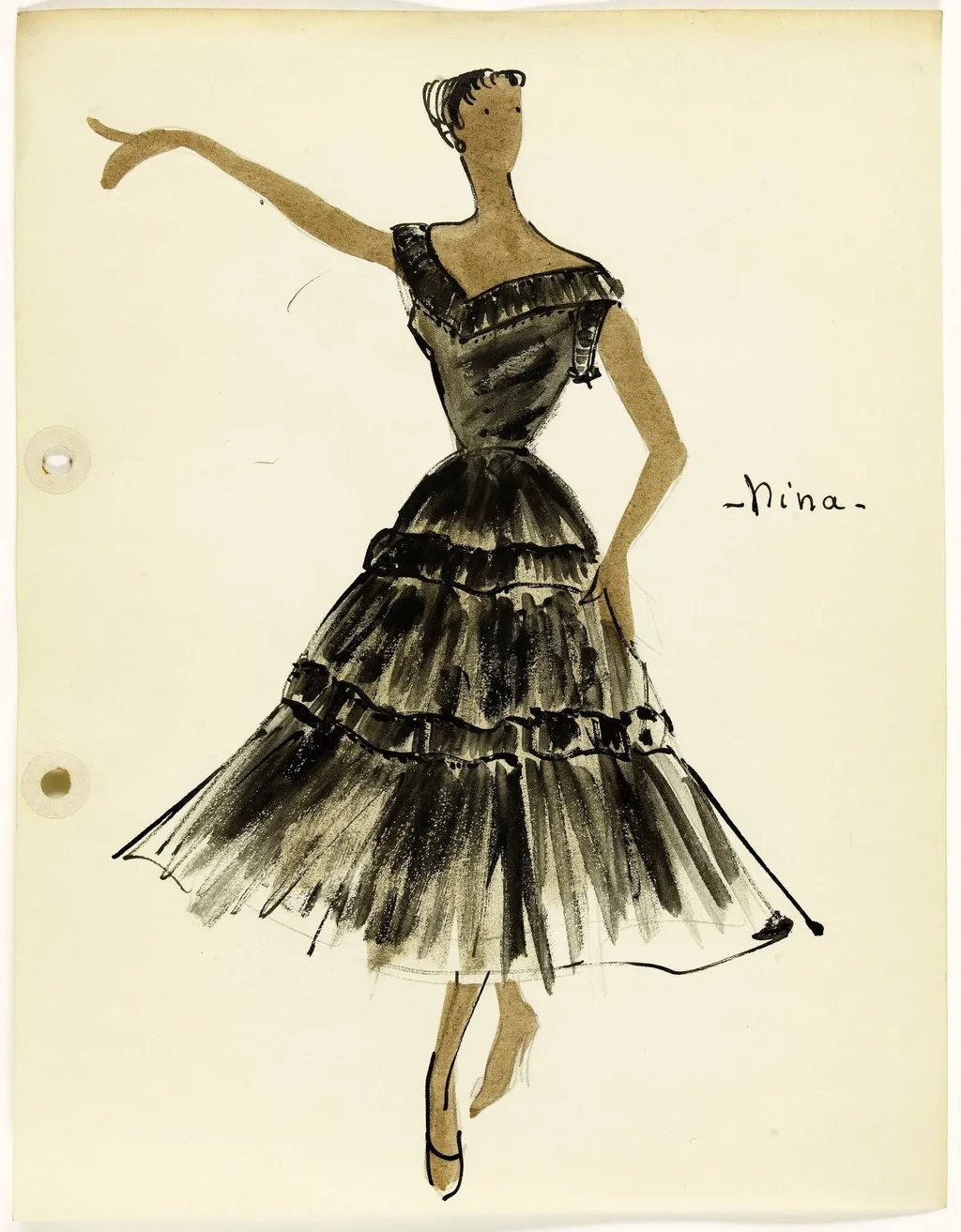
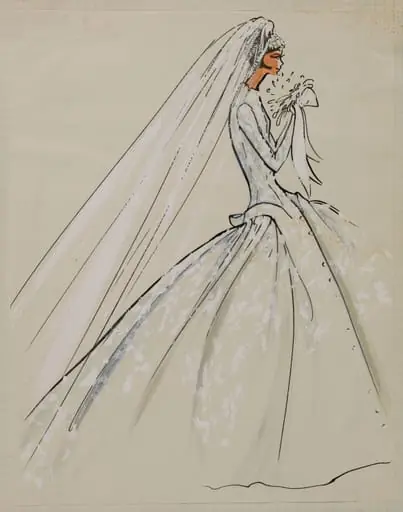
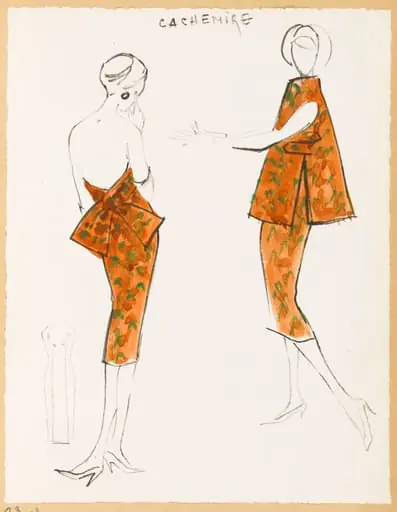
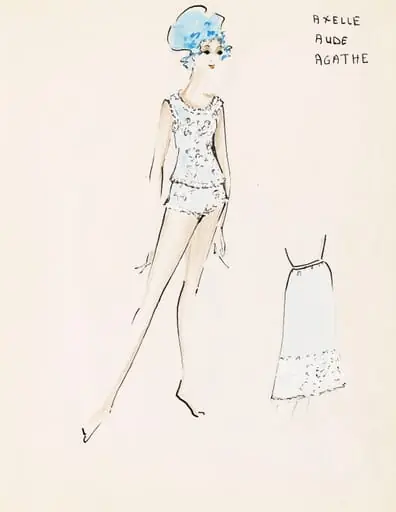
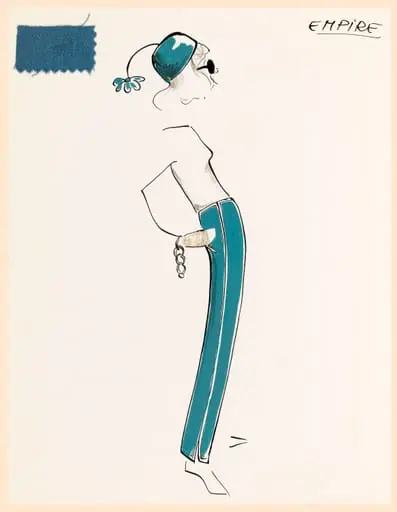
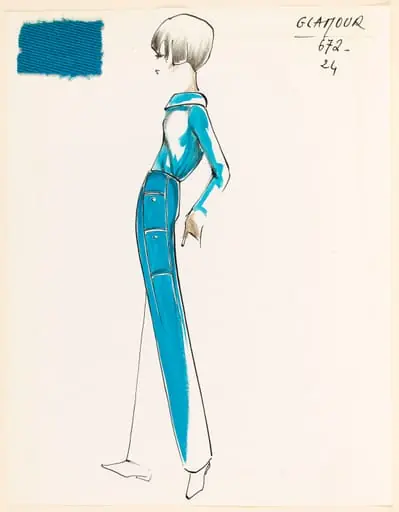
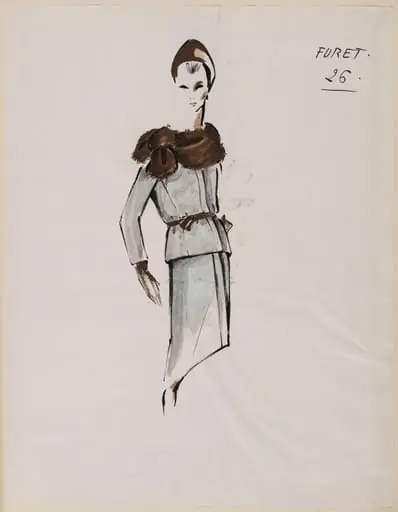
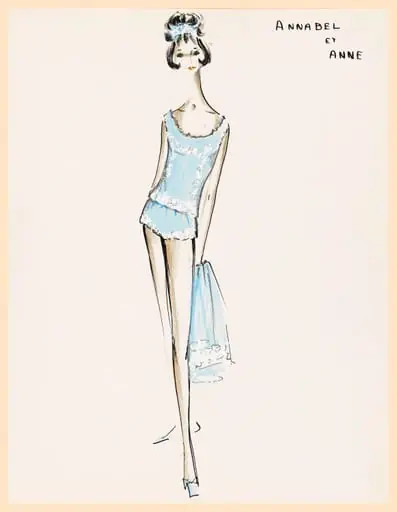
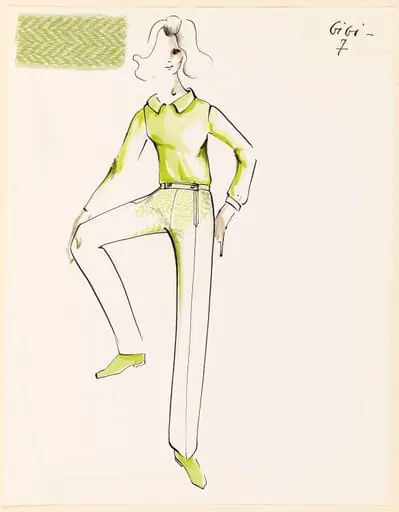
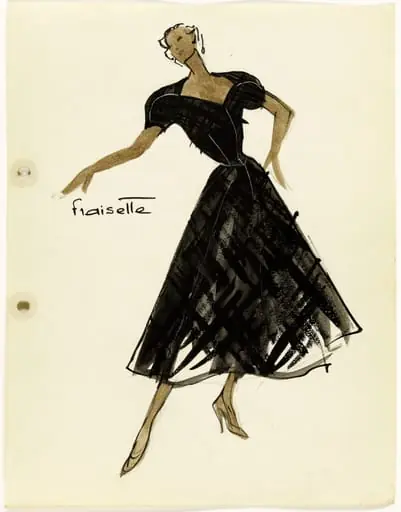
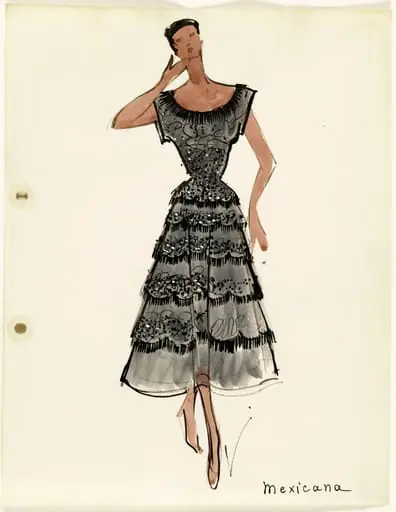
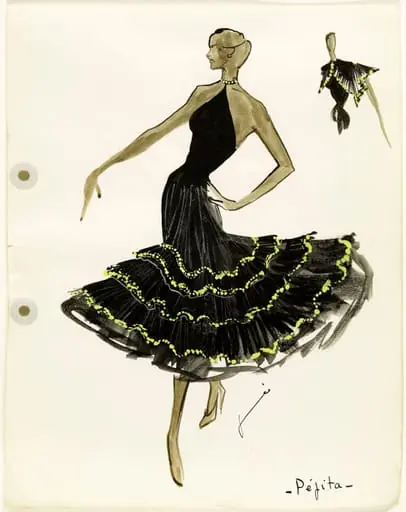
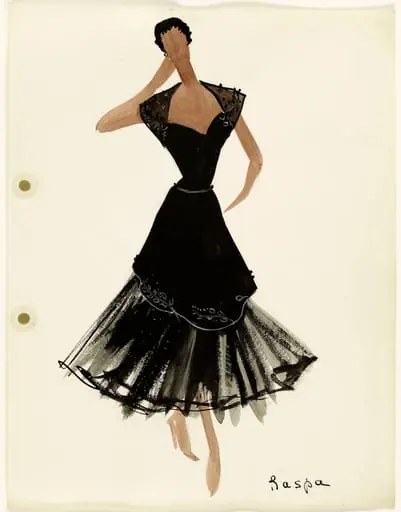
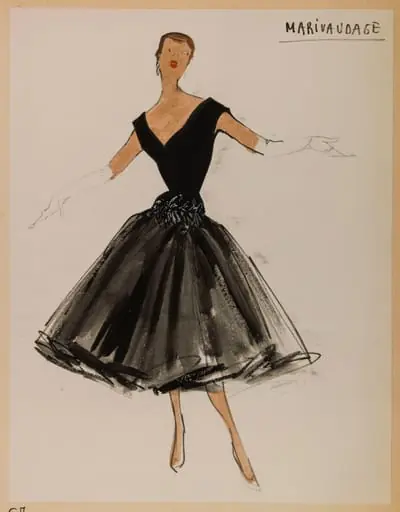
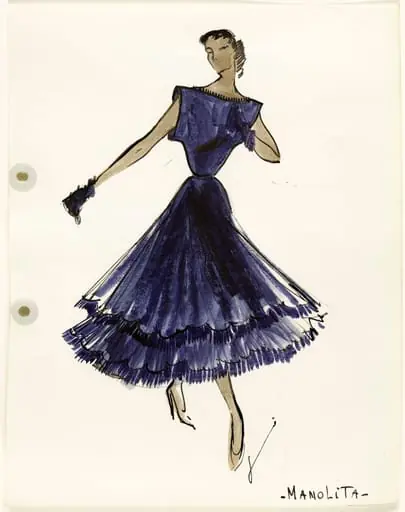
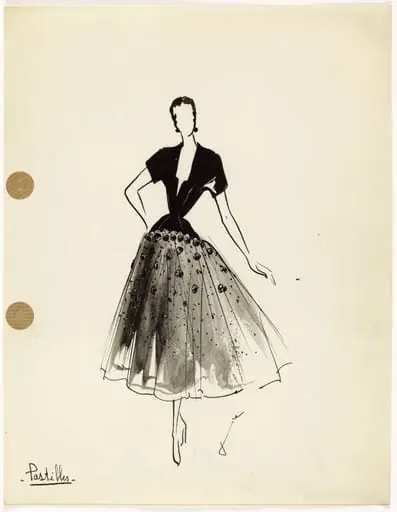
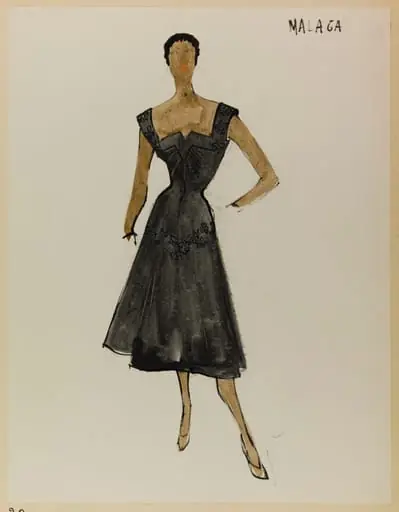
'Nina' is a drawing by Carven. It dates from 1951 and is held in the collection of the Palais Galliera - Musée de la Mode de la Ville de Paris.
About this work
Overview
'Nina' is a graphite and ink drawing dated around 1951, attributed to the designer and illustrator Carven. It resides in the collection of the Museum of Ethnography. The work presents a single figure in a poised, asymmetrical stance, rendered with fluid linework and minimal tonal variation. Its intimate scale and focused composition suggest a study or portrait rather than a finished illustration.
Subject & Meaning
Her short hair and tailored dress reflect mid-century feminine aesthetics, though the drawing resists overt symbolism.
The figure, identified as Nina, stands with one arm extended and the other resting on her hip, her torso twisted slightly while her head turns in the opposite direction. This contrapposto-like posture conveys quiet self-possession. The absence of contextual details isolates her as an individual, emphasizing personal presence over narrative. Her short hair and tailored dress reflect mid-century feminine aesthetics, though the drawing resists overt symbolism.
Technique & Style
Carven employs loose, confident strokes to define form, favoring rhythm over precision. The dress’s ruffled hem and neckline are suggested through layered lines rather than detailed rendering. Subtle hatching adds volume to the figure’s contours, while the background remains unworked, enhancing the sense of immediacy. The interplay of bold outlines and delicate shading creates a tension between structure and spontaneity.
History & Provenance
The drawing entered the Museum of Ethnography’s collection in the mid-20th century, likely through the artist’s personal archive or a donation linked to Carven’s design work. Its classification within an ethnographic institution, rather than a fine arts setting, may reflect contemporary interest in fashion as cultural expression. No documentation of its original commission or subject has been publicly verified.
Context
Created during a period when fashion illustration was evolving from rigid commercial renderings to more expressive forms, 'Nina' aligns with postwar shifts in graphic design. Carven, known for textile and costume design, often blurred boundaries between art and applied craft. The drawing reflects a broader interest in capturing movement and personality in fashion media, away from idealized stereotypes.
Legacy
Though not widely exhibited, 'Nina' remains a representative example of Carven’s approach to figure drawing, economical, emotionally resonant, and rooted in observation. It contributes to scholarly discussions on mid-century fashion illustration as a distinct visual language. Its preservation in an ethnographic context underscores evolving perceptions of design as cultural artifact.
Artist & collection
Artist
These delicate ink-on-paper drawings capture the quiet poetry of everyday things: pinecones, reeds, apples.
Museum
Palais Galliera - Musée de la Mode de la Ville de Paris
Continue through works from the same source collection.