Artwork
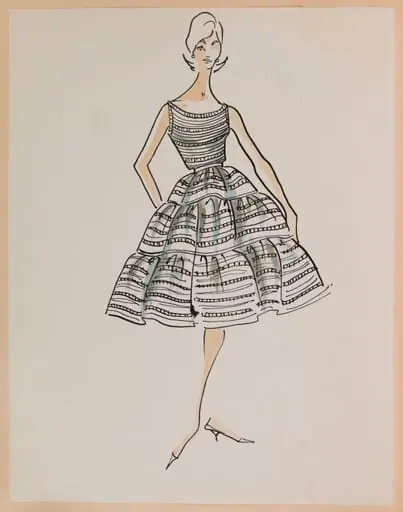
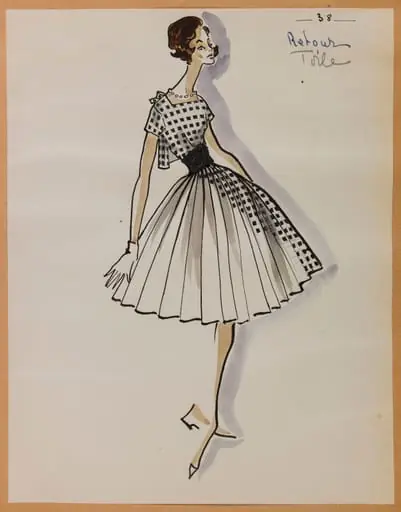
Robe prince-de-galles à encolure bateau
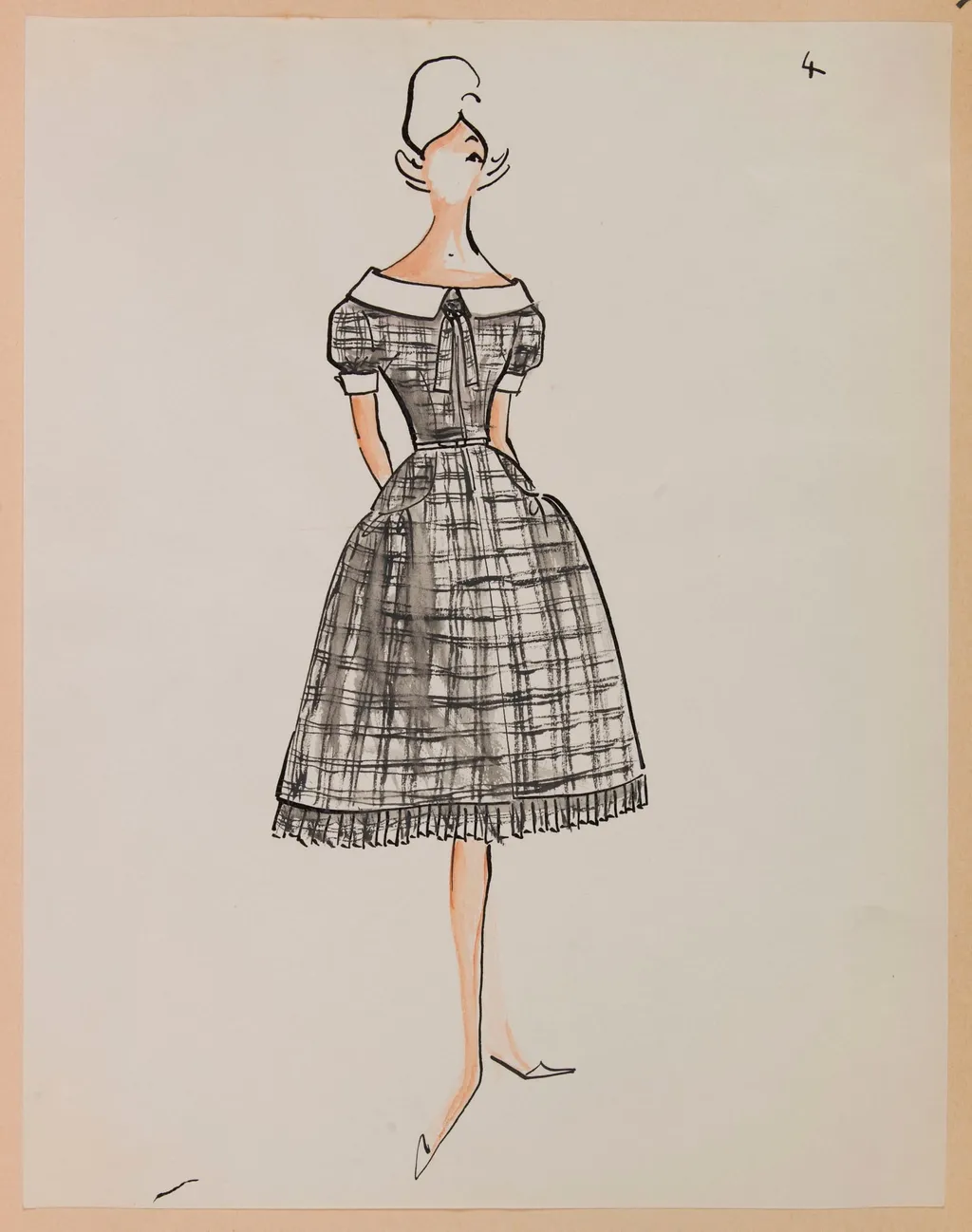
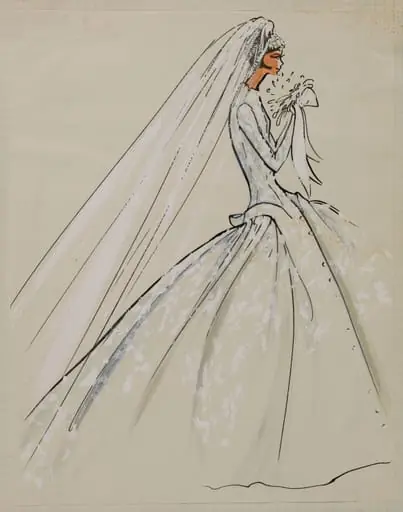
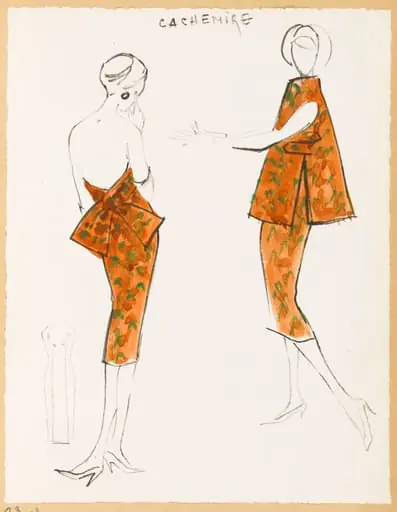
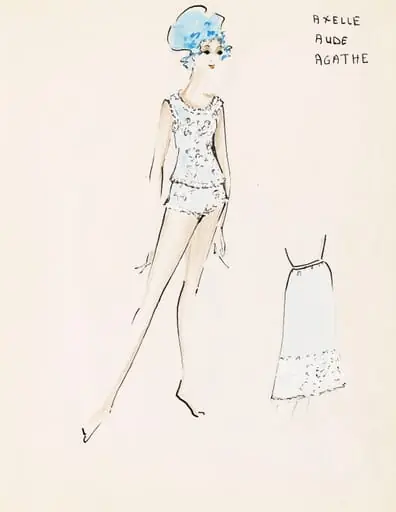
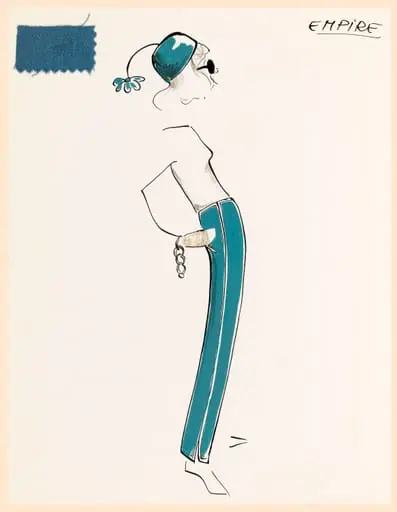
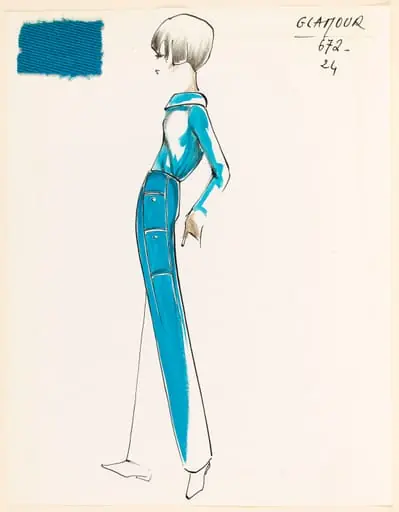
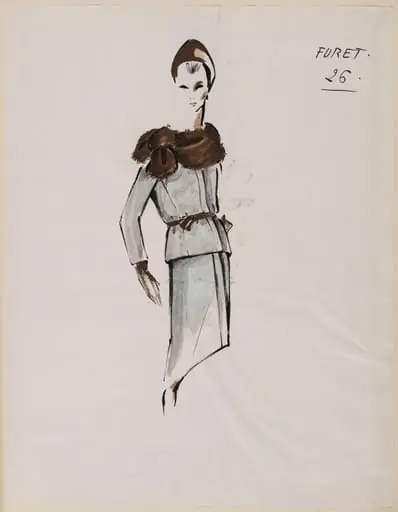
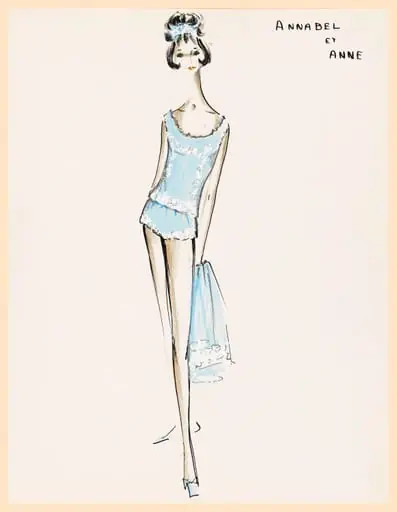
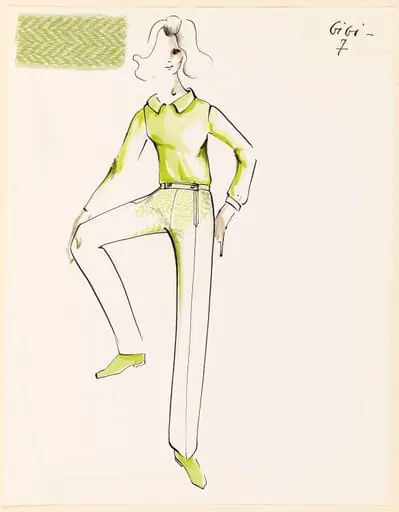
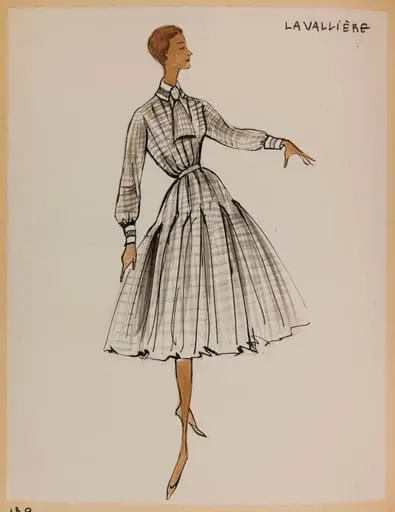
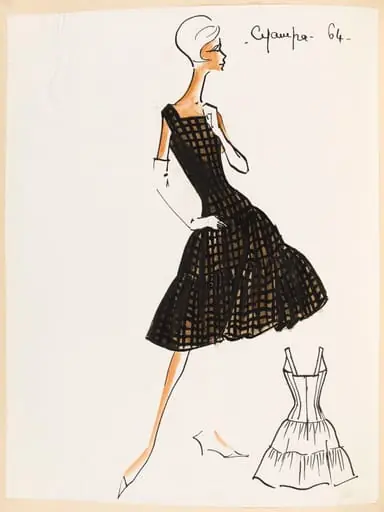
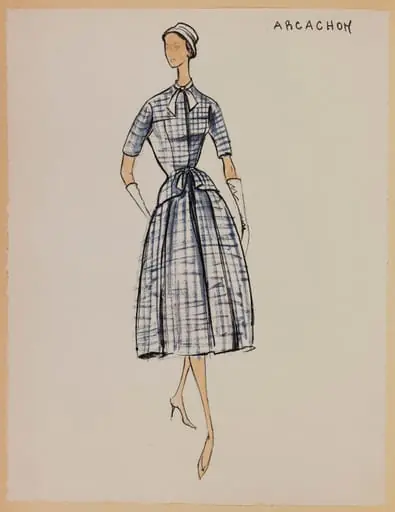
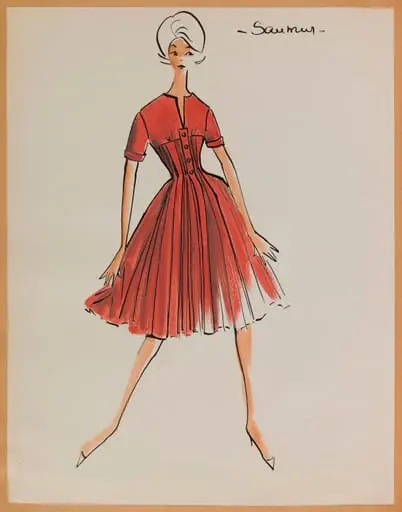
Robe prince-de-galles à encolure bateau is a drawing by Carven. It dates from 1959 and is held in the collection of the Palais Galliera - Musée de la Mode de la Ville de Paris.
About this work
Overview
This fashion sketch, attributed to Carven and dated around 1959, depicts a woman wearing a dress with a boat neckline and short puffed sleeves. Rendered in ink with minimal detail, it captures the silhouette and texture of the garment through rapid, repeated lines. The work is held in the collection of the Museum of Ethnography, where it serves as a record of mid-century French design aesthetics.
Subject & Meaning
The figure stands in a relaxed pose, one hand on the hip, suggesting everyday wear rather than formal attire. The knee-length skirt with a checkered pattern and ruffled hem reflects the playful, accessible style of late 1950s women’s fashion. The drawing emphasizes practicality and movement, aligning with postwar trends favoring livable, youthful silhouettes.
Technique & Style
The artist employs quick, linear strokes to suggest the checkered fabric, a method akin to cross-hatching used in fashion illustration to convey texture efficiently. The lack of shading and simplified anatomy focus attention on the garment’s form. This economical style was typical of design sketches intended for production, prioritizing clarity over realism.
History & Provenance
The drawing entered the Museum of Ethnography’s collection as part of a broader effort to document everyday fashion as cultural artifact. While the exact provenance prior to acquisition is undocumented, its association with Carven, a Parisian house known for ready-to-wear, supports its role in illustrating the democratization of fashion in the postwar era.
Context
In the late 1950s, French fashion houses like Carven shifted toward more affordable, mass-producible designs. This sketch reflects that transition, capturing a style accessible to middle-class women. The use of line drawings for design communication was standard in ateliers, bridging creative vision and textile production during a period of rapid industry change.
Legacy
As a representative example of mid-century fashion illustration, the sketch preserves the visual language of its time: functional, precise, and focused on garment structure. It contributes to ongoing scholarly interest in how design documentation reflects societal values, particularly the evolving relationship between fashion, gender, and daily life.
Artist & collection
Artist
These delicate ink-on-paper drawings capture the quiet poetry of everyday things: pinecones, reeds, apples.
Museum
Palais Galliera - Musée de la Mode de la Ville de Paris
Continue through works from the same source collection.