Artwork
Saint Gervais
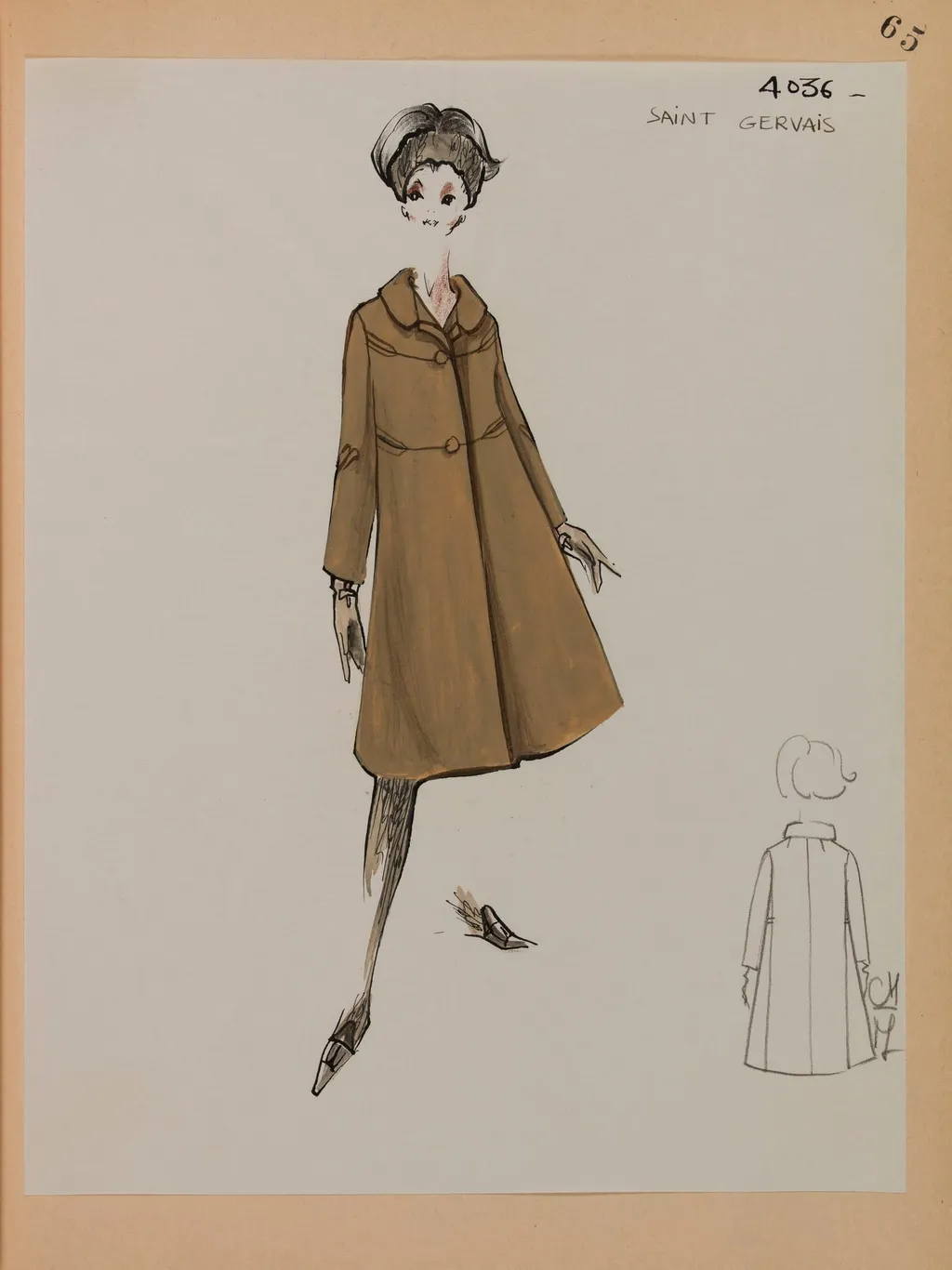
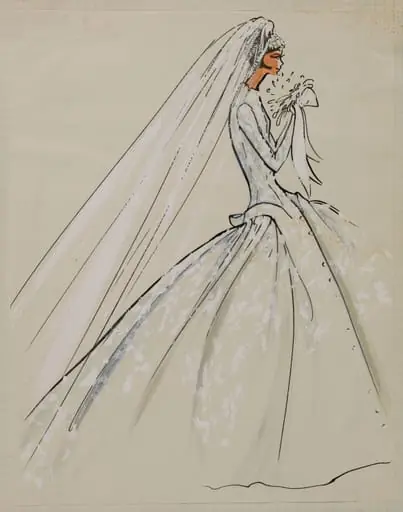
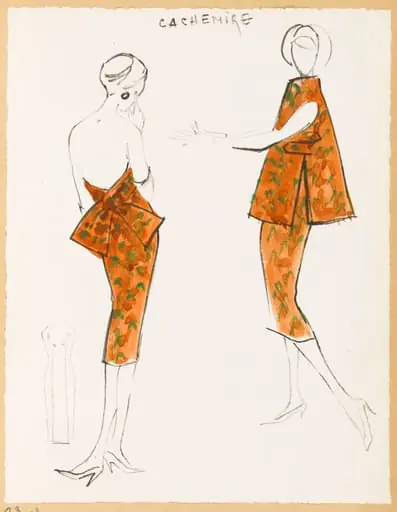
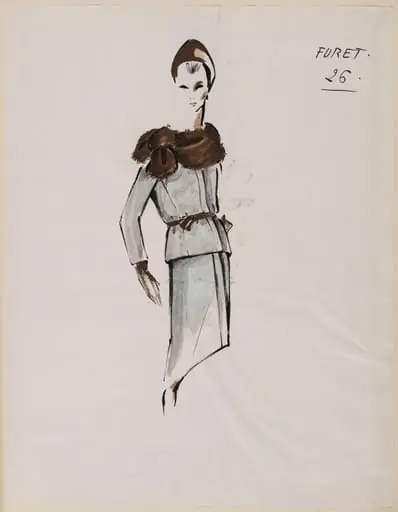
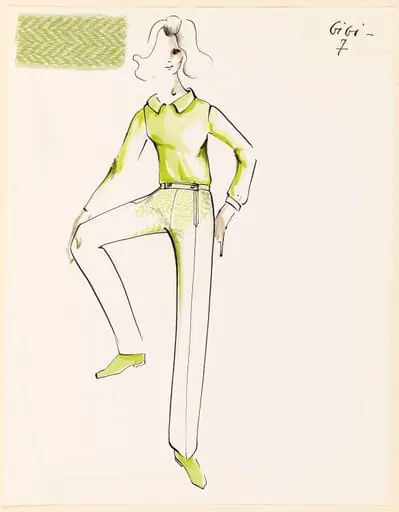
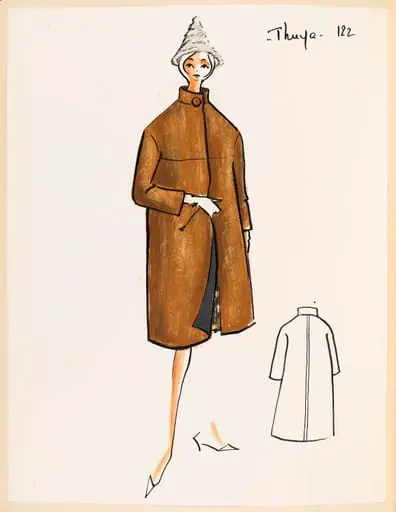
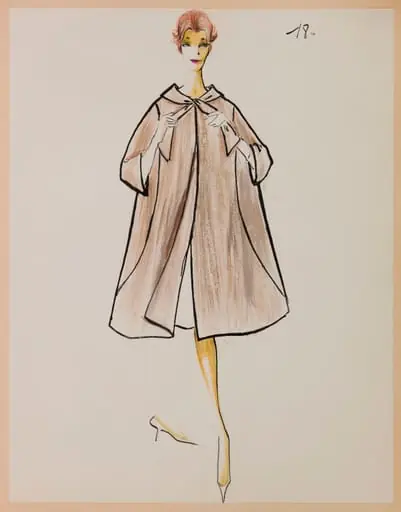
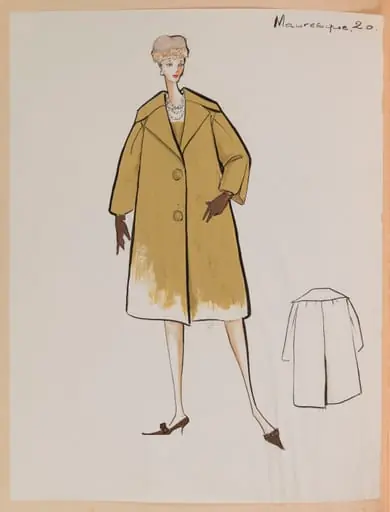
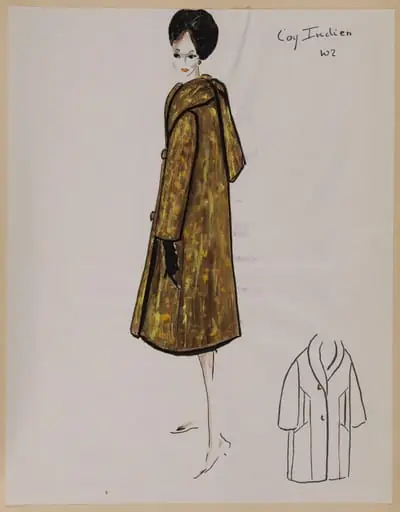
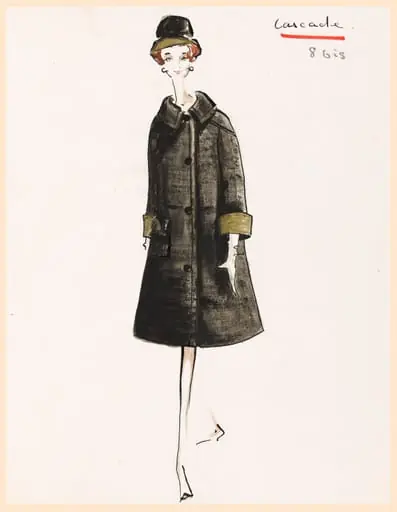
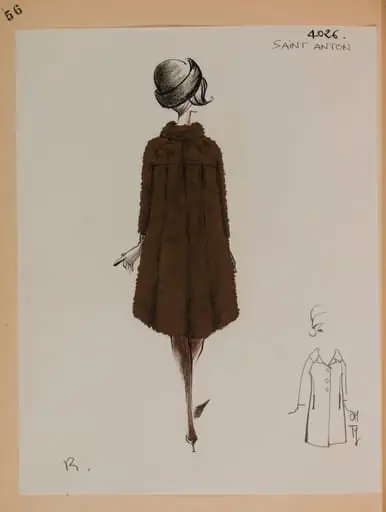
Saint Gervais is a drawing by Carven. It dates from 1963 and is held in the collection of the Palais Galliera - Musée de la Mode de la Ville de Paris. A small ink sketch from around 1963 depicts a woman in a tailored brown coat with a high collar and belted waist.
About this work
Overview
The label 'Saint Gervais' appears in the corner, likely referencing the garment’s design title rather than a religious figure.
A small ink sketch from around 1963 depicts a woman in a tailored brown coat with a high collar and belted waist. The figure stands with subtle weight shift, one foot slightly advanced. A secondary drawing on the right shows only the coat’s rear profile.
The label 'Saint Gervais' appears in the corner, likely referencing the garment’s design title rather than a religious figure. The work is cataloged at the Museum of Ethnography as part of a fashion-related collection.
Subject & Meaning
The figure is not a saint in the traditional religious sense but a model wearing a garment named Saint Gervais. The sketch captures a moment of quiet poise, emphasizing the structure and drape of the coat rather than narrative or spiritual symbolism. The label suggests the designer intended to evoke dignity or tradition through the garment’s nomenclature, aligning fashion with cultural resonance rather than hagiography.
Technique & Style
Executed in fine ink lines, the sketch employs minimal shading to define form and volume. The contours are precise yet fluid, highlighting the coat’s flared hem and fitted torso. The secondary profile view demonstrates an analytical approach to garment construction, typical of fashion design studies. The restrained palette and focus on silhouette reflect a functional, observational style rather than expressive embellishment.
History & Provenance
The sketch is attributed to the French fashion house Carven, active in the mid-20th century. It was likely created during the design phase of a coat line named Saint Gervais, possibly for a 1963 collection. Acquired by the Museum of Ethnography, it entered the institution’s fashion archives as an example of postwar European design documentation, preserved for its technical insight rather than artistic fame.
Context
In the early 1960s, fashion houses increasingly documented design iterations through sketches, using them as internal references and client presentations. The Saint Gervais sketch reflects this practice, where garments were often named after places or historical references to imply heritage. This piece belongs to a broader trend of treating clothing as cultural artifact, bridging haute couture and ethnographic study.
Legacy
Though not widely exhibited, the sketch remains a quiet testament to the meticulous process behind mid-century French fashion design. Its presence in an ethnographic museum underscores how clothing, even in preliminary form, contributes to understanding social aesthetics and craftsmanship. It continues to inform studies on the intersection of design, identity, and material culture in postwar Europe.
Artist & collection
Artist
These delicate ink-on-paper drawings capture the quiet poetry of everyday things: pinecones, reeds, apples.
Museum
Palais Galliera - Musée de la Mode de la Ville de Paris
Continue through works from the same source collection.