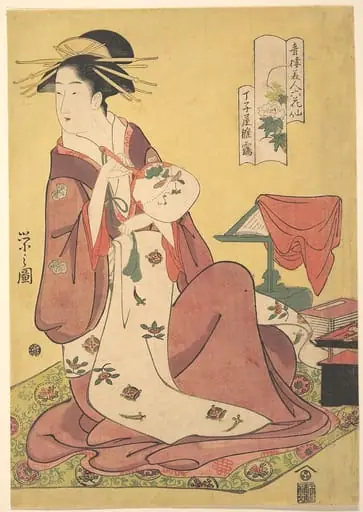
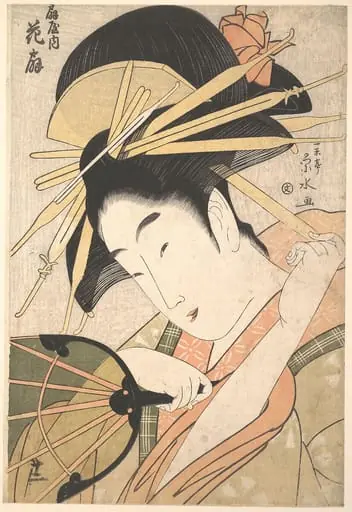
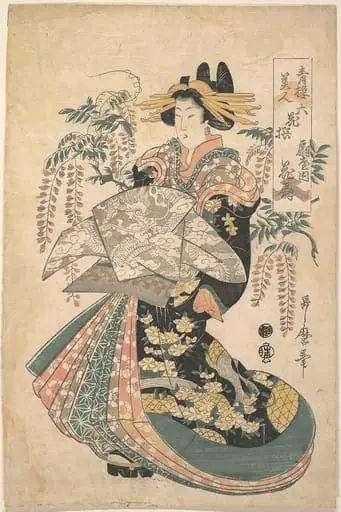
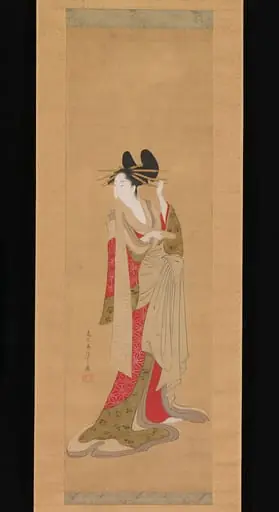
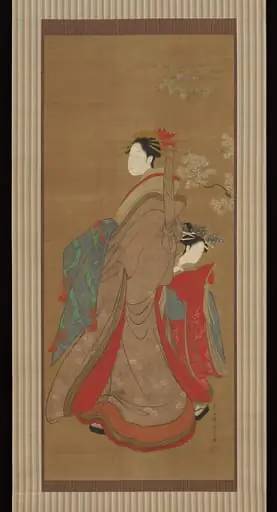
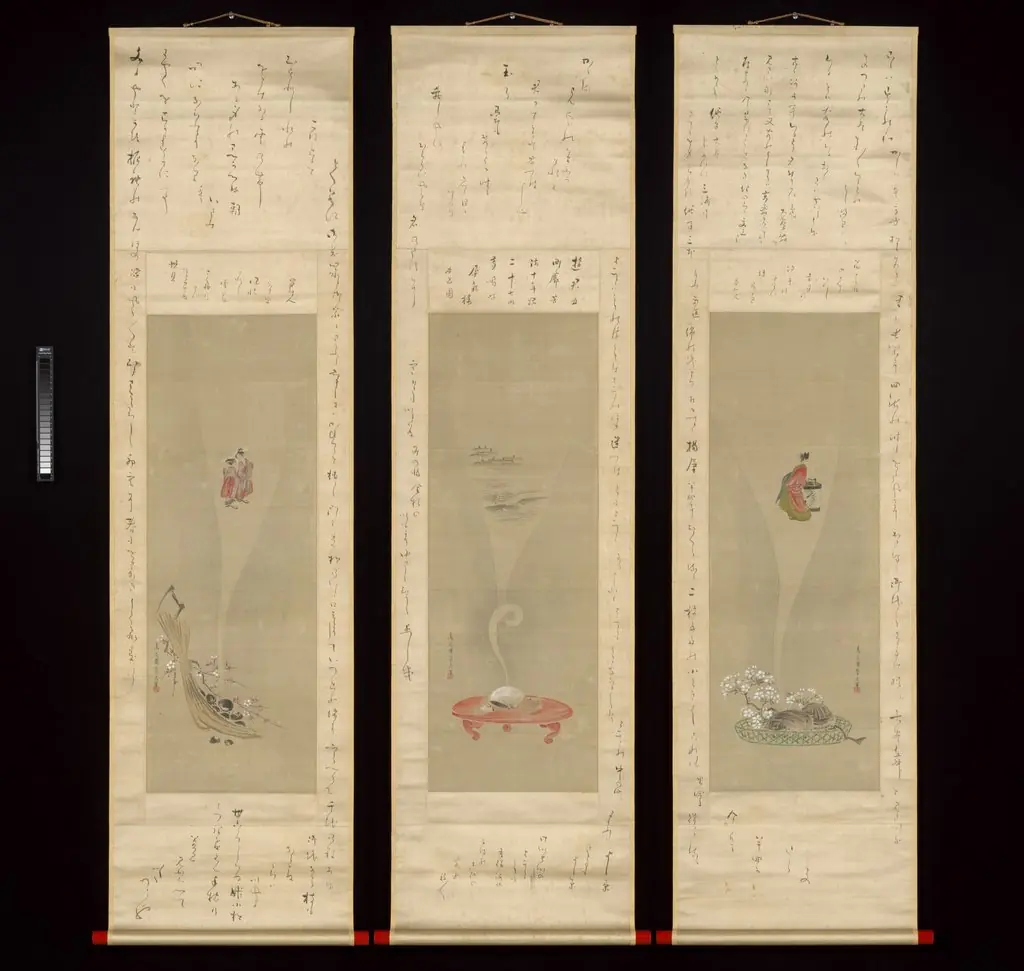
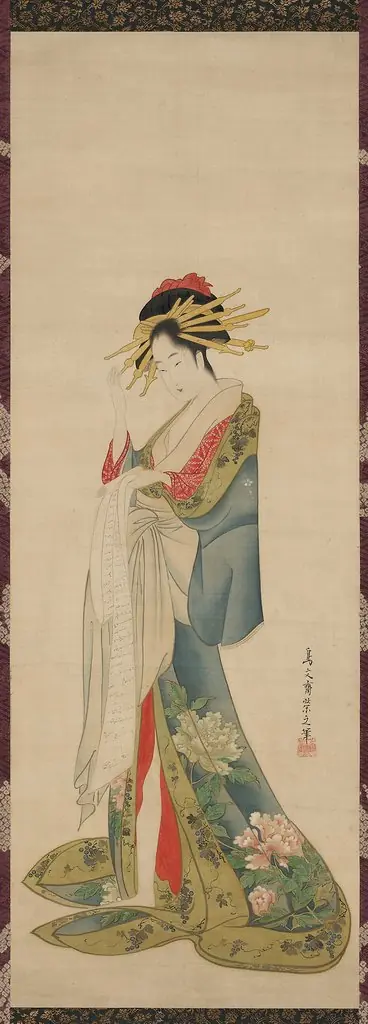
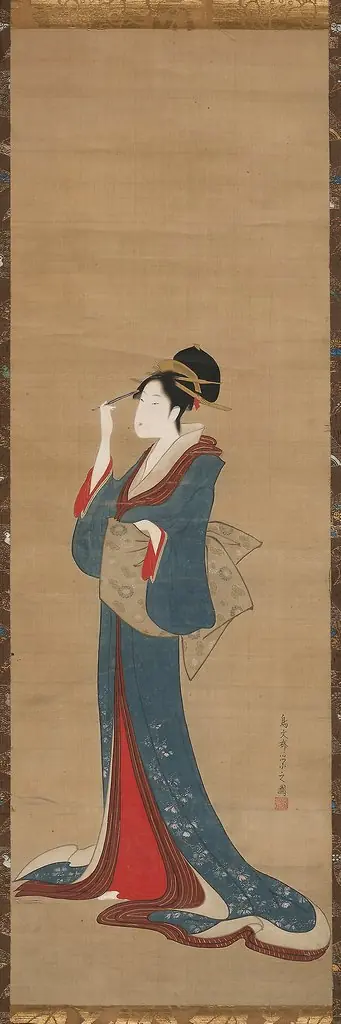
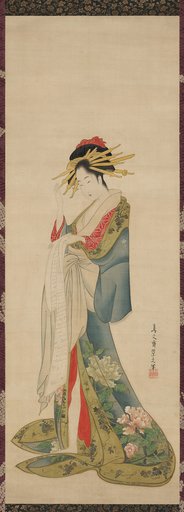
「青楼美人六花仙 扇屋花扇」|The Courtesan Hanaōgi of the Ōgiya Brothel (Ōgiya Hanaōgi), from the series Beauties of the Pleasure Quarters as Six Floral Immortals (Seirō bijin rokkasen)
1794
ink
paper
From the collection of Metropolitan Museum of Art
1794
ink
paper
From the collection of Metropolitan Museum of Art
「青楼美人六花仙 扇屋花扇」|The Courtesan Hanaōgi of the Ōgiya Brothel (Ōgiya Hanaōgi), from the series Beauties of the Pleasure Quarters as Six Floral Immortals (Seirō bijin rokkasen) is a 1794 ink by Chôbunsai Eishi, a Romanticism work, depicting Working, held at Metropolitan Museum of Art.
In this painting, a woman is depicted sitting at a desk, writing with a brush. She is dressed in a traditional Japanese kimono with a floral pattern, and her hair is styled in an elaborate updo. The background of the painting is a soft yellow color. The woman's kimono is intricately designed, with a mix of green, pink, and white colors. She is holding a fan in her left hand, and her right hand is poised over the paper, ready to write. The desk in front of her is adorned with various objects, including a small vase and a box. This painting is a beautiful example of Japanese art from the Romanticism movement. To learn more about the artist's style and technique, look up Chôbunsai Eishi.
Chōbunsai Eishi (鳥文斎 栄之; 1756–1829) was a Japanese ukiyo-e artist. His last name was Hosoda (細田). His first name was Tokitomi (時富). His common name was Taminosuke (民之丞) and later Yasaburo (弥三郎). Pupil of Kano Eisen'in…
See the richer artist pageYour cart is empty
Explore artworks →