Artwork
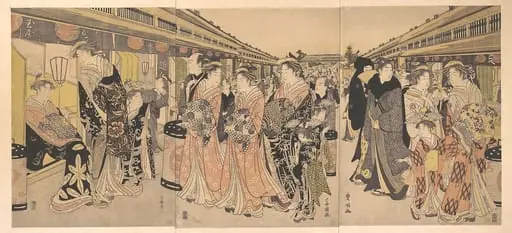
Three Gods of Good Fortune Visit the Yoshiwara; or “Scenes of Pleasure at the Height of Spring”
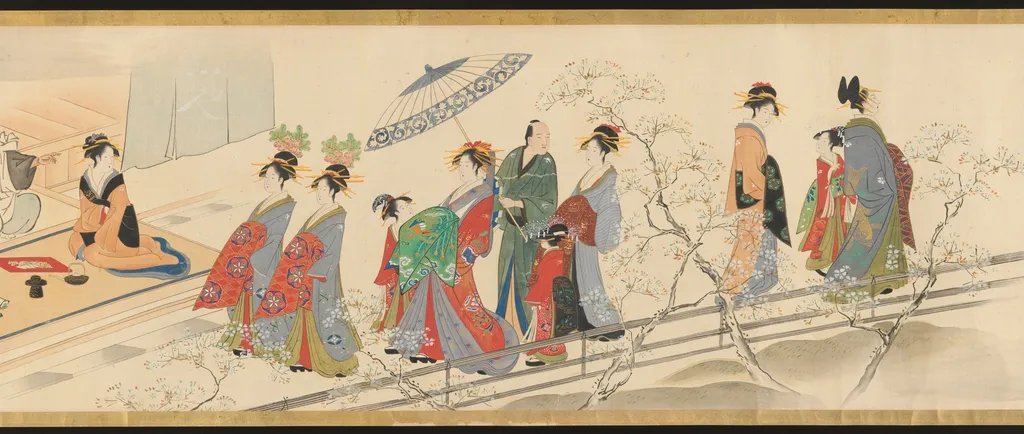
Three Gods of Good Fortune Visit the Yoshiwara; or “Scenes of Pleasure at the Height of Spring” is an unspecified painting by the Ukiyo-e artist Chôbunsai Eishi. It dates from 1816 and is held in the collection of the Metropolitan Museum of Art.
About this work
Overview
It features a lively procession of figures, including men and women, suggesting a festive occasion within a specific urban setting.
Chōbunsai Eishi, a prominent ukiyo-e artist, created this painting in 1816, titled "Three Gods of Good Fortune Visit the Yoshiwara; or "Scenes of Pleasure at the Height of Spring."" The work captures a vibrant bridge scene, characteristic of the ukiyo-e movement's focus on everyday life and entertainment. It features a lively procession of figures, including men and women, suggesting a festive occasion within a specific urban setting.
Subject & Meaning
The painting portrays a bustling procession crossing a narrow bridge, set against a serene, snow-dusted landscape. Women in richly patterned kimonos, vibrant with reds, blues, and greens, carry umbrellas or fans, while men accompany them in plainer attire. The title, referencing the Three Gods of Good Fortune visiting Yoshiwara, suggests a celebratory atmosphere, intertwining auspicious deities with the famed pleasure district, implying a scene of spring revelry.
Technique & Style
Eishi employs flat areas of color and precise, clean lines to define the forms and create a dynamic composition. Despite the numerous figures, the scene maintains a sense of balance, with each individual carefully placed along the bridge. This approach contributes to an overall impression of graceful movement, guiding the viewer's eye through the animated gathering and emphasizing the elegant flow of the procession.
History & Provenance
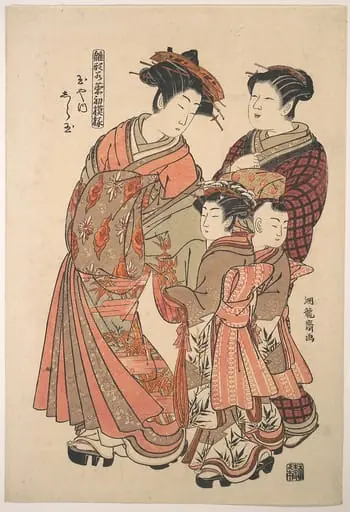
Born in 1756 into an affluent samurai family with direct ties to the Shogunate, Chōbunsai Eishi initially served as a vassal. He later departed from this official role to dedicate himself to art, studying under Kano Eisen'in Michinobu. Eishi first gained recognition for his bijin-ga prints, which depicted elegant, slender female figures, before expanding his artistic repertoire to include works such as this painting.
Artist & collection

Artist
Chōbunsai Eishi (鳥文斎 栄之; 1756–1829) was a Japanese ukiyo-e artist. His last name was Hosoda (細田). His first name was Tokitomi (時富). His common name was Taminosuke (民之丞) and later Yasaburo (弥三郎). Pupil of Kano Eisen'in…

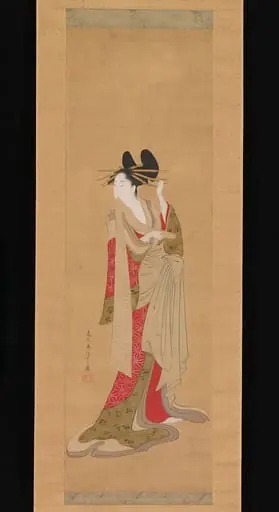
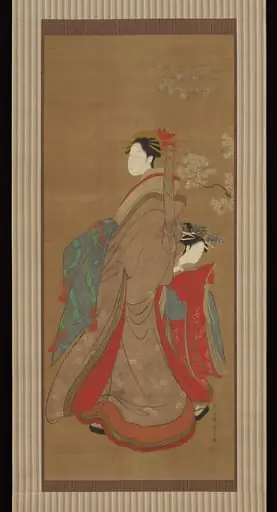
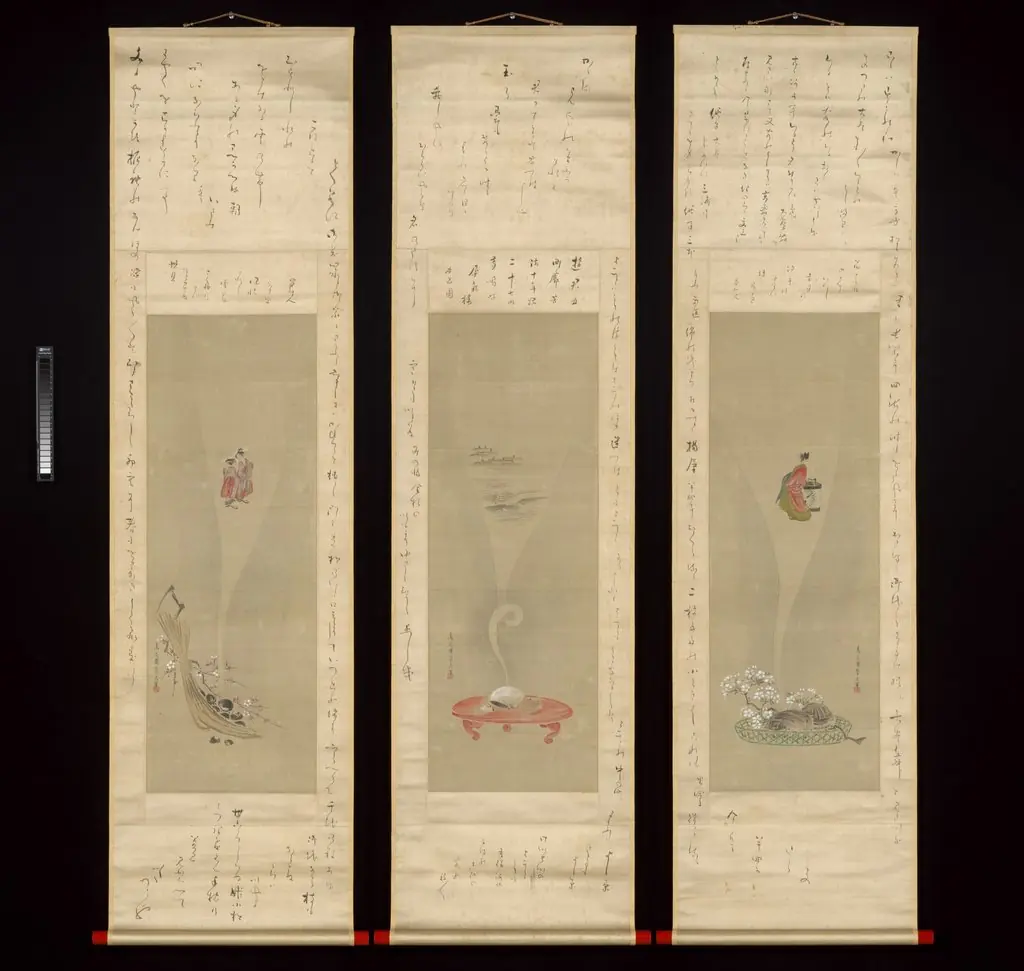
- 『雛形若菜初模様 玉や内 しら玉』|The Courtesan Shiratama of the Tamaya Brothel, from the series “A Pat-tern Book of the Year’s First Designs, Fresh as Spring Herbs” (“Hinagata wakana hatsu moyō”)
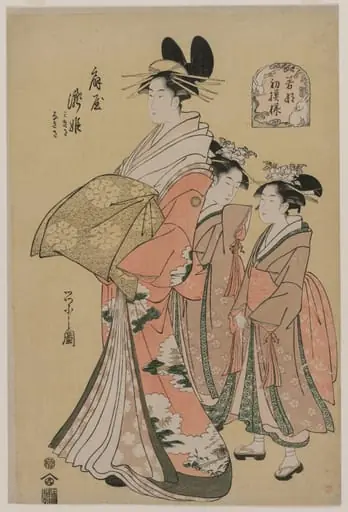 The Courtesan Takihime and Attendants (from the series New Patterns of Young Greens)
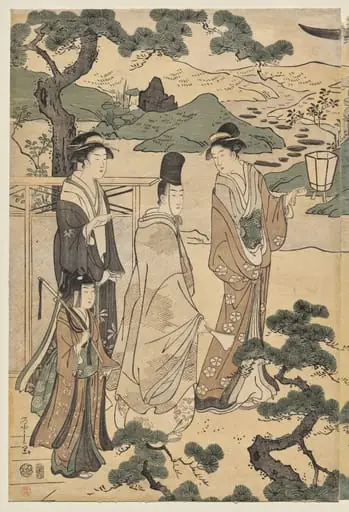 The Matsukaze Chapter of the Tale of Genji (from the series The Tale of Genji in Elegant Modern Dress)
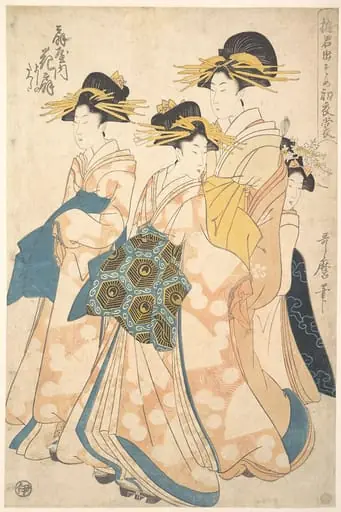 遊君出そめ初衣裳 扇屋内花扇|The Oiran Hanaogi of Ogiya attended by Two Shinzo and Her Kamuro Yoshino
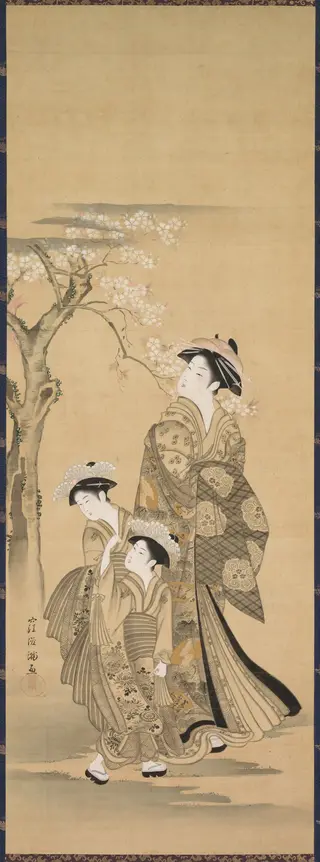 Woman and Two Children
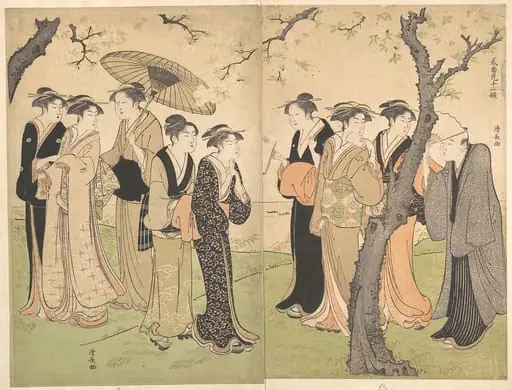 Untitled
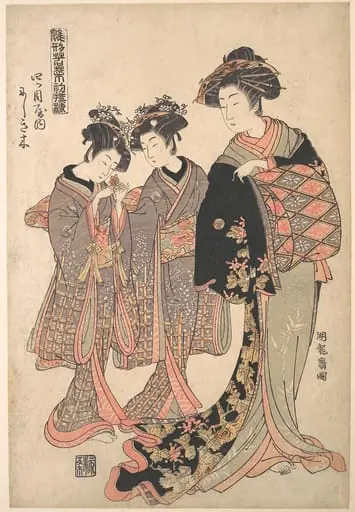 『雛形若菜初模様 四ツ目屋内 にしき木』|The Courtesan Nishikigi of the Yotsumeya Brothel, from the series “A Pattern Book of the Year’s First Designs, Fresh as Spring Herbs” (“Hinagata wakana hatsu moyō”)
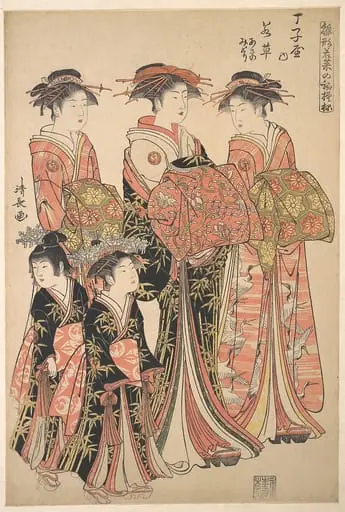 鳥居清長画 「雛形若菜の初模様 丁子屋の若草・ あさの・みどり」|The Courtesan Wakakusa of the Chōjiya Brothel, and Attendants Asano and Midori, from the series “A Pattern Book of the Year’s First Designs, Fresh as Spring Herbs” (Hinagata wakana no hatsumoyō)
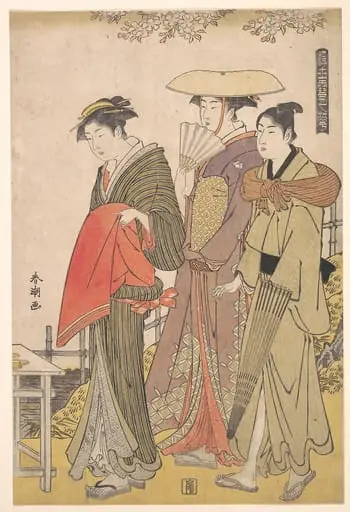 Ukiyoe Ga|The Beauty of the Floating World
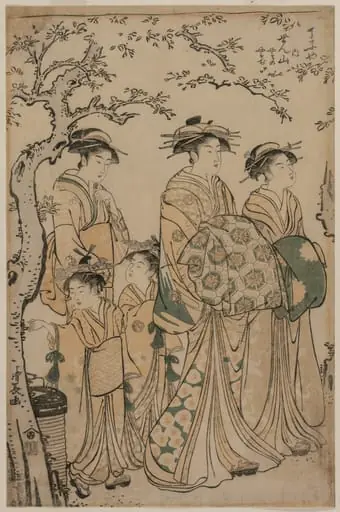 The Courtesan Senzan of Chojiya Strolling with her Kamuro Yasono and Yasoji and Two Shinzo
 吉原仲の町花魁道中|Courtesans Promenading on the Nakanochō in Yoshiwara