Artwork
『青楼七小町』 「玉屋内花紫」|“Hanamurasaki of the Tamaya,” from the series Seven Komachi of the Pleasure Quarters (Seirō Nana Komachi)
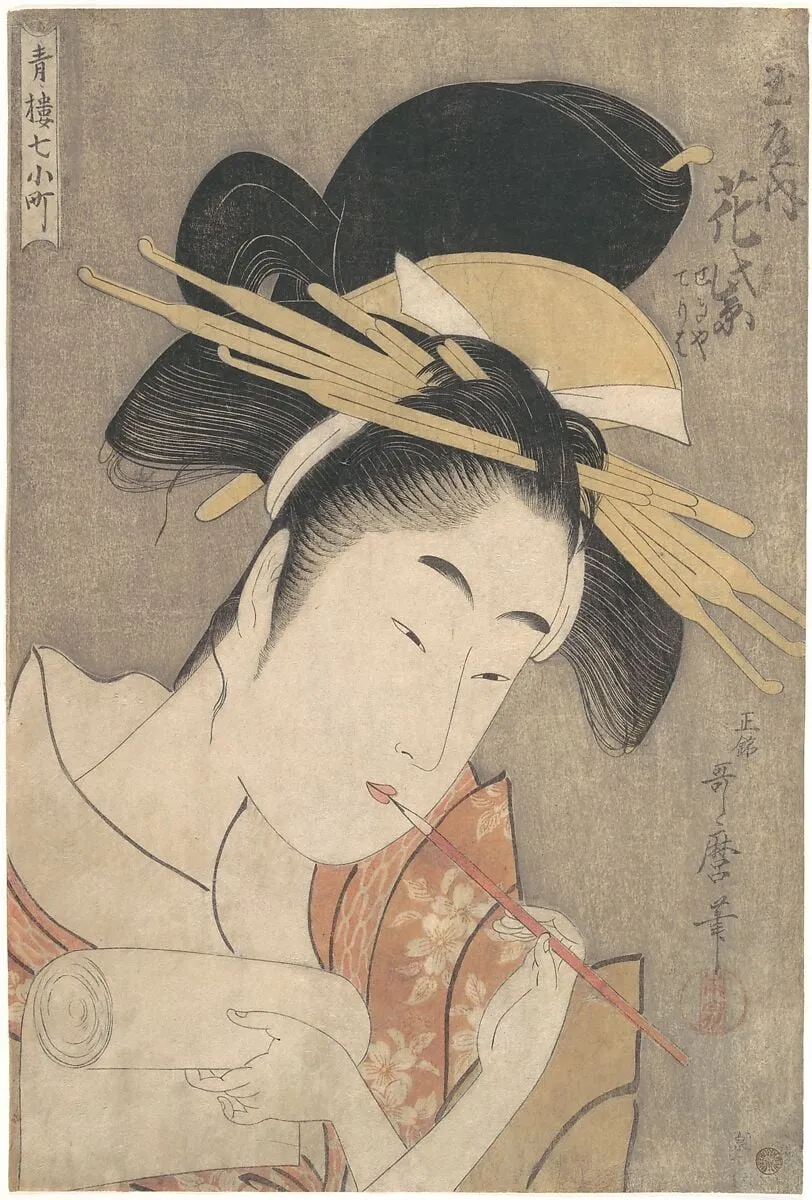
『青楼七小町』 「玉屋内花紫」|“Hanamurasaki of the Tamaya,” from the series Seven Komachi of the Pleasure Quarters (Seirō Nana Komachi) is an ink print by the Romanticist artist Kitagawa Utamaro. It dates from 1790 and is held in the collection of the Metropolitan Museum of Art. Created around 1790, this woodblock print by Kitagawa Utamara belongs to the series “Seven Komachi of the Pleasure Quarters.
About this work
Subject & Meaning
The series title, "Seven Komachi of the Pleasure Quarters," links the courtesan to the legendary poet Ono no Komachi, one of the Six Immortals of Poetry.
The print depicts a bijin, a beautiful woman of the Edo-period pleasure quarters, portrayed as Hanamurasaki of the Tamaya house. She is shown with the refined attributes of a high-ranking courtesan: carefully applied make-up, an ornate kanzashi hair ornament, and an ink brush held in hand. The brush signals literacy and cultivated accomplishment, qualities prized in the elite courtesans of the Yoshiwara and a deliberate echo of the classical arts of the Heian court.
The series title, "Seven Komachi of the Pleasure Quarters," links the courtesan to the legendary poet Ono no Komachi, one of the Six Immortals of Poetry. By pairing each famous Yoshiwara beauty with a classical poetic archetype, Utamaro elevates the courtesan from a figure of entertainment to a modern incarnation of timeless feminine refinement and artistic grace.
Technique & Style
This work is a woodblock print produced with ink and color on paper, a technique characteristic of ukiyo-e production in late eighteenth-century Japan. The composition falls within the bijin-ga tradition, presenting a portrait-format depiction of a courtesan. Visual details rendered through the printmaking process include the sitter's kanzashi hair ornaments, applied make-up, and an ink brush, all conveyed through the layered color and line work typical of the medium.
The sheet measures 36.8 cm in height by 25.1 cm in width, a standard vertical format for bust-length courtesan portraits of the period. The handling reflects the refined modeling of features and textile patterns associated with Kitagawa Utamaro's portrait style.
History & Provenance
Created in 1790 by the artist Kitagawa Utamaro, this woodblock print belongs to the series titled "Seven Komachi of the Pleasure Quarters" (Seirō Nana Komachi). The specific sheet depicts Hanamurasaki of the Tamaya house. While the exact commission details or intermediate ownership history are not recorded in the available documentation, the work is currently held in the collection of the Metropolitan Museum of Art. The piece is classified as a bijin-ga portrait executed in ink and color on paper.
Overview
Created around 1790, this woodblock print by Kitagawa Utamara belongs to the series “Seven Komachi of the Pleasure Quarters.” It portrays a single courtesan, identified as Hanamurasaki of the Tamaya, seated on a tatami mat with a brush ready over a sheet of paper, surrounded by modest furnishings.
Context
Within the “Seven Komachi” series, each work highlights a different renowned courtesan. By portraying Hanamurasaki in a contemplative pose, Utamara diverges from the series’ typical emphasis on theatricality, reflecting a shift toward more personal, psychological representation in ukiyo‑e portraiture.
Artist & collection


 Untitled
 Untitled
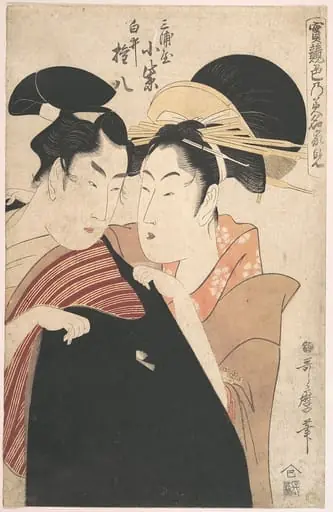 実競色乃美名家見 三浦屋小紫 白井権八|The Lovers Miura-ya Komurasaki and Shirai Gonpachi.
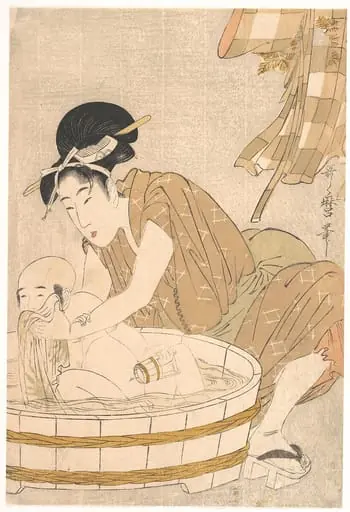 行水|Bathtime (Gyōzui)
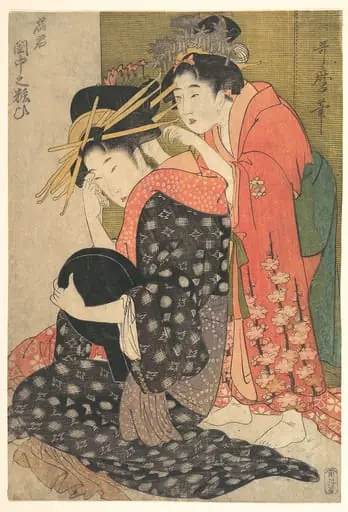 名君 閨中の粧ひ|The Oiran Yoso-oi Seated at Her Toilet
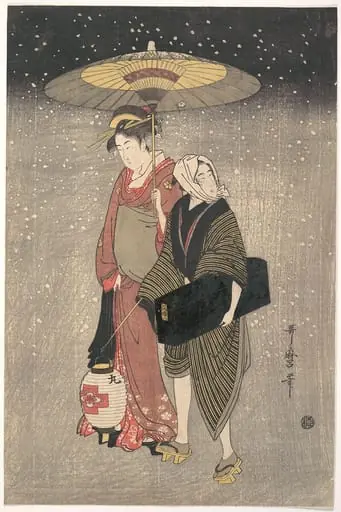 Untitled
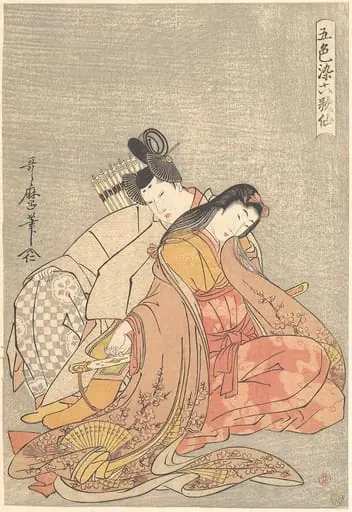 『五色染六歌仙』 在原業平と小野小町|“The Poet Ariwara no Narihira (825–880) and Ono no Komachi,” from the series Five Colors of Love for the Six Poetic Immortals (Goshiki-zome rokkasen)
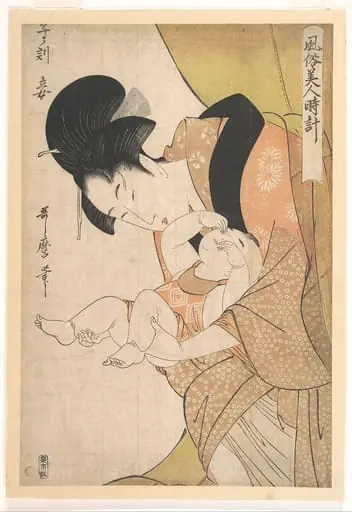 風俗美人時計 子ノ刻 妾|Midnight: Mother and Sleepy Child
- 江戸の園花合 東屋の花|Azumaya no Hana
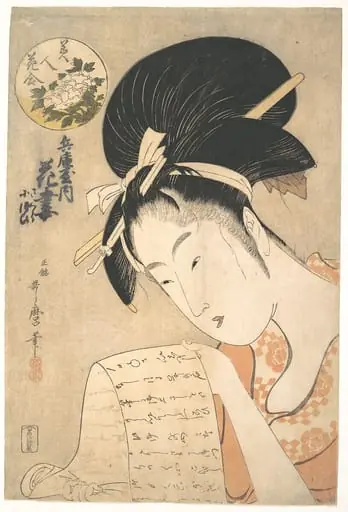 喜多川歌麿画 『美人花合』 「兵庫屋内 花妻図」|“The Courtesan Hanazuma Reading a Letter,” from the series Beauties Compared to Flowers (Bijin hana awase)
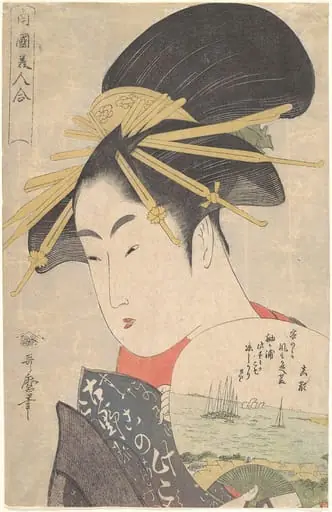 喜多川歌麿画 「南国美人合」 此すミ|The Courtesan Konosumi, from the series “Beauties of the Southern Quarter”(Nangoku bijin awase)
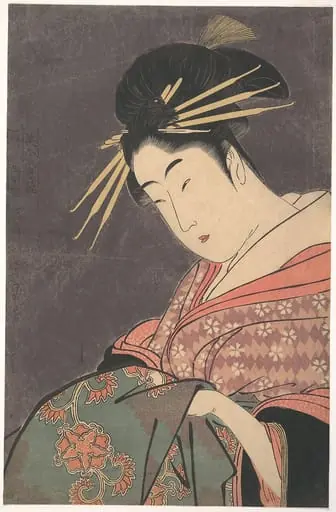 喜多川歌麿画 「美人気量競 五明楼 花扇」|“Hanaōgi of the Gomeirō,” from the series Comparing the Charms of Beauties (Bijin kiryō kurabe: Gomeirō Hanaōgi)
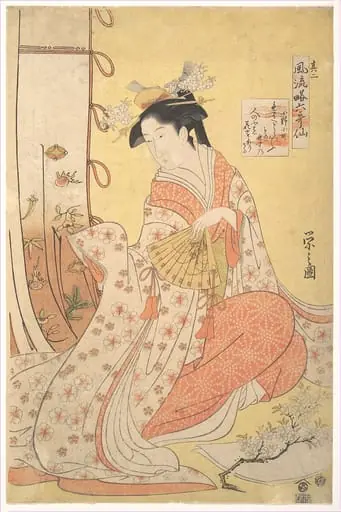 鳥文斎栄之画 「風流略六哥仙 其の二」小野小町|Ono no Komachi: Number Two (Sono ni), from the series Stylish Parodies of the Six Poetic Immortals (Fūryū yatsushi rokkasen)
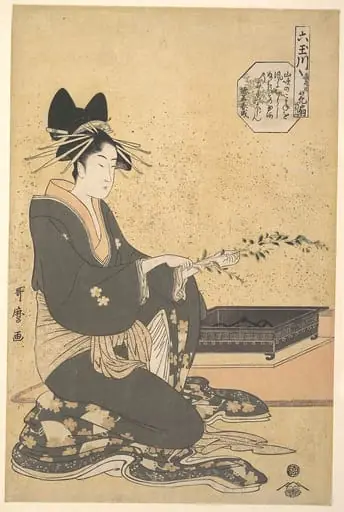 喜多川歌麿画 六玉川 扇屋内 花扇 扇屋内花扇|The Oiran Hanaogi of Ogiya, from the series “Six Jewel Rivers” (Mutamagawa)
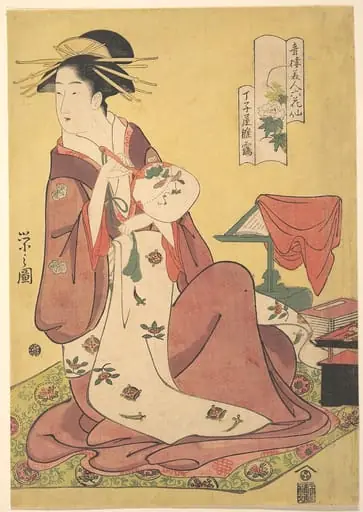 鳥文斎栄之画 「青楼美人六花仙 丁子屋雛鶴鸖」|The Courtesan Hinazuru of the Chōjiya Brothel (Chōjiya Hinazuru), from the series Beauties of the Pleasure Quarters as Six Floral Immortals (Seirō bijin rokkasen)