Artwork
Shellfish and Apparitions of the Yoshiwara Pleasure Quarter
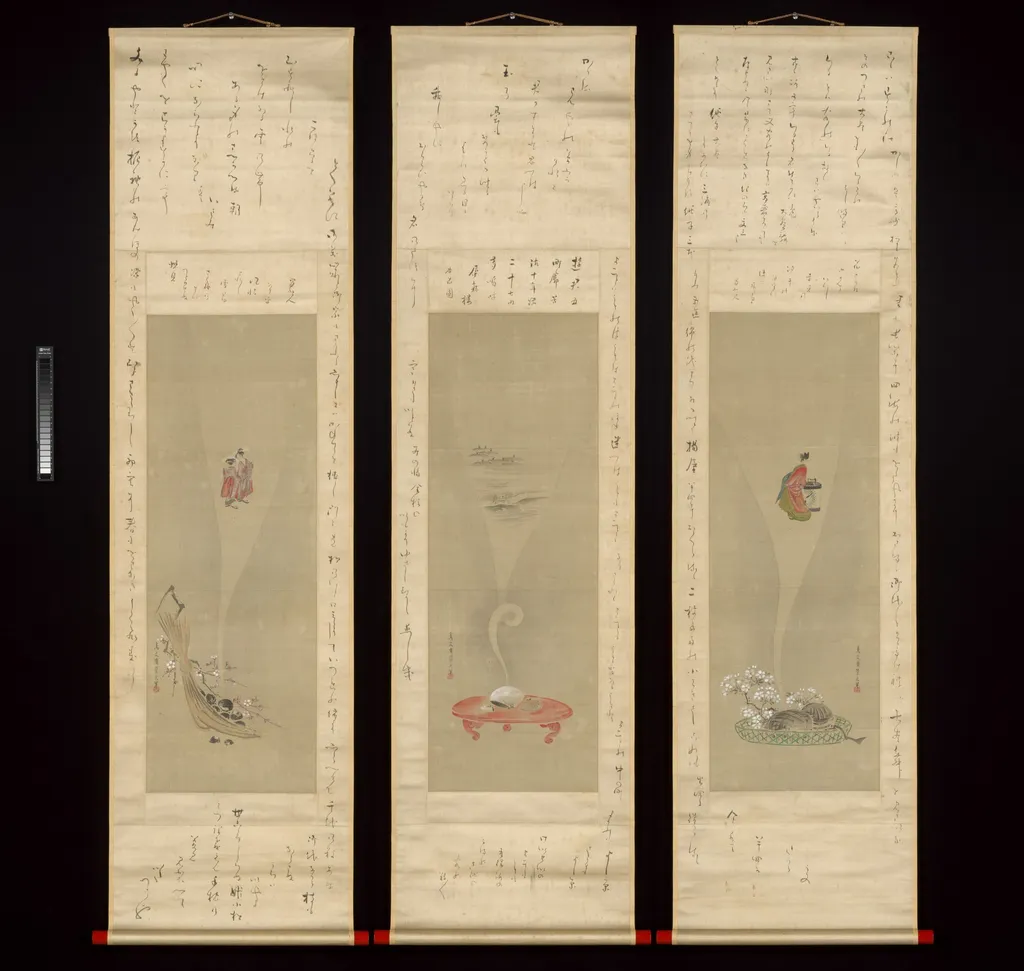
Shellfish and Apparitions of the Yoshiwara Pleasure Quarter is an unspecified painting by the Ukiyo-e artist Chôbunsai Eishi. It dates from 1811 and is held in the collection of the Metropolitan Museum of Art.
About this work
Technique & Style
The artwork’s stylistic approach emphasizes flattened space and subtle gradations of tone, aligning with Eishi’s refined interpretation of bijin-ga portraiture.
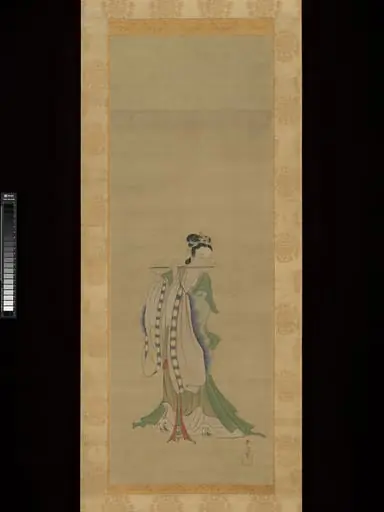
The work is an ukiyo-e painting created with ink and color on paper, depicting shellfish and spectral figures within the Yoshiwara pleasure district. The composition features delicate linework and muted palettes characteristic of early 19th-century Japanese prints, rendered on a flat support typical of the genre. The Metropolitan Museum of Art holds the piece in its collection, documenting its provenance and physical condition as part of its modern holdings.
The artwork’s stylistic approach emphasizes flattened space and subtle gradations of tone, aligning with Eishi’s refined interpretation of bijin-ga portraiture. Formal elements include restrained color fields and compositional asymmetry that evoke the transience of pleasure, reflecting broader Edo-period aesthetics. These qualities underscore the piece’s significance as both a technical and cultural artifact within the museum’s collection.
History & Provenance
Created in 1811 by the Japanese artist Chōbunsai Eishi, this painting originated in Japan. The work, titled Shellfish and Apparitions of the Yoshiwara Pleasure Quarter, is currently held in the collection of the Metropolitan Museum of Art. No specific details regarding its original commission, early ownership history, or the circumstances of its acquisition by the museum are provided in the available records.
Shellfish and Apparitions of the Yoshiwara Pleasure Quarter is held by the Metropolitan Museum of Art. The work entered the museum's collection in 1811 and is cataloged under the accession number 1988.106. It has been featured in exhibitions at the museum, including a display of Japanese prints and drawings.
Overview
Created in 1811 by Chōbunsai Eishi, a former samurai official who turned to ukiyo-e, this three‑panel painting is part of the Metropolitan Museum of Art’s collection. The work juxtaposes a still‑life arrangement with spectral figures, all set within the atmosphere of Edo’s Yoshiwara pleasure district.
Subject & Meaning
The central panel presents a steaming teapot on a red tray, rendered with such realism that the vapor appears tangible. Flanking it, two women in vivid red and green kimono hold fans and stand beside floral or culinary motifs, their forms suggested as apparitions that evoke the fleeting pleasures and transient nature of the Yoshiwara quarter.
Context
The work reflects Edo‑period fascination with the Yoshiwara pleasure quarter, a hub of entertainment and artistic inspiration. By integrating ghostly presences with everyday objects, Eishi comments on the ephemerality of desire, a common theme in ukiyo‑e prints that catered to a burgeoning urban audience.
Own this work as a print
Artist & collection

Artist
Chōbunsai Eishi (鳥文斎 栄之; 1756–1829) was a Japanese ukiyo-e artist. His last name was Hosoda (細田). His first name was Tokitomi (時富). His common name was Taminosuke (民之丞) and later Yasaburo (弥三郎). Pupil of Kano Eisen'in…

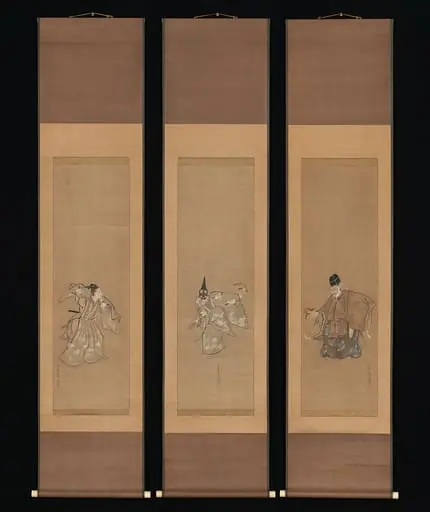 鳥山石燕筆 「翁」図|The Auspicious Noh Dance "Okina"
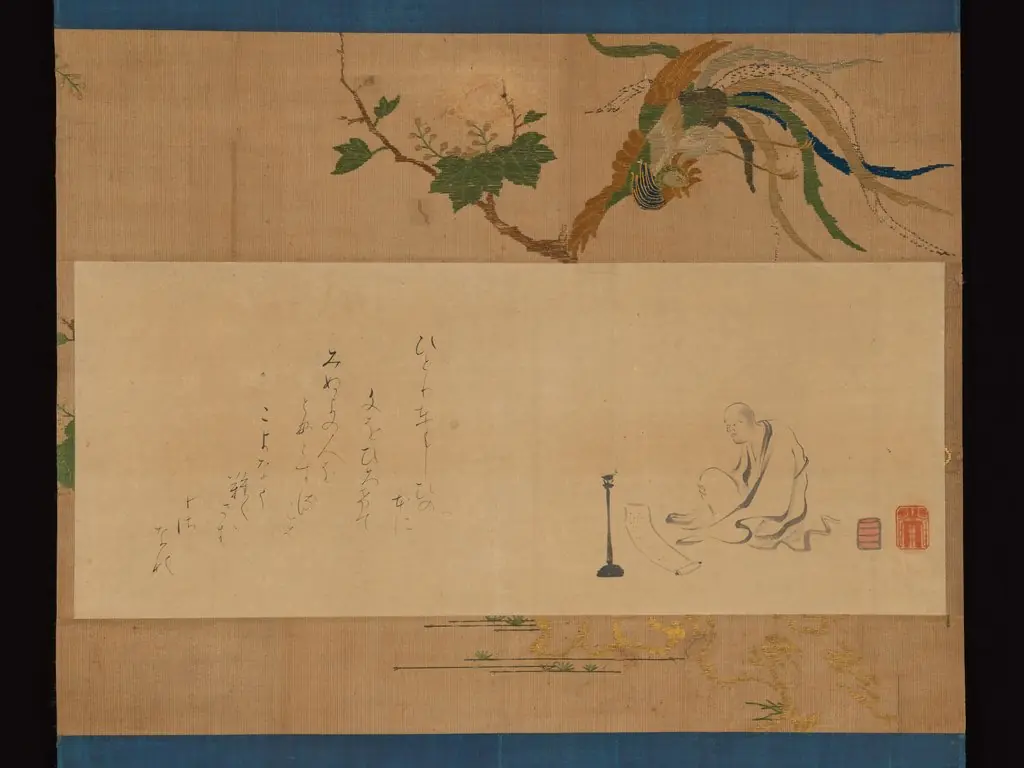 Monk Kenkō Reading by Lamplight
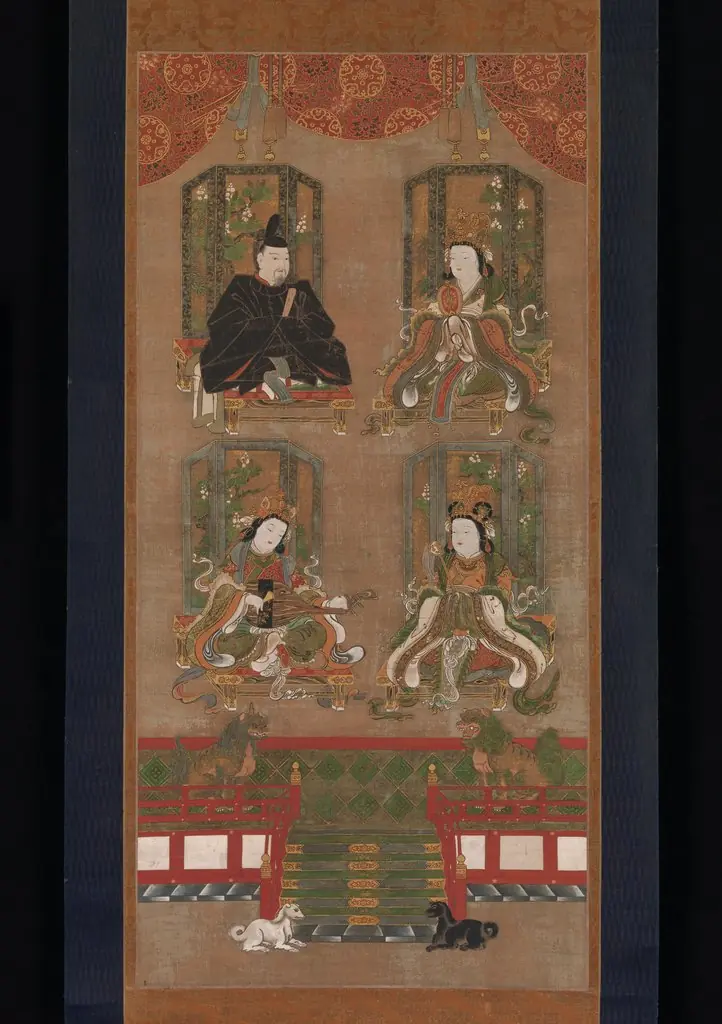 The Four Deities of Mount Kōya
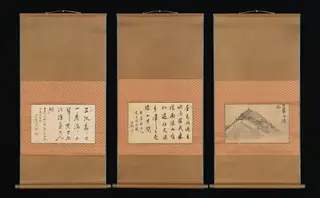 Mountain and Calligraphy
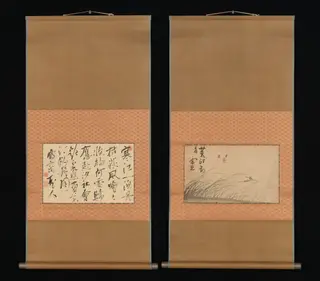 Fishing Boat on Reed Covered Bank and Calligraphy
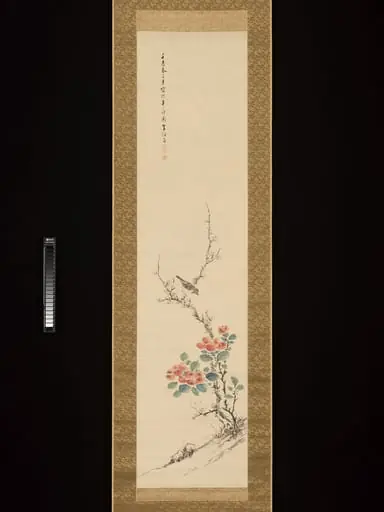 Untitled
 Untitled
 White-Robed Guanyin with Hanshan and Shide
 Untitled
 池田孤邨筆 四季花鳥画|Flowers and Birds of the Four Seasons
 狩野常信筆 楊貴妃吹笛図|Yang Guifei Playing a Flute