Artwork
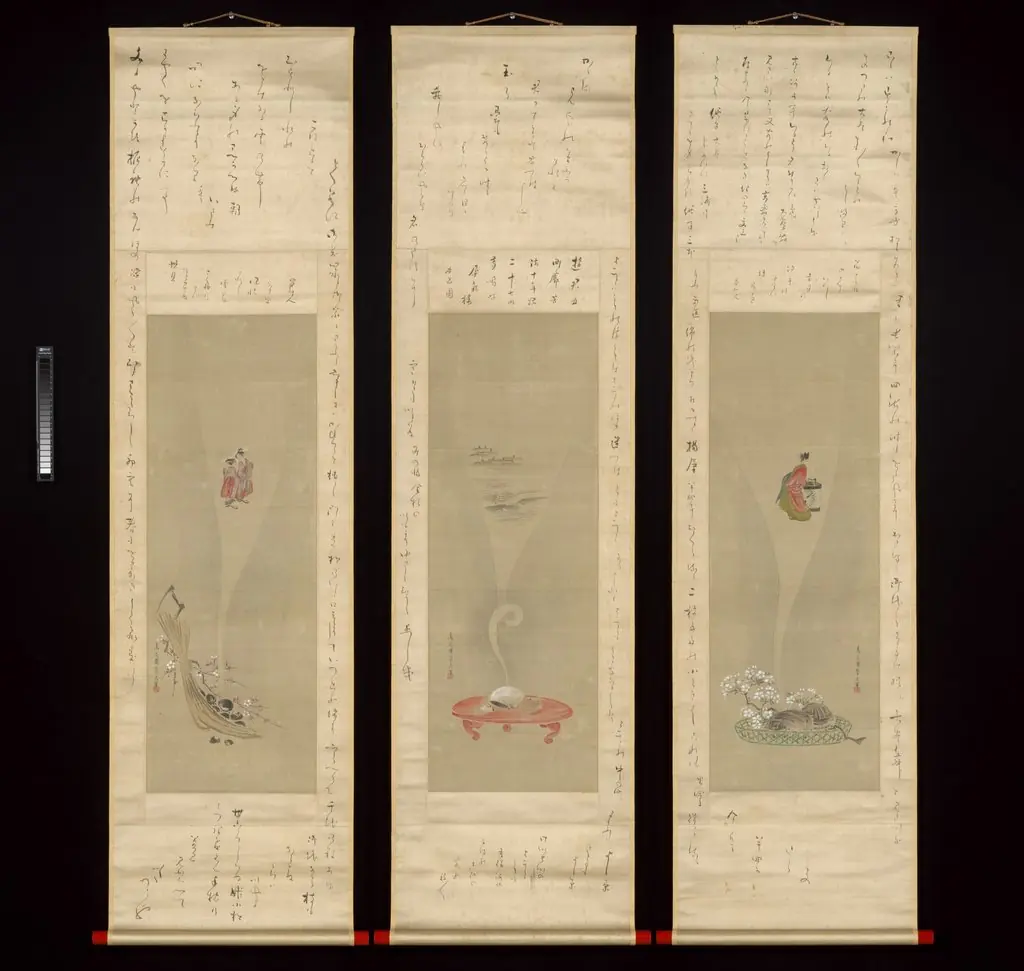
蜀山人(大田 南畝)賛 雪・月・花図 |Snow, Moon, and Cherry Blossoms (Yoshiwara in Three Seasons)
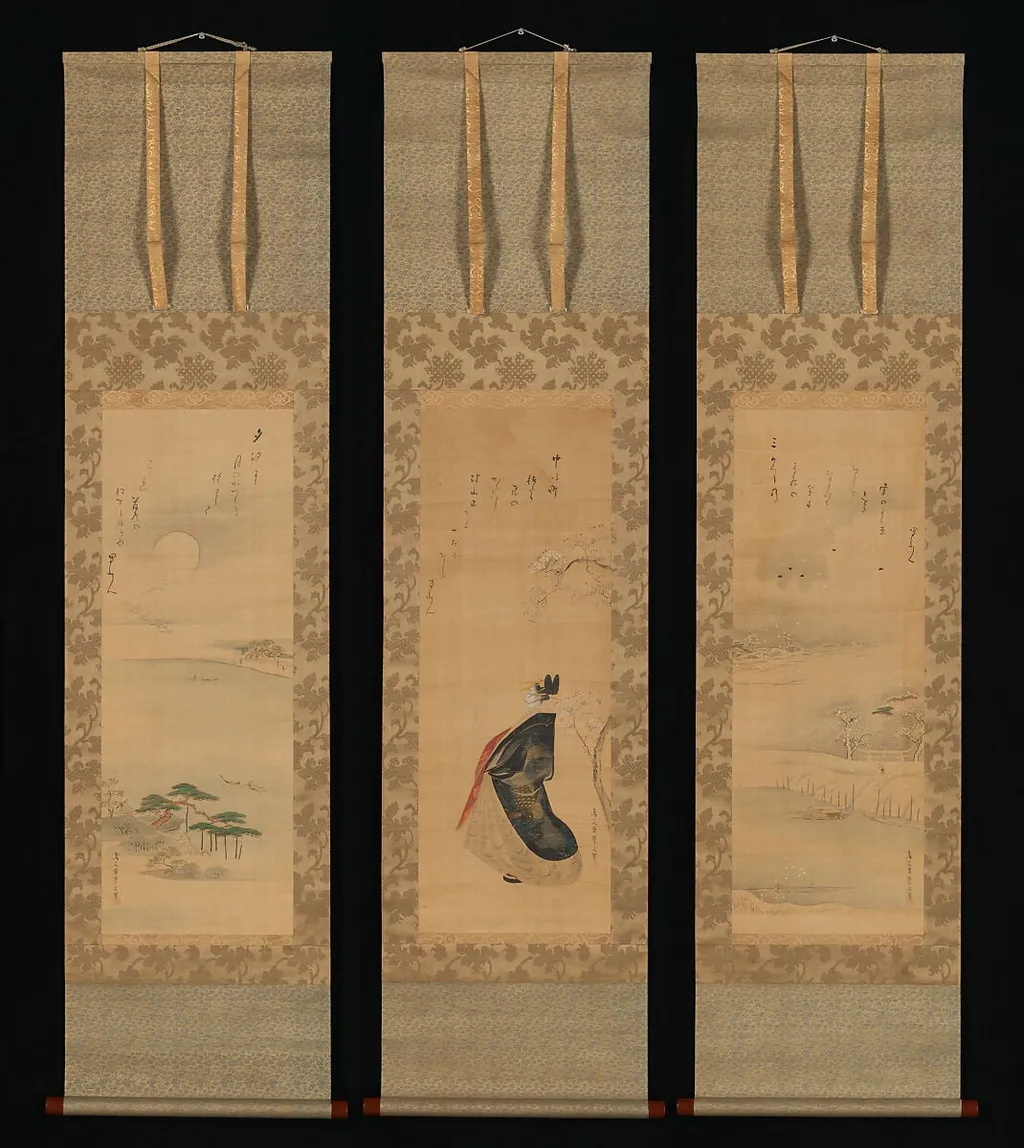
蜀山人(大田 南畝)賛 雪・月・花図 |Snow, Moon, and Cherry Blossoms (Yoshiwara in Three Seasons) is an ink painting by the Romanticist artist Chôbunsai Eishi. It dates from 1809 and is held in the collection of the Metropolitan Museum of Art. Chōbunsai Eishi's Snow, Moon, and Cherry Blossoms (Yoshiwara in Three Seasons), created in 1809, is a triptych of hanging scrolls.
- Accession no.
- 2015.300.142a–c
- Credit line
- Mary Griggs Burke Collection, Gift of the Mary and Jackson Burke Foundation, 2015
About this work
Subject & Meaning
Together, these elements create a symbolic representation of seasonal change and the fleeting nature of beauty, reflecting the cultural values of the period.
The work depicts a landscape scene featuring a boat, flowers, and a woman, set against a backdrop that evokes the seasonal themes of snow, moon, and cherry blossoms. While the title explicitly references these three seasonal motifs, the visual composition integrates them to represent the passage of time and the aesthetic ideals associated with the Yoshiwara pleasure quarters. The inclusion of a woman alongside natural elements suggests a connection between human experience and the transient beauty of nature, a common theme in Edo-period art.
The presence of a boat further anchors the scene in a specific setting, likely alluding to the waterways near the Yoshiwara district. Together, these elements create a symbolic representation of seasonal change and the fleeting nature of beauty, reflecting the cultural values of the period.
Technique & Style
The artwork is a triptych of hanging scrolls rendered in ink, color, and gold on silk, characteristic of Edo-period painting practice. Its support consists of silk sheets arranged as three separate hanging scrolls, allowing flexible display. The composition falls within the landscape genre while incorporating figurative motifs, a boat, a flower, and a woman, rendered with delicate brushwork and subtle gold highlights that accentuate atmospheric effects.
The use of layered color over ink creates a luminous surface, and the spatial arrangement reflects a balanced, decorative approach typical of Chōbunsai Eishi's style. The piece is housed in the Metropolitan Museum of Art and dates to 1809.
History & Provenance
Created in 1809 in Japan, this triptych of hanging scrolls was executed by the artist Chōbunsai Eishi in ink, color, and gold on silk. It is now held in the collection of the Metropolitan Museum of Art. The work carries inscriptions by the poet Shokusanjin (Ōta Nanpo), linking the visual depiction of seasonal themes, snow, moon, and cherry blossoms, with literary commentary typical of the period.
The specific circumstances of its original commission and the chain of ownership prior to its museum acquisition are not detailed in the available records, and no accession number or exhibition history is documented; the work is firmly dated to the early nineteenth century.
Overview
Chōbunsai Eishi's Snow, Moon, and Cherry Blossoms (Yoshiwara in Three Seasons), created in 1809, is a triptych of hanging scrolls. Executed in ink, color, and gold on silk, this landscape painting captures a series of seasonal vignettes. The composition features a boat carrying women, set amidst blossoming trees and a moonlit, snowy environment, evoking a serene Japanese landscape that also hints at everyday life scenes.
Context
Born into a prominent samurai family, Chōbunsai Eishi initially served as a vassal to the Shogunate. His artistic training included studies with the Kano-school painter Kano Eisen'in Michinobu, a classical tradition. Eishi later chose to leave his official duties to dedicate himself fully to art, transitioning into the ukiyo-e genre where he became recognized for his graceful depictions of figures.
Artist & collection

Artist
Chōbunsai Eishi (鳥文斎 栄之; 1756–1829) was a Japanese ukiyo-e artist. His last name was Hosoda (細田). His first name was Tokitomi (時富). His common name was Taminosuke (民之丞) and later Yasaburo (弥三郎). Pupil of Kano Eisen'in…

 Shichirigahama and Enoshima
 狩野常信筆 滝見業平図|Nunobiki Waterfall, Mount Yoshino, and Tatsuta River
 Landscapes
 鳥山石燕筆 「翁」図|The Auspicious Noh Dance "Okina"
 Untitled
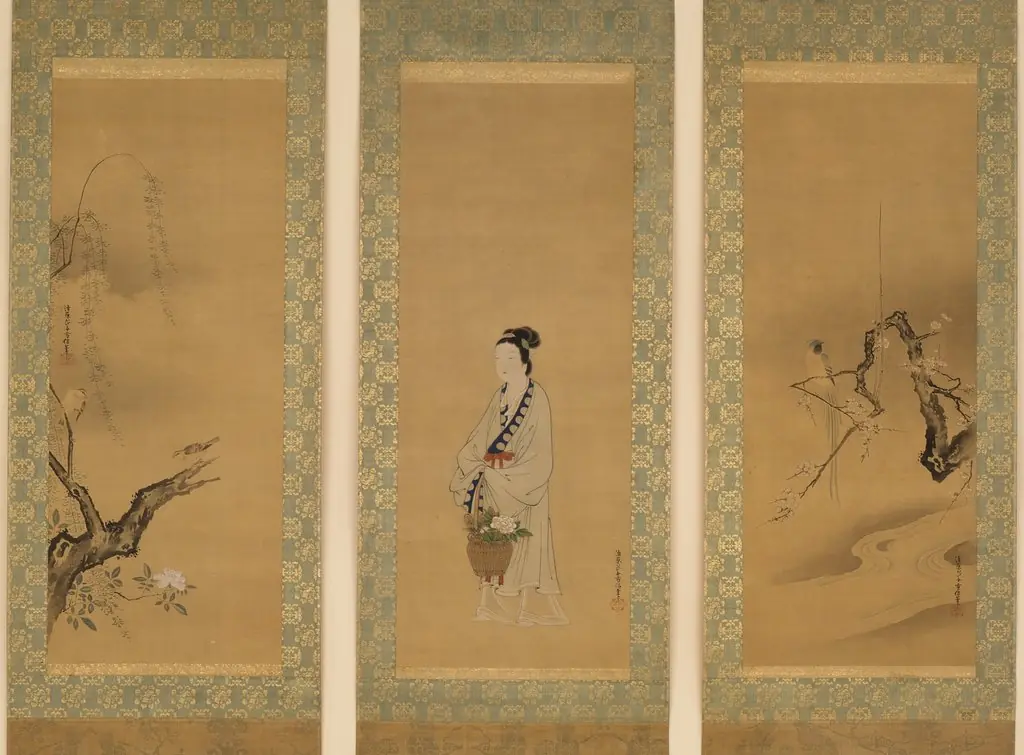 Reishō: Paragon of Filiel Piety; Chinese Blue Magpie with Flowering Plum; Sparrows, Willow, and Rose
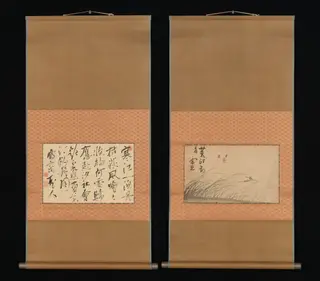 Fishing Boat on Reed Covered Bank and Calligraphy
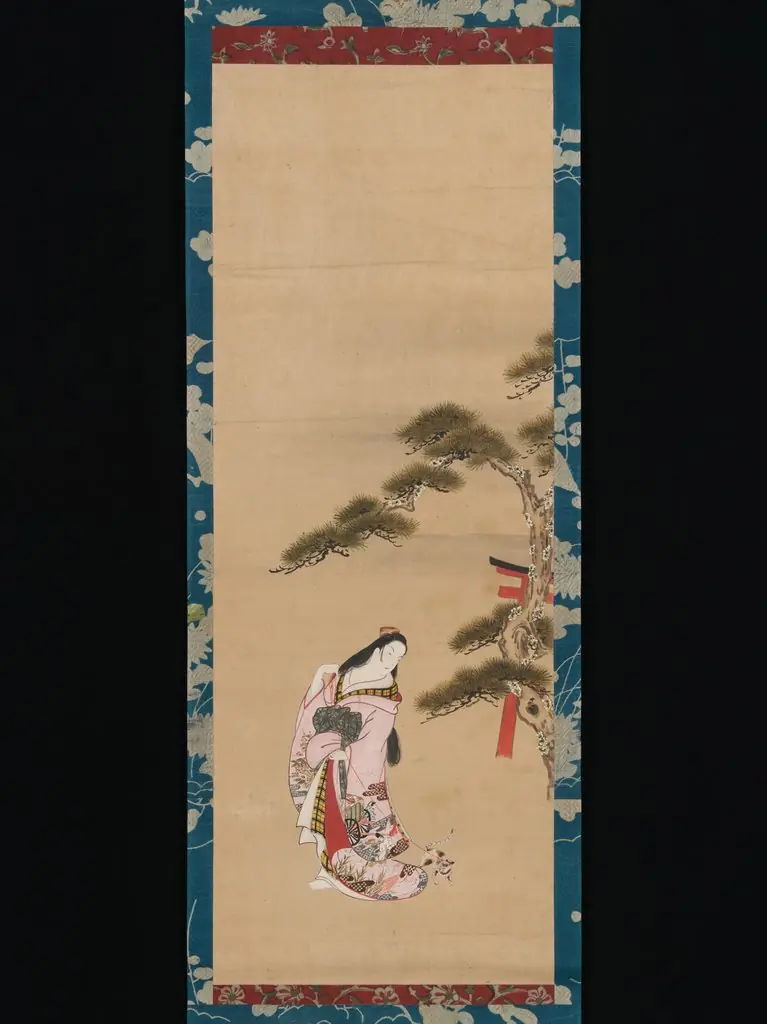 The Third Princess and a Cat, from the "New Herbs I" (Wakana I) chapter The Tale of Genji (Genji monogatari}