Artwork
Rev. Christopher Edwards Gadsden
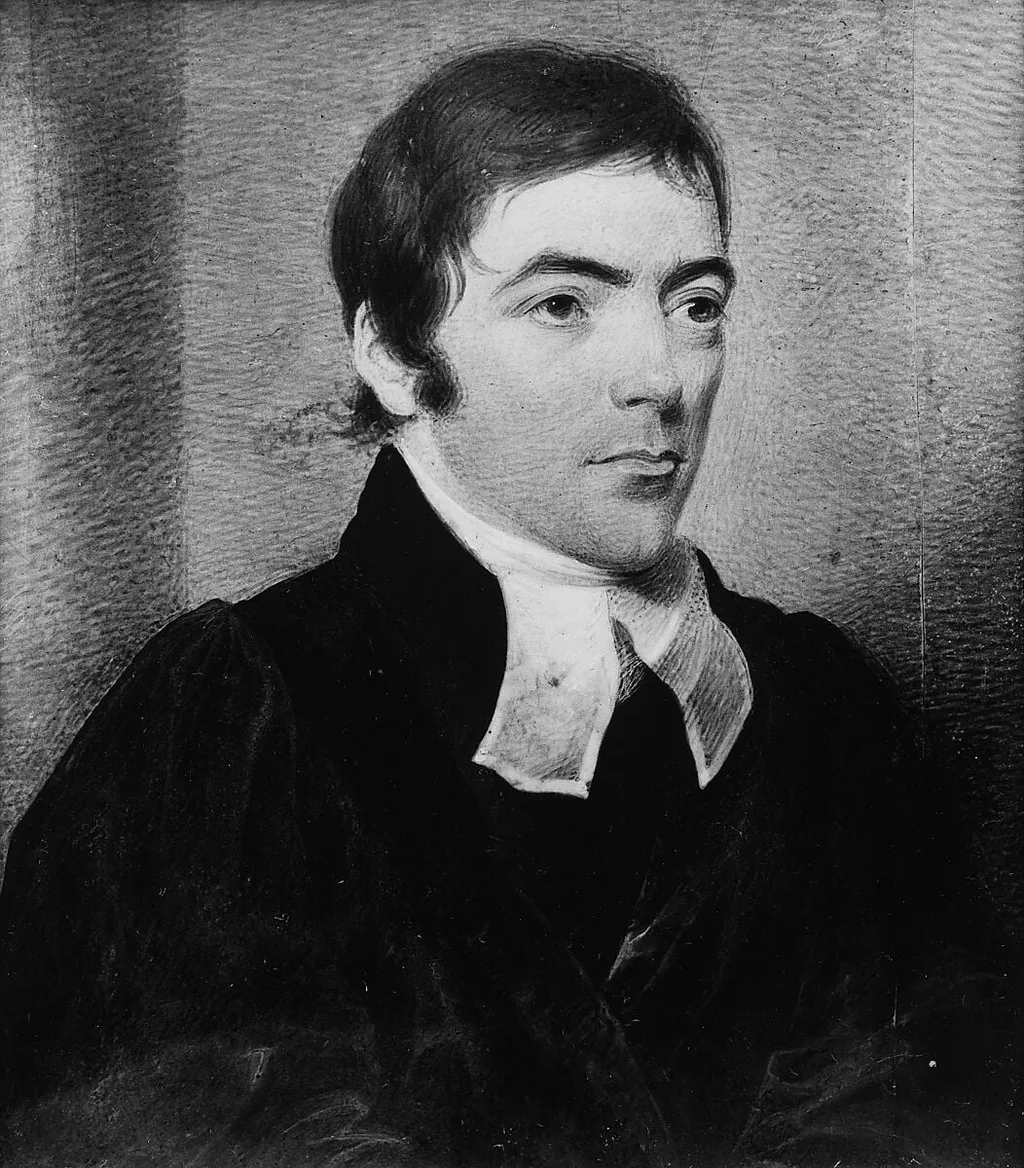
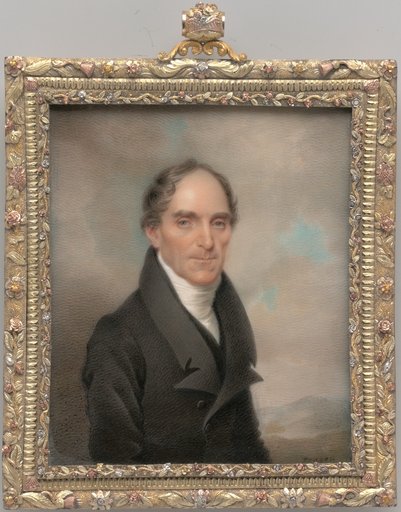
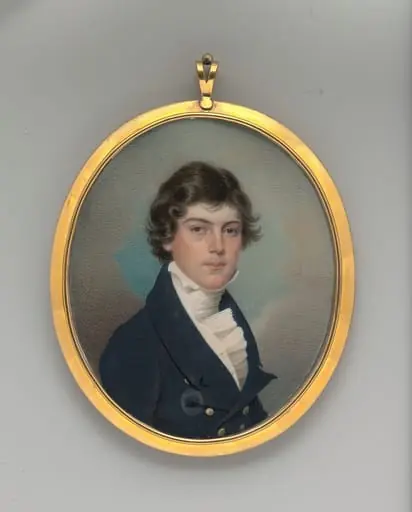
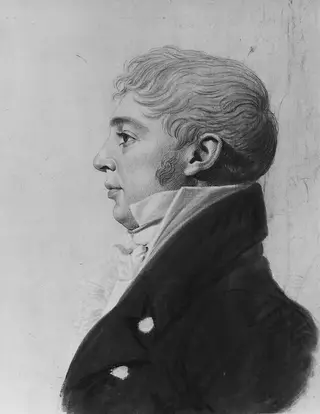
Rev. Christopher Edwards Gadsden is a watercolor painting by the American Folk Art artist Charles Fraser. It dates from 1819 and is held in the collection of the Metropolitan Museum of Art.
About this work
Technique & Style
The medium of watercolour applied to ivory allows for a delicate handling of tonal values and fine detail, typical of Fraser's technique in the genre.
Created in 1819, this portrait of Rev. Christopher Edwards Gadsden by Charles Fraser is executed in watercolour on an ivory support. The work measures 11 centimetres in height and 8.9 centimetres in width, in keeping with the dimensions and materials characteristic of miniature portraiture from the early nineteenth century. The medium of watercolour applied to ivory allows for a delicate handling of tonal values and fine detail, typical of Fraser's technique in the genre.
Classified within The American Wing at the Metropolitan Museum of Art, the work combines the translucency of watercolour pigment with the smooth, luminous surface of the ivory base to depict the sitter as a man through the refined aesthetic of the period.
History & Provenance
Commissioned as a portrait miniature, this watercolour on ivory depicts Reverend Christopher Edwards Gadsden and was created by the artist Charles Fraser in 1819. Since its inception, the piece has entered the collection of the Metropolitan Museum of Art, where it is housed within the institution's American Wing, and measures approximately 11 centimetres in height by 8.9 centimetres in width. No further details regarding intermediate ownership, the specific commissioning patron, or exhibition history are provided in the available records, and the specific inventory or accession number is not given.
Context
Charles Fraser's 1819 watercolour portrait of Rev. Christopher Edwards Gadsden exemplifies early American miniature portraiture through its delicate rendering on ivory and its inclusion in The American Wing of the Metropolitan Museum of Art. Fraser, a leading miniaturist of Charleston, South Carolina, situates Gadsden, an Episcopal clergyman of South Carolina, within the Lowcountry's Federal-era culture. Its documented dimensions of 11 × 8.9 cm and its place in the Met's collection underscore its recognized status as a representative example of portraiture from the 1810s.
Overview
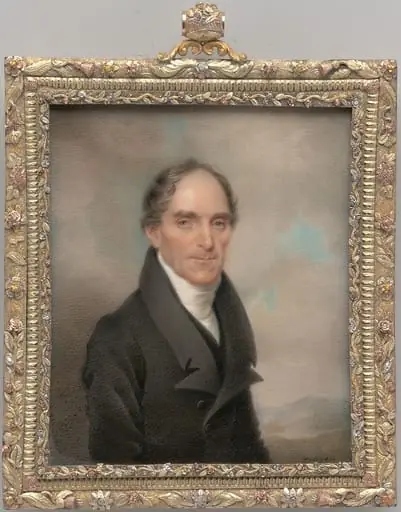
Painted in 1819 by the Charleston artist Charles Fraser, this miniature portrait depicts the Reverend Christopher Edwards Gadsden. Executed in watercolor on ivory, the work exemplifies the refined technique characteristic of Fraser's portraiture during the early nineteenth century. The composition presents Gadsden in a three-quarter view, dressed in a formal black coat and a crisp white cravat, set against a neutral, unadorned background that directs full attention to the sitter's features.
Fraser renders the clergyman's pale complexion and neatly combed hair with delicate precision, capturing a dignified and contemplative expression. As a miniature, the piece was designed as an intimate object, likely intended for personal possession or display within a locket, reflecting the period's custom of preserving likenesses of family and community leaders on a small scale. This work stands as a representative example of Fraser's contribution to American portraiture, showcasing his ability to convey character and status through the challenging medium of watercolor on ivory.
Subject & Meaning
The portrait captures Reverend Christopher Edwards Gadsden, presented in a black coat and a crisp white cravat, his gaze direct and composed. Miniatures like this were typically cherished as private keepsakes, often worn or carried by loved ones. Their small scale and intimate nature fostered a close connection between the viewer and the depicted individual, making them significant personal artifacts rather than public displays.
Artist & collection