Artwork
Dogs at play
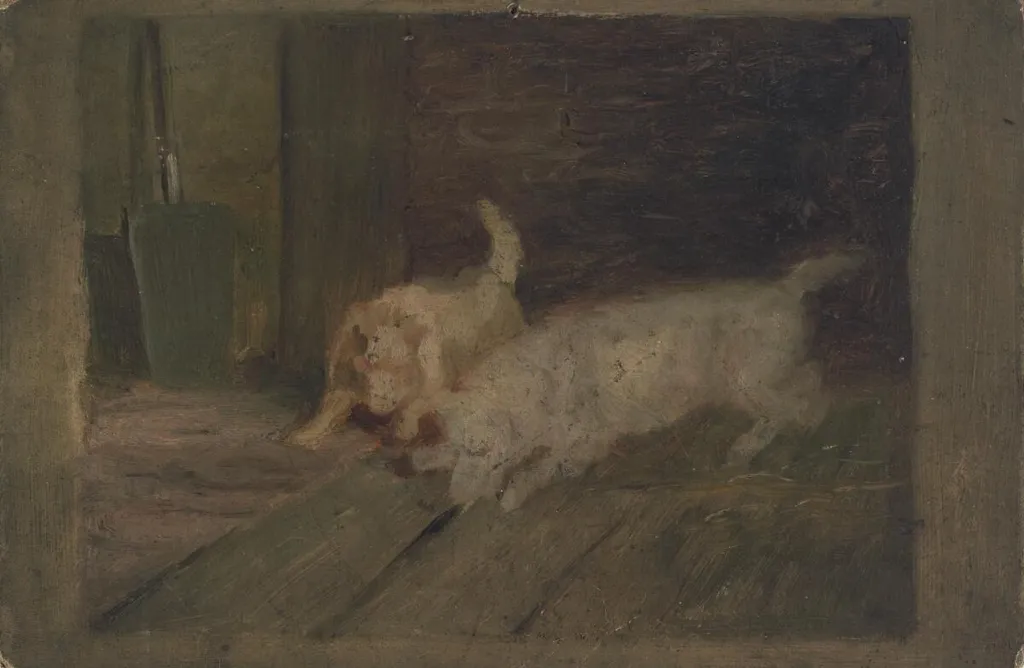
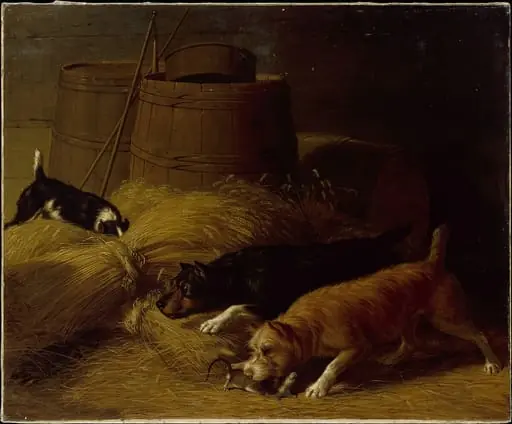
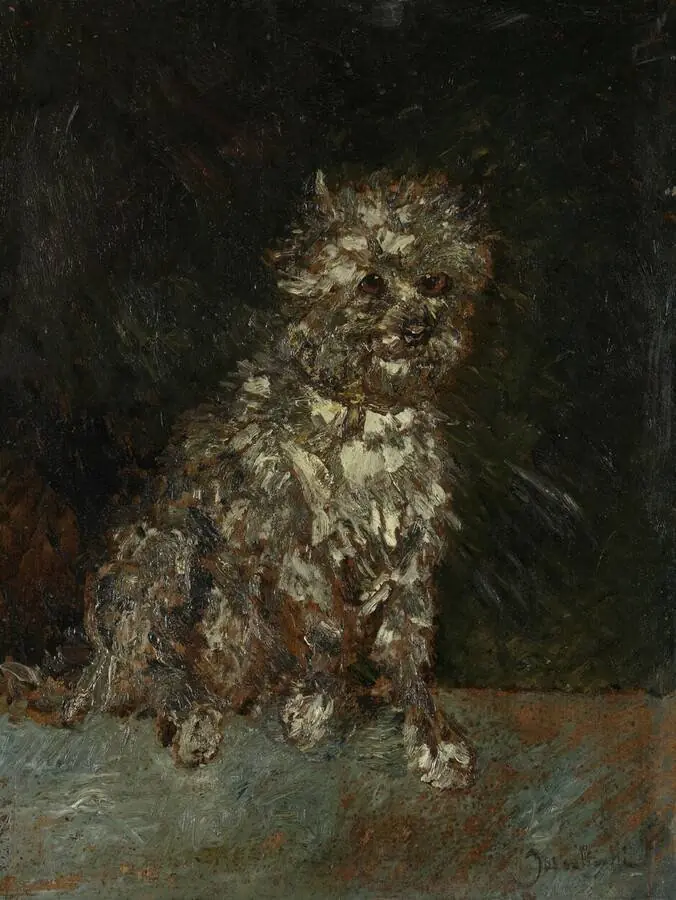
Dogs at play is an oil painting by the British Romanticist artist Charles Jones. It dates from 1870 and is held in the collection of the National Library of Wales.
About this work
Overview
Unlike typical landscape paintings of the period, it focuses on a domestic scene, emphasizing the animals' interaction rather than an external environment.
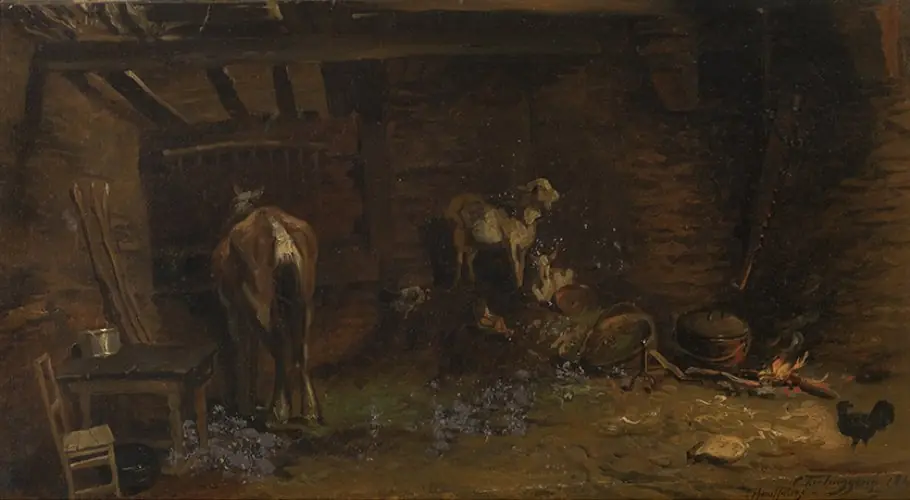
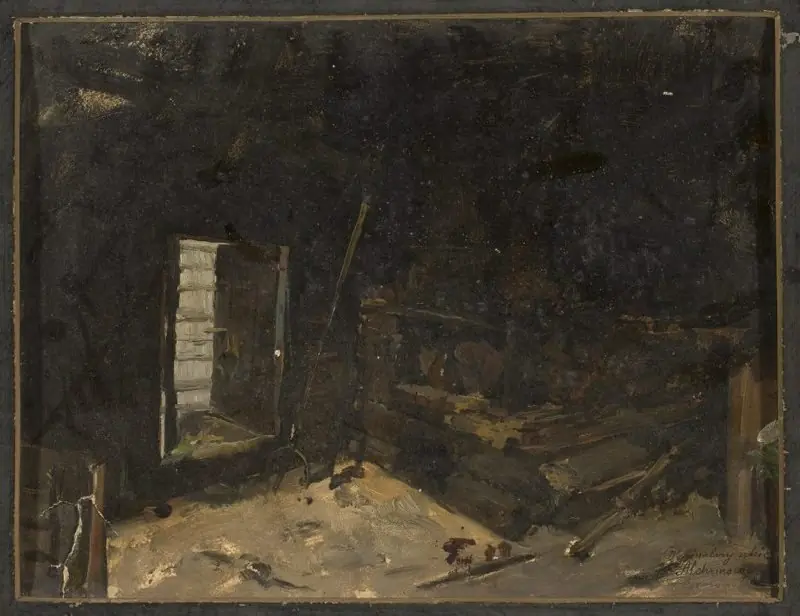
Painted in 1870 by Charles Jones, this oil on canvas depicts two dogs in motion against a dark interior setting. The work is part of the National Library of Wales collection. Unlike typical landscape paintings of the period, it focuses on a domestic scene, emphasizing the animals' interaction rather than an external environment. The composition is tightly framed, drawing attention to the figures and their dynamic posture.
Subject & Meaning
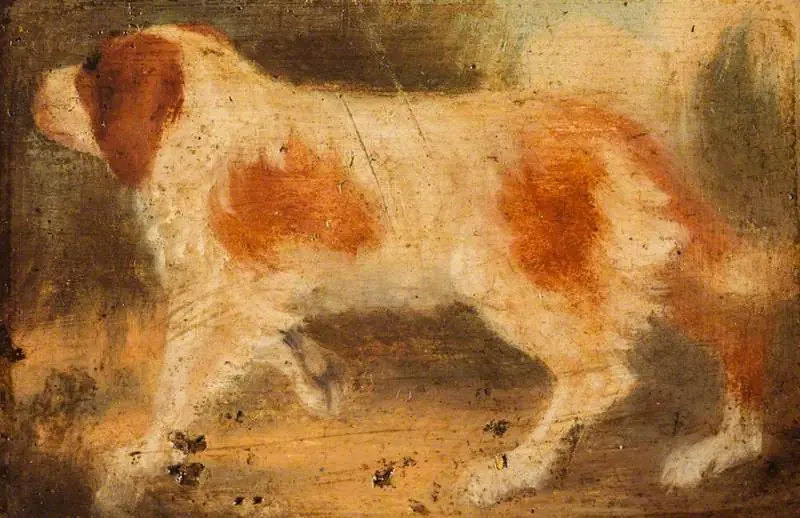
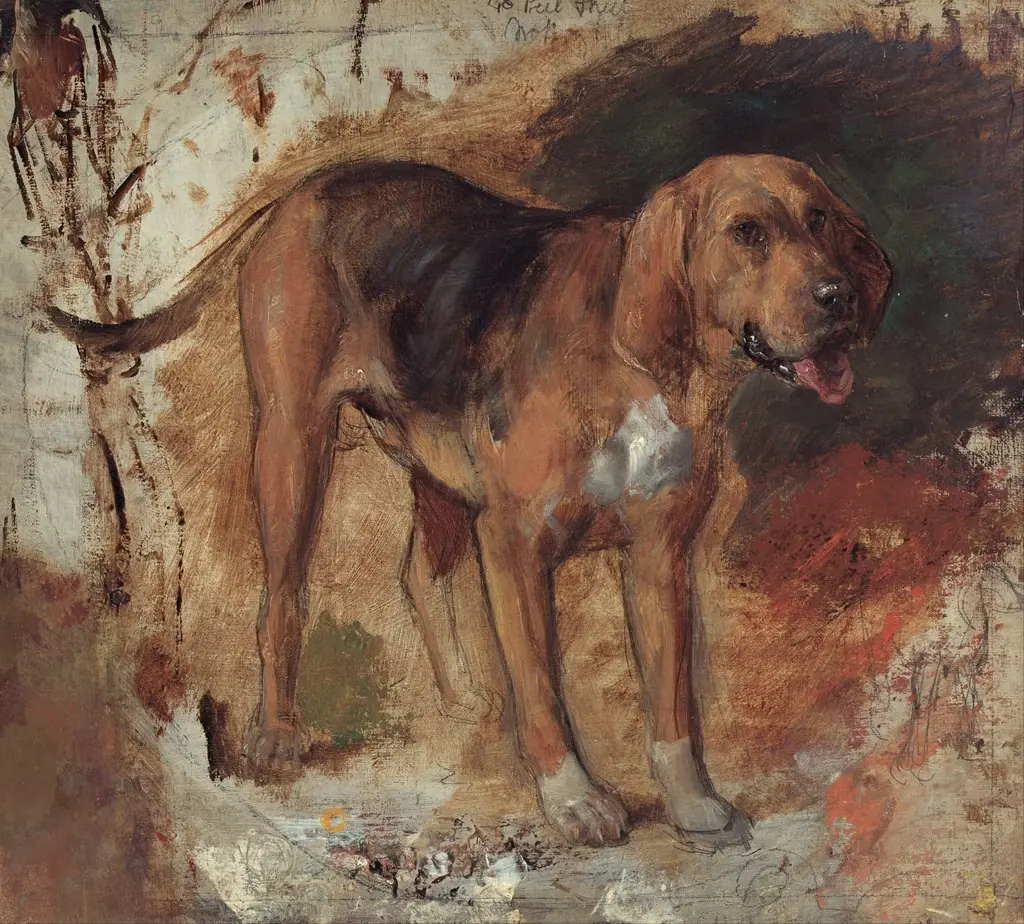
The two dogs, white with brown markings, are shown mid-play, their bodies twisted in energetic poses suggesting pursuit or wrestling. No human figures are present, and the setting, marked by a dim wall and a partially visible door, hints at an indoor space, perhaps a stable or servant’s quarters. The scene conveys spontaneity and animal vitality, reflecting a quiet appreciation for everyday moments rather than symbolic or allegorical intent.
Technique & Style
Jones employs chiaroscuro to define the dogs’ forms, using sharp contrasts between light and shadow to model their fur and suggest volume. The dark background isolates the animals, enhancing the sense of movement. Brushwork is loose yet controlled, capturing the texture of fur and the fluidity of motion without excessive detail.
The lighting appears to come from a single source, likely a window or door, casting a directional glow that heightens the drama of the scene.
History & Provenance
The painting entered the National Library of Wales’ collection in the 20th century, though its earlier ownership is undocumented. Charles Jones, a lesser-known 19th-century British artist, produced few works that survive today. This piece is among the few attributed to him with certainty.
Its preservation suggests it was valued locally, possibly commissioned by a Welsh landowner or acquired through a private donation.
Context
In the late 19th century, animal portraiture was common among British artists, often commissioned by the gentry. Jones’s focus on working-class or utilitarian spaces, rather than aristocratic kennels, sets this work apart. While contemporaries like Edwin Landseer idealized dogs, Jones presents them with unembellished realism, aligning the painting with a growing interest in ordinary life during the Victorian era.
Legacy
Though not widely exhibited, the painting remains a rare example of Jones’s output and a modest contribution to Victorian animal painting. It offers insight into how non-elite subjects were rendered with technical care, even without grand narrative. Its presence in a national library collection underscores its value as a historical artifact rather than a celebrated work of fine art.
Artist & collection
Artist
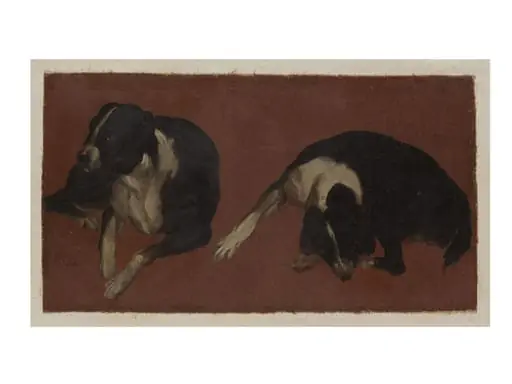
The English painter Charles Jones left behind quiet, small-scale oil studies of animals in the late 1800s.